Photo: Wikipedia
Demographics of Wilson County
Affluence Level in Wilson County
A below-average socioeconomic profile. Incomes, home values, and educational attainment trail the U.S., with higher poverty and unemployment.
People of Wilson County
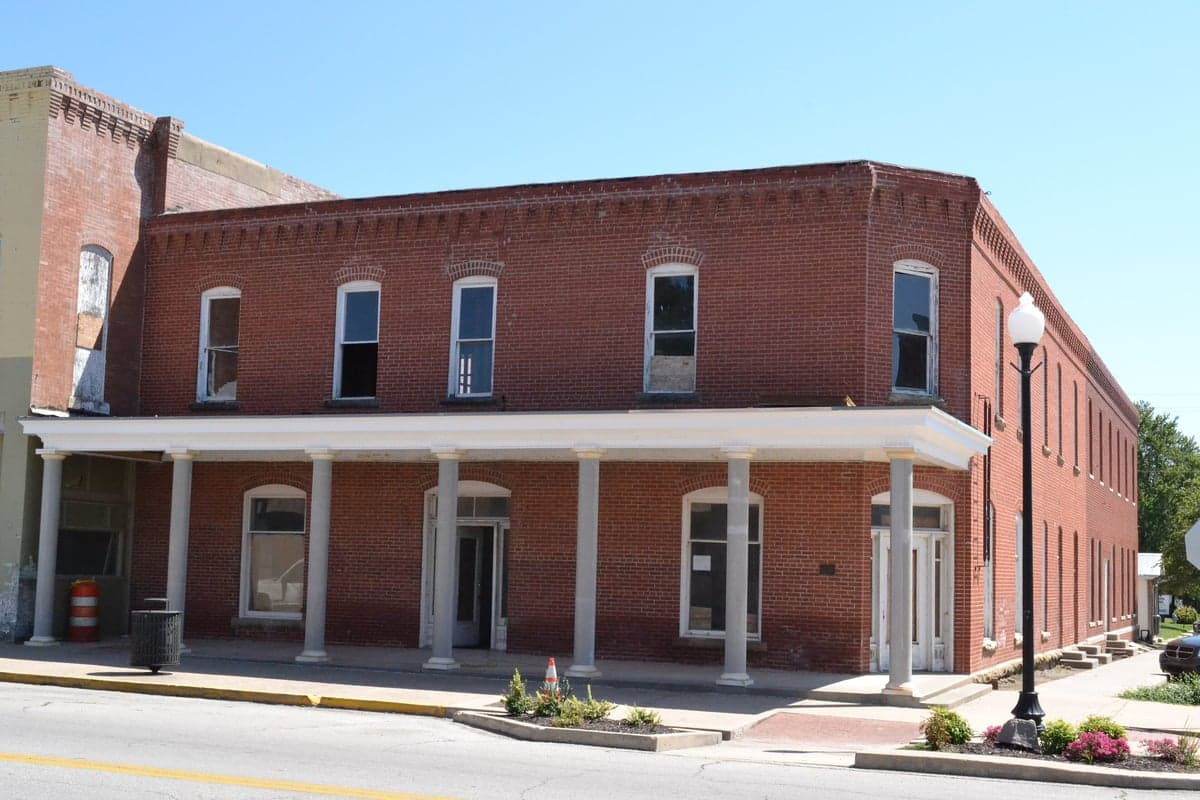
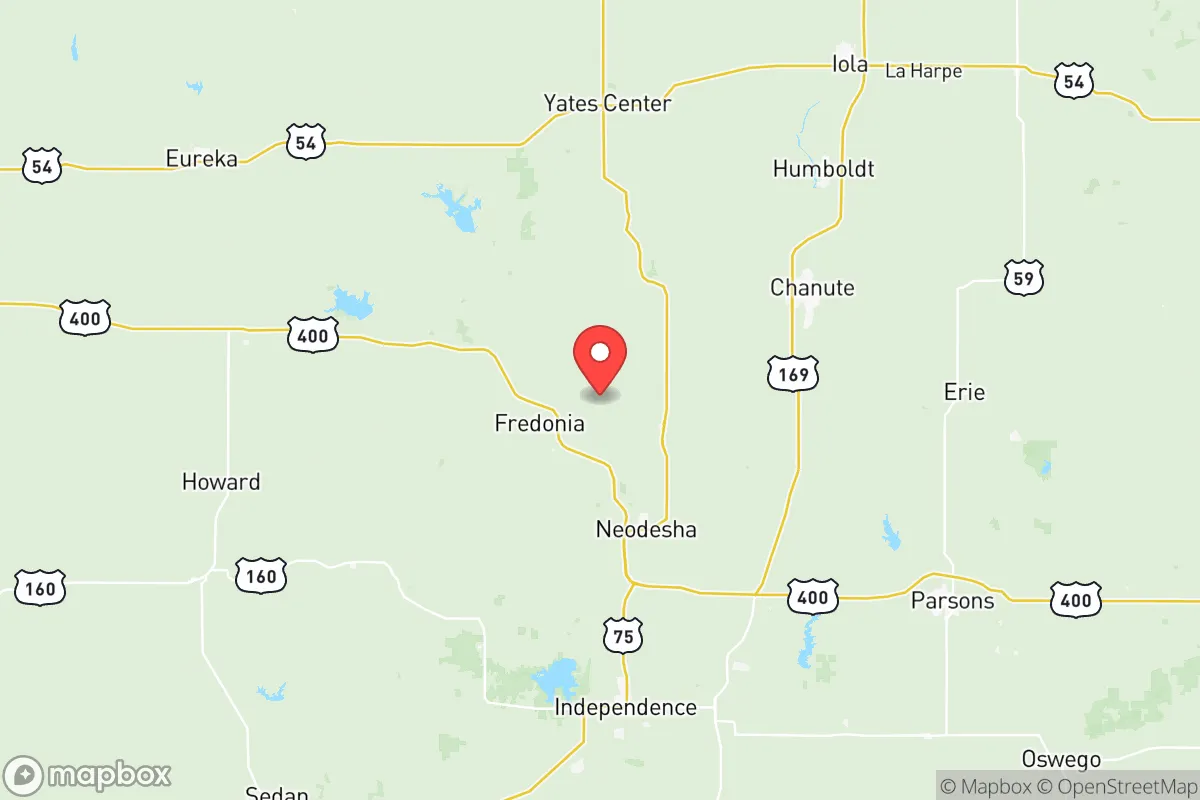
Wilson County, Kansas, is a deeply rural, predominantly white community of 8,559 residents where the population has been shaped by waves of 19th-century European settlement and a steady, decades-long decline. The county’s character is defined by its small, historic towns—Fredonia (the county seat), Neodesha, Altoona, and Benedict—where agriculture, energy extraction, and a quiet, self-reliant way of life remain central. With a foreign-born population of just 0.8% and a 91.0% white demographic, Wilson County is one of the least diverse counties in Kansas, a place where the past is still very much present in the surnames, churches, and annual festivals of its residents.
Settlement & growth (pre-1960)
Before American settlement, the land that is now Wilson County was part of the ancestral territory of the Osage Nation, who used the region for hunting and seasonal camps. The Osage were forcibly removed to a reservation in southeastern Kansas in the 1820s and 1830s, and by the 1850s, the area was opened to Euro-American settlement under the Kansas-Nebraska Act. The first permanent settlers arrived in the late 1850s and early 1860s, primarily from the Ohio River Valley and the Upper South—Kentucky, Tennessee, and Missouri. These early pioneers were of English, Scots-Irish, and German descent, drawn by the promise of cheap land under the Homestead Act of 1862.
The county was officially organized in 1865, and the arrival of the Leavenworth, Lawrence & Galveston Railroad in the 1870s spurred rapid growth. The railroad towns of Fredonia (the county seat, founded 1865) and Neodesha (founded 1869) became commercial hubs, attracting merchants, blacksmiths, and farmers. A second wave of German immigrants arrived in the 1870s and 1880s, settling in and around Altoona and Benedict, where they established Lutheran churches and tight-knit farming communities. These German families—many from the Volga region of Russia—brought with them a tradition of wheat farming and dairying that defined the local economy for generations.
The discovery of oil in the 1890s near Neodesha transformed the county. The Neodesha oil field was one of the first major oil strikes in Kansas, and by 1900, the town boasted a population of over 3,000, with refineries and boomtown energy. This attracted a small but significant influx of workers from the Midwest and Appalachia, though the county remained overwhelmingly white and native-born. The population peaked at 15,722 in 1900, then began a slow decline as the oil boom faded and agricultural consolidation reduced the need for farm labor. By 1930, the county had lost nearly a third of its peak population, a trend that would continue for the rest of the century.
Modern era (post-1965)
The 1965 Hart-Cellar Act had almost no impact on Wilson County. The county’s foreign-born population today is just 0.8%, and there are no significant immigrant enclaves. The demographic story of the modern era is one of domestic out-migration and aging. From 1960 to 2020, the county’s population fell from 11,000 to 8,559, a decline of over 20%. Young people have left for college and jobs in larger cities like Wichita, Kansas City, and Tulsa, Oklahoma, leaving behind an older, more settled population.
The Hispanic population, now at 3.6%, is the only notable minority group, and it has grown slowly since the 1990s. Most Hispanic residents are of Mexican descent and work in agriculture, meatpacking, or oil-field services. They are dispersed across the county rather than concentrated in any single town, though Fredonia and Neodesha have small but visible Hispanic communities. The Black population remains negligible at 0.2%, and there are no recorded East/Southeast Asian or Indian subcontinent residents. The county’s racial homogeneity is a direct legacy of its 19th-century settlement patterns and the lack of any post-1965 immigration gateway.
Suburbanization has not reshaped Wilson County in the way it has in the Kansas City or Wichita metro areas. The county’s towns remain small and isolated, with no significant exurban development. The closest major city is Independence, Kansas (population 8,500), about 20 miles west. The county’s economy has shifted from oil and agriculture toward a mix of healthcare, education, and local government, with the Fredonia Regional Hospital and the Neodesha school district among the largest employers. The population is older than the state average, with a median age of 43.5, and the county’s school enrollment has declined steadily since the 1970s.
The future
Wilson County’s population is projected to continue its slow decline over the next 10-20 years. The county’s birth rate is below replacement level, and out-migration of young adults shows no sign of reversing. The Hispanic population may grow modestly as agricultural and energy-sector workers fill labor gaps, but it is unlikely to exceed 5-7% of the total population. The county will remain overwhelmingly white, rural, and older, with a cultural identity rooted in its German and Scots-Irish heritage.
There are no signs of new immigrant communities forming, and the county’s low housing costs and quiet lifestyle may attract a small number of remote workers or retirees from the coasts, but not in numbers sufficient to reverse the demographic trend. The towns of Fredonia and Neodesha will likely continue to consolidate services, with smaller settlements like Altoona and Benedict facing further population loss. The county’s future is one of stability in character but shrinkage in size—a place where the people who remain are deeply rooted, but where the next generation is increasingly choosing to leave.
For someone moving in now, Wilson County offers a quiet, affordable, and safe rural lifestyle with a strong sense of community and a low cost of living. The trade-off is limited economic opportunity, a shrinking tax base, and a population that is aging and homogeneous. It is a place for those who value continuity over change, and who are comfortable with the slow pace and sparse amenities of the Great Plains.

* Values derived from national, state, county, city and local statistics and may differ in a specific area. Last updated: 2026-09-30T17:36:26.000Z
Narrative content on this page is AI-generated and may contain mistakes. Verify any details that matter before acting on them.
ReloMaps may earn a commission from affiliate links at no extra cost to you.

