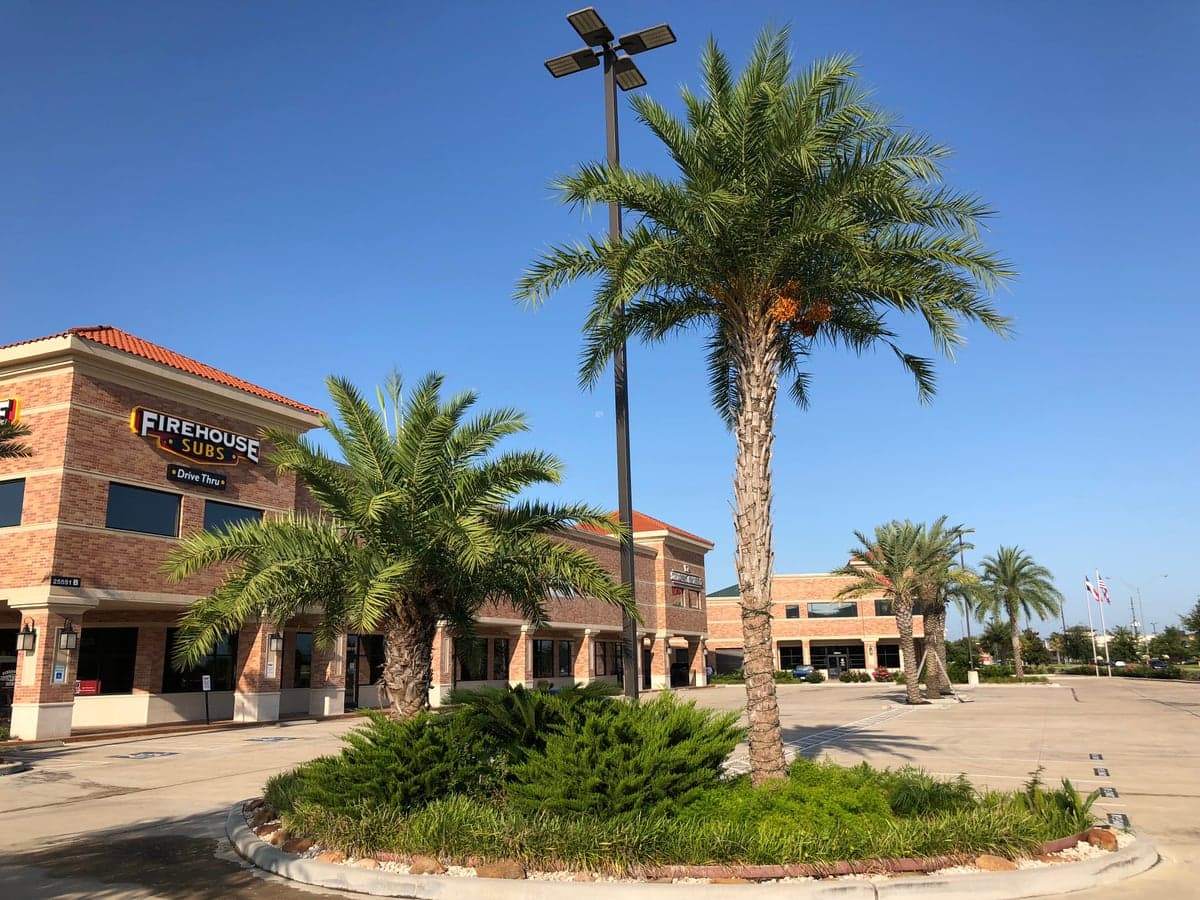
Photo: Wikipedia
Quality of Life in Katy, TX
A high quality of life with strong walkability, manageable living costs, healthy neighborhood signals, and solid amenity access.
What does Quality of Life tell us?
Quality of Life blends cost of living, nearby amenities, socioeconomic signals, and neighborhood character. City-level scores represent the whole municipality; individual neighborhoods can differ.
What does this tell us?
Quality of Life blends cost of living, nearby amenities, socioeconomic signals, and neighborhood character. City-level scores represent the whole municipality; individual neighborhoods can differ.
Cost of Living
36% above national average
The Real Cost of Living in Katy, TX for 2026
| Tier | Individual | Family (4) |
|---|---|---|
| Survival | $26k | $48k |
| Comfortable | $73k | $108k |
| Luxury | $175k+ | $272k+ |
| Elite (Top 5%) | $206k+ | $320k+ |
100%
The Area Signal
A metric tracking the socioeconomic signals of the area.


Hobbies
Explore the areaGroceries
2 within 10 miles
Gas
0 within 10 miles
Hospital
3 within 20 miles
Airport
IAH — George Bush Intercontinental
Post Office
USPS — Katy, TX
Critical Amenities
Quality-of-Life Analysis
Katy, Texas, is an affluent master-planned suburb of Houston that consistently ranks among the region's most desirable places to live, drawing families and professionals with its top-tier schools, low crime rates, and strong sense of community. With a cost of living index of 136 (36% above the U.S. average), Katy is more expensive than the typical American suburb but remains a relative bargain compared to coastal metros like Austin or Dallas, offering a trade-off of higher housing costs for exceptional public services and a family-oriented lifestyle. The city's population is predominantly composed of married couples with children, many of whom are white-collar workers in the energy, healthcare, and technology sectors, who commute into Houston for work but return to Katy for its slower pace and green spaces.
Cost of living, housing, and affordability compared to Houston
Katy's cost of living is significantly higher than the national average, driven primarily by housing. The median home value sits at $376,800, which is roughly 30% above the Houston metro median but still well below comparable suburbs in California or the Northeast. Median rent is $1,609, making it a competitive market for renters, though inventory of single-family rentals is tight. While property taxes in Fort Bend and Harris counties are high (typically 2.5–3.0% of assessed value), there is no state income tax in Texas, which partially offsets the burden. Compared to nearby suburbs like Sugar Land or The Woodlands, Katy offers slightly lower home prices for comparable square footage, but its commute—averaging 30 minutes—is longer than some closer-in neighborhoods. For buyers, the trade-off is clear: a larger home on a bigger lot in a highly rated school district, at the cost of a longer drive to downtown Houston.
Schools, amenities, and what daily life is like for families
Daily life in Katy revolves around its highly regarded Katy Independent School District (KISD), which consistently earns A ratings from the Texas Education Agency and feeds into top-ranked high schools like Seven Lakes and Tompkins. The area is defined by master-planned communities such as Cinco Ranch, Elyson, and Firethorne, which offer extensive amenities including community pools, parks, and walking trails. The Katy Mills Mall and LaCenterra at Cinco Ranch provide retail and dining, while the nearby George Bush Park and Mary Jo Peckham Park offer outdoor recreation. The average commute of 30 minutes is manageable for most residents, though traffic on I-10 and the Grand Parkway can spike during peak hours. The rhythm of life is suburban and car-dependent, with most errands and school drop-offs handled by vehicle, but the community's emphasis on youth sports, church involvement, and neighborhood events creates a tight-knit social fabric.
Katy is best suited for families and professionals who prioritize school quality, safety, and space over urban convenience and nightlife. The city's high cost of living is justified by its exceptional public education, low violent crime rates (roughly half the national average), and abundant family-oriented amenities. Singles or young couples without children may find the area too quiet and car-centric, but for those raising children or seeking a stable, community-focused environment, Katy offers a compelling package that few Houston suburbs can match.

Crime in Katy, TX
Generally safer than 69% of comparable U.S. locations.
Violent CrimeViolent Crime Analysis
Property CrimeProperty Crime Analysis
Crime Analysis
Katy, Texas, presents a mixed safety profile: its violent crime rate of 112.8 incidents per 100,000 residents is significantly lower than both the Texas state average and national figures, but its property crime rate of 2,959.8 per 100,000 exceeds the national median. This divergence means that while the risk of violent assault or robbery is relatively low, residents face a notably higher chance of theft, burglary, and vehicle break-ins. The city's rapid suburban growth and proximity to Houston's sprawling metro area create a dynamic where property crime is a more pressing daily concern than violent offenses.
Crime in context
Katy's violent crime rate of 112.8 per 100,000 is roughly 60% lower than the national average of about 380 per 100,000 and well below the Texas average of approximately 430 per 100,000. This places Katy among the safer suburbs for violent offenses like homicide, rape, and aggravated assault. However, the property crime rate of 2,959.8 per 100,000 is about 50% higher than the national average of roughly 1,950 per 100,000. This elevated property crime figure is typical of fast-growing exurbs within large metro areas, where transient populations and easy highway access (via I-10 and the Grand Parkway) create opportunities for opportunistic theft. The contrast is stark: a resident is far more likely to have a package stolen from their porch than to be a victim of a violent crime.
What residents experience
In practice, Katy residents report that property crime—particularly vehicle burglaries, package theft, and home break-ins—is the most common safety issue. Neighborhood social media groups frequently share alerts about suspicious vehicles and stolen items from unlocked cars. Violent crime is rare and tends to be concentrated in specific apartment complexes or commercial corridors rather than in established single-family subdivisions. The presence of the Harris County District Attorney's office, which has pursued progressive criminal justice reforms in recent years, is a concern for some residents. Critics argue that policies such as reduced cash bail and diversion programs for property offenders may contribute to repeat thefts, as offenders face fewer consequences and return to the same neighborhoods. This ideological approach, while intended to reduce incarceration, can lead to a perception that the justice system prioritizes offender rehabilitation over victim restitution and public safety.
Neighborhood-level variation is significant. Master-planned communities like Cinco Ranch, Firethorne, and Seven Meadows generally report lower crime rates due to private security patrols, gated entries, and active homeowners' associations. Older, non-gated areas near the Katy Mills Mall or along the I-10 corridor see higher property crime volumes. For prospective residents, the key takeaway is that Katy is safe from violent crime but requires vigilance against property theft—and the local justice system's progressive leanings may reduce the deterrent effect for repeat property offenders.
* Values derived from national, state, county, city and local statistics and may differ in a specific area. Last updated: 2026-04-19T07:20:01.000Z
Narrative content on this page is AI-generated and may contain mistakes. Verify any details that matter before acting on them.
ReloMaps may earn a commission from affiliate links at no extra cost to you.

