Photo: Wikipedia
Political ClimatePolitical Climate in Katy, TX
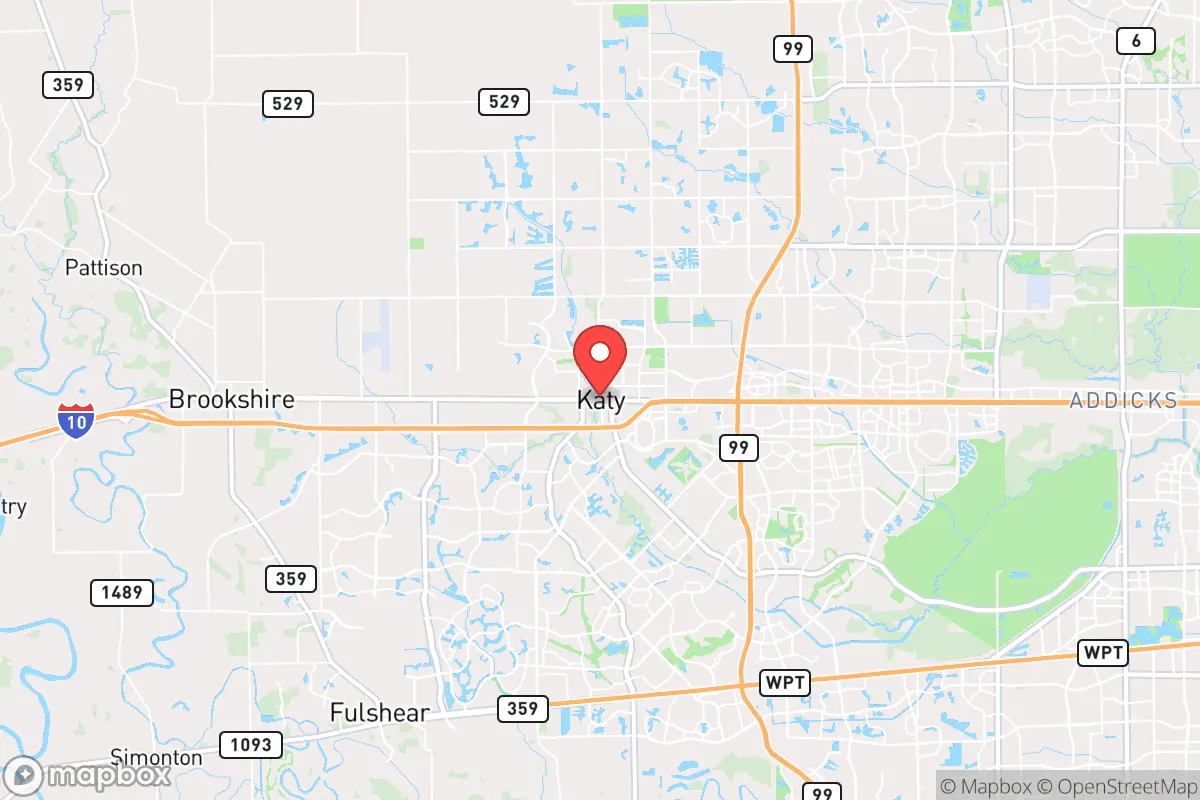
District shown is the primary district for this city’s centroid. Cities may span multiple districts.
Local Political AnalysisPolitical Analysis of Katy, TX
Katy, Texas, has long been a solidly conservative stronghold, and that hasn’t changed much despite the massive growth over the last couple decades. The Cook Partisan Voting Index (PVI) for the area sits at R+9, meaning it votes about nine points more Republican than the national average, and that’s a number that feels about right if you’ve been paying attention. You’ll see Trump and Cruz signs in yards year-round, and local school board and city council races tend to be decided on who can keep taxes lower and government out of people’s business. That said, as more folks move in from blue states—especially from California and the Northeast—you can feel a subtle shift in some neighborhoods, particularly around the newer master-planned communities closer to the Grand Parkway. It’s not a blue wave by any stretch, but it’s something to keep an eye on if you value limited government and personal freedoms.
How it compares
Compared to Houston proper, which is just 25 miles east and leans reliably Democratic, Katy feels like a different world. You drive down I-10 and you can almost see the political line in the asphalt. Neighboring Fulshear and Richmond are even more conservative, with a stronger rural, ranching influence that keeps taxes low and regulations light. On the flip side, if you head south toward Sugar Land, you’ll find a more moderate, business-friendly Republicanism that sometimes flirts with centrist policies. Katy sits right in the middle of that spectrum—conservative, but not as hardline as the rural counties to the west. The contrast is most visible in how each town handled the pandemic: Katy largely resisted mask mandates and business closures, while Houston and Sugar Land were quicker to impose restrictions. That’s the kind of local control that keeps people here feeling like they’re not being bossed around by distant bureaucrats.
What this means for residents
For the average Katy resident, this political climate means you’re generally left alone to live your life. Property taxes are a constant gripe—Texas has no income tax, so local governments lean hard on property taxes—but the city and county tend to keep spending in check compared to Harris County as a whole. You won’t see a lot of progressive social experiments here: no defund the police movements, no heavy-handed zoning that tells you what you can do with your own land, and no school curriculum battles that push ideology over basics. The local school district, Katy ISD, has been a battleground over library books and parental rights, but so far the conservative majority on the board has held the line. If you’re worried about government overreach creeping into your home or your wallet, Katy is still a place where that’s the exception, not the rule. The biggest concern for the long term is whether the influx of new residents from high-tax states will start voting for the same policies they fled—higher spending, more regulations, and less personal freedom.
One cultural distinction that stands out is Katy’s strong sense of community rooted in faith and family. You’ll find more churches per square mile than coffee shops, and the local chamber of commerce is still old-school Texas: handshake deals and neighborly trust. There’s no city income tax, no business license hassle for small operators, and the zoning is light enough that you can run a home-based business without jumping through hoops. That’s the kind of freedom that’s getting harder to find in the suburbs closer to Houston. If the trend toward progressive governance in other parts of the country bothers you, Katy is still a place where you can breathe easy—for now. Just keep an eye on those city council meetings, because the fight for local control never really ends.

State Political ClimatePolitical Climate in Texas
State Political AnalysisPolitical Environment in the State
Texas has been a reliably red state for decades, with Republicans holding every statewide office and both chambers of the legislature since the early 2000s. The state’s political identity is built on a foundation of limited government, low taxes, and individual liberty, but the last 10-15 years have seen a slow but steady demographic shift that is testing that foundation. While the GOP still dominates at the state level, the margins have tightened in presidential races—from a 16-point win in 2012 to a 5.5-point win in 2024—driven largely by explosive growth in the urban corridors of Dallas-Fort Worth, Houston, Austin, and San Antonio. For a conservative considering relocation, the state remains a stronghold of traditional values, but the political ground is shifting underfoot, and you need to know where the fault lines are.
Urban vs. rural divide
The political map of Texas is a tale of two worlds. The vast rural and exurban areas—places like Lubbock, Amarillo, and the Hill Country—vote overwhelmingly Republican, often by 70-80% margins. These are the counties that anchor the state’s conservative majority. Meanwhile, the major metros are increasingly blue. Austin is the most liberal city in the state, with Travis County delivering a 40-point margin for Democrats in 2024. Dallas and Houston are more purple but trending left, especially in their inner-core counties (Dallas and Harris). The real battleground is the suburbs: Collin County (north of Dallas) and Fort Bend County (southwest of Houston) were once GOP strongholds but have flipped or become competitive as diverse, educated professionals move in. El Paso remains a Democratic stronghold, but it’s an outlier—most of the border region leans conservative on immigration enforcement even if it votes blue on social issues. The rural-urban split is the defining political reality of Texas today.
Policy environment
Texas’s policy environment is a conservative’s dream on paper, but the devil is in the details. There is no state income tax, which is the single biggest draw for high-earners and business owners. Property taxes are high (among the top 10 in the nation), but the legislature has been chipping away at them—the 2023 session passed a $18 billion property tax cut, the largest in state history. The regulatory posture is business-friendly: Texas is a right-to-work state, with minimal zoning in many areas and fast permitting for development. On education, the state has expanded school choice through charter schools and the Education Savings Account program passed in 2023, giving parents more control over where their kids learn. Healthcare is a mixed bag: Texas did not expand Medicaid under Obamacare, keeping government out of that system, but the state has the highest uninsured rate in the country. Election laws tightened after 2020—SB 1 (2021) restricted mail-in voting, added ID requirements, and banned drive-through voting, which conservatives see as protecting election integrity. The policy environment is solidly conservative, but the property tax burden and lack of Medicaid expansion are real trade-offs for new residents.
Trajectory & freedom
On the freedom front, Texas has been a net positive over the last decade, but the trend line is not uniformly upward. The biggest win for personal liberty was the permitless carry law (HB 1927) passed in 2021, allowing law-abiding adults to carry a handgun without a license—a major expansion of Second Amendment rights. Parental rights were strengthened with the Parental Bill of Rights (HB 5) in 2023, which requires schools to notify parents about curriculum changes and medical services. On medical autonomy, Texas banned gender transition procedures for minors (SB 14, 2023) and restricted abortion to the point of a near-total ban (trigger law after Dobbs). These are clear wins for conservative values. However, there are concerning signs of government overreach. The state has aggressively used its power to prosecute election fraud (though convictions are rare), and the Texas Attorney General’s office has been active in suing the federal government over immigration and environmental rules—which conservatives cheer, but it also means more state-level enforcement power. The biggest threat to freedom is the property tax system: because there’s no income tax, local governments rely heavily on property taxes, and assessments have risen faster than the 10% cap on appraisal increases, effectively forcing some long-time homeowners out. Overall, Texas is becoming more free in the areas that matter most to conservatives (guns, parents, life), but the tax burden is a creeping concern.
Civil unrest & political movements
Texas has seen its share of political flashpoints, and a new resident should be aware of the visible tensions. The 2020 Black Lives Matter protests in Austin, Dallas, and Houston were large and sometimes violent, leading to property damage and a lasting distrust of local law enforcement in those cities. The “Defund the Police” movement gained traction in Austin, where the city council cut the police budget by $150 million in 2020—though much of that was later restored after public backlash. On the right, the Texas Nationalist Movement (Texit) has been a vocal but fringe push for secession, gaining more attention after the 2020 election but with no real legislative traction. Immigration politics are a constant flashpoint: Governor Abbott’s Operation Lone Star (2021-present) has deployed state troopers and National Guard to the border, bused migrants to sanctuary cities, and installed razor wire along the Rio Grande—all of which are popular with conservatives but have drawn federal lawsuits. Election integrity remains a hot-button issue: the 2020 and 2022 cycles saw widespread claims of irregularities, though no evidence of systemic fraud was found. The 2021 voter ID law (SB 1) was a direct response to those concerns. A new resident will notice the political divide most acutely in the cities: bumper stickers, yard signs, and local news coverage are sharply polarized, especially in Austin and Dallas.
Projection
Looking ahead 5-10 years, Texas is on a trajectory toward becoming a true battleground state. The in-migration of roughly 1,000 people per day—many from blue states like California and New York—is slowly diluting the conservative base. The suburbs of Dallas, Houston, and Austin are turning purple, and if the trend continues, statewide races could be competitive by 2030. However, the rural and exurban areas are not shrinking—they are growing too, just more slowly. The Republican Party has responded by gerrymandering congressional and state legislative districts to lock in their majorities, and the 2023 session passed laws that make it harder for cities to enact progressive policies (like banning local plastic bag bans or rent control). The biggest wildcard is the Hispanic vote: Texas’s Hispanic population is growing rapidly, but it is not monolithic—many border-area Hispanics are conservative on economics and immigration, while urban Hispanics lean left. If the GOP can hold onto a significant share of that vote, Texas stays red. If not, it flips. For a conservative moving in now, expect the state to remain a policy leader on guns, taxes, and parental rights for the next decade, but prepare for the political climate to become more contested and the culture wars to intensify.
For a new resident, the bottom line is this: Texas is still a great place for conservatives who value low taxes, gun rights, and local control, but it is not the solid red fortress it was 20 years ago. You will find your values reflected in state law, but you will also encounter growing progressive activism in the cities and suburbs. If you are moving to a rural area or a conservative exurb like Keller or Katy, you will feel right at home. If you are moving to Austin or inner Dallas, you will be in a blue bubble. The key is to choose your county wisely—because in Texas, local politics matter more than ever. The state is still a net positive for freedom, but you need to be engaged and vote to keep it that way.
* Values derived from national, state, county, city and local statistics and may differ in a specific area. Last updated: 2026-04-19T07:20:01.000Z
Narrative content on this page is AI-generated and may contain mistakes. Verify any details that matter before acting on them.
ReloMaps may earn a commission from affiliate links at no extra cost to you.

