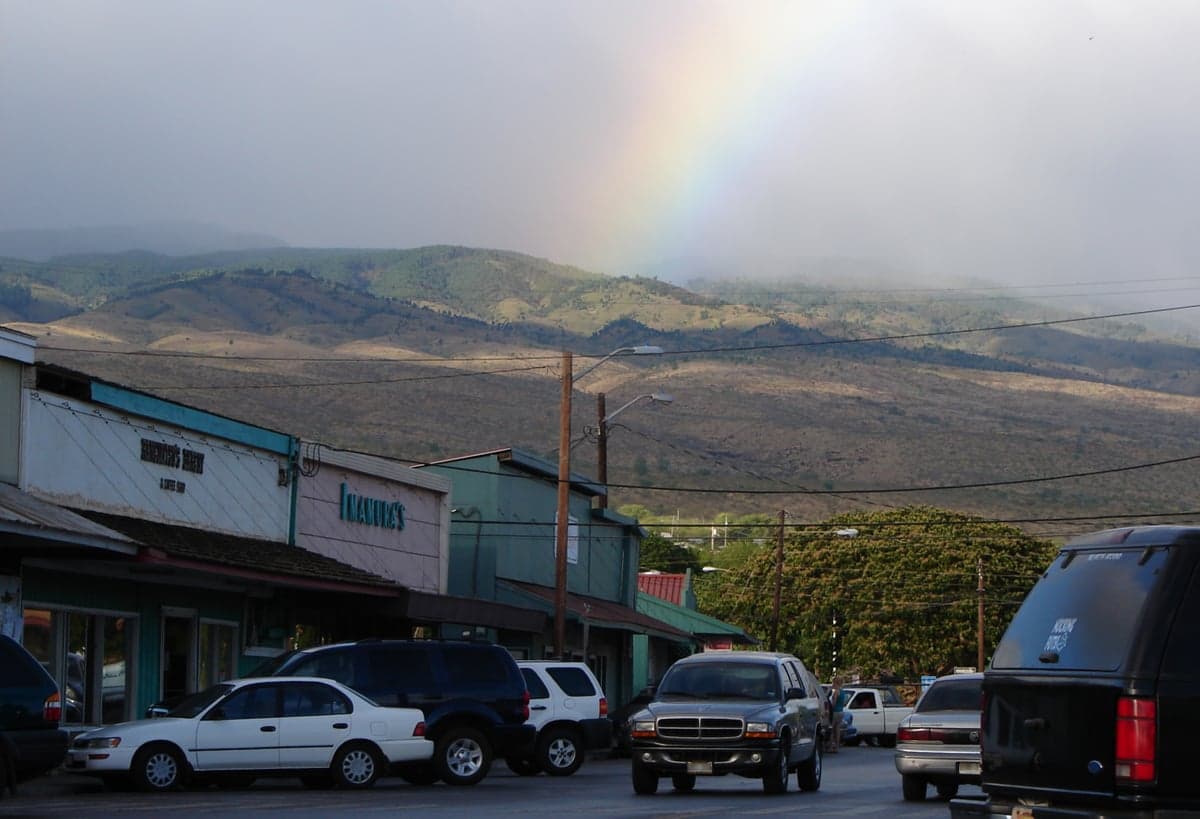
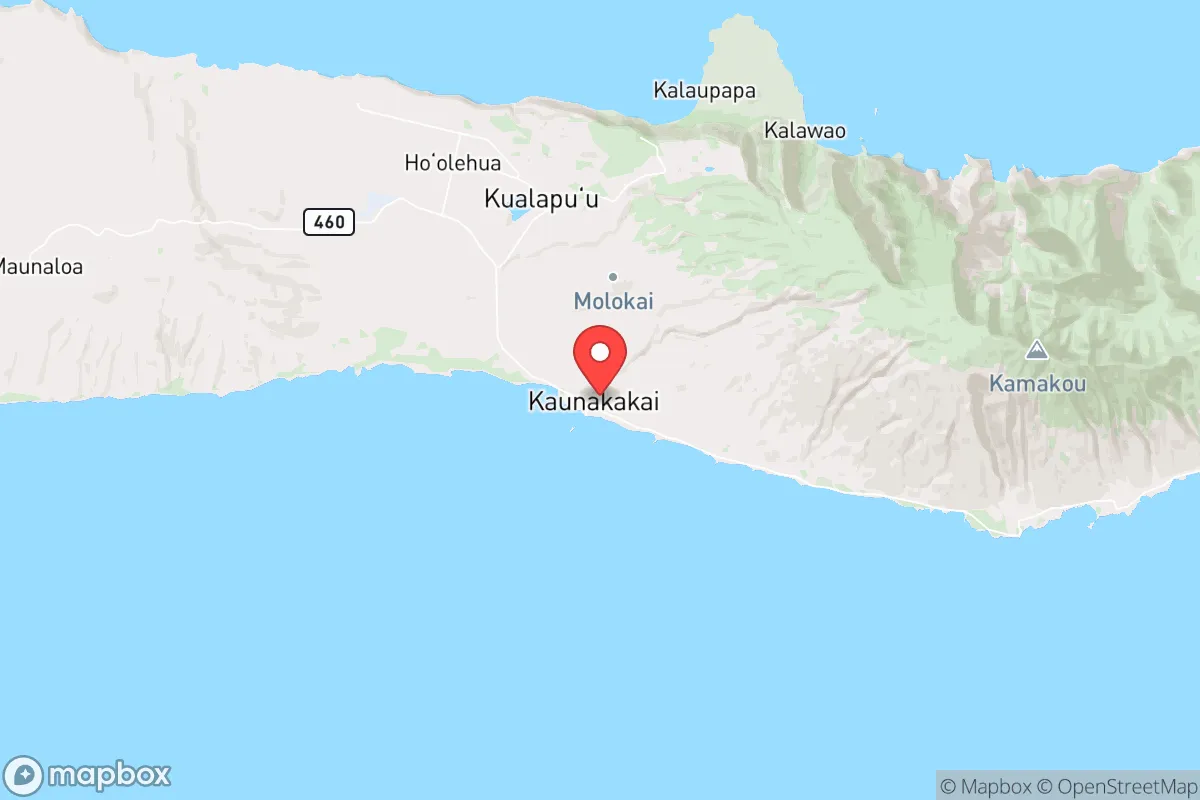
Photo: Wikipedia
Personal Sovereignty in Kaunakakai, HI
Moderate friction. Expect trade-offs in some aspect of personal liberty and independence.
What does Personal Sovereignty tell us?
Personal Sovereignty measures your capacity for self-reliance and independence with minimal government friction. Higher scores mean fewer barriers between you and the way you want to live... but it assumes you have the space you need and good neighbors.
What does this tell us?
Personal Sovereignty measures your capacity for self-reliance and independence with minimal government friction. Higher scores mean fewer barriers between you and the way you want to live... but it assumes you have the space you need and good neighbors.
State Policy
Energy independence: Importer (2% of energy produced in-state)
Personal Liberty
Homesteading

Personal Liberty Analysis
Kaunakakai, on the island of Molokai, offers a unique and complex environment for personal sovereignty that diverges sharply from the mainland and even from Oahu. While the state of Hawaii imposes significant constraints through its regulatory and tax structures, the island's remote, rural character and small population create a de facto buffer against the most intrusive forms of government overreach. For the conservative-leaning individual or family seeking to maximize autonomy, Kaunakakai presents a trade-off: you accept a high state-level tax burden and a restrictive legal framework in exchange for a low-density, community-driven lifestyle where local enforcement is often thin and self-reliance is not a choice but a necessity. This analysis examines the specific levers of personal freedom—taxes, self-defense, homesteading, and civil liberties—to determine whether the isolation of Molokai outweighs the heavy hand of Honolulu.
Tax burden and regulatory posture in a remote island economy
Hawaii's state-level tax burden is among the highest in the nation, and Kaunakakai residents are not exempt. The state imposes a progressive income tax with a top marginal rate of 11%, which kicks in at relatively modest income levels, and a general excise tax of 4% that applies to nearly all goods and services, including groceries and rent. For a prepper or survivalist, this means every dollar earned or spent is subject to significant state extraction. Property taxes, however, are comparatively low—around 0.28% of assessed value on Molokai—which is a silver lining for those who can secure land. The regulatory posture is equally challenging: Hawaii's land use commission and county zoning boards exert tight control over development, and building permits can take months to process. The state's environmental regulations, particularly around coastal areas and water rights, are stringent. For someone looking to build a self-sufficient compound, expect to navigate a bureaucratic maze that favors established landowners over newcomers. The practical workaround is to buy existing structures or raw land with grandfathered uses, but even then, any expansion triggers review. In short, the tax and regulatory climate is hostile to rapid, independent action, but the low property tax and the difficulty of enforcement on a small island can be exploited by those who keep a low profile.
Self-defense and gun law specifics in Hawaii's restrictive environment
Hawaii has some of the most restrictive gun laws in the United States, and Kaunakakai offers no refuge from them. The state requires a permit to acquire any firearm, a separate permit to carry a concealed weapon (which is issued on a "may-issue" basis and is virtually impossible to obtain on Molokai), and a mandatory 14-day waiting period. Assault weapons and large-capacity magazines are banned outright, and all firearms must be registered with the county police. For the prepper mindset, this is a critical vulnerability: you cannot legally maintain an arsenal for defense against civil unrest or government overreach. The practical reality on Molokai, however, is that crime rates are low and the community is tight-knit. Many residents rely on traditional hunting rifles for pig and deer, and enforcement of carry laws is lax for those who keep firearms on their property. But if you are moving from a state with constitutional carry or even a shall-issue system, you will find your Second Amendment rights severely curtailed. The best legal strategy is to focus on non-firearm self-defense tools—knives, bows, and physical security measures—while accepting that the state's monopoly on force is nearly absolute here. For those who prioritize armed autonomy, Kaunakakai is a poor choice.
Self-reliance and homesteading viability on Molokai
This is where Kaunakakai shines for the survivalist. Molokai is one of the least developed inhabited islands in Hawaii, with large tracts of agricultural land and a zoning code that permits rural homesteading. Lot sizes in the Kaunakakai area typically range from 1 to 5 acres, with some parcels exceeding 10 acres in the outlying districts like Ho'olehua or Kualapu'u. The county's general plan allows for agricultural uses, including livestock, orchards, and aquaculture, without the need for special permits as long as the activity is "bona fide farming." Off-grid feasibility is high: many residents rely on rainwater catchment systems, solar panels, and composting toilets because municipal water and sewer are limited to the town core. The climate is semi-arid, so water conservation is critical, but the year-round growing season means you can produce a significant portion of your own food. The main regulatory hurdle is the state's ban on certain invasive species and its strict quarantine laws for importing plants and animals, which can complicate establishing a diversified homestead. For the prepper, the ability to live largely off the grid, with minimal interaction with government utilities, is a major advantage. The trade-off is that you must be self-sufficient in terms of medical care, supplies, and transportation—the nearest hospital is on Maui, a 30-minute flight or 2-hour ferry ride away.
Personal liberties: parental rights, medical autonomy, speech, and property
Hawaii's state government has a progressive tilt that can conflict with conservative values on several fronts. Parental rights are generally respected in education, but the state mandates vaccination for school attendance (with limited exemptions) and has a robust public health apparatus that can override parental decisions during outbreaks. Medical autonomy is constrained by the state's strict licensing laws; alternative practitioners and homeopathic remedies are legal but face scrutiny, and the state's single-payer healthcare push (still debated as of 2026) could further centralize medical decisions. Free speech is protected under the First Amendment, but Hawaii has hate speech statutes and social media regulations that could be used to silence dissenting views on topics like immigration or gender ideology. Property rights are the most concerning: the state's history of land reform, including the Hawaiian Homes Commission Act and the use of eminent domain for development projects, means that owning land does not guarantee you can use it as you wish. The county's planning department has broad discretion to deny permits based on "community character" or environmental impact. For the conservative individual, the key is to stay under the radar—avoid public activism, keep medical decisions private, and maintain property in a way that does not attract official attention. The small population of Molokai (roughly 7,000 people) means that personal reputation matters more than legal paperwork; if you are known as a responsible, contributing member of the community, local authorities are less likely to enforce the full weight of state regulations against you.
In the broader landscape of personal sovereignty, Kaunakakai occupies a niche that is neither a libertarian haven nor a totalitarian nightmare. Compared to mainland rural areas like Idaho or Montana, you sacrifice gun rights and face a higher tax burden, but you gain a climate that supports year-round food production and a community that values self-reliance out of necessity rather than ideology. Compared to other Hawaiian islands, Molokai offers the most breathing room due to its low population density and weak enforcement infrastructure. For the strategic relocator with a survivalist mindset, the calculus is clear: accept the state's high-level constraints as a fixed cost, and focus on building a resilient, off-grid homestead that minimizes your dependence on the system. The key is to arrive with a clear plan for water, energy, and food security, and to integrate into the local community before making any waves. Kaunakakai is not a place to fight the government—it is a place to quietly opt out of its reach, as much as the law allows.

* Values derived from national, state, county, city and local statistics and may differ in a specific area. Last updated: 2026-05-15T21:54:01.000Z
Narrative content on this page is AI-generated and may contain mistakes. Verify any details that matter before acting on them.
ReloMaps may earn a commission from affiliate links at no extra cost to you.

