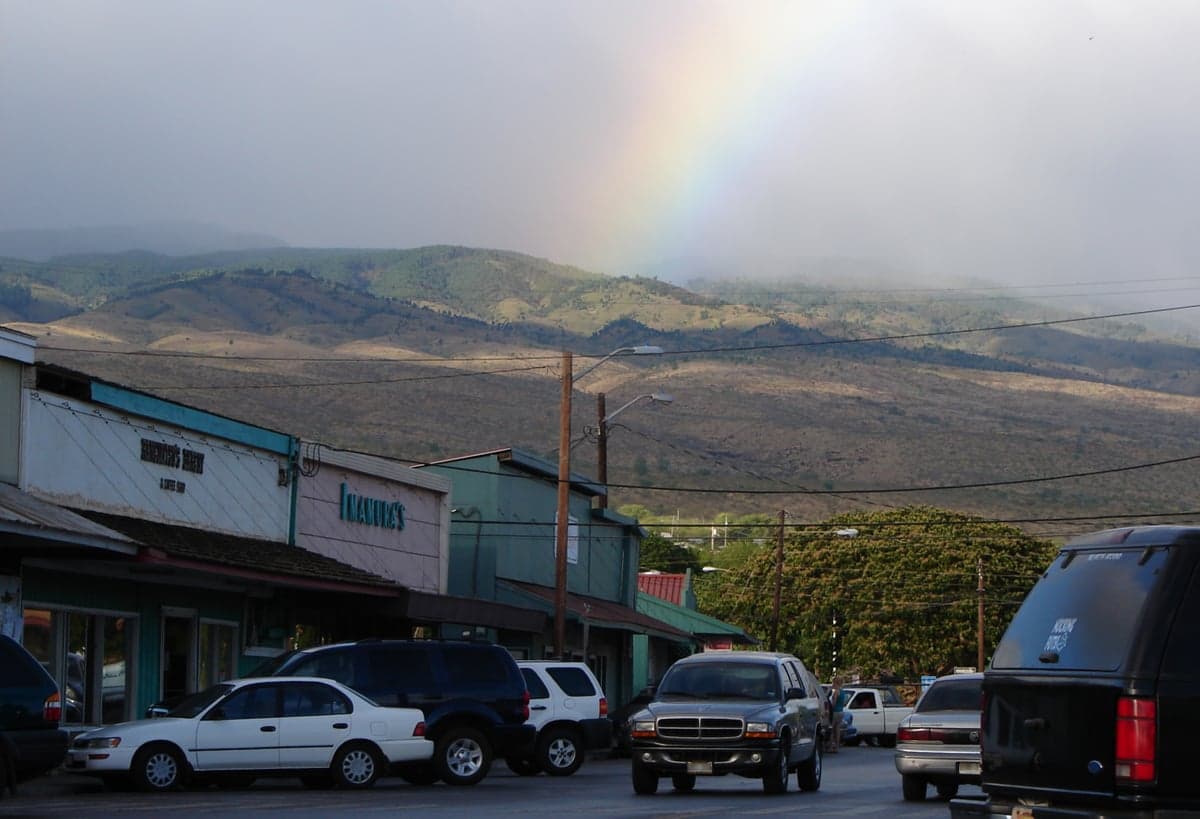
Photo: Wikipedia
Political ClimatePolitical Climate in Kaunakakai, HI
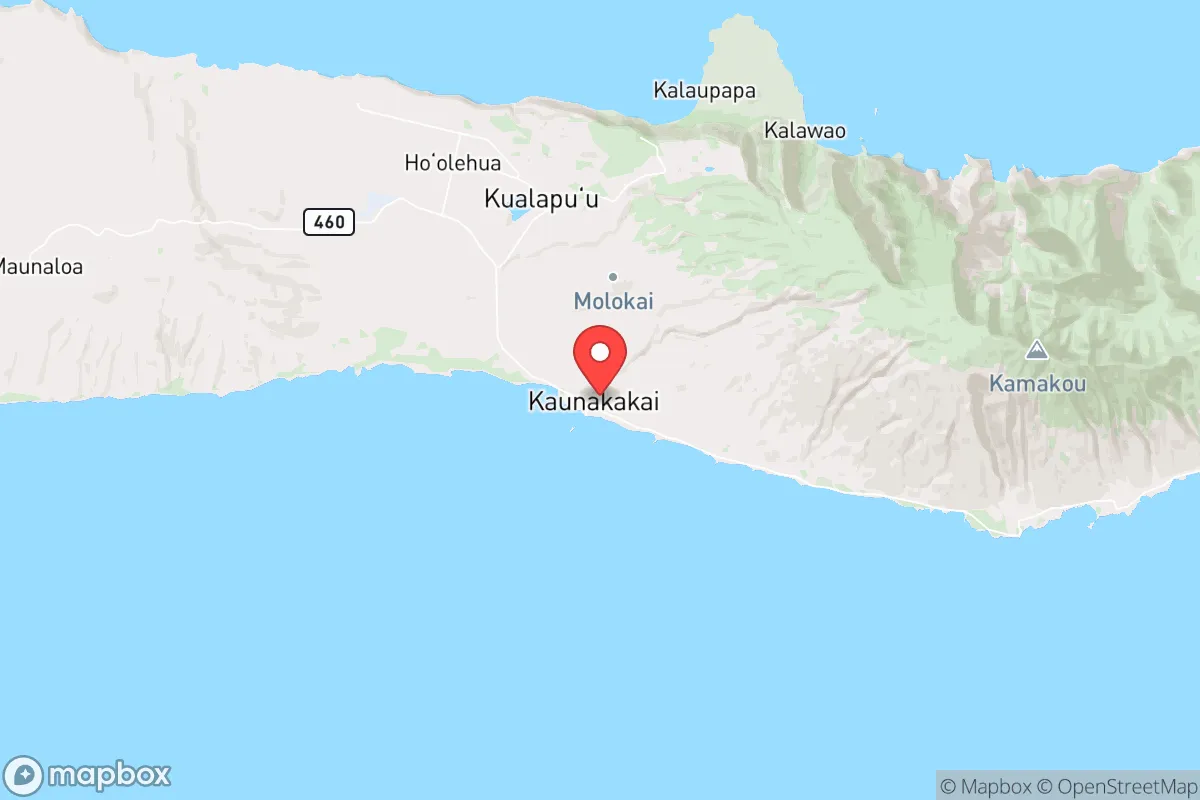
District shown is the primary district for this city’s centroid. Cities may span multiple districts.
Local Political AnalysisPolitical Analysis of Kaunakakai, HI
Kaunakakai leans heavily Democratic, with a Cook PVI of D+12 that mirrors the state of Hawaii as a whole. This means the area has consistently voted about 12 points more Democratic than the national average in recent presidential elections. While the island of Molokai has a long history of independent, self-sufficient living, the local political machinery in Kaunakakai has increasingly aligned with the progressive policies coming out of Honolulu, which is concerning for those who value personal freedoms and limited government.
How it compares
Kaunakakai and the broader state of Hawaii share the exact same Cook PVI of D+12, but the political feel on the ground is different. In Honolulu or Hilo, you see a more aggressive push for progressive social policies, higher taxes, and stricter regulations on everything from short-term rentals to fishing rights. On Molokai, there's a stronger undercurrent of resistance to outside control, especially from the state government. The contrast is sharpest when you look at nearby towns like Lahaina on Maui or Kailua-Kona on the Big Island, where tourism-driven economies have embraced more liberal cultural shifts. Kaunakakai, by comparison, still has a slower pace and a more traditional, family-oriented way of life, but the political winds are blowing the same direction. The state legislature in Honolulu passes laws that affect everyone here, and local representatives from Molokai often go along with the party line, meaning we get the same progressive agenda without much local pushback.
What this means for residents
For a long-time resident, the biggest concern is the steady creep of government overreach into daily life. We've seen it with stricter building codes that make it harder to build or renovate a home, tighter regulations on hunting and fishing that impact traditional subsistence practices, and a growing push for higher property taxes and income taxes to fund state programs. The local government in Maui County, which Kaunakakai is part of, has also become more aggressive in enforcing vacation rental bans and land-use rules, limiting what you can do with your own property. The shift towards progressive ideology means more mandates, more fees, and less room for the kind of independent, self-reliant lifestyle that has defined Molokai for generations. If you value being left alone to live your life without a lot of bureaucratic interference, the trajectory here is worrying.
Culturally, Kaunakakai still holds onto a strong sense of community and local identity, but the policy distinctions are becoming more pronounced. The state's push for renewable energy mandates, for example, sounds good in theory but often means higher electricity bills and less reliable power for rural areas like ours. The emphasis on "equity" and "diversity" in government programs can feel like a one-size-fits-all approach that ignores the unique challenges of living on a small, remote island. In the near term, expect more of the same: a continued alignment with the state's progressive agenda, with little room for local voices that want a different path. For those who remember when Kaunakakai was more about self-determination and less about government programs, the long-term outlook is one of cautious concern.

State Political ClimatePolitical Climate in Hawaii
State Political AnalysisPolitical Environment in the State
Hawaii has been a one-party Democratic stronghold for decades, with a Cook PVI of D+12 that makes it one of the most reliably blue states in the nation. The dominant coalition is a mix of unionized government workers, Native Hawaiian sovereignty advocates, and progressive transplants from the mainland, but the state’s political trajectory over the past 10-20 years has been a steady march leftward—away from its historically moderate, pragmatic roots and toward a more aggressive progressive agenda on taxes, housing, and personal freedoms. If you’re considering a move here, you need to understand that the aloha spirit often comes with a heavy hand from Honolulu.
Urban vs. rural divide
The political map of Hawaii is starkly divided between the urban core of Honolulu on Oahu and the rest of the state. Honolulu and its suburbs—places like Waipahu, Kaneohe, and Ewa Beach—drive the state’s Democratic dominance, with voter registration heavily tilted toward the party and turnout consistently high. The city’s economy is tied to tourism, military bases, and government jobs, which creates a natural constituency for big-spending, pro-union policies. In contrast, the neighbor islands—Hilo on the Big Island, Kahului on Maui, and Lihue on Kauai—are more politically mixed, with rural areas leaning conservative on issues like property rights and gun ownership. Hawaii County (the Big Island) is the most Republican-friendly county in the state, but even there, Democrats hold most local offices. The divide isn’t just geographic; it’s cultural. Urban voters prioritize environmental regulation and social programs, while rural residents—many of them ranchers, farmers, and hunters—feel increasingly alienated by Honolulu’s one-size-fits-all mandates.
Policy environment
Hawaii’s policy environment is a cautionary tale for anyone who values limited government. The state has the highest combined tax burden in the nation, with a state income tax that tops out at 11% and a general excise tax (GET) of 4% that applies to nearly everything, including business-to-business transactions. Property taxes are relatively low, but that’s cold comfort when the cost of living is astronomical. The regulatory posture is aggressively progressive: Hawaii passed a statewide rent control law in 2023 (Act 40) that caps annual rent increases at 5% plus inflation, which sounds good on paper but has already discouraged new housing construction. Education policy is dominated by a single statewide school district—the only one in the country—which means local control is virtually nonexistent. Parents have limited options for school choice, and the teachers’ union is one of the most powerful political forces in the state. Healthcare is heavily regulated, with a state-run insurance exchange and mandates that drive up premiums. Election laws are among the most restrictive for third parties and independents: Hawaii has closed primaries, meaning only registered Democrats and Republicans can vote in their respective primaries, effectively locking out the 35% of voters who register as nonpartisan.
Trajectory & freedom
Hawaii is becoming less free by nearly every measure, and the trend has accelerated since 2020. On gun rights, the state passed some of the strictest laws in the country after the Bruen decision, including a 2023 law (Act 52) that bans carrying firearms in most public places—parks, beaches, hospitals, and even parking lots—effectively gutting the right to bear arms for self-defense. On parental rights, the state passed Act 2 in 2022, which mandates that public schools provide LGBTQ+ inclusive curriculum from kindergarten onward, with no opt-out for parents. Medical autonomy took a hit with the 2023 passage of Act 1, which codifies abortion access as a “fundamental right” and removes parental consent requirements for minors. Property rights are under constant assault from the state’s powerful Land Use Commission, which can rezone land at will and has a history of favoring large developers over individual landowners. The state also passed a “right to shelter” law in 2024 that effectively decriminalizes homelessness, leading to encampments in public parks and beaches that are rarely cleared. Taxation is the biggest freedom killer: the state’s income tax brackets are not indexed for inflation, so every year, more of your paycheck gets eaten by the government.
Civil unrest & political movements
Hawaii has a long history of civil unrest, but the flashpoints have shifted in recent years. The Mauna Kea protests (2019-2020) against the Thirty Meter Telescope were a rare moment of cross-ideological unity, bringing together Native Hawaiian activists, environmentalists, and libertarian-leaning locals who opposed government overreach. That movement fizzled after the telescope was given the green light, but it left a legacy of distrust toward state institutions. More recently, the “Save Our Sandbars” movement on Oahu’s North Shore has seen residents clash with the state over beach access and erosion control policies. On the left, the Hawaii People’s Fund and other activist groups have pushed for reparations and land redistribution, while on the right, the Hawaii Republican Party has struggled to gain traction, though there are small but vocal groups advocating for school choice and gun rights. Immigration politics are relatively quiet in Hawaii compared to the mainland, but the state is a sanctuary state by practice if not by law, with local law enforcement prohibited from cooperating with ICE on most matters. Election integrity has been a minor issue, with the state’s all-mail voting system (implemented in 2020) drawing criticism from conservatives who worry about ballot security, though no major scandals have emerged. The most visible flashpoint for a new resident would be the homeless encampments in Waikiki and along the Kona coast, which are a constant source of tension between residents, tourists, and local government.
Projection
Over the next 5-10 years, Hawaii is likely to become even more progressive, driven by demographic shifts and in-migration patterns. The state’s population has been declining since 2016, with many native-born residents moving to the mainland for lower costs and more freedom. Those who replace them are often wealthy retirees from California and the Pacific Northwest, who bring their progressive politics with them. The Native Hawaiian population is growing, and with it, the push for sovereignty and land reparations—a movement that could lead to significant legal and political upheaval. The Democratic Party’s supermajority in the legislature shows no signs of weakening, and the state’s tax-and-spend policies are likely to intensify as the government tries to fund its ambitious climate and social programs. For a conservative-leaning individual or family, the outlook is grim: expect higher taxes, more regulations on housing and business, and fewer personal freedoms. The only wildcard is the military presence—Hawaii is home to major bases like Schofield Barracks and Pearl Harbor, and a shift in federal defense policy could bring more conservative-leaning families to the islands, but that’s a long shot.
Bottom line for a new resident: If you’re moving to Hawaii, you’re moving to a state where the government is deeply involved in your daily life—from what you can build on your land to how you educate your kids to whether you can carry a firearm for protection. The natural beauty is unmatched, but the political climate is hostile to traditional values of self-reliance, limited government, and personal liberty. If you can afford the cost of living and are willing to navigate a thicket of regulations, you’ll find a community of like-minded conservatives on the neighbor islands, especially in rural areas of the Big Island and Kauai. But don’t expect the state to change direction anytime soon—Hawaii is doubling down on its progressive experiment, and the rest of us are just along for the ride.
* Values derived from national, state, county, city and local statistics and may differ in a specific area. Last updated: 2026-05-15T21:54:01.000Z
Narrative content on this page is AI-generated and may contain mistakes. Verify any details that matter before acting on them.
ReloMaps may earn a commission from affiliate links at no extra cost to you.

