Photo: Wikipedia
Demographics of Kearns, UT
Affluence Level in Kearns, UT
A middle-class area roughly in line with national averages across income, home values, education, and employment.
People of Kearns, UT
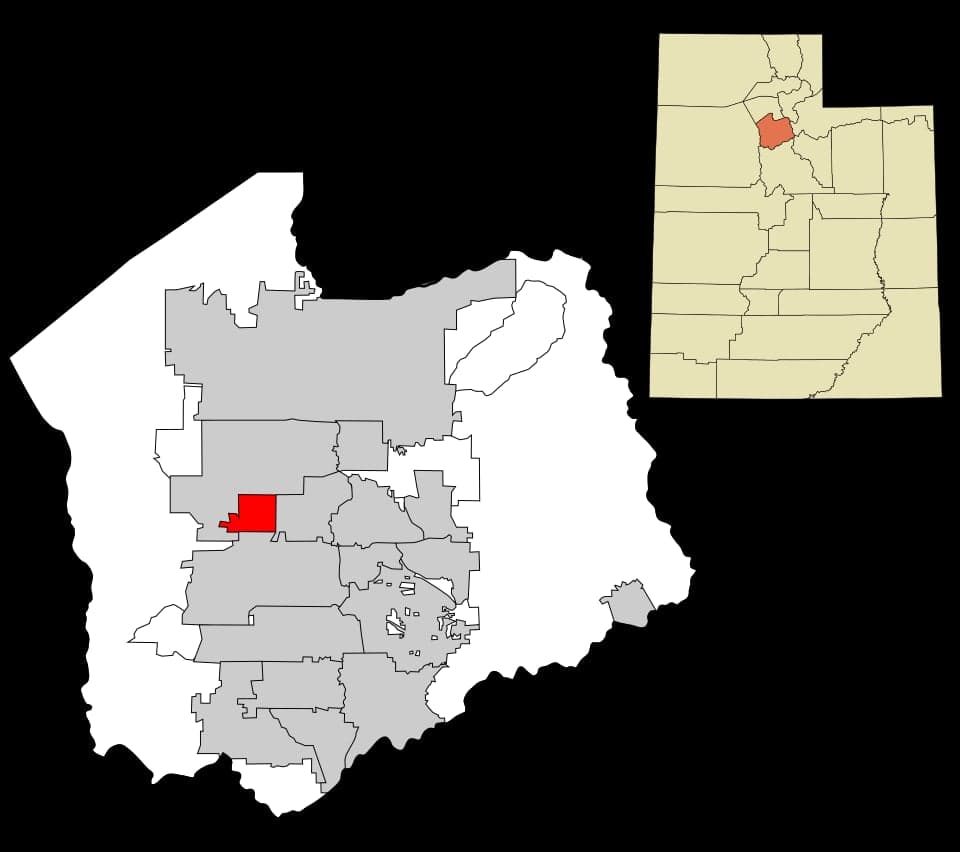
Kearns, Utah, is a densely populated, working-class suburb of Salt Lake City with a population of 37,058 that is nearly evenly split between a white plurality (47.4%) and a Hispanic majority-minority (41.0%). Its residents are notably less educated than state averages—only 12.7% hold a college degree—and the city carries a distinct blue-collar, family-oriented character shaped by its post-World War II origins and subsequent waves of domestic and international migration. The city’s identity is rooted in its history as a planned defense-worker community, and today it is one of the most ethnically diverse and politically moderate-to-conservative enclaves in Salt Lake County.
How the city was settled and grew
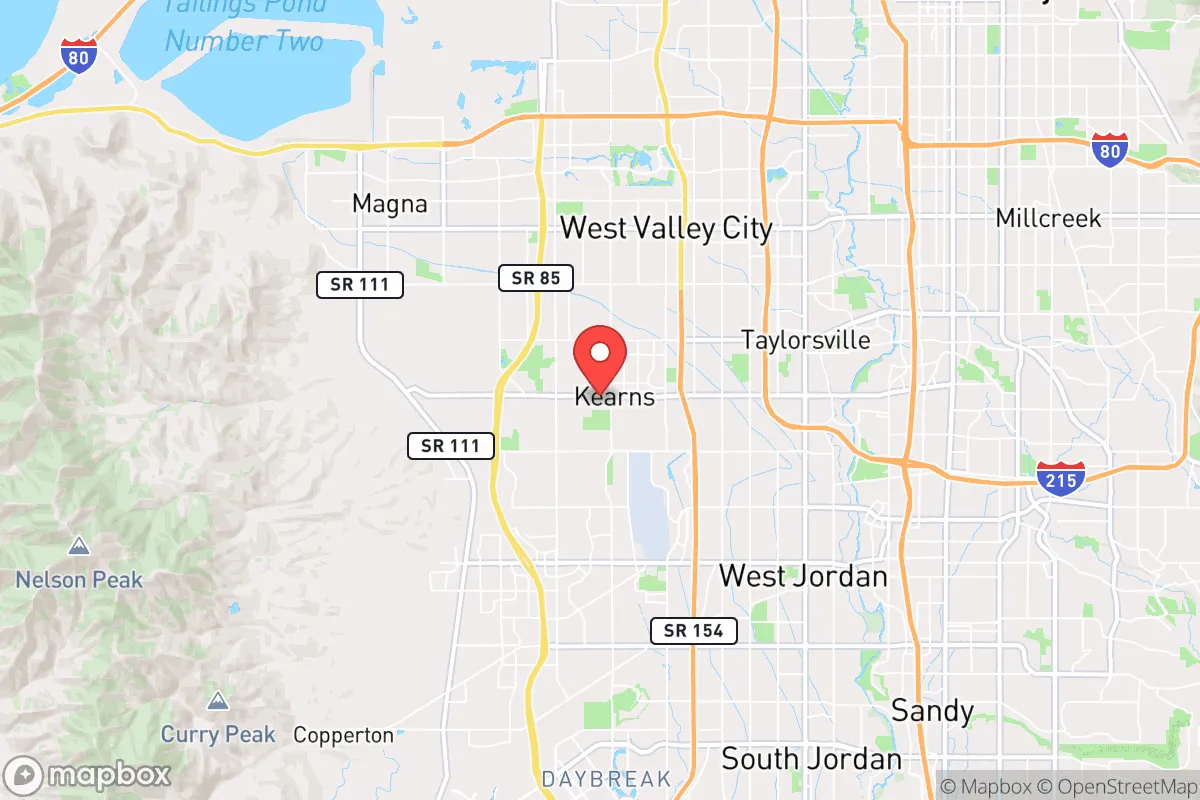
Kearns did not exist before 1942. It was built from scratch on former farmland west of Salt Lake City as a federal housing project to accommodate workers at the nearby Utah Army Depot and the Tooele Army Depot during World War II. The original population was overwhelmingly white, native-born, and drawn from rural Utah and the Intermountain West by steady defense-industry wages. The first wave of settlers moved into the Kearns Central neighborhood, a grid of modest wartime bungalows and duplexes laid out around 4700 South and 4800 West. After the war, many workers stayed, and the federal government sold the housing to private owners. The 1950s and 1960s saw a second wave of domestic in-migration—white families from the rural South and Midwest seeking affordable housing and construction jobs in the booming Salt Lake Valley. These families filled out the West Kearns and East Kearns subdivisions, which were built out with ranch-style homes and larger lots. By 1970, Kearns was a nearly all-white, blue-collar suburb of roughly 20,000 residents, with a strong Latter-day Saint (Mormon) cultural base and a reputation as a safe, affordable place to raise a family.
Modern era (post-1965)
The 1965 Hart-Cellar Act opened the door for new immigration streams, but Kearns saw little foreign-born growth until the 1980s. The major demographic shift began in the 1990s, when Hispanic families—primarily of Mexican and Central American origin—began moving into the aging wartime housing stock of Kearns Central and the adjacent South Kearns neighborhood, drawn by low home prices and proximity to construction and service-sector jobs in the Salt Lake Valley. By 2000, the Hispanic share had risen to roughly 20%, and by 2020 it had doubled to 41.0%. Today, the foreign-born population stands at 12.2%, a figure driven almost entirely by Latin American immigration. The white population, which was over 90% in 1980, has fallen to 47.4%. East/Southeast Asian communities (1.2%) and Black residents (2.5%) are small but present, concentrated in the Kearns Central and West Kearns neighborhoods. There is no measurable Indian-subcontinent population (0.0%). The city has not experienced significant Arab or Middle Eastern settlement. The result is a suburb that is essentially bi-ethnic—white and Hispanic—with little of the pan-Asian or South Asian diversity seen in nearby cities like West Valley City or Sandy.
The future
Kearns is likely to continue its trajectory toward a Hispanic-majority population within the next 10–15 years, driven by natural increase and continued migration from Latin America. The white population is aging and declining, while the Hispanic population is younger and has higher fertility rates. The city is not tribalizing into distinct ethnic enclaves—Hispanic and white families live side-by-side in most neighborhoods, particularly in Kearns Central and South Kearns—but socioeconomic stratification is emerging. The West Kearns area, with newer construction and larger homes, is attracting upwardly mobile Hispanic and white families, while the older wartime housing in Kearns Central is becoming more renter-heavy and lower-income. The college education rate (12.7%) is among the lowest in Salt Lake County, and without a major employer or university anchor, the city is unlikely to attract significant numbers of highly educated newcomers. The immigrant community is assimilating linguistically—English proficiency is high among second-generation residents—but the city remains culturally distinct, with a strong Catholic and evangelical presence alongside the historic LDS majority.
For a conservative-leaning individual or family moving to Kearns today, the city offers affordable housing, a strong sense of community, and a working-class ethos that prizes self-reliance and neighborliness. It is not a place of rapid gentrification or elite migration; it is a stable, slowly diversifying suburb where the dominant story is the gradual replacement of an older white population by a younger Hispanic one. The schools are improving but underfunded, and the crime rate is slightly above the county average but concentrated in property offenses. Kearns is becoming a more Hispanic, more working-class, and more family-oriented version of itself—a place where the American dream still means a house with a yard and a job within a 20-minute commute.

* Values derived from national, state, county, city and local statistics and may differ in a specific area. Last updated: 2026-05-09T23:45:00.000Z
Narrative content on this page is AI-generated and may contain mistakes. Verify any details that matter before acting on them.
ReloMaps may earn a commission from affiliate links at no extra cost to you.

