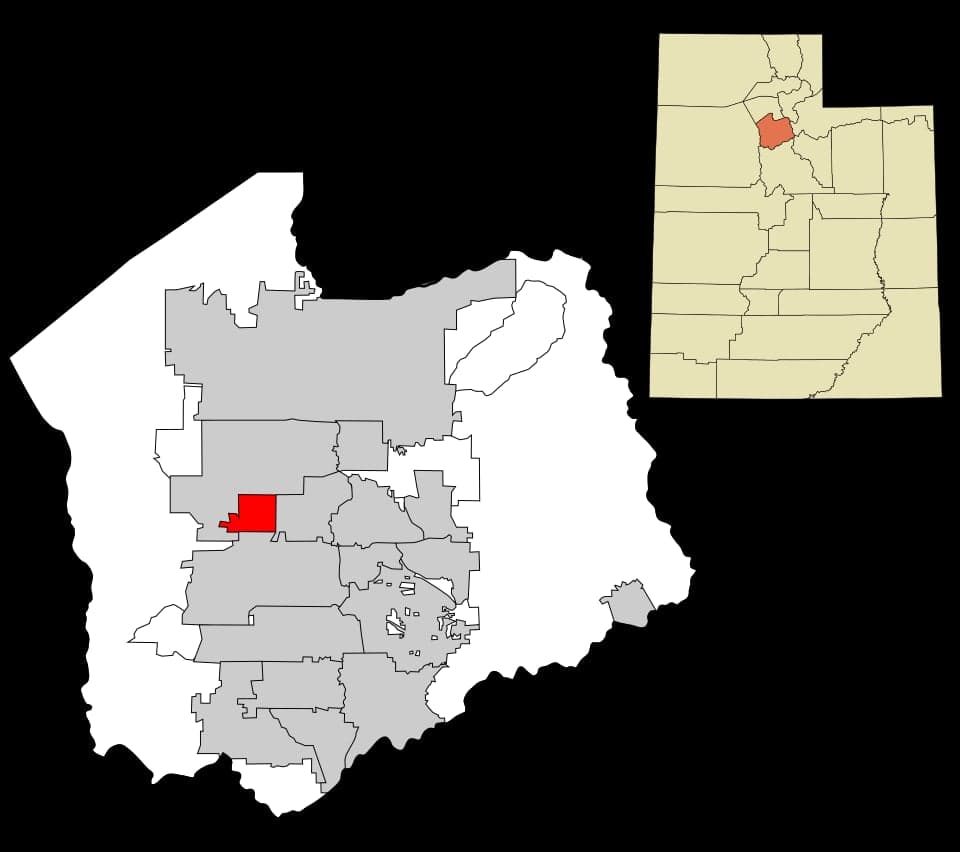
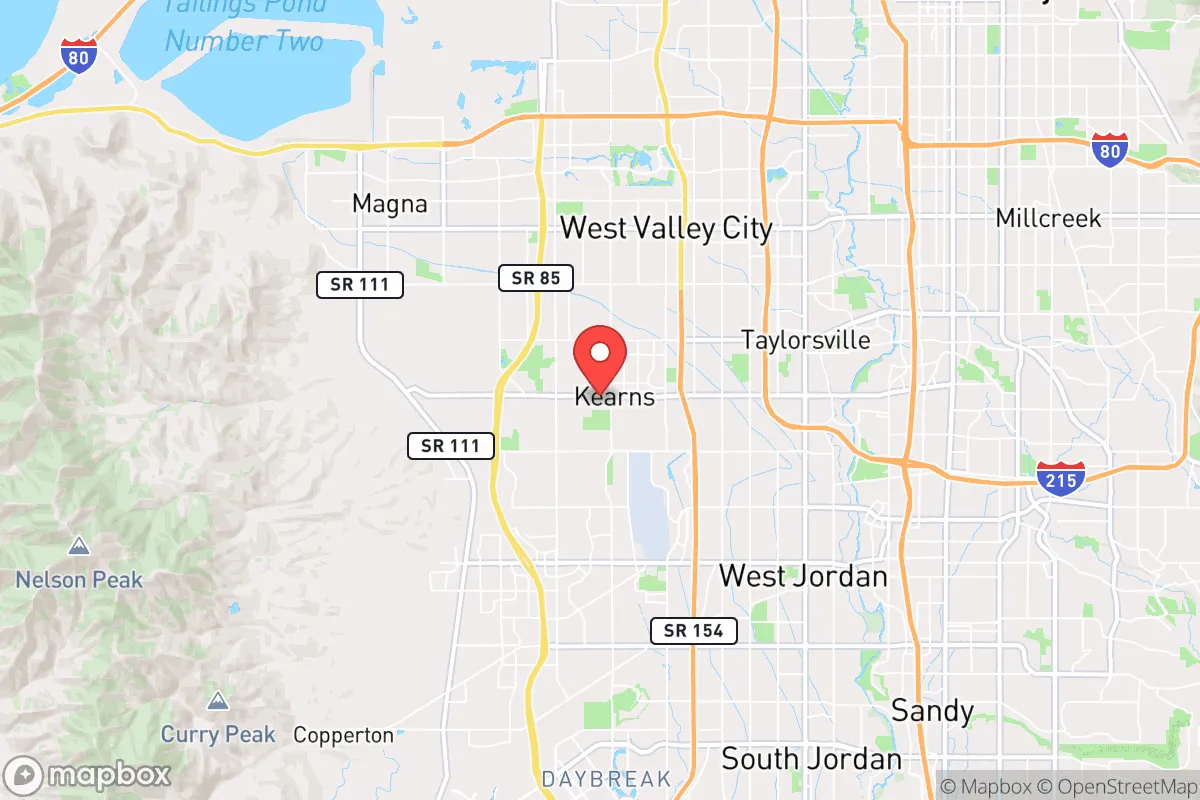
Photo: Wikipedia
Quality of Life in Kearns, UT
A high quality of life with strong walkability, manageable living costs, healthy neighborhood signals, and solid amenity access.
What does Quality of Life tell us?
Quality of Life blends cost of living, nearby amenities, socioeconomic signals, and neighborhood character. City-level scores represent the whole municipality; individual neighborhoods can differ.
What does this tell us?
Quality of Life blends cost of living, nearby amenities, socioeconomic signals, and neighborhood character. City-level scores represent the whole municipality; individual neighborhoods can differ.
Cost of Living
32% above national average
The Real Cost of Living in Kearns, UT for 2026
| Tier | Individual | Family (4) |
|---|---|---|
| Survival | $24k | $45k |
| Comfortable | $65k | $96k |
| Luxury | $100k+ | $154k+ |
| Elite (Top 5%) | $117k+ | $182k+ |
87%
The Area Signal
A metric tracking the socioeconomic signals of the area.
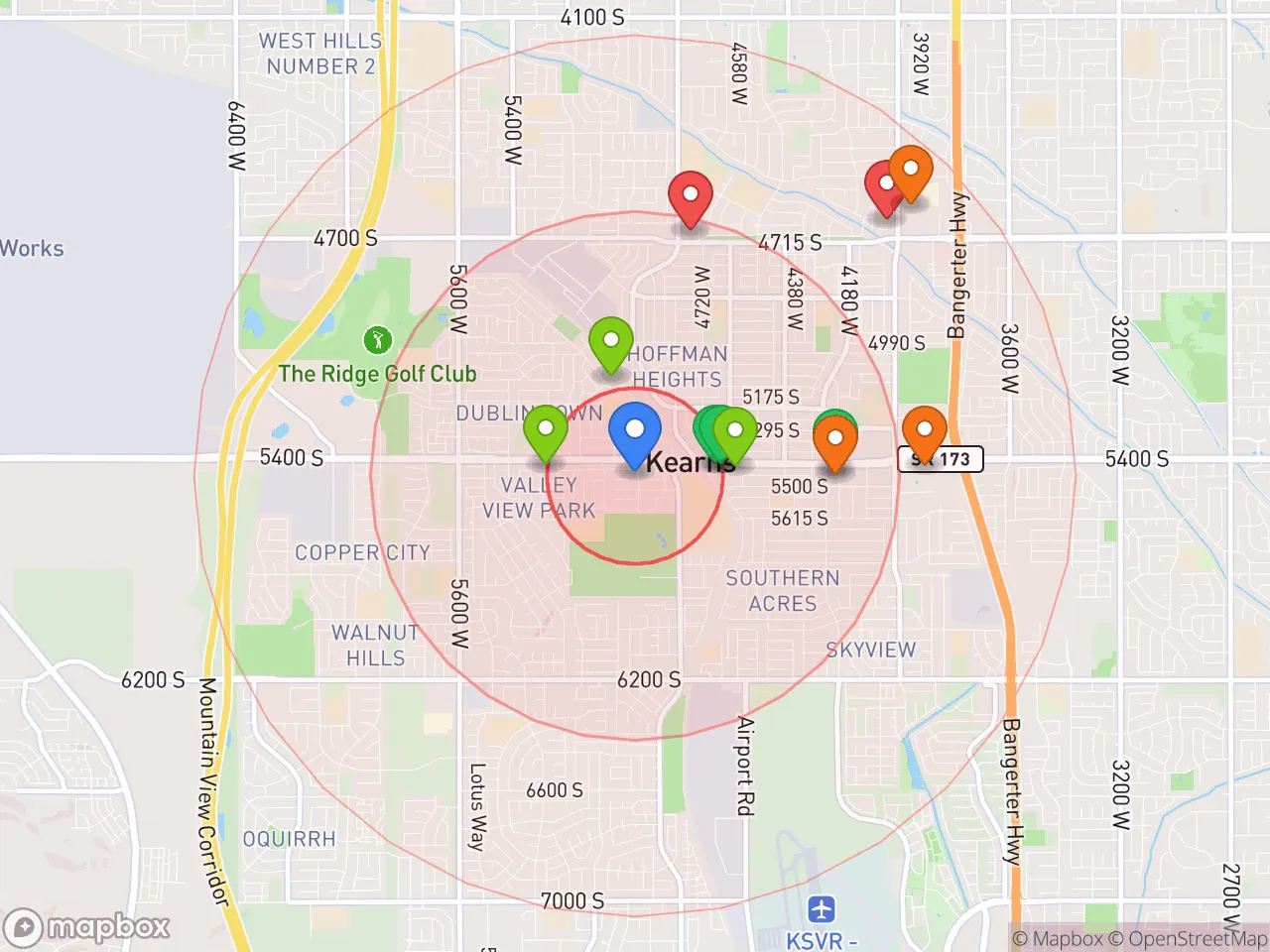
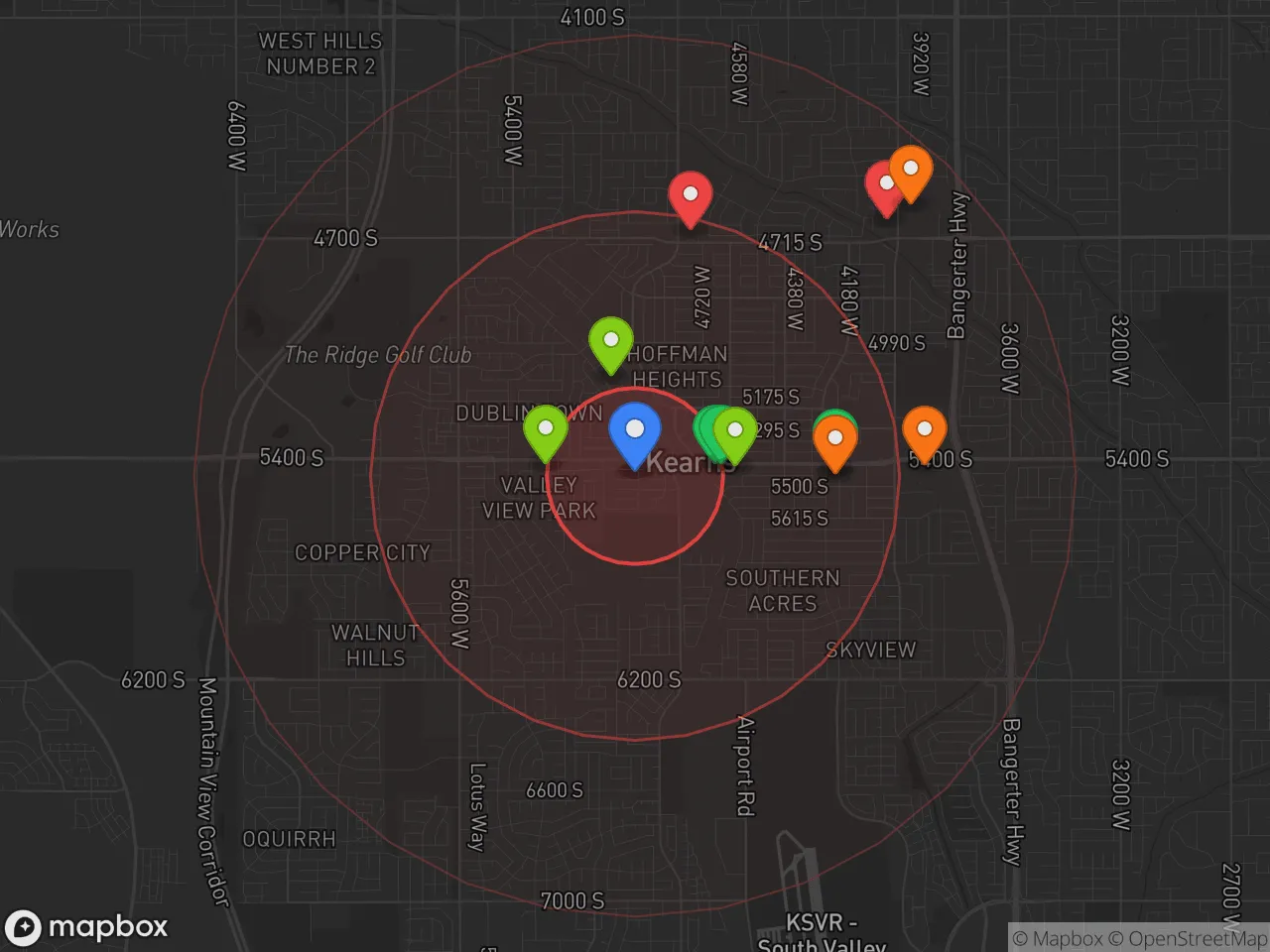
Hobbies
Explore the areaGroceries
5 within 10 miles
Gas
20 within 10 miles
Hospital
20 within 20 miles
Airport
SLC — Salt Lake City International
Post Office
USPS — Taylorsville, UT
Critical Amenities
Quality-of-Life Analysis
Kearns, Utah, presents a middle-ground quality of life within the Salt Lake City metro area, balancing a cost of living that is notably above the national average with home values that remain more attainable than in many neighboring suburbs. With a cost of living index of 132 (where 100 equals the U.S. average), residents pay a premium for the Wasatch Front lifestyle, yet the median home value of $334,400 and median rent of $1,644 undercut pricier enclaves like Park City or Holladay. The area attracts a mix of young families, long-time local homeowners, and commuters who work in Salt Lake City or the tech corridor stretching toward Lehi, drawn by a quieter, more established suburban feel than the rapidly expanding west-side developments.
How Kearns housing costs compare to Salt Lake City and West Valley
Kearns sits in a affordability sweet spot within the Salt Lake Valley. Its median home value of $334,400 is roughly $60,000 less than the Salt Lake City median and significantly undercuts the $500,000+ averages seen in Cottonwood Heights or Sandy. Renters also find relative value: the median rent of $1,644 is about $200–$300 cheaper per month than comparable units in downtown Salt Lake or the burgeoning Daybreak community in South Jordan. However, the overall cost of living index of 132 means everyday expenses—groceries, utilities, transportation—run about a third higher than the national norm. The average commute of 24.6 minutes is manageable by metro standards, with most residents driving I-215 or Bangerter Highway to reach jobs in Salt Lake City (15–20 minutes) or the Silicon Slopes tech hub (25–35 minutes). Property taxes in Salt Lake County hover around 0.6% of assessed value, keeping annual tax bills on a median-priced home near $2,000—lower than in many U.S. metros but higher than in neighboring Tooele County.
Parks, schools, and the daily rhythm of Kearns life
Daily life in Kearns revolves around its well-used parks system and the Kearns Recreation Center, which offers a pool, gym, and sports leagues for all ages. The Granite School District serves the area, with Kearns High School and Thomas Jefferson Junior High as the main public options; both have graduation rates near the state average of 88% but face challenges with chronic absenteeism. For families, the Oquirrh Mountain foothills provide immediate hiking and biking access, while the Jordan River Trail is a 10-minute drive east. Retail is concentrated along 5400 South and 4000 West, anchored by a Walmart Supercenter, Smith’s grocery, and local eateries like Kearns Oyster Bar (a community staple since 1971). The area lacks a dedicated downtown or nightlife district—most entertainment and dining require a 15-minute drive to West Valley City’s Maverik Center or downtown Salt Lake. The vibe is distinctly suburban: quiet streets, older ranch-style homes mixed with newer infill construction, and a strong sense of community visible in events like the Kearns Fourth of July parade and the Kearns Community Council meetings.
Kearns is best suited for budget-conscious families and long-term renters who prioritize a stable, middle-class suburb over urban amenities or prestige school districts. The combination of below-average home prices for the valley, a reasonable commute, and solid park infrastructure makes it a practical choice for those who work in Salt Lake City or the tech corridor but cannot afford the $500,000+ entry points of more affluent suburbs. Singles and young professionals may find the social scene limited, while retirees on fixed incomes should weigh the 32% cost-of-living premium against the area’s lower housing costs. For anyone seeking an unpretentious, family-oriented base with access to the Wasatch Front’s outdoor and job opportunities, Kearns delivers a functional, if not flashy, quality of life.

Crime in Kearns, UT
Generally safer than 67% of comparable U.S. locations.
Violent CrimeViolent Crime Analysis
Property CrimeProperty Crime Analysis
Crime Analysis
Kearns, Utah, presents a mixed safety profile for prospective residents. The unincorporated township in Salt Lake County reports a violent crime rate of 215.9 incidents per 100,000 people and a property crime rate of 1,267.7 per 100,000. While these figures place Kearns below the national average for violent crime, they are notably higher than the state of Utah's overall rates, and the property crime figure warrants careful consideration, particularly given the broader context of Salt Lake County's justice system.
Crime in context
To understand Kearns' safety, it is essential to compare its statistics against broader benchmarks. The national violent crime rate stands at approximately 380 per 100,000, meaning Kearns' rate of 215.9 is about 43% lower. However, Utah's statewide violent crime rate is roughly 240 per 100,000, making Kearns slightly safer than the state average. The picture shifts with property crime. Kearns' rate of 1,267.7 per 100,000 is significantly higher than the national average of about 1,954 per 100,000, but it is substantially above Utah's statewide property crime rate of roughly 1,100 per 100,000. This elevated property crime rate is a key concern, especially as it occurs within Salt Lake County, a large metro area where progressive judicial policies are a factor. The presence of liberal district attorneys and judges who prioritize offender rehabilitation over incarceration can lead to higher recidivism and more criminals on the street, directly impacting public safety and victim justice. Residents should be aware that this ideological approach in the justice system may contribute to a less secure environment than raw numbers alone suggest.
What residents experience
Daily life in Kearns is shaped by the tangible risk of property crime. Residents commonly report vehicle break-ins, package theft, and burglaries from sheds and garages. The community's proximity to major transit corridors like I-215 and Bangerter Highway makes it accessible, but also facilitates quick getaways for criminals. While violent crime is less frequent, it is not absent; incidents of assault and robbery do occur, often concentrated in specific areas. The overall feeling of safety varies by neighborhood and time of day, with many residents taking standard suburban precautions like locking vehicles and installing security cameras. The progressive judicial environment in Salt Lake County means that even when perpetrators are caught, they may face minimal consequences, further eroding the deterrent effect and frustrating victims.
Neighborhood-level variation within Kearns is notable. Areas closer to the commercial corridors along 5400 South and 4800 West tend to experience higher rates of property crime, while the more established residential blocks south of 5400 South and east of 4800 West are generally quieter. The unincorporated status of Kearns means it lacks its own police department, relying on the Salt Lake County Sheriff's Office for law enforcement. This can result in slower response times compared to incorporated cities with dedicated police forces. Prospective residents should research specific blocks, talk to neighbors, and consider that the overall safety picture is one of moderate risk, heavily influenced by the county's lenient criminal justice policies.
* Values derived from national, state, county, city and local statistics and may differ in a specific area. Last updated: 2026-05-09T23:45:00.000Z
Narrative content on this page is AI-generated and may contain mistakes. Verify any details that matter before acting on them.
ReloMaps may earn a commission from affiliate links at no extra cost to you.

