Photo: Wikipedia
Political ClimatePolitical Climate in Kearns, UT
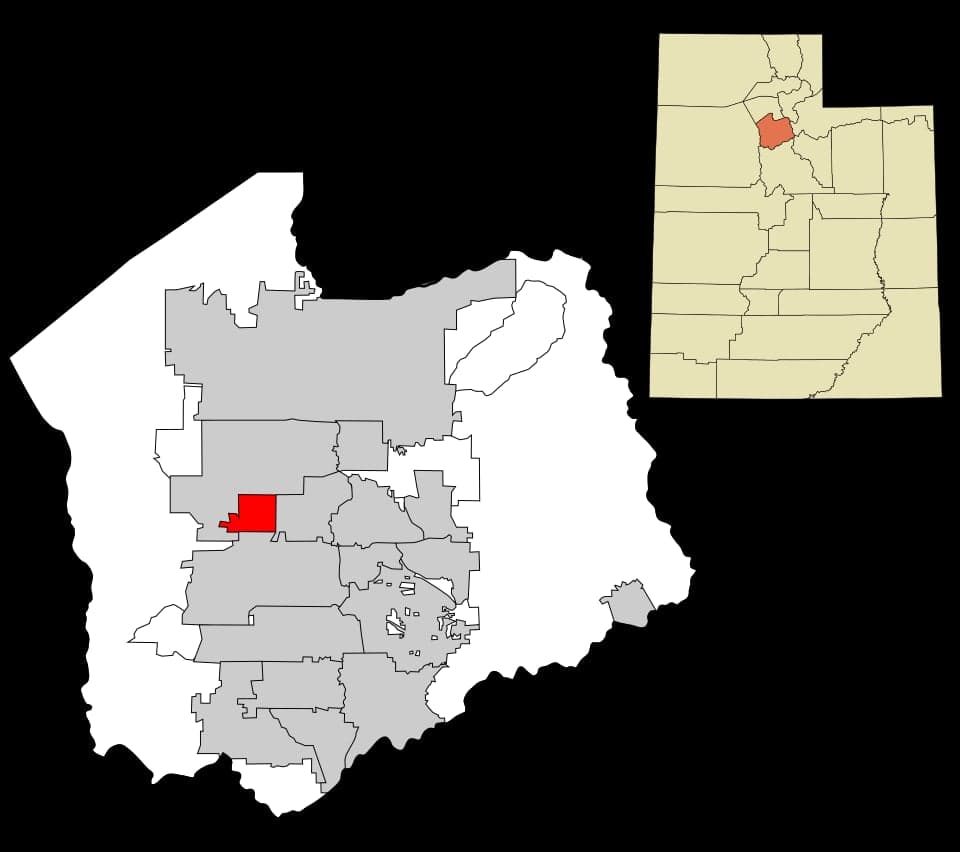
District shown is the primary district for this city’s centroid. Cities may span multiple districts.
Local Political AnalysisPolitical Analysis of Kearns, UT
Kearns, Utah, has long been a solidly conservative community, but it’s not as deep red as some of the more rural or affluent parts of the state. You’ll find a lot of working-class families here who value self-reliance and don’t appreciate the government poking its nose into their business. The surrounding state of Utah carries a Cook PVI of R+11, which tells you the baseline is strongly Republican, but Kearns itself has seen some subtle shifts in recent years that are worth keeping an eye on. While it still leans right, the area is becoming a bit more of a battleground between traditional conservative values and the creeping influence of progressive policies coming out of Salt Lake City and the county seat.
How it compares
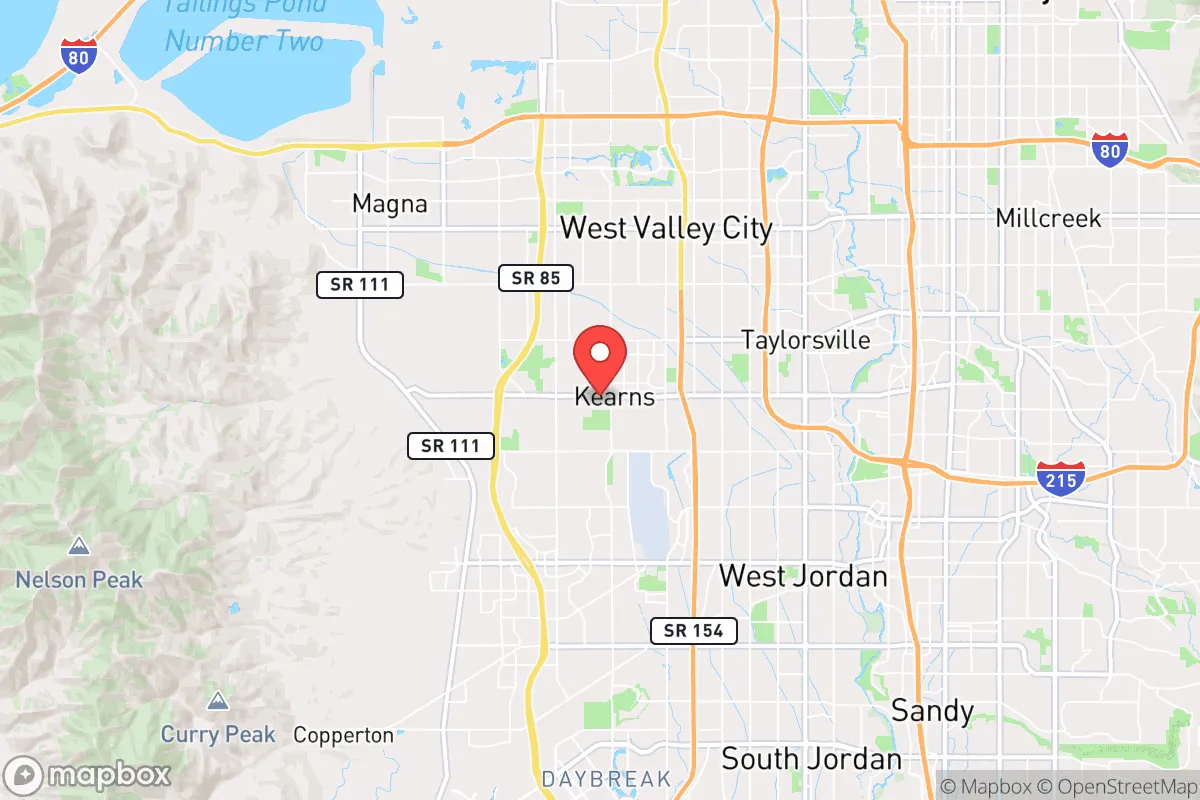
Compared to the rest of Utah, Kearns is a bit of a mixed bag. Places like West Jordan and Taylorsville to the north and east have seen more of a push toward moderate or even left-leaning candidates in local races, especially on issues like zoning and school board decisions. In contrast, Magna to the west and Herriman to the south remain more reliably conservative, with a stronger emphasis on gun rights and limited government. Kearns sits right in the middle—it’s not as reliably red as the rural counties, but it’s also not as blue as some of the Salt Lake City suburbs. The real concern for folks here is that the county-level government, which has been trending more progressive in recent years, is starting to push policies that feel like overreach, like stricter land-use regulations and higher property taxes that don’t seem to come with any real improvement in services.
What this means for residents
For the average resident, this political climate means you have to stay vigilant. The local school board and city council races are where the rubber meets the road, and they’ve become battlegrounds for issues like curriculum transparency and parental rights. If you value your Second Amendment rights or don’t want the government dictating how you run your small business, you’ll find that Kearns still offers a relatively friendly environment, but it’s not immune to the broader trends. The Kearns Metro Township council has historically been conservative, but recent elections have seen more candidates pushing for things like “equity” initiatives and climate action plans that sound good on paper but often lead to more bureaucracy and less personal freedom. Long-time residents will tell you that the community used to be much more hands-off, and the shift toward government involvement in daily life is a real red flag.
One of the biggest cultural distinctions in Kearns is its strong sense of community self-reliance, which is a direct contrast to the more urbanized, policy-heavy approach you see in places like Salt Lake City or Murray. People here still help their neighbors without waiting for a government program to do it. The local Kearns Oquirrh Park and the Kearns Library are community hubs where you see that spirit in action. Looking ahead, the trend is concerning: if the county continues to push progressive policies on housing density and tax increases, you could see Kearns lose its character and become just another cookie-cutter suburb where the government tells you what you can and can’t do with your property. For now, it’s still a place where a conservative, live-and-let-live attitude holds strong, but it’s a fight that requires active participation to keep it that way.

State Political ClimatePolitical Climate in Utah
State Political AnalysisPolitical Environment in the State
Utah is a deeply Republican state with a Cook PVI of R+11, but don’t let that single number fool you into thinking it’s a monolith. The dominant coalition is a mix of conservative Latter-day Saint (Mormon) cultural influence, a growing libertarian-leaning tech sector, and a small but vocal progressive urban core. Over the last 10-20 years, the state has shifted from a reliably red, church-aligned voting bloc to a more complex landscape where the Wasatch Front’s explosive growth is slowly diluting the old guard’s power, while rural counties have only hardened their conservative stance. If you’re looking for a place where government stays out of your business and your wallet, Utah still delivers—but the cracks are starting to show.
Urban vs. rural divide
The political map of Utah is a tale of two valleys. The Wasatch Front—Salt Lake City, Provo, and Ogden—is where the action is. Salt Lake County, home to over a million people, has been trending purple for a decade. In 2020, Joe Biden won Salt Lake County by 11 points, a massive shift from 2012 when Mitt Romney carried it by 12. That’s a 23-point swing in eight years, driven by an influx of out-of-state transplants, younger voters, and a growing non-Mormon population. Provo and Utah County, by contrast, remain deeply red—Trump won Utah County by 30 points in 2020—but even there, the tech boom in Lehi and American Fork is bringing in a more moderate, fiscally conservative but socially libertarian crowd. Head east or south to St. George, Cedar City, or Moab, and you’re in solid Trump country. Rural counties like Daggett, Piute, and Wayne routinely vote 80-90% Republican. The divide isn’t just urban vs. rural—it’s Wasatch Front vs. everything else, with the former becoming a battleground and the latter holding the line.
Policy environment
Utah’s policy environment is a mixed bag for a conservative. On taxes, it’s a winner: a flat 4.85% income tax and a 6.1% state sales tax, with no inheritance tax and a homestead exemption that keeps property taxes low. The regulatory posture is generally business-friendly, with right-to-work laws and a 2023 law that preempted local zoning restrictions on housing development—a nod to free-market principles. Education policy is a flashpoint: the state passed a universal school choice voucher program in 2023, but it was quickly repealed by a voter referendum in 2024, a rare loss for the conservative legislature. Healthcare is a mixed bag—Utah expanded Medicaid under the Affordable Care Act in 2019, a pragmatic move that rankled some libertarians but kept rural hospitals afloat. Election laws are solid: voter ID is required, no-excuse mail-in voting is the norm (which conservatives have mixed feelings about), and the legislature passed a 2021 law banning private funding of elections, a direct response to Zuckerberg’s 2020 grants. On the whole, the state leans small-government, but the LDS Church’s influence still pushes for a more communitarian, “we know what’s best” approach on social issues.
Trajectory & freedom
Utah is becoming more free in some areas and less free in others, and the trend lines are worth watching. On the plus side, gun rights are strong: constitutional carry passed in 2021, and the state has a preemption law that blocks local gun control ordinances. Parental rights got a boost with the 2023 “Utah Parental Rights in Education” law, which requires schools to notify parents if a child requests a name or pronoun change—a direct counter to the woke school board agenda. Medical autonomy took a hit, though: the 2023 ban on gender-affirming care for minors (SB 16) was a win for traditional values, but it also expanded government power over medical decisions, which should give any freedom-loving person pause. Property rights are generally respected, but the state’s rapid growth has led to increased eminent domain fights, particularly around the Point of the Mountain development zone. The biggest red flag is the creeping influence of the LDS Church on legislation—laws like the 2020 “Common Sense Consumption” bill that restricted alcohol sales in grocery stores are a reminder that Utah’s freedom is often conditional on moral conformity.
Civil unrest & political movements
Utah is not a hotbed of civil unrest, but it has its flashpoints. The most visible movement in recent years has been the “Utah Parents United” coalition, which mobilized against mask mandates and critical race theory in schools during the pandemic. These groups are still active, now focused on school board races and library book challenges—expect to see them at every local meeting. On the left, the “Utah Rising” movement has pushed for Medicaid expansion and environmental protections, but it’s small and mostly confined to Salt Lake City. Immigration politics are relatively calm—Utah was one of the first states to pass a “compact” approach to immigration reform in 2011, but that’s been largely superseded by federal enforcement. There’s no sanctuary city movement to speak of; even Salt Lake City’s “welcoming city” resolution is toothless. Election integrity controversies have been minimal, though the 2024 referendum on school vouchers saw accusations of out-of-state dark money on both sides. The biggest protest in recent memory was the 2020 “Black Lives Matter” march in Salt Lake City, which drew thousands but fizzled quickly. A new resident would notice the lack of visible political tension—Utahns are polite, even when they disagree—but the undercurrent is real, especially in the suburbs of Sandy and Draper, where school board meetings can get heated.
Projection
Over the next 5-10 years, Utah is on a trajectory toward more political fragmentation. The in-migration from California, Washington, and Colorado is accelerating—Utah added over 500,000 people between 2010 and 2020, and the pace hasn’t slowed. These newcomers are often fiscally conservative but socially moderate, and they’re settling in Salt Lake City, Lehi, and Park City. That will continue to push the Wasatch Front leftward, while rural counties double down on Trumpism. The LDS Church’s influence is slowly waning as the state becomes more diverse—by 2030, non-Mormons may outnumber Mormons in Salt Lake County. Expect more fights over school choice, housing deregulation, and water rights (the Great Salt Lake’s decline is a ticking time bomb). The legislature will remain Republican, but the margin will shrink, and the party will split between the old guard (pro-business, pro-church) and a new libertarian wing (pro-gun, anti-tax, anti-government overreach). If you’re moving in now, expect to find a state that’s still conservative by national standards, but where the definition of “conservative” is up for grabs.
Bottom line for a new resident: Utah is a great place to live if you value low taxes, strong gun rights, and a culture of personal responsibility. But don’t expect a libertarian paradise—the state still has a paternalistic streak, especially on alcohol, education, and medical decisions. The urban-rural divide is real, and the Wasatch Front is becoming a purple battleground. If you want to avoid the culture wars, stick to the smaller towns like St. George or Logan. If you want to be where the fight for freedom is happening, Lehi and American Fork are the new frontier. Just keep an eye on the legislature—they’re still too comfortable telling you how to live your life.
* Values derived from national, state, county, city and local statistics and may differ in a specific area. Last updated: 2026-05-09T23:45:00.000Z
Narrative content on this page is AI-generated and may contain mistakes. Verify any details that matter before acting on them.
ReloMaps may earn a commission from affiliate links at no extra cost to you.

