
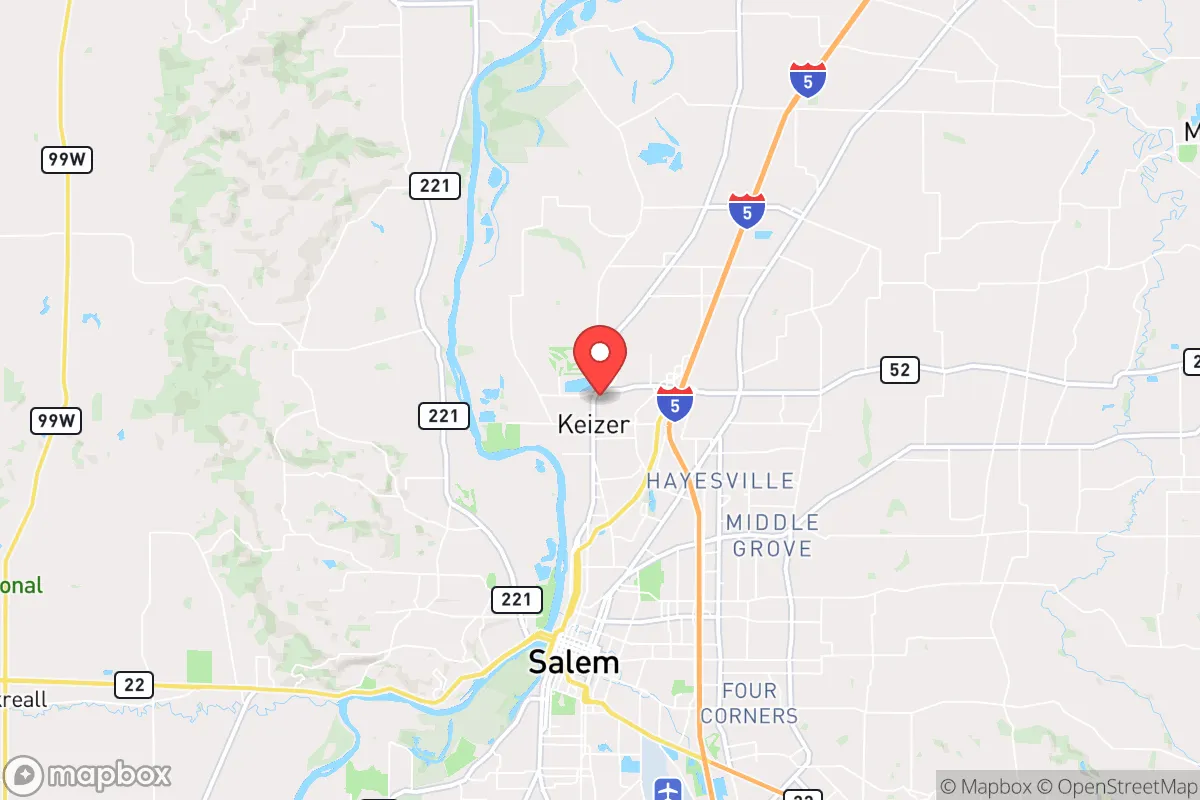
Photo: Wikipedia
Personal Sovereignty in Keizer, OR
Viable for self-reliance. Generally workable, though some barriers may limit total independence.
What does Personal Sovereignty tell us?
Personal Sovereignty measures your capacity for self-reliance and independence with minimal government friction. Higher scores mean fewer barriers between you and the way you want to live... but it assumes you have the space you need and good neighbors.
What does this tell us?
Personal Sovereignty measures your capacity for self-reliance and independence with minimal government friction. Higher scores mean fewer barriers between you and the way you want to live... but it assumes you have the space you need and good neighbors.
State Policy
Energy independence: Importer (35% of energy produced in-state)
Personal Liberty
Homesteading

Personal Liberty Analysis
For the liberty-minded individual or family evaluating Keizer, Oregon, personal sovereignty is a mixed bag defined by a tension between a relatively permissive local culture and an increasingly assertive state government in Salem. While the city itself offers a quieter, more self-directed lifestyle than nearby Portland, residents must contend with Oregon’s broader regulatory environment, which has steadily encroached on property rights, self-defense choices, and parental autonomy. The bottom line: Keizer provides a decent baseline for self-reliance, but you will need to be proactive—and legally savvy—to preserve your freedoms here.
Tax burden and regulatory posture in Oregon’s Willamette Valley
Oregon’s tax structure is a significant consideration for anyone prioritizing financial sovereignty. The state has no sales tax, which is a clear win for controlling your spending and purchasing power. However, this is offset by a progressive income tax that tops out at 9.9% on high earners, and property taxes in Marion County (where Keizer sits) average around 1.0% of assessed value—moderate by national standards but not cheap. The real sovereignty hit comes from regulatory overreach. Oregon’s land-use laws, governed by statewide planning goals, severely restrict what you can do with your property. In Keizer, residential zones typically prohibit most home-based businesses, livestock, or accessory dwelling units without lengthy permitting processes. The state’s 2021 ban on natural gas in new construction (though currently challenged) signals a trend toward dictating energy choices. For the prepper, this means you cannot simply buy a lot and build a self-sufficient compound; you must navigate a thicket of zoning codes and environmental regulations that prioritize government planning over individual initiative.
Self-defense and gun law specifics in Keizer and Oregon
On firearms, Oregon presents a stark contrast between local sentiment and state law. Keizer itself is a relatively gun-friendly community, with a strong hunting and sport-shooting culture in the surrounding Marion County. However, the state legislature has been aggressively restricting Second Amendment rights. Measure 114, passed in 2022 but currently tied up in court, would require a permit to purchase any firearm, a mandatory background check for all transfers, and a ban on magazines holding more than ten rounds. Even if the measure is struck down, the political pressure is clear. Open carry is legal without a permit, but concealed carry requires a license issued by the county sheriff—a process that is generally straightforward in Marion County but could become more restrictive. For the survivalist, the key takeaway is that Oregon’s gun laws are in flux and trending negatively. You can still own and carry, but you must stay informed and be prepared to fight legal battles or relocate if the state continues its trajectory. The local sheriff’s office in Keizer is generally supportive of gun rights, but they are bound by state law.
Self-reliance and homesteading viability: lot sizes, zoning, and off-grid feasibility
True self-reliance in Keizer is challenging due to urban zoning and lot sizes. The typical residential lot in the city is one-quarter to one-third of an acre, which severely limits gardening, rainwater catchment, or keeping chickens (though chickens are allowed with restrictions). Off-grid living is effectively illegal within city limits: you must connect to municipal water and sewer, and solar panels require permits and grid-tie agreements. The state’s building codes are strict, and Oregon’s “Right to Repair” laws do not extend to off-grid systems—you cannot simply disconnect from the grid. For serious homesteading, you would need to look outside Keizer, into unincorporated Marion County, where lot sizes of 1-5 acres are more common and zoning is less restrictive. Even there, however, you face state-level hurdles: water rights are tightly controlled, and building a “tiny house” or alternative dwelling requires meeting the same code as a standard home. The prepper mindset must accept that Keizer is a base of operations, not a self-sufficient retreat. You can supplement with a large garden and solar backup, but full independence requires rural land outside the urban growth boundary.
Personal liberties: parental rights, medical autonomy, speech, and property
This is where Oregon’s progressive tilt most directly impacts sovereignty. Parental rights have been weakened by state laws that allow minors to consent to certain medical procedures (including reproductive care and gender-affirming treatment) without parental notification. This is a major red flag for conservative parents. Medical autonomy is also constrained: Oregon has a vaccine mandate for school attendance (though religious and medical exemptions exist), and the state’s public health authority has broad powers to impose restrictions during emergencies—powers that were used aggressively during COVID-19. Free speech is protected by the Oregon Constitution, which is actually stronger than the First Amendment in some areas (e.g., it protects speech in “any place” open to the public), but local governments have attempted to regulate political signs and public gatherings. Property rights are the weakest link: Oregon’s land-use system, combined with environmental regulations like the Endangered Species Act (which affects timber and water use), means you do not have full control over your land. The state can restrict what you build, how you use water, and even what trees you can cut. For the liberty-minded, this is a slow erosion of the most fundamental right—control over your own property.
In the broader Pacific Northwest context, Keizer offers a moderate level of personal sovereignty compared to Portland or Eugene, but it falls short of Idaho or Eastern Oregon. The city’s local government is less intrusive than the state’s, and the community is generally respectful of individual choices. However, the state-level trend is unmistakable: higher taxes, tighter gun control, weaker parental rights, and more regulatory control over property. For the survivalist or prepper, Keizer is a viable location only if you are willing to engage in constant vigilance, join local advocacy groups, and potentially prepare for a future where you may need to move to a more liberty-friendly jurisdiction. It is not a haven, but it is not a lost cause either—it is a place where you can live your life largely as you see fit, provided you stay within the lines the state has drawn.

* Values derived from national, state, county, city and local statistics and may differ in a specific area. Last updated: 2026-05-17T23:02:40.000Z
Narrative content on this page is AI-generated and may contain mistakes. Verify any details that matter before acting on them.
ReloMaps may earn a commission from affiliate links at no extra cost to you.

