Photo: Wikipedia
Political ClimatePolitical Climate in Keizer, OR
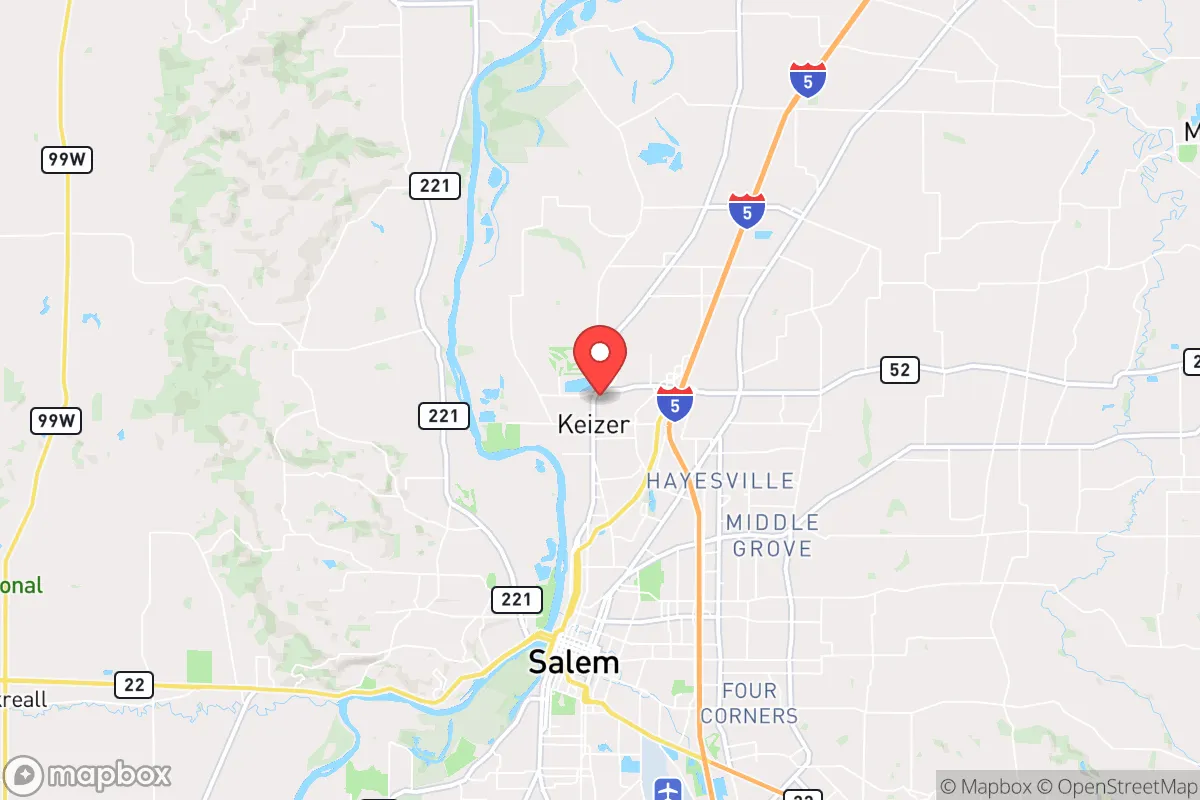
District shown is the primary district for this city’s centroid. Cities may span multiple districts.
Local Political AnalysisPolitical Analysis of Keizer, OR
Keizer, Oregon, sits in a bit of a political pocket that’s more conservative than you’d expect for a state that’s gone deep blue. The Cook PVI here is D+6, which is a couple of points less progressive than the statewide D+8, and that gap has been widening as the state legislature in Salem pushes further left. Locally, you’ll still find a lot of folks who remember when Keizer was a small farming community, and that independent, live-and-let-live attitude hasn’t fully faded—but it’s under pressure. The last few election cycles have shown the city trending slightly more Democratic, but it’s still a place where a Republican candidate can win a precinct or two, especially in the older neighborhoods near the river. The real story is how much the surrounding areas—like Salem to the south and Portland to the north—have shifted, and Keizer is feeling that pull.
How it compares
Compared to Oregon as a whole, Keizer is a bit of a political island. The statewide PVI of D+8 means Oregon is reliably blue in presidential elections, but Keizer’s D+6 shows it’s slightly more competitive. Drive ten minutes south into Salem, and you’re in a city that’s been trending hard left, with city council races often dominated by progressive candidates who push policies like rent control and sanctuary city status. Head north to Woodburn or east to Silverton, and you’ll find communities that lean more conservative than Keizer, with Silverton being a notable red dot in Marion County. Keizer sits right in the middle, and that’s where the tension comes from. The state government in Salem has been passing laws on land use, gun rights, and energy mandates that feel like they’re written for Portland, not for a mid-sized Willamette Valley town. A lot of longtime residents I know feel like their votes don’t matter much in statewide races, but they still show up for local school board and city council elections, trying to keep the balance from tipping too far.
What this means for residents
For someone living in Keizer, the political climate means you’re constantly watching your back. The state legislature has a habit of passing laws that preempt local control—things like mandatory housing density increases and restrictions on short-term rentals—that override what the city council might want. There’s a growing sense that Salem doesn’t listen to Keizer, and that’s led to a quiet but persistent resistance. You see it in the number of “Keep Oregon Free” signs in yards, and in the local chatter about property taxes and school funding. The shift toward progressive ideology is concerning because it often comes with more regulations on small businesses, higher energy costs from the cap-and-trade programs, and a general feeling that personal freedoms—like choosing your own healthcare or how to use your land—are being chipped away. Keizer’s not Portland yet, but the trajectory is worth watching, especially if you value local decision-making over state mandates.
One thing that sets Keizer apart culturally is its strong sense of community identity that pushes back against the state’s progressive tide. The annual KeizerFEST parade and the local volunteer fire department are still big deals here, and they’re run by people who’ve lived here for decades. You won’t find the same level of activism you see in Salem or Portland—no big protests, no constant political signage. Instead, it’s more of a quiet, practical conservatism: people want good schools, safe streets, and to be left alone. The policy distinctions that matter most are around land use and local governance. Keizer has fought to keep its own zoning rules, and there’s a real wariness of state-level housing mandates that could change the character of the town. If you’re moving here, expect a place where neighbors know each other and politics is more about what happens at the city council meeting than what’s trending on social media. But keep an eye on Salem—what happens there will shape Keizer’s future, and not always in ways the locals want.

State Political ClimatePolitical Climate in Oregon
State Political AnalysisPolitical Environment in the State
Oregon has a Cook PVI of D+8, making it a reliably Democratic state at the presidential level, but that number hides a deeply fractured political landscape. The state hasn't voted for a Republican presidential candidate since 1984, yet the legislature and governor's mansion have seesawed between parties for decades, with Democrats now holding a trifecta. Over the last 20 years, the urban corridor from Portland through Salem to Eugene has pulled the state hard left, while the rest of Oregon—east of the Cascades and much of the southern coast—has grown more conservative and resentful of Portland's dominance. If you're looking at Oregon, you're looking at a state where your experience of "freedom" depends entirely on which county you land in.
Urban vs. rural divide
The political map of Oregon is a tale of two states. The Portland metro area—Multnomah, Washington, and Clackamas counties—generates roughly half the state's population and votes overwhelmingly Democratic. Multnomah County alone gave Biden 78% of the vote in 2020. Salem (Marion County) and Eugene (Lane County) are also reliably blue, though Lane has a notable libertarian streak. Drive east over the Cascade Range, and you hit a wall of red. Deschutes County (Bend) was once a Republican stronghold but has flipped to a purple swing county as Californians and Portland refugees move in—Bend voted for Biden by just 2 points in 2020. Further east, places like Baker City, Pendleton, and Klamath Falls are deep red, often voting 70%+ Republican. The southern Oregon coast, including Coos Bay and Brookings, leans conservative, while the Willamette Valley's smaller towns like McMinnville and Newberg are mixed but trending left. The urban-rural divide is so stark that the Greater Idaho movement—which proposes moving 13 eastern Oregon counties into Idaho—has gained serious traction, with several counties voting on it in recent elections.
Policy environment
Oregon's policy environment is a mixed bag that leans heavily progressive at the state level. There is no state sales tax, which sounds great, but property taxes are moderate and income taxes are among the highest in the nation—top marginal rate hits 9.9%. The state has a strict land-use planning system that limits development and drives up housing costs, especially in the Willamette Valley. Education policy is dominated by the teachers' unions; Oregon ranks near the bottom nationally in graduation rates despite above-average per-pupil spending. Healthcare is heavily regulated, with a state-run insurance exchange and Medicaid expansion under the Affordable Care Act. Election laws are among the most progressive: Oregon was the first state to vote entirely by mail (1998), and it now has automatic voter registration, same-day registration, and no voter ID requirement. This makes voting easy but raises concerns about election integrity among conservatives. The state also has a "sanctuary" law (ORS 181A.820) that prohibits state and local law enforcement from using resources to enforce federal immigration law, a policy that has been in place since 1987.
Trajectory & freedom
Oregon has been on a clear trajectory toward less personal freedom over the last decade, particularly in areas of property rights, parental rights, and gun rights. In 2022, voters passed Measure 114, which requires a permit to purchase a firearm, bans magazines over 10 rounds, and mandates a completed background check before transfer—effectively ending the private sale of firearms. The law is currently tied up in court, but it signals the direction. On parental rights, the state passed the "Student Success Act" in 2019, which includes ethnic studies standards that many conservatives view as critical race theory. In 2023, the legislature passed a law (HB 2002) that mandates insurance coverage for gender-affirming care and prohibits "conversion therapy" for minors, overriding parental consent in some cases. On medical autonomy, Oregon was the first state to legalize physician-assisted suicide (1994's Death with Dignity Act) and has some of the most lenient drug laws in the nation—though a 2024 law recriminalized possession of small amounts of hard drugs after the disastrous experiment with Measure 110 (2020), which decriminalized all drugs and led to a spike in public overdoses. Property rights are under constant pressure from the state's land-use planning system, which can restrict what you can build on your own land, especially in agricultural zones.
Civil unrest & political movements
Oregon has a long history of political activism, from the 2020 Portland protests—which saw months of nightly clashes between Antifa-aligned groups and federal law enforcement—to the rise of the "Greater Idaho" movement. The Portland protests were a national flashpoint, with the city's mayor and governor criticized for not deploying the National Guard sooner. The movement has since quieted, but the underlying tensions remain. On the right, the "III% Security Force" and other militia groups have a presence in rural areas, particularly around the Malheur National Wildlife Refuge occupation of 2016. The sanctuary law has made Oregon a destination for illegal immigration, though the numbers are smaller than in border states. Election integrity is a live issue: Oregon's all-mail system has no voter ID requirement, and in 2020, a ballot drop box in Portland was set on fire, damaging hundreds of ballots. The state's automatic voter registration system has also been criticized for registering non-citizens, though the state claims it has safeguards. A new resident will notice the political divide in everyday life—Portland's streets have visible homeless encampments and graffiti, while rural towns feel like a different country entirely.
Projection
Over the next 5-10 years, Oregon is likely to become more Democratic at the state level, driven by continued in-migration from California and other blue states. The Portland metro will grow denser and more progressive, while the rural east will become more isolated and resentful. The Greater Idaho movement will probably not succeed—it would require approval from both the Oregon and Idaho legislatures, which is unlikely—but it will continue to be a political pressure valve. The housing crisis will worsen, pushing more people into the suburbs of Bend, Salem, and Medford, which will shift those areas leftward. On policy, expect more gun control, more regulation of land use, and continued expansion of government-run healthcare. The recriminalization of drug possession in 2024 shows that even Oregon has limits, but the progressive base will push back. For a conservative-leaning individual, the state will feel increasingly hostile to traditional values, with the best bet being to settle in a red county like Deschutes (Bend area) or Jackson (Medford) where local government offers some buffer against Salem's overreach.
For a new resident, the bottom line is this: Oregon offers stunning natural beauty and no sales tax, but you'll pay for it with high income taxes, a housing shortage, and a state government that is actively expanding its control over your life. If you're a parent, expect your children's schools to emphasize progressive social values. If you're a gun owner, expect your rights to be under constant legal assault. If you value local control, look at the red counties east of the Cascades or in southern Oregon—but know that the state legislature in Salem will override your local preferences whenever it chooses. Oregon is a beautiful state to visit, but living here requires a clear-eyed understanding that you are moving into a blue state with a powerful, activist government. Choose your county carefully, and don't expect the political winds to shift anytime soon.
* Values derived from national, state, county, city and local statistics and may differ in a specific area. Last updated: 2026-05-17T23:02:40.000Z
Narrative content on this page is AI-generated and may contain mistakes. Verify any details that matter before acting on them.
ReloMaps may earn a commission from affiliate links at no extra cost to you.

