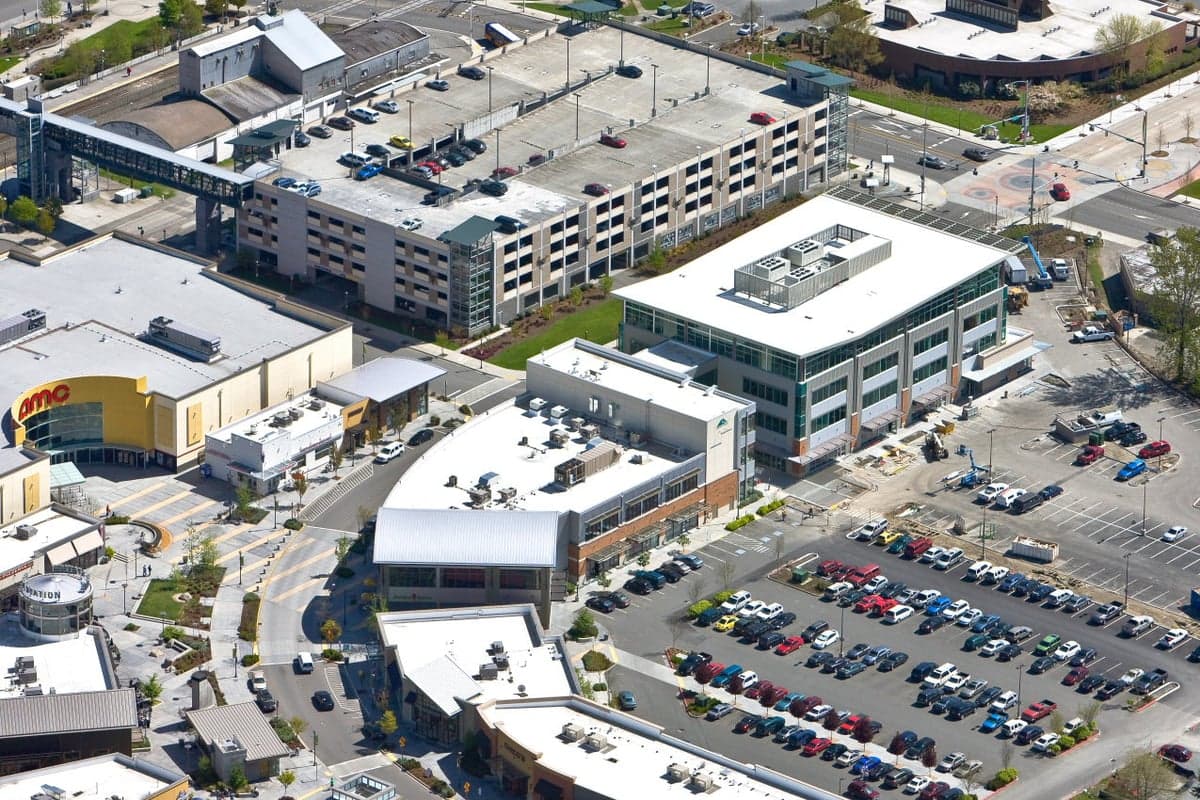
Photo: Wikipedia
Personal Sovereignty in Kent, WA
Viable for self-reliance. Generally workable, though some barriers may limit total independence.
What does Personal Sovereignty tell us?
Personal Sovereignty measures your capacity for self-reliance and independence with minimal government friction. Higher scores mean fewer barriers between you and the way you want to live... but it assumes you have the space you need and good neighbors.
What does this tell us?
Personal Sovereignty measures your capacity for self-reliance and independence with minimal government friction. Higher scores mean fewer barriers between you and the way you want to live... but it assumes you have the space you need and good neighbors.
State Policy
Energy independence: Importer (55% of energy produced in-state)
Personal Liberty
Homesteading

Personal Liberty Analysis
For the individual or family prioritizing personal sovereignty—the ability to live, defend, and provide for oneself without undue government interference—Kent, Washington presents a complex and largely cautionary picture. Nestled in King County, a jurisdiction with some of the most assertive regulatory and tax policies in the nation, Kent offers proximity to economic opportunity but at a steep cost to autonomy. The city’s environment is shaped by a state-level political culture that increasingly centralizes control over property, healthcare choices, and self-defense, making it a location where a survivalist or prepper mindset must be paired with constant vigilance and strategic planning to preserve any semblance of independence.
Tax burden and regulatory posture: How Washington’s policies affect your wallet and freedom
Washington State’s lack of a personal income tax is often cited as a pro-freedom feature, but the reality for Kent residents is a heavy reliance on other revenue streams that directly impact self-reliance. The state’s sales tax, which in King County reaches a combined rate of 10.1%, applies to nearly all goods—including emergency supplies, tools, and building materials—making every prepper purchase more expensive. Property taxes in Kent are also significant, with effective rates around 1.0% to 1.2% of assessed value, and annual increases are capped at 1% plus new construction, but reassessments can still drive up bills. More concerning for the sovereignty-minded is the state’s aggressive regulatory posture. Washington’s Growth Management Act (GMA) tightly controls land use, limiting where you can build, what you can build, and how you can use your property. This means that even if you own a house on a standard suburban lot in Kent, your ability to run a small home-based business, keep livestock, or install off-grid infrastructure like rainwater catchment systems is heavily restricted by local zoning codes. The state’s Department of Ecology also enforces strict water rights, making independent well drilling or large-scale rainwater collection legally complex. For a prepper, this regulatory web means that achieving true self-sufficiency on a typical residential lot is nearly impossible without navigating a maze of permits and fees.
Self-defense and gun law specifics: What you can and cannot do in Kent
For those who view the Second Amendment as a cornerstone of personal sovereignty, Washington State has become increasingly hostile in recent years, and Kent is fully under its thumb. The state enacted a ban on so-called “assault weapons” in 2023, which includes many popular semi-automatic rifles like the AR-15, and also passed a law requiring a 10-day waiting period and enhanced background checks for all firearm purchases. Magazine capacity is limited to 10 rounds for rifles and pistols, a significant restriction for anyone considering home defense or long-term preparedness. Open carry is generally legal without a permit, but local ordinances in Kent can create friction, and the political climate in King County makes open carry a potential flashpoint. Concealed carry requires a permit, which is shall-issue but subject to administrative delays. More troubling for the prepper is the state’s “red flag” law (Extreme Risk Protection Order), which allows law enforcement or family members to petition a court to temporarily seize firearms without a criminal conviction. This law, combined with the state’s broad definition of “negligent” storage, creates a legal environment where a personal defense stockpile can be legally dismantled based on a single complaint. For the sovereignty-minded, Kent is a location where you must be prepared to defend your rights in court, not just your home.
Self-reliance and homesteading viability: Lot sizes, zoning, and off-grid feasibility
True homesteading within Kent city limits is a non-starter for most. The typical residential lot in Kent is a quarter-acre or smaller, with zoning that prohibits agricultural uses beyond small vegetable gardens. Keeping chickens is allowed in many areas, but with strict limits on the number of birds and coop placement, and larger livestock like goats or pigs is generally forbidden. The city’s municipal water and sewer systems are mandatory for most properties, meaning you cannot legally disconnect from the grid and rely on a well and septic system. Rainwater collection for potable use is heavily regulated by the state, requiring treatment systems and permits that make it impractical for a small lot. Solar panels are allowed, but net metering policies and homeowner association (HOA) restrictions in many Kent neighborhoods can limit your ability to go fully off-grid. For those serious about self-reliance, the viable strategy is to look outside the city limits—into unincorporated King County or neighboring Pierce County—where lot sizes of one to five acres are more common and zoning is less restrictive. Even there, however, state-level water rights and building codes still apply, so a move to Kent proper should be seen as a temporary base for earning income, not a long-term homesteading destination.
Personal liberties: Parental rights, medical autonomy, speech, and property
On the spectrum of personal liberties, Kent and Washington State lean heavily toward government authority over individual choice. Parental rights have been a flashpoint, with the state passing laws that allow minors to access certain medical procedures, including reproductive healthcare and gender-affirming care, without parental consent. This directly undermines a family’s ability to make healthcare decisions for their children. Medical autonomy more broadly is constrained by the state’s vaccine mandates for school attendance and healthcare workers, and by the lack of robust conscience protections for those who refuse certain treatments. Free speech is legally protected, but the political monoculture in King County can create a chilling effect for those who express conservative or dissenting views, particularly in public forums or on social media. Property rights are the most eroded area: the state’s strong eminent domain powers, combined with the GMA’s land-use restrictions, mean that what you can do with your own land is heavily dictated by government planners. For the prepper, this means that building a bunker, storing large quantities of fuel, or even putting up a privacy fence may require permits and inspections that invite government scrutiny. The cumulative effect is a location where personal sovereignty is constantly negotiated against a powerful state apparatus.
In the broader landscape of the Pacific Northwest, Kent ranks low for personal sovereignty compared to more rural counties like Ferry or Stevens, where zoning is looser and gun laws are less aggressively enforced. It offers a higher density of jobs and services, which can be useful for building financial reserves, but the trade-off is a significant loss of autonomy in nearly every domain of life. For the survivalist or prepper who values independence above all, Kent is best viewed as a temporary staging ground—a place to earn and save while planning a move to a jurisdiction that respects your right to live, defend, and provide for yourself on your own terms. The state’s trajectory suggests that these restrictions will only tighten, making proactive relocation a wise strategic move for those who prioritize freedom over convenience.

* Values derived from national, state, county, city and local statistics and may differ in a specific area. Last updated: 2026-04-21T11:20:05.000Z
Narrative content on this page is AI-generated and may contain mistakes. Verify any details that matter before acting on them.
ReloMaps may earn a commission from affiliate links at no extra cost to you.

