Photo: Wikipedia
Strategic Assessment of Kent, WA
Multiple tactical vulnerabilities. Population density, target proximity, or disaster risk are likely compounding. A retreat property and exit planning is required.
What does the Strategic Assessment tell us?
Our Strategic Assessment grades tactical survivability of an area. Major population centers, military targets, fallout zones, natural disasters, and border exposure all drive risk — lower exposure means a more defensible position in a crisis.
This is heavily inspired by Joel Skousen's Strategic Relocation book. Highly recommended you checkout the book ($)What does this tell us?
Our Strategic Assessment grades tactical survivability of an area. Major population centers, military targets, fallout zones, natural disasters, and border exposure all drive risk — lower exposure means a more defensible position in a crisis.
This is heavily inspired by Joel Skousen's Strategic Relocation book. Highly recommended you checkout the book ($)Strategic Pillars

Key Distances
Regional Safe Places
Below is our recommended "safe zones" in Washington and the surrounding area based on our strategic heuristics. For most people, it's unrealistic to live in a “safe zone” full-time due to work, family or other personal reasons. They tend to be more rural. However, many of these areas are perfect for second homes and retreat properties that double as a vacation home or even a short-term rental.
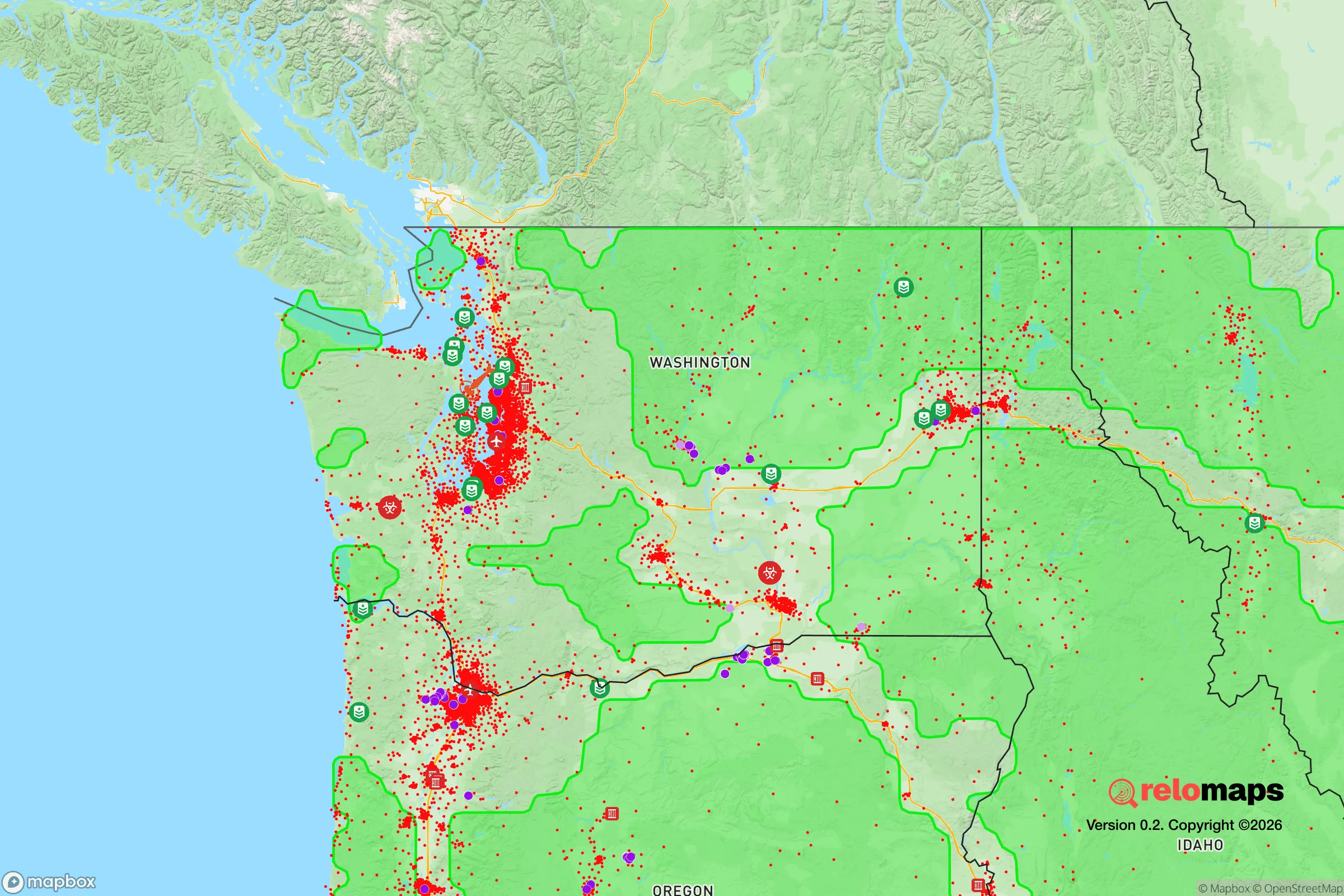
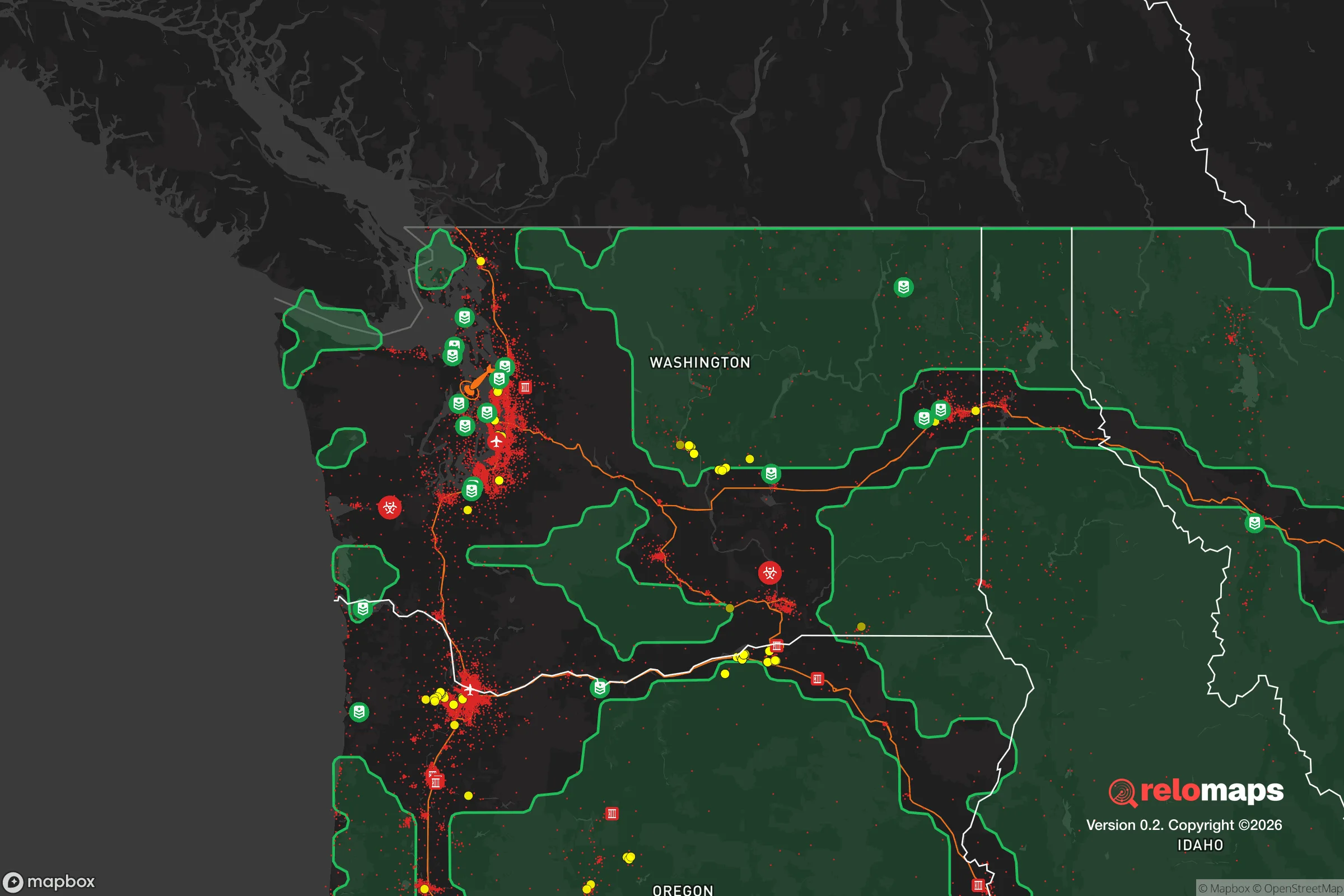


Important Note: For informational purposes only. This does not mean nothing bad ever happens in the green zones. Please use common sense. This is based on public data and modeled with AI. We tried to take a conservative approach but mistakes happen. We update this regularly as new information becomes available.
Solar Generator Recommendations
Backup power matters more here than in safer locations. We've picked three solar generators across budgets and capacity tiers — start with the budget unit if you only need a few essentials, or step up if you want to run a fridge and HVAC for days at a time.

Jackery Portable Power Station Explorer 300
Budget OptionPower on the Go: Weighing only 11 lbs, it's convenient to set up and store with book-sized foldable solar panels

BLUETTI Portable Power Station AC180
Designed for both indoor and outdoor scenarios, AC180 is highly capable as it has a robost capacity and continuous output power.

EF ECOFLOW DELTA Pro Ultra Power Station
Upgraded PickEcoFlow DELTA Pro Ultra is a whole-home energy system designed to grow with your family. Integrated with the Smart Home Panel 2, it scales to meet your evolving energy needs — keeping your home powered, intelligent, and secure through every stage of life.
We earn a commission, at no additional cost to you.
Strategic Assessment Analysis
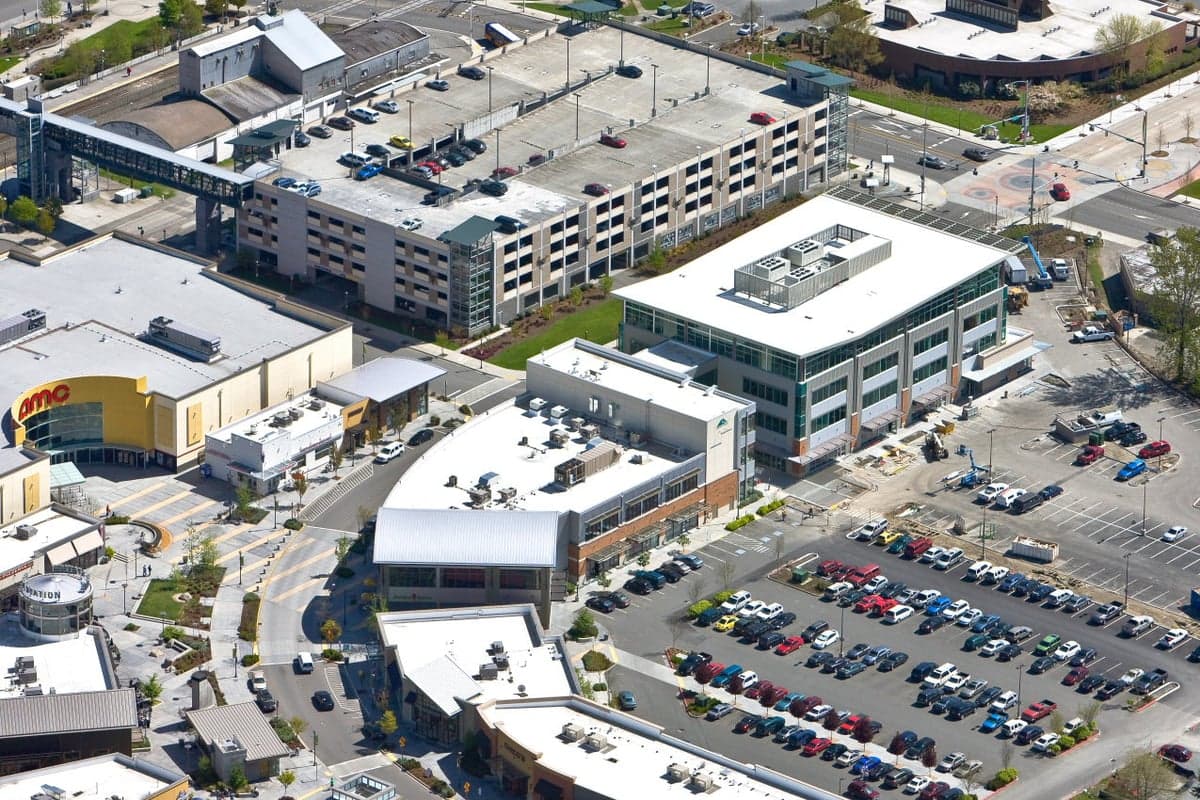
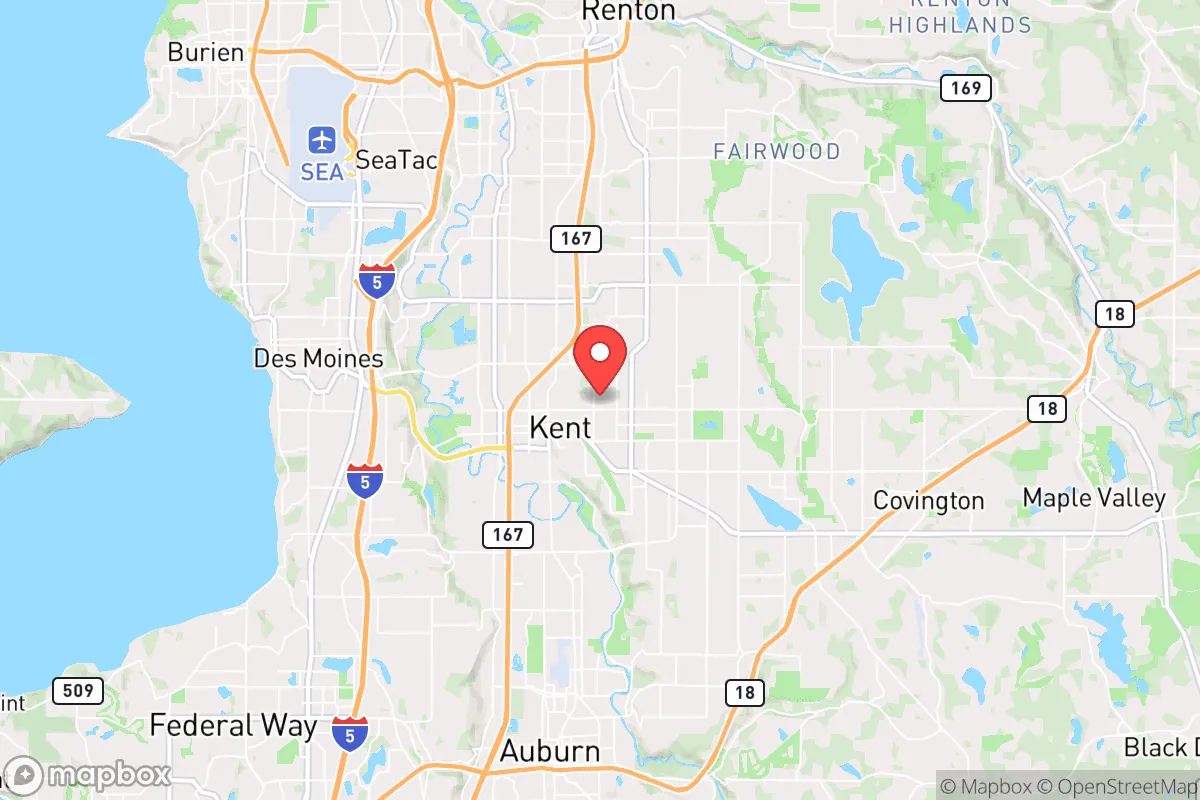
Kent, Washington, sits in a precarious strategic position that demands a clear-eyed assessment. Its location in the Green River Valley, roughly 20 miles southeast of Seattle and 10 miles from Joint Base Lewis-McChord, offers both logistical advantages and significant vulnerabilities for those prioritizing long-term preparedness. While the area’s infrastructure and access to resources are robust, its proximity to major population centers, critical military infrastructure, and potential fallout zones makes it a high-risk, high-reward proposition for a survivalist or prepper household. This analysis weighs those factors for a conservative-leaning audience concerned with civic unrest, mass casualty events, and systemic collapse.
Geographic position and natural advantages for long-term survival
Kent’s geography is a double-edged sword. The city lies in the fertile Green River Valley, which historically provided rich agricultural land—a key asset for any self-sufficient setup. The nearby Cascade foothills offer escape routes and potential retreat areas, with national forest land (like the Mount Baker-Snoqualmie National Forest) within an hour’s drive. Water access is abundant: the Green River runs through the city, and the larger Puget Sound is a short drive west, providing both fresh and saltwater resources. However, the valley floor is flood-prone, with the Green River having a history of significant inundation events (e.g., 1996, 2009). For a prepper, this means any long-term homestead or bug-out location must be elevated or have flood mitigation plans. The area’s mild maritime climate—rarely below freezing or above 90°F—reduces heating and cooling demands, a practical advantage for off-grid living. But the persistent cloud cover and rain (averaging 37 inches annually) complicate solar power generation and crop drying, requiring backup energy strategies like micro-hydro or wind.
Risks, exposures, and proximity to fallout-relevant landmarks
The most glaring vulnerability is Kent’s proximity to Seattle-Tacoma International Airport (Sea-Tac), just 8 miles north. In a mass casualty event or nuclear scenario, Sea-Tac is a primary target for both military and terrorist actors. Additionally, Joint Base Lewis-McChord (JBLM), a major Army and Air Force installation, lies 10 miles southwest. JBLM houses the I Corps headquarters and the 62nd Airlift Wing—assets that make it a high-value target in any conflict. Fallout patterns from a strike on either location would likely drift east-northeast with prevailing winds, putting Kent in a moderate-to-high fallout zone depending on yield and wind direction. The Port of Tacoma, 12 miles west, is another strategic chokepoint for trade and military logistics, increasing the region’s target profile. For a relocator, this means Kent is not a safe distance from likely ground zeroes. The city’s population of roughly 136,000 (2023 estimate) is dense enough to create chaos during an evacuation, with I-5 and SR-167 being the primary arteries—both prone to gridlock. Civic unrest in Seattle (a 30-minute drive north) could spill over, as seen during the 2020 CHOP protests and subsequent property crime spikes. Kent itself has seen rising homelessness and drug-related crime, with the Kent Police Department reporting a 15% increase in property crimes from 2021 to 2023. For a prepper, this is a location that requires robust physical security—reinforced doors, surveillance, and a neighborhood watch network—rather than a place to hunker down unnoticed.
Practical resilience for a relocator: food, water, energy, and defensibility
For a single individual or family looking to establish a resilient household, Kent offers mixed prospects. Water is the strongest asset: the Green River provides a year-round surface water source, but it requires filtration (agricultural runoff and industrial contaminants are concerns). The city’s municipal water comes from the Cedar River watershed, which is generally high-quality but vulnerable to disruption. A well is not feasible in most residential areas due to shallow groundwater and floodplain restrictions. Food production is viable but limited: the valley’s soil is rich, but most residential lots are small (typically 5,000–8,000 sq ft). Community gardens exist (e.g., the Kent Valley Garden), but for serious self-sufficiency, a relocator would need to secure land in the nearby rural areas like Covington or Maple Valley. Energy resilience is a challenge: Puget Sound Energy dominates, and grid outages are common during windstorms (e.g., the 2021 ice storm left 10,000+ without power). Solar is hampered by cloud cover, but micro-hydro from the Green River is possible for properties with water rights—a rare and expensive option. Natural gas is widely available, but a propane backup generator is the most practical solution for most homes. Defensibility is poor in the city core: Kent’s suburban layout with cul-de-sacs and strip malls makes it hard to secure a perimeter. A better bet is the East Hill area (elevated, less flood-prone) or the unincorporated areas near Lake Meridian, where larger lots and tree cover provide some concealment. For a prepper, the ideal setup would be a home with a basement (rare in the valley due to water tables) or a reinforced safe room, plus a bug-out vehicle pre-positioned for a quick exit east toward the Cascades. The local gun culture is moderate—Washington is a shall-issue state for concealed carry, and Kent has several gun shops and ranges (e.g., Wade’s Eastside Guns in Bellevue is 20 minutes north). However, magazine capacity restrictions (10 rounds for rifles, 15 for handguns) and the state’s 2023 ban on certain semi-automatic firearms are legislative risks that a conservative relocator should factor into their planning.
Overall, Kent is a location that demands constant vigilance and a layered preparedness strategy. Its advantages—water access, mild climate, proximity to wilderness—are real but overshadowed by its proximity to high-value targets and dense population centers. For a single individual or family willing to invest in robust security, off-grid backups, and a solid bug-out plan, it can serve as a functional base for a few years. But for those seeking a truly defensible, low-profile retreat with minimal fallout risk, the areas east of the Cascades (e.g., Ellensburg, Cle Elum) or north of the Olympic Peninsula offer better long-term viability. Kent is a staging ground, not a sanctuary—a place to build skills and resources before moving to a more secure location when the indicators turn red.

* Values derived from national, state, county, city and local statistics and may differ in a specific area. Last updated: 2026-04-21T11:20:05.000Z
Narrative content on this page is AI-generated and may contain mistakes. Verify any details that matter before acting on them.
ReloMaps may earn a commission from affiliate links at no extra cost to you.

