Photo: Wikipedia
Quality of Life in Kent, WA
Above-average quality of iife. The area offers a reasonable cost of living, decent mobility, and a mix of neighborhood amenities.
What does Quality of Life tell us?
Quality of Life blends cost of living, nearby amenities, socioeconomic signals, and neighborhood character. City-level scores represent the whole municipality; individual neighborhoods can differ.
What does this tell us?
Quality of Life blends cost of living, nearby amenities, socioeconomic signals, and neighborhood character. City-level scores represent the whole municipality; individual neighborhoods can differ.
Cost of Living
71% above national average
The Real Cost of Living in Kent, WA for 2026
| Tier | Individual | Family (4) |
|---|---|---|
| Survival | $29k | $55k |
| Comfortable | $103k | $151k |
| Luxury | $150k+ | $233k+ |
| Elite (Top 5%) | $177k+ | $274k+ |
60%
The Area Signal
A metric tracking the socioeconomic signals of the area.
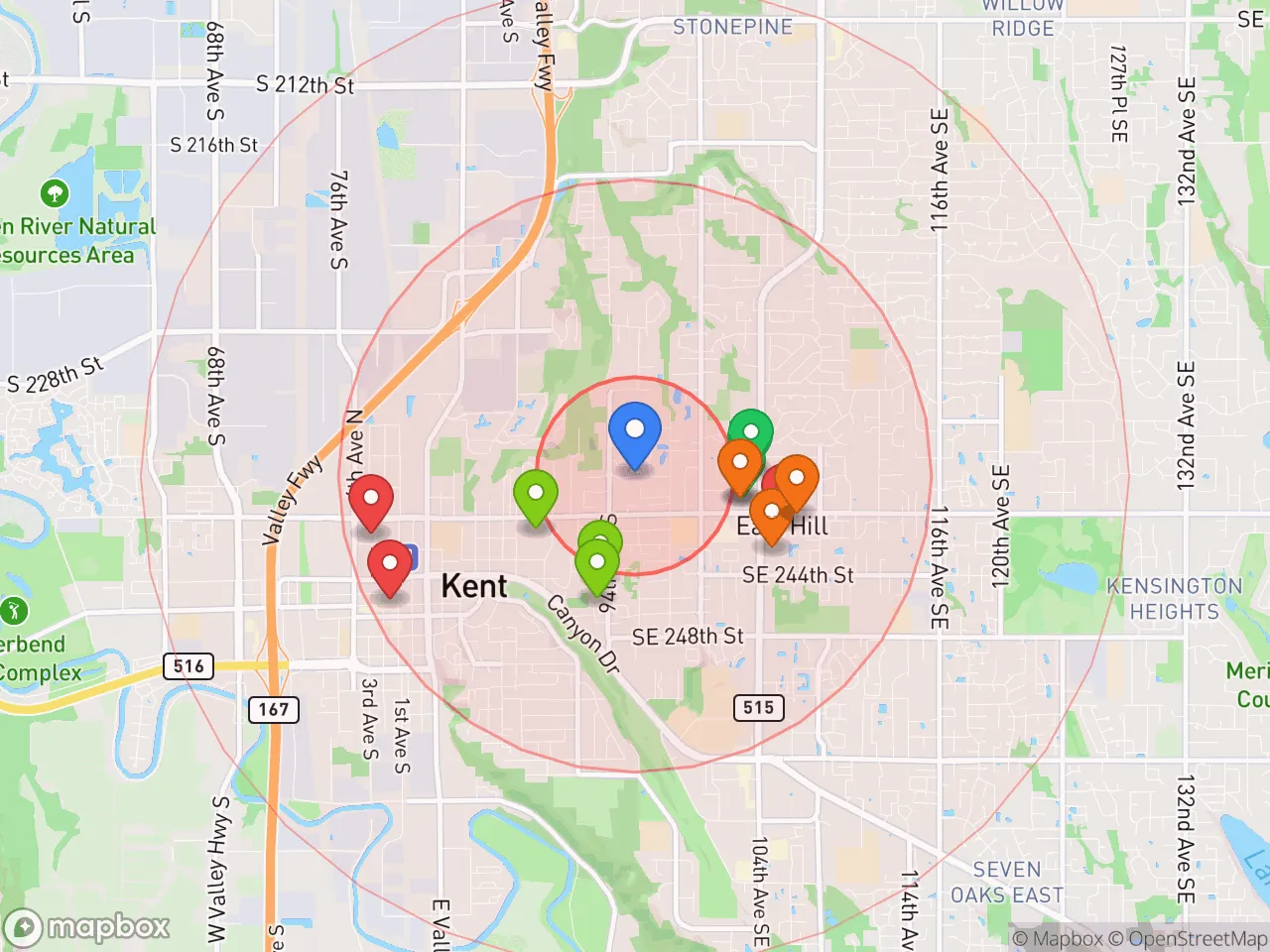
Hobbies
Explore the areaGroceries
8 within 10 miles
Gas
20 within 10 miles
Hospital
20 within 20 miles
Airport
SEA — Seattle–Tacoma International
Post Office
USPS — Kent, WA
Critical Amenities
Quality-of-Life Analysis
Kent, Washington, presents a quality of life shaped by its position as a more affordable alternative to Seattle, with a cost of living index of 171 (100 = US average) that reflects its proximity to the region’s high-cost job centers. The city attracts a diverse mix of families, aerospace and logistics workers, and commuters who value relative affordability over urban intensity. With a median home value of $537,500 and median rent of $1,833, Kent offers a middle-ground lifestyle that balances access to the Puget Sound economy with a more grounded, suburban feel.
Cost of living, housing, and how Kent compares to Seattle and Tacoma
Kent’s cost of living is 71% above the national average, but it remains significantly cheaper than Seattle (index ~180) and comparable to Tacoma (index ~160). The median home value of $537,500 is roughly $350,000 less than Seattle’s median, making homeownership attainable for dual-income households and professionals. Renters face a median of $1,833, which is about $400–$600 less than comparable units in Seattle proper. However, wages in Kent do not always keep pace with the index; many residents commute to higher-paying jobs in Seattle, Bellevue, or Renton. Property taxes in King County average around 1.0% of assessed value, adding roughly $5,375 annually on a median-priced home. For those willing to trade a longer commute for lower housing costs, Kent’s affordability advantage is clear, but the trade-off is a 30.1-minute average commute—longer than the national average of 26 minutes—which can strain daily schedules.
Schools, parks, and what daily life feels like in Kent
Daily life in Kent revolves around its extensive park system—over 1,200 acres of parks and trails, including the Green River Natural Resources Area and the Interurban Trail—and a growing network of local shops and restaurants along Meeker Street and the Kent Station transit hub. The Kent School District serves roughly 27,000 students, with several schools earning above-average ratings on GreatSchools, though performance varies widely by neighborhood. Families often choose Kent for its strong sense of community and lower crime rates compared to nearby Auburn or Federal Way, though property crime remains a concern in some areas. The city’s industrial base—anchored by Boeing, Amazon fulfillment centers, and logistics firms—provides local employment, but many residents still commute to Seattle or Bellevue. The rhythm is suburban: strip malls, chain restaurants, and big-box stores dominate, but pockets of independent coffee shops and ethnic eateries (notably Vietnamese and Mexican) add character. The Green River Trail offers a scenic commute option for cyclists, and the Kent Station transit center connects to Sounder commuter rail, which can cut the downtown Seattle trip to under 30 minutes.
Who thrives in Kent and who might look elsewhere
Kent is best suited for families and professionals who prioritize space and affordability over urban amenities. It works well for those employed in logistics, manufacturing, or aerospace, as well as commuters who can tolerate a 30-minute drive or train ride to Seattle. Retirees on fixed incomes may find the cost of living challenging, while young singles seeking nightlife and walkability will likely prefer Seattle or Tacoma. The city’s diversity—over 40% of residents are foreign-born—creates a culturally rich environment, but the lack of a dense downtown core means most errands require a car. For those who value a quiet, family-oriented suburb with solid schools and reasonable housing costs relative to the region, Kent offers a practical, livable base in the greater Seattle area.

Crime in Kent, WA
Generally safer than 69% of comparable U.S. locations.
Violent CrimeViolent Crime Analysis
Property CrimeProperty Crime Analysis
Crime Analysis
Kent, Washington, presents a mixed safety profile that demands careful consideration from potential residents. While the city's violent crime rate of 166.2 per 100,000 residents is notably lower than the national average, its property crime rate of 1,425.4 per 100,000 is significantly elevated, creating a situation where residents face a higher risk of theft and burglary than in many comparable suburbs. This dynamic is further complicated by the legal and political environment of King County, where progressive prosecutorial policies have been linked to reduced incarceration rates and, critics argue, a diminished deterrent effect on property and recidivist offenders.
Crime in context
To understand Kent's safety, it is essential to compare its statistics to broader benchmarks. The city's violent crime rate of 166.2 per 100,000 is roughly 55% lower than the national average of about 370 per 100,000, placing it in a relatively safer tier for serious offenses like homicide and assault. However, the property crime rate of 1,425.4 per 100,000 is approximately 25% higher than the national average of 1,150 per 100,000. This disparity is a direct reflection of the challenges facing many cities in King County, where a combination of high population density, economic inequality, and a justice system that often prioritizes diversion and rehabilitation over incarceration has created an environment where property crimes—particularly vehicle thefts and break-ins—are persistent problems. The presence of a progressive district attorney's office, which has implemented policies like presumptive release and reduced cash bail, is a factor that residents should weigh, as these approaches can lead to higher rates of repeat offending.
What residents experience
Daily life in Kent is shaped by this property crime reality. Residents frequently report issues with package theft, car prowls, and catalytic converter thefts, particularly in areas near transit hubs and apartment complexes. The city's police department has responded with targeted patrols and community outreach, but the sheer volume of property crime often overwhelms available resources. For families and individuals, this means taking proactive measures like installing security cameras, joining neighborhood watch programs, and avoiding leaving valuables in vehicles. The impact of progressive justice policies is felt most acutely here: offenders arrested for property crimes are often released quickly due to low bail requirements or diversion programs, creating a cycle where the same individuals commit multiple offenses. This can erode trust in the system and leave victims feeling that justice is not being served.
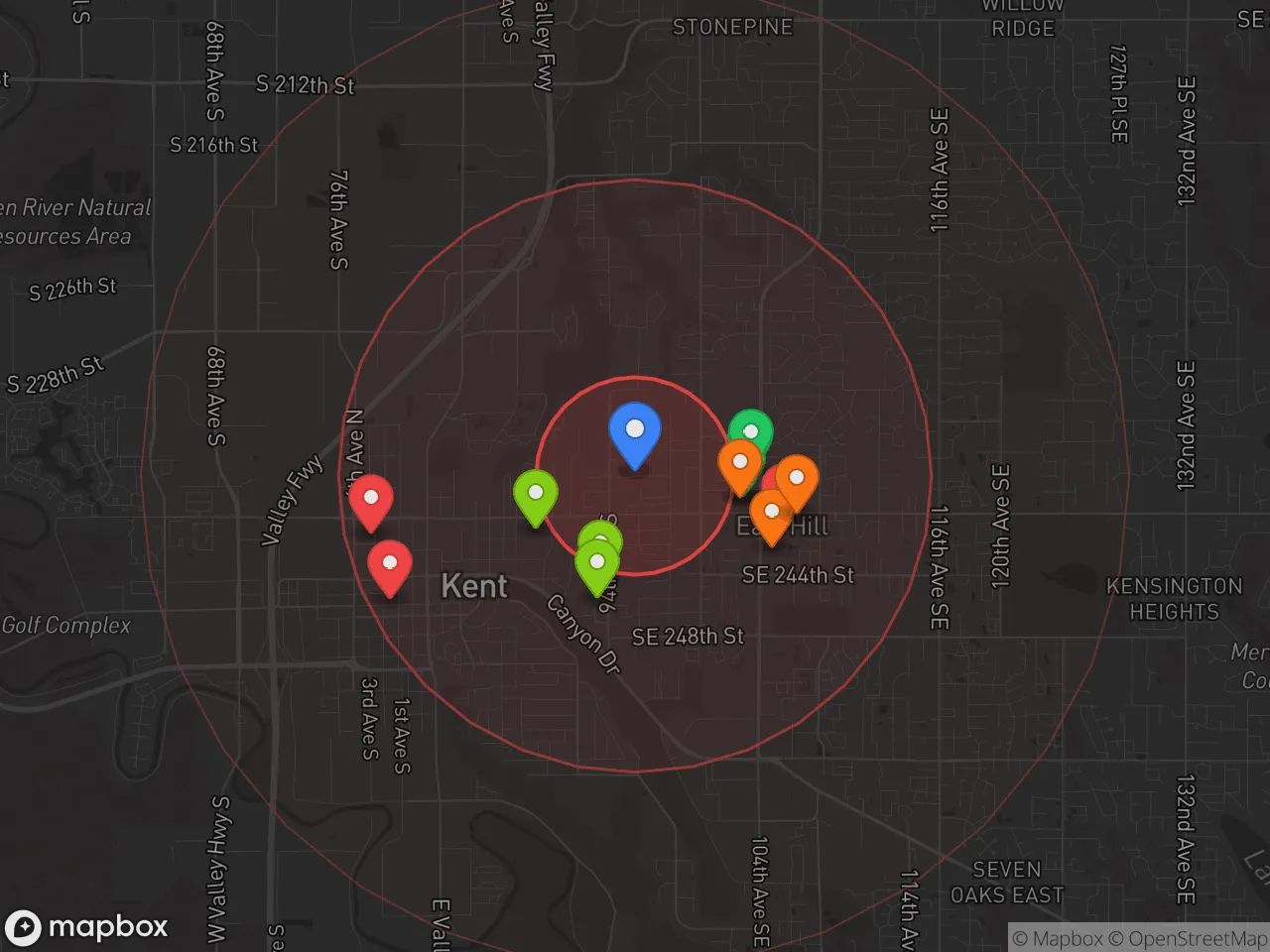
Neighborhood-level variation is significant within Kent. Areas east of Interstate 5, such as the East Hill and Panther Lake neighborhoods, generally experience lower crime rates and are considered safer, with more single-family homes and established community networks. In contrast, the downtown core and areas near the Kent Station transit center and the Green River corridor see higher concentrations of property crime and occasional violent incidents. The Valley area, with its mix of industrial zones and older apartment complexes, also reports elevated crime numbers. Prospective residents are advised to research specific blocks and talk to local police precincts, as a few blocks can make a substantial difference in daily safety. Ultimately, while Kent is not a high-violence city, its property crime problem—exacerbated by the surrounding county's lenient criminal justice approach—is a serious consideration for anyone planning to relocate there.
* Values derived from national, state, county, city and local statistics and may differ in a specific area. Last updated: 2026-04-21T11:20:05.000Z
Narrative content on this page is AI-generated and may contain mistakes. Verify any details that matter before acting on them.
ReloMaps may earn a commission from affiliate links at no extra cost to you.

