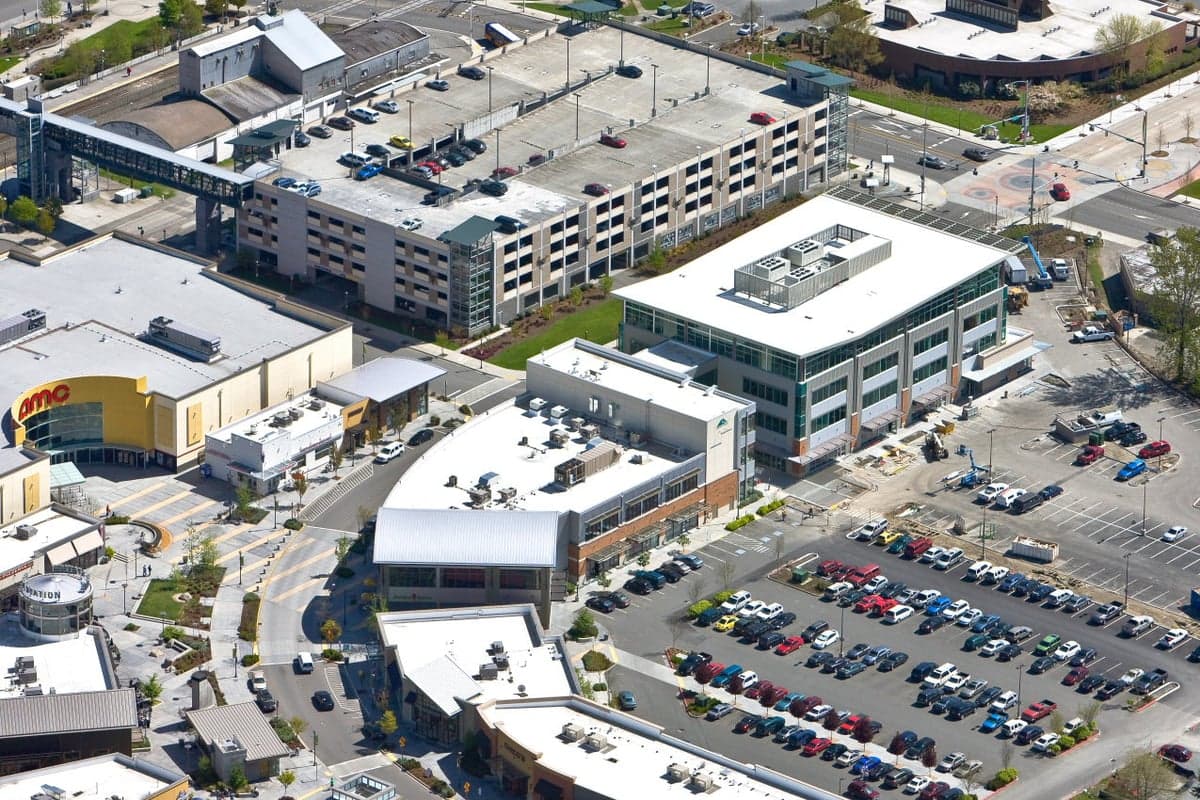
Photo: Wikipedia
Political ClimatePolitical Climate in Kent, WA
District shown is the primary district for this city’s centroid. Cities may span multiple districts.
Local Political AnalysisPolitical Analysis of Kent, WA
Kent leans heavily Democratic, with a Cook PVI of D+22, meaning the city votes about 22 points more Democratic than the national average. This wasn't always the case—I remember when Kent was a solidly blue-collar, middle-of-the-road town where folks just wanted to be left alone to work and raise their families. Over the last decade or so, the shift has been dramatic, driven largely by an influx of new residents from Seattle and King County's broader progressive machine. The local elections and policy decisions now reflect a near-total dominance of progressive ideology, and it's a far cry from the independent, live-and-let-live spirit that used to define this place.
How it compares
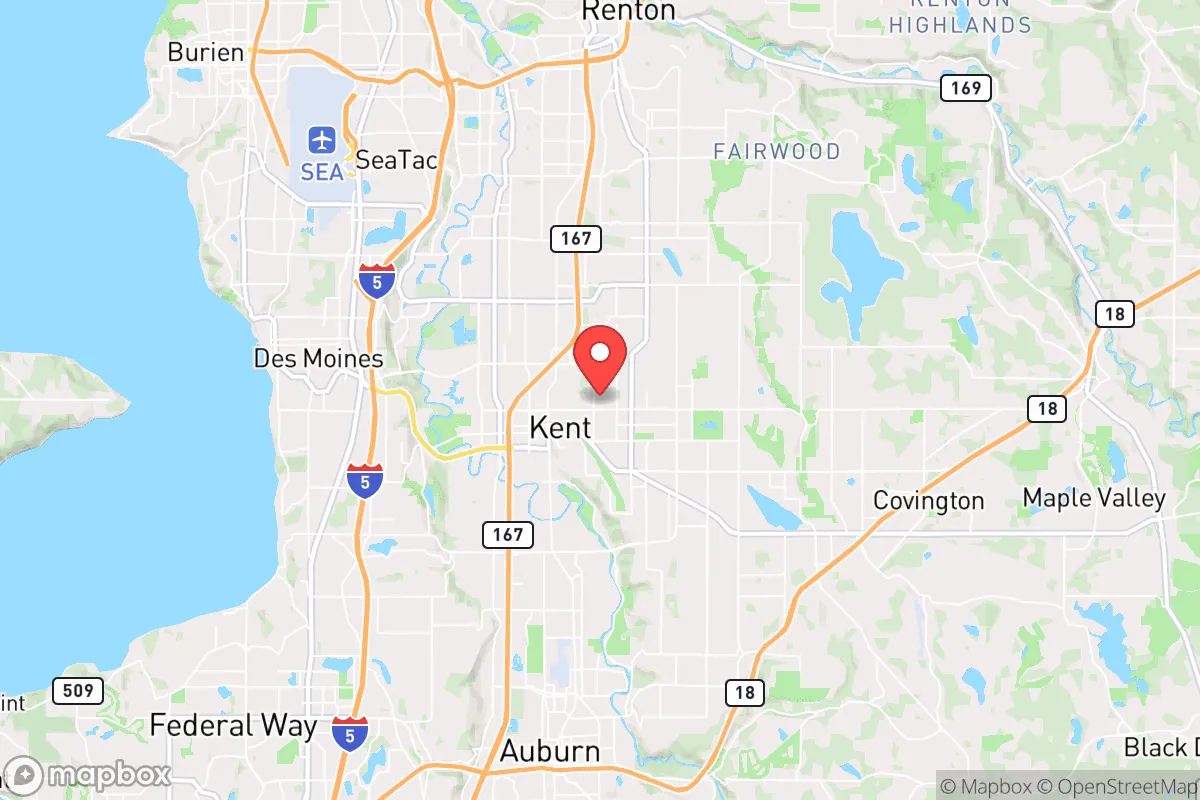
To really understand Kent's political climate, you have to look at the surrounding areas. Drive just a few miles east to Covington or Maple Valley, and you'll find communities that still lean conservative—places where property rights and fiscal restraint are taken seriously. Head south to Auburn, and it's a mixed bag, but still more balanced than Kent. The contrast is stark: Kent has become an extension of Seattle's political culture, while its neighbors have held onto more traditional values. This creates a real tension, especially when county-level policies—like zoning mandates or tax increases—get pushed through by the King County Council, which is dominated by Seattle-area representatives. Kent residents often get lumped in with the urban core's priorities, even when those priorities don't fit a suburban, family-oriented community.
What this means for residents
For those of us who've been here a while, the biggest concern is government overreach into personal freedoms. The local city council has embraced policies that feel less about helping people and more about controlling outcomes—things like strict rent control measures that actually discourage new housing, or business regulations that make it harder for small shops to stay open. There's a growing sense that your property rights and personal choices are secondary to the city's social engineering goals. The school board has also shifted, with curriculum changes that prioritize ideological messaging over academic fundamentals. If you value local control and want your voice to matter, it's getting harder to feel heard. The long-term trajectory worries me: more taxes, more mandates, and less room for the kind of self-reliance that built this community.
One cultural distinction that stands out is the city's approach to public safety and law enforcement. Kent has seen a noticeable uptick in property crime and petty theft over the past few years, and the response from city hall has been to defund or redirect police resources toward social service programs. It sounds good on paper, but in practice, it means slower response times and less accountability for repeat offenders. Meanwhile, neighboring cities like Covington have maintained a more traditional law-and-order stance, and their crime stats reflect it. If you're considering a move here, I'd say keep an eye on how the next few elections go—if the progressive wave continues, Kent could become a place where personal freedoms are increasingly squeezed by well-intentioned but overreaching policies. It's not the Kent I grew up in, and that's a shame.

State Political ClimatePolitical Climate in Washington
State Political AnalysisPolitical Environment in the State
Washington State has transformed from a moderate, pragmatic Western state into one of the most reliably Democratic strongholds in the nation, with Democrats holding every statewide office and supermajorities in the legislature. Over the past 20 years, the state has shifted decisively leftward, driven by explosive growth in the Seattle metropolitan area and the Puget Sound corridor, while rural and eastern counties have grown increasingly Republican but lack the population to counterbalance the urban vote. For a conservative considering relocation, the state’s political trajectory is a cautionary tale of how concentrated urban power can override the values and votes of vast rural and suburban regions.
Urban vs. rural divide
The political map of Washington is a stark study in contrast. King County, home to Seattle and its sprawling suburbs, casts roughly one-third of the state’s total vote and delivers margins of 70-80% for Democratic candidates. The I-5 corridor from Seattle south through Tacoma and Olympia, and north to Everett and Bellingham, forms a solid blue wall that determines every statewide election. Meanwhile, the eastern half of the state—cities like Spokane, Spokane Valley, and the Tri-Cities (Kennewick, Pasco, Richland)—votes reliably Republican, but their populations are a fraction of the Seattle metro. Even traditionally purple counties like Clark County (Vancouver) and Snohomish County (Everett) have flipped blue in recent cycles, driven by an influx of California and Oregon transplants seeking lower housing costs but bringing their progressive politics with them. The result is a state where rural conservatives in places like Yakima, Walla Walla, and the Okanogan Valley feel increasingly disenfranchised, their votes effectively nullified by the Seattle machine.
Policy environment
Washington’s policy environment reflects its one-party rule. The state has no personal income tax, which sounds appealing, but it levies a highly regressive sales tax (among the highest in the nation) and has aggressively pursued a capital gains tax on high earners, which was upheld by the state Supreme Court in 2023. Property taxes are moderate but rising fast, especially in growing counties. The regulatory posture is among the most burdensome in the country: the state has a strict carbon cap-and-trade program (the Climate Commitment Act), a long-term care payroll tax (the WA Cares Fund) that took effect in 2023, and some of the nation’s most restrictive land-use and environmental regulations. Education policy is dominated by teachers’ unions, with school choice virtually nonexistent—no vouchers, no education savings accounts, and charter schools heavily restricted. Healthcare is heavily regulated, with a state-run insurance exchange and mandates that drive up premiums. Election laws are among the most progressive: universal mail-in voting, same-day registration, and no voter ID requirement at the polls, which has raised concerns about election integrity among conservatives.
Trajectory & freedom
Washington is becoming less free by nearly any measure of personal liberty. On gun rights, the state has passed some of the strictest laws in the nation: a ban on "assault weapons" (HB 1240, 2023), a ban on high-capacity magazines (SB 5078, 2022), and a requirement for a 10-day waiting period and safety training for all firearm purchases (I-1639, 2018). Parental rights have been eroded by a law allowing minors as young as 13 to consent to gender-affirming care without parental notification (SB 5599, 2023), and the state has become a "sanctuary" for out-of-state minors seeking such care. Medical autonomy took a hit with the state’s COVID-19 vaccine mandates, which were among the most aggressive in the country and led to thousands of state employees losing their jobs. Property rights are constrained by the Growth Management Act, which heavily restricts development in rural areas and drives up housing costs. The state’s tax burden, while lacking an income tax, is still high due to the sales tax and new wealth taxes, and there is growing talk of a statewide wealth tax on high-net-worth individuals.
Civil unrest & political movements
Washington has been a flashpoint for political unrest, most notably during the 2020 protests in Seattle, where the Capitol Hill Autonomous Zone (CHAZ) was allowed to operate for weeks with minimal police response, leading to widespread property damage and a perception of lawlessness that still lingers. The state has also seen organized far-left activism through groups like the Puget Sound John Brown Gun Club and Antifa-affiliated networks, particularly in Seattle and Portland-adjacent Vancouver. On the right, the Washington State Republican Party has struggled to gain traction, but grassroots movements like the "Three Percenters" and "Washington Stands Up" have organized around gun rights, parental rights in education, and opposition to vaccine mandates. Immigration politics are a major fault line: Washington is a "sanctuary state" by law (2019’s Keep Washington Working Act), prohibiting local law enforcement from cooperating with federal immigration authorities, which has led to tensions in border counties like Yakima and Franklin. Election integrity remains a hot-button issue, with conservatives pointing to the state’s mail-in voting system and lack of voter ID as vulnerabilities, though no major fraud has been proven. Secession talk is common in eastern Washington, with some counties exploring joining Idaho or forming a new "Liberty State," but it remains a fringe movement.
Projection
Over the next 5-10 years, Washington will likely become more progressive, not less. Demographic trends favor the left: the Seattle metro continues to grow, attracting young, college-educated, and often foreign-born residents who lean heavily Democratic. The rural population is stagnant or declining, and even traditionally red suburbs like those in Pierce County are turning purple. The state’s tax structure will likely shift further left, with a possible statewide wealth tax or a progressive income tax on high earners being debated in the legislature. Gun restrictions will almost certainly tighten further, with talk of a permit-to-purchase system and mandatory liability insurance. Parental rights will continue to erode as the state expands its role in children’s medical and educational decisions. The only wild card is a potential economic downturn that could slow in-migration and strain the state’s generous social programs, but even then, the political inertia is strongly toward more government control. A conservative moving in now should expect to be a permanent minority voter, with their values increasingly out of step with state policy.
For a conservative considering Washington, the bottom line is this: you will enjoy stunning natural beauty, a strong economy, and no income tax, but you will pay for it with high sales taxes, heavy regulation, and a state government that actively works against your values on guns, education, parental rights, and personal freedom. If you can afford to live in a red enclave like Spokane County or the Tri-Cities, you may find a like-minded community, but you will still be subject to Seattle’s laws. If you value liberty and limited government, Washington is a state in decline, and you should weigh whether the trade-offs are worth it before making the move.
* Values derived from national, state, county, city and local statistics and may differ in a specific area. Last updated: 2026-04-21T11:20:05.000Z
Narrative content on this page is AI-generated and may contain mistakes. Verify any details that matter before acting on them.
ReloMaps may earn a commission from affiliate links at no extra cost to you.

