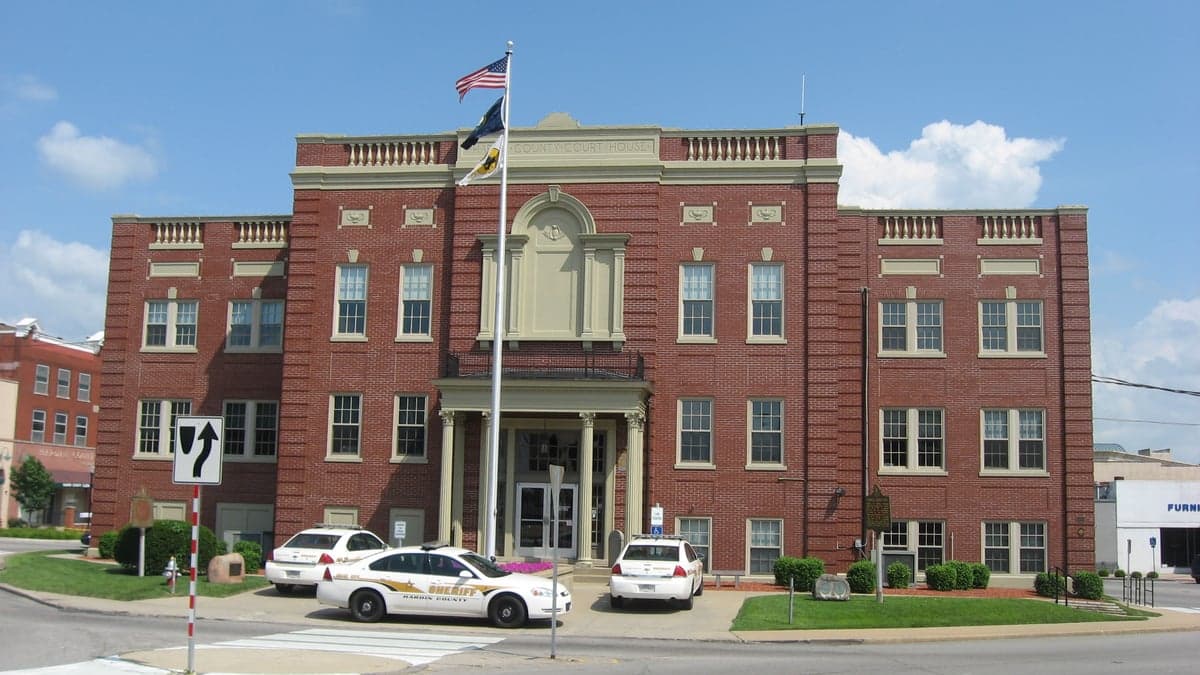
Photo: Wikipedia
Demographics of Hardin County
Affluence Level in Hardin County
A middle-class area roughly in line with national averages across income, home values, education, and employment.
People of Hardin County
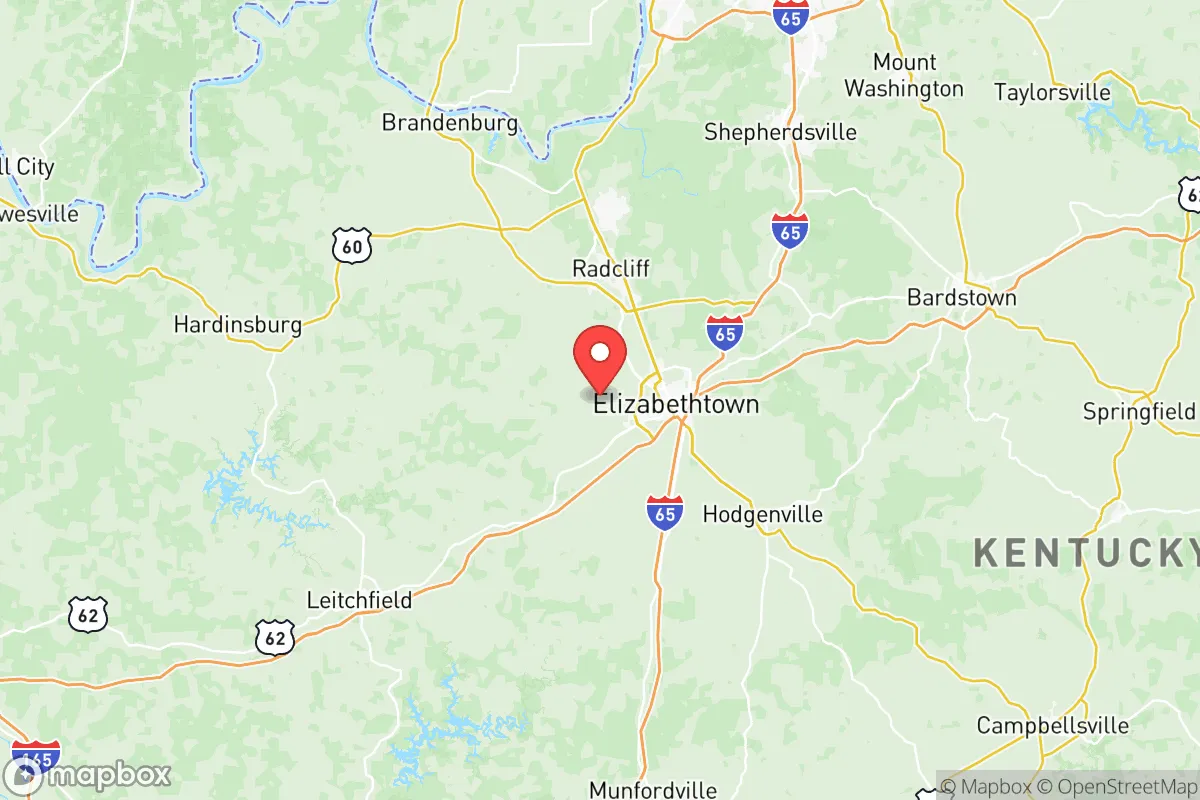
Hardin County's 111,452 residents form a predominantly white, military-anchored community where conservative values, rural roots, and a family-centric lifestyle define daily life. The county is less ethnically diverse than the nation as a whole, with a foreign-born share of just 1.7%, yet it hosts a significantly higher Black population (11.0%) than most Kentucky counties outside Louisville, a direct legacy of Fort Knox. Its people skew practical and self-reliant, shaped by generations of agricultural work, military service, and the steady rhythms of small cities like Elizabethtown, Radcliff, and Vine Grove, which serve as employment and service hubs along the I-65 corridor.
Settlement & growth (pre-1960)
Long before European settlers arrived, the land that is now Hardin County was part of the hunting and warring grounds of the Shawnee and Cherokee nations. These tribes used the Salt River and Rolling Fork waterways as travel and trade routes, but no permanent Native villages existed within the county's boundaries by the time of sustained white settlement. The area became part of Kentucky County, Virginia, and then the state of Kentucky in 1792, opening the door for wave after wave of settlers pushing west through the Cumberland Gap.
The first significant group of non-Native inhabitants were Scots-Irish and English pioneers arriving in the 1780s and 1790s, drawn by the promise of cheap, fertile land in the interior Bluegrass region. They established farms along the Salt River and its tributaries, and the first permanent settlements appeared at present-day Elizabethtown (founded 1797), Rineyville, and Cecilia. These early families were largely subsistence farmers, fiercely independent, and overwhelmingly Protestant. They formed the cultural bedrock of the county's identity: suspicion of distant government, a strong work ethic, and tight-knit community bonds.
A second, smaller wave came in the 1840s through 1870s as German and Irish Catholic immigrants arrived via the Ohio River and the Louisville and Nashville Railroad, which laid tracks through the county in the 1850s. They settled in Glendale and Sonora, where they established Catholic parishes and small businesses serving the railroad and agricultural trade. These groups remained distinct but largely assimilated into the broader white population by the early 20th century.
The single most transformative event in Hardin County's population history was the establishment of Fort Knox in 1918, and its massive expansion during World War II and the Cold War. The base brought tens of thousands of military personnel and civilian employees—many of them Black Americans from the South and Midwest—into the county. The Black population, which was negligible before 1940, surged to roughly 10% by 1960, concentrated in Radcliff and the neighborhoods adjacent to the base. These families formed the foundation of what is today a stable, 11% Black community, predominantly employed by the military or in service industries supporting it.
By 1960, Hardin County's population had grown to roughly 50,000, still heavily white and rural, but now divided between the old agricultural settlements (Elizabethtown, Cecilia, Rineyville) and the new military-centered suburbs of Radcliff and Vine Grove.

* Values derived from national, state, county, city and local statistics and may differ in a specific area. Last updated: 2026-06-01T15:00:15.000Z
Narrative content on this page is AI-generated and may contain mistakes. Verify any details that matter before acting on them.
ReloMaps may earn a commission from affiliate links at no extra cost to you.

