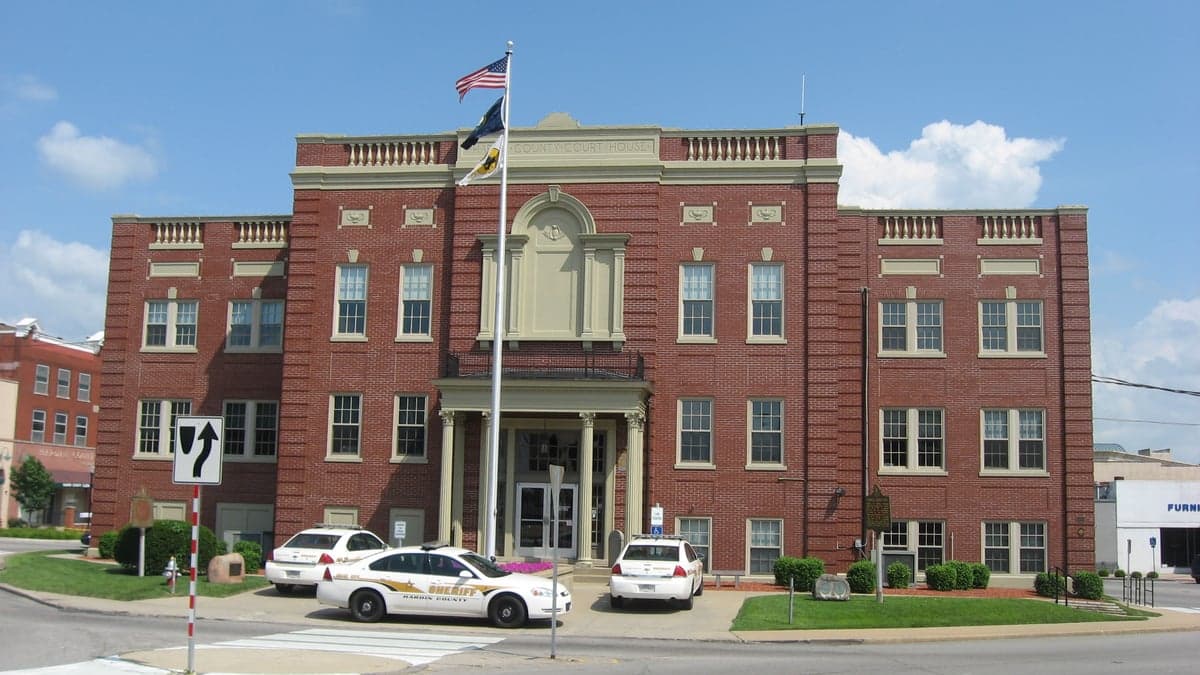
Photo: Wikipedia
Personal Sovereignty in Hardin County
Viable for self-reliance. Generally workable, though some barriers may limit total independence.
What does Personal Sovereignty tell us?
Personal Sovereignty measures your capacity for self-reliance and independence with minimal government friction. Higher scores mean fewer barriers between you and the way you want to live... but it assumes you have the space you need and good neighbors.
What does this tell us?
Personal Sovereignty measures your capacity for self-reliance and independence with minimal government friction. Higher scores mean fewer barriers between you and the way you want to live... but it assumes you have the space you need and good neighbors.
State Policy
Energy independence: Importer (60% of energy produced in-state)
Personal Liberty
Homesteading

Personal Liberty Analysis
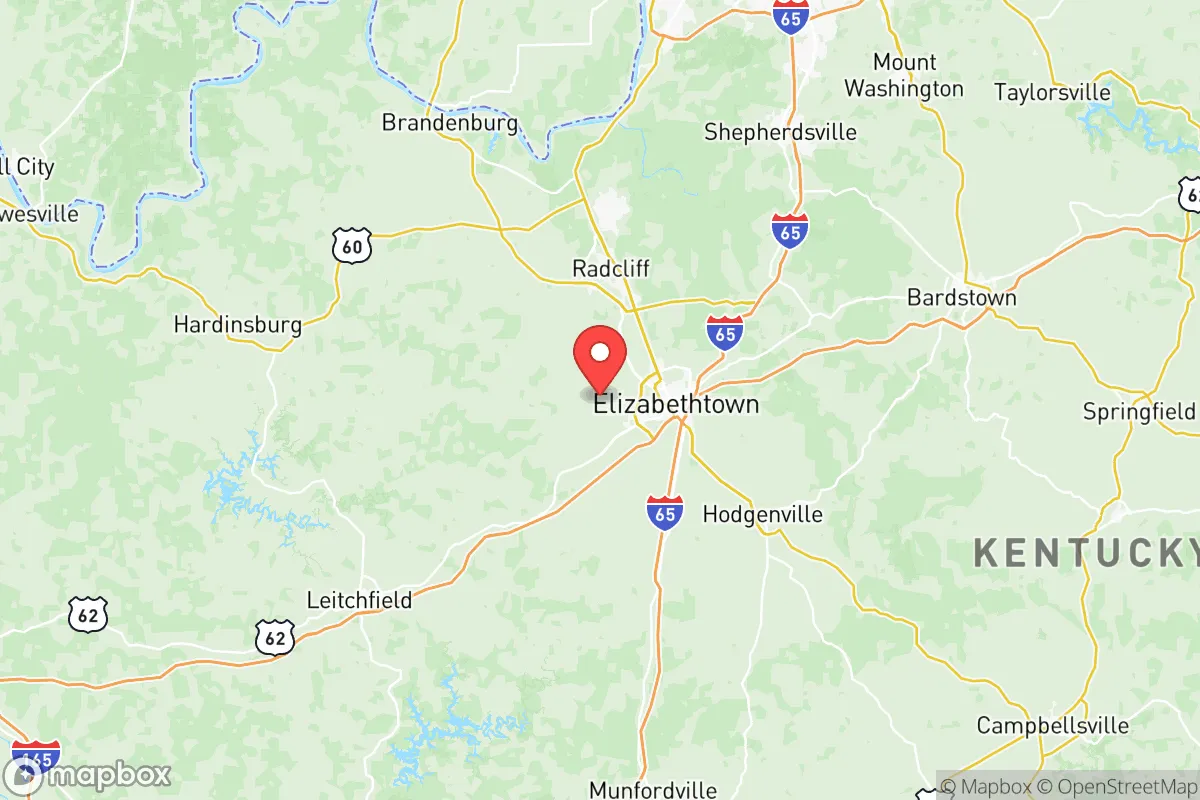
Hardin County, Kentucky provides a robust environment for personal sovereignty, upheld by state-level constitutional protections, low taxes, and a culture of self-reliance that varies from the urban center of Elizabethtown to the rural expanses of Sonora and Glendale. The county's mix of suburban bedroom communities around Fort Knox and open farmland in the south gives residents real choices about how much government they want in their daily lives. For the survivalist-minded or liberty-focused parent, the numbers and local attitudes paint a picture of genuine autonomy—especially when measured against the creeping overreach found in many other parts of the country. The key is knowing where to land inside the county boundaries, because even within Hardin, regulatory posture shifts block by block.
Low tax burden, light regulation, and what it means for your wallet
Kentucky's flat income tax of 4% (scheduled to phase down) and modest property taxes—roughly 0.75–0.85% of assessed value county-wide—leave more money in your pocket compared to high-tax states like Illinois or California. Hardin County does not impose a local income tax, and there is no inventory tax on businesses. Unincorporated areas—places like Cecilia, Rineyville, and Glendale—operate with minimal zoning. You can build a workshop, park an RV, or keep livestock on larger parcels without navigating a thicket of permits. In contrast, Elizabethtown and Radcliff have municipal zoning and building codes that can add friction, especially for unconventional structures like tiny homes or earth-sheltered builds. The county's regulatory posture is best described as "hands-off by default, intrusive on request." For a prepper prioritizing financial freedom and minimal interference, the southern and eastern rural pockets are the sweet spots.
Constitutional carry, self-defense laws, and gun culture on the ground
Kentucky permits constitutional carry for adults 21 and older—no permit required to carry a concealed handgun. There is no state-level red-flag law, no magazine capacity restriction, and the Castle Doctrine applies both inside your home and your vehicle. Hardin County is home to the Patton Museum and Fort Knox, giving the area a deeply ingrained military firearms culture. Radcliff, Vine Grove, and Muldraugh have gun shops, retail ranges, and informal shooting clubs that welcome new and experienced owners alike. In Elizabethtown, you will find a few city ordinances restricting discharge of firearms within town limits—but step five minutes outside the city boundary, and you can legally target shoot on your own land with reasonable safety setbacks. The county sheriff's office is known for issuing concealed carry permits (for those who still want reciprocity) without excessive wait times or capricious denials. For the parent who wants to teach kids firearms safety and self-defense, this culture is a distinct asset.
Homesteading viability, lot sizes, and off-grid feasibility across Hardin County
Lot sizes vary dramatically: inside Elizabethtown you are looking at half-acre subdivisions; in Cecilia, Sonora, and Glendale, you can find 5- to 40-acre parcels with minimal deed restrictions. Zoning in unincorporated areas allows for livestock, barns, and agricultural infrastructure without demanding a formal conditional-use permit. Off-grid living is feasible but requires workarounds. Kentucky has no statewide ban on rainwater collection, and solar panel installation is legal—though net metering policies are lukewarm and you may need to negotiate with the local electric co-op (Nolin RECC or Meade County RECC). Septic systems must be permitted through the county health department, but the standards are reasonable for standard gravity-fed systems. Burning trash is regulated by the state, and open burning of yard waste is generally allowed outside city limits. For a serious homesteader, the south end of the county—around Sonora and Glendale—offers the best combination of large acreage, low property taxes, and minimal enforcement of nuisance codes. Just avoid HOA-governed subdivisions near Elizabethtown if you want to keep chickens, drive a diesel truck, or dry lumber in your yard.
Parental rights, medical autonomy, and property freedoms you should know about
Kentucky has strong statutory protections for parental rights in education—parents have the right to review curriculum, opt out of sex education, and homeschool without excessive state oversight. No vaccine mandates exist for public school attendance; religious and medical exemptions are honored. During the COVID emergency, state laws were passed limiting the duration of business shutdowns and vaccine requirements by private employers, providing a buffer against future overreach. On the medical freedom front, Kentucky does not have a "right to try" constitutional amendment, but it does allow terminally ill patients to access experimental treatments under federal law. Property rights are generally solid: Hardin County rarely uses eminent domain for private development, and land values remain low enough that the average family can buy acreage outright. The biggest threat to personal sovereignty locally is not the county itself but the federal footprint of Fort Knox—a massive base that can impose certain security restrictions if you live in adjacent communities like Radcliff or Vine Grove. Noise ordnances and occasional flight restrictions exist, but they are a minor trade-off for the economic stability the base provides.
Overall, Hardin County stands out as a strong contender for anyone seeking maximum personal sovereignty in the Ohio Valley region. It avoids the heavy-handed regulation of Louisville or Lexington, the high taxes of Frankfort, and the coastal restrictions of western states. The balance of low taxes, constitutional carry, minimal zoning in rural areas, and solid parental rights makes it a strategic choice for singles and parents who value freedom over proximity to urban amenities. For those willing to live outside the towns—in Cecilia, Glendale, or Sonora—the sovereignty picture approaches what you would find in rural Idaho or Texas, but with milder winters and closer access to the industrial and logistical hub of the I-65 corridor. Just vet your specific parcel for deed restrictions, check the septic soil report, and be aware that the county health department still holds power over your well and waste system. Everything else, the Commonwealth largely leaves to you.

* Values derived from national, state, county, city and local statistics and may differ in a specific area. Last updated: 2026-06-01T15:00:15.000Z
Narrative content on this page is AI-generated and may contain mistakes. Verify any details that matter before acting on them.
ReloMaps may earn a commission from affiliate links at no extra cost to you.

