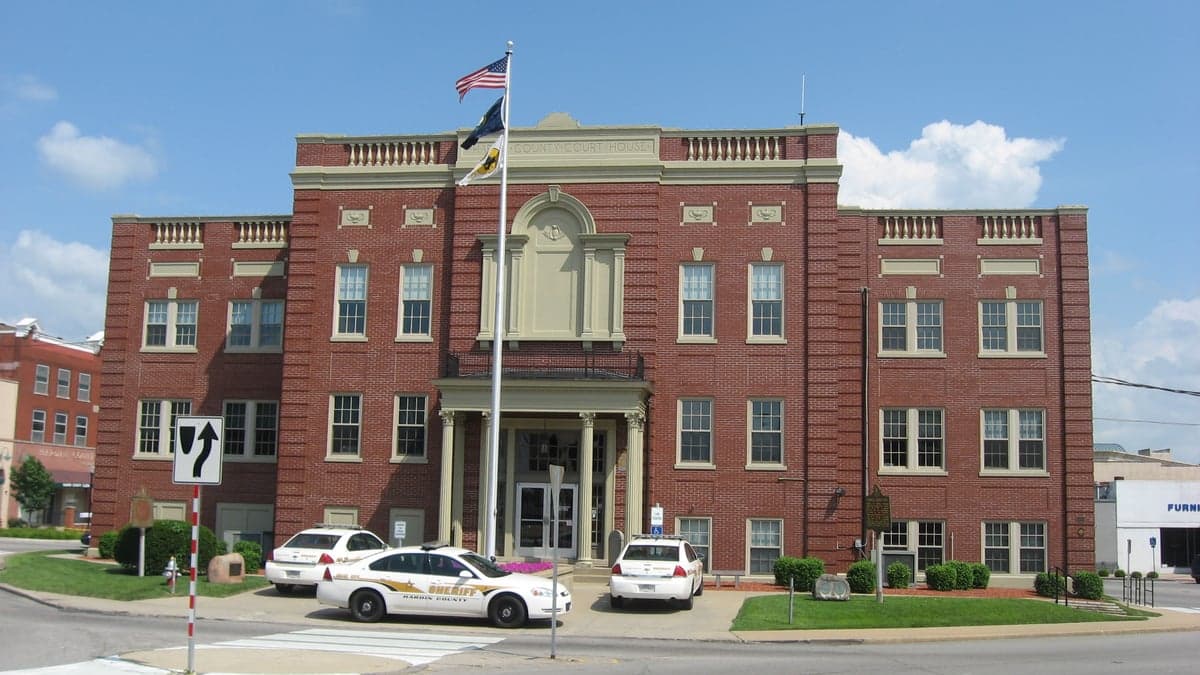
Photo: Wikipedia
Quality of Life in Hardin County
A livable area that tracks near national norms for affordability, walkability, and neighborhood health.
What does Quality of Life tell us?
Quality of Life measures an area by evaluating factors like cost of living, nearby amenities, country club access, airport proximity, socioeconomic signals and neighborhood character. For large states, this is a general average — quality of life can vary dramatically between metro areas, suburbs, and rural communities within the same state.
What does this tell us?
Quality of Life measures an area by evaluating factors like cost of living, nearby amenities, country club access, airport proximity, socioeconomic signals and neighborhood character. For large states, this is a general average — quality of life can vary dramatically between metro areas, suburbs, and rural communities within the same state.
Cost of Living
22% below national average
115%
The Real Cost of Living in Hardin County for 2026
| Tier | Individual | Family (4) |
|---|---|---|
| Survival | $15k | $28k |
| Comfortable | $40k | $59k |
| Luxury | $122k+ | $189k+ |
| Elite (Top 5%) | $150k+ | $233k+ |
Quality-of-Life Analysis
Hardin County, Kentucky, offers a broad quality-of-life spectrum that ranges from the dense, amenity-rich environment of its largest city, Elizabethtown, to the quiet, open landscapes of rural communities like Cecilia and Rineyville. With a cost of living index of 78 — well below the national average of 100 — the county attracts a mix of military families connected to Fort Knox, commuters working in Louisville or Bowling Green, and those seeking affordable land for country living. The county’s character shifts noticeably from its commercial core to its agricultural periphery, giving prospective residents clear trade-offs between convenience and space.
Largest town(s) & population centers
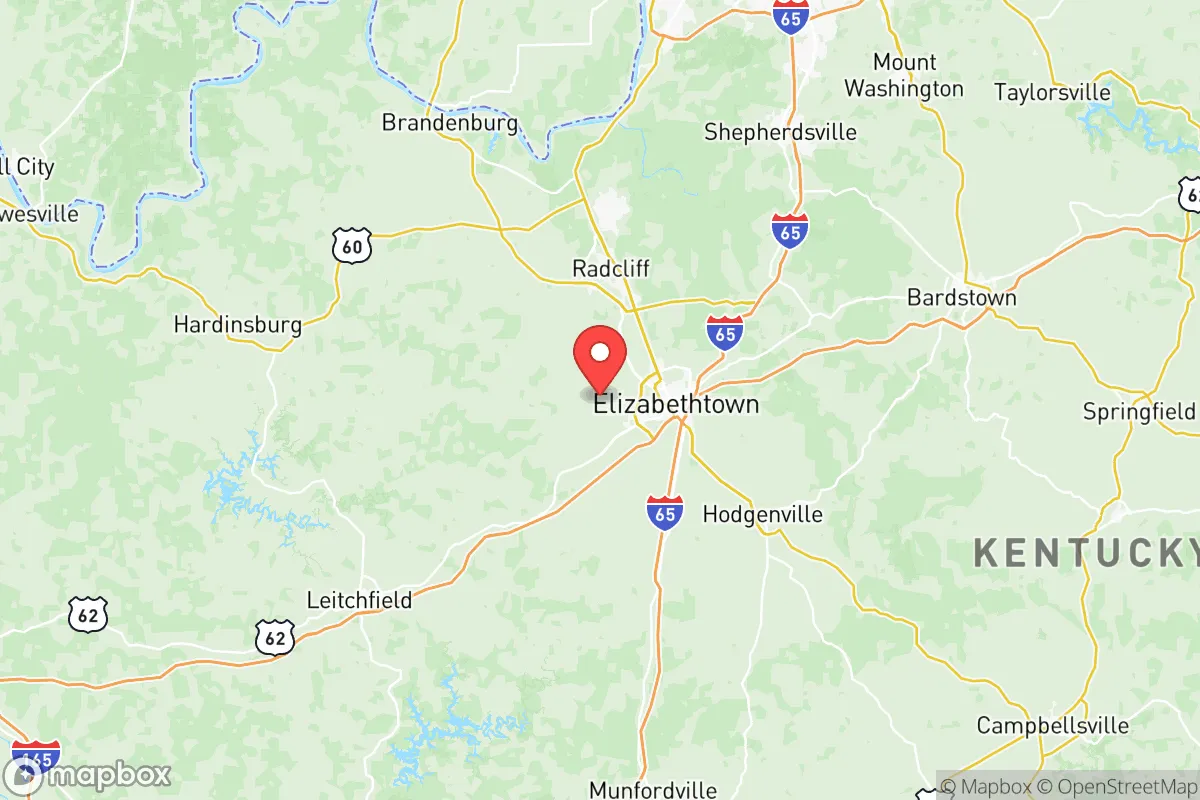
Elizabethtown, the county seat and largest city, is the commercial and cultural hub of Hardin County. Home to roughly 32,000 residents, it offers the most diverse set of amenities: regional retail at the Towne Mall, healthcare through Baptist Health Hardin, and dining options that include local breweries and national chains. Daily life here is car-dependent but compact, with most errands within a 10-15 minute drive. The city’s public schools, particularly John Hardin High School and Central Hardin High School, are well-regarded. Radcliff, immediately south of Elizabethtown and adjacent to the Fort Knox main gate, is the county’s second-largest city (population ~23,000). Its character is heavily shaped by the military presence, with a higher concentration of rental housing, fast-food outlets, and services catering to active-duty personnel and veterans. Radcliff’s median home value is slightly lower than Elizabethtown’s, and its school system, North Hardin High School, serves a notably diverse student body. Vine Grove, a smaller town of about 6,000, sits between Radcliff and Fort Knox and offers a quieter, more established residential feel with older homes and a small historic downtown.
Smaller towns & rural pockets
Outside the Elizabethtown-Radcliff corridor, Hardin County’s smaller communities offer a markedly different pace. Cecilia (population ~600) is a rural crossroads with a handful of local businesses and a strong agricultural base; its residents typically commute 20-30 minutes to Elizabethtown for groceries and employment. Rineyville, located along U.S. Route 62 west of Elizabethtown, is an unincorporated community with a post office, a few churches, and large-lot subdivisions that appeal to families wanting acreage without total isolation. Glendale, near the county’s southern edge, is a tiny historic hamlet (population ~400) known for its annual Glendale Crossing Festival and its proximity to the Glendale Industrial Park, which houses a major Amazon fulfillment center. Eastview and Sonora are similarly small, with Sonora offering a few local eateries and a quiet, neighborly atmosphere. These areas lack the retail and medical infrastructure of the larger towns, but they provide lower land prices and a sense of community that many find appealing.
Cost & lifestyle range
The cost of living in Hardin County varies noticeably by location. In Elizabethtown, the median home value of $205,900 and median rent of $947 are the county’s highest, but still significantly below the national median. A typical three-bedroom home in a newer subdivision near Elizabethtown’s western edge might list for $220,000-$240,000, while a comparable home in Radcliff could be $180,000-$200,000. At the lower end, rural properties in Cecilia or Rineyville often sell for $150,000-$180,000, with older mobile homes on acreage available for under $100,000. The average commute countywide is 22.9 minutes, but that figure masks a wide split: Elizabethtown residents often commute under 15 minutes, while those in Glendale or Sonora may drive 30-40 minutes to jobs in Elizabethtown or Louisville. Amenities follow the same gradient — Elizabethtown has a YMCA, a performing arts center, and multiple grocery chains, while rural residents rely on small local markets or make weekly trips into town. Property taxes are low across the county (roughly 0.8% of assessed value), but rural homeowners pay more for well and septic maintenance and have fewer options for high-speed internet, though fiber coverage is expanding.
Hardin County works best for people who value affordability and choice of setting. Military families and defense contractors gravitate toward Radcliff and Vine Grove for proximity to Fort Knox. Professionals who want walkable dining and shopping but still need a low cost of living settle in Elizabethtown. Those seeking a slower, land-based lifestyle — hobby farmers, remote workers, retirees — find good value in Cecilia, Rineyville, or Glendale. The county’s mix of urban, suburban, and rural options, all within a 30-minute drive of each other, makes it a practical choice for a wide range of budgets and preferences.

Crime in Hardin County
Generally safer than 62% of comparable U.S. locations.
Violent CrimeViolent Crime Analysis
Property CrimeProperty Crime Analysis
Crime Analysis
Hardin County, Kentucky, presents a moderate safety profile with a violent crime rate of 212.6 per 100,000 residents and a property crime rate of 1,275.5 per 100,000, both well below national averages but slightly above some neighboring rural counties. The county's largest city, Elizabethtown, along with Radcliff and Vine Grove, experience varying levels of crime shaped by proximity to Fort Knox, local policing strategies, and the judicial philosophy of the 9th Judicial Circuit.
Crime in context
Compared to the rest of Kentucky, Hardin County's violent crime rate sits roughly 12% below the state average of about 240 per 100,000, while its property crime rate is approximately 29% lower than Kentucky's average of 1,800 per 100,000. Nationally, the U.S. violent crime rate hovers near 380 per 100,000 and property crime near 2,100 per 100,000, making Hardin County 44% safer than the national baseline for violent crime and 39% safer for property crime. These figures contrast sharply with larger metro areas such as Louisville (Jefferson County) or Lexington, where progressive district attorneys have pursued reform-oriented sentencing policies that critics argue reduce accountability and encourage repeat offenses. Hardin County's Commonwealth's Attorney's office has historically maintained a more traditional, victim-focused approach, emphasizing prosecution rates and incarceration for violent offenders — a factor that helps keep local crime rates lower than in neighboring regions with lenient justice systems.
What residents experience
Property crime accounts for the majority of incidents residents encounter daily. Theft from vehicles, package theft, and residential burglary are the most common complaints, particularly in areas with easy highway access such as the I-65 corridor through Elizabethtown and along the Dixie Highway (US 31W) in Radcliff. Violent crime is less frequent but not absent: aggravated assaults and robberies tend to cluster in specific commercial zones and older residential neighborhoods. In Elizabethtown, the central downtown blocks and areas near the Elizabethtown Shopping Center see higher incident volumes, while Radcliff's neighborhoods immediately adjacent to the Fort Knox gates report more property crime related to transient populations. Vine Grove and West Point experience far fewer issues — Vine Grove's violent crime rate is estimated at under 100 per 100,000, making it one of the safest small towns in the county. The military police presence at Fort Knox itself provides robust security for base housing and facilities, but that protection does not extend into civilian areas like Radcliff where rental turnover is high.
Neighborhood-level variation is significant within Hardin County. In Elizabethtown, northern neighborhoods near I-65 and the railroad tracks typically have elevated property crime rates, while newer subdivisions on the south side (Lakewood, Cedar Creek) and the west side near Freeman Lake report far fewer incidents. Radcliff shows a sharp divide: older housing stock along Wilson Road and the area around Radcliff City Park tends to have higher calls for service, whereas the community of Rineyville and newer developments east of the city limits are quieter. Vine Grove and West Point consistently rank as the safest communities in the county, with property crime rates below 800 per 100,000. For families or retirees seeking the lowest risk, those two towns — combined with outlying unincorporated areas like Cecilia and Glendale — offer the most secure daily life in Hardin County.
* Values derived from national, state, county, city and local statistics and may differ in a specific area. Last updated: 2026-06-01T15:00:15.000Z
Narrative content on this page is AI-generated and may contain mistakes. Verify any details that matter before acting on them.
ReloMaps may earn a commission from affiliate links at no extra cost to you.

