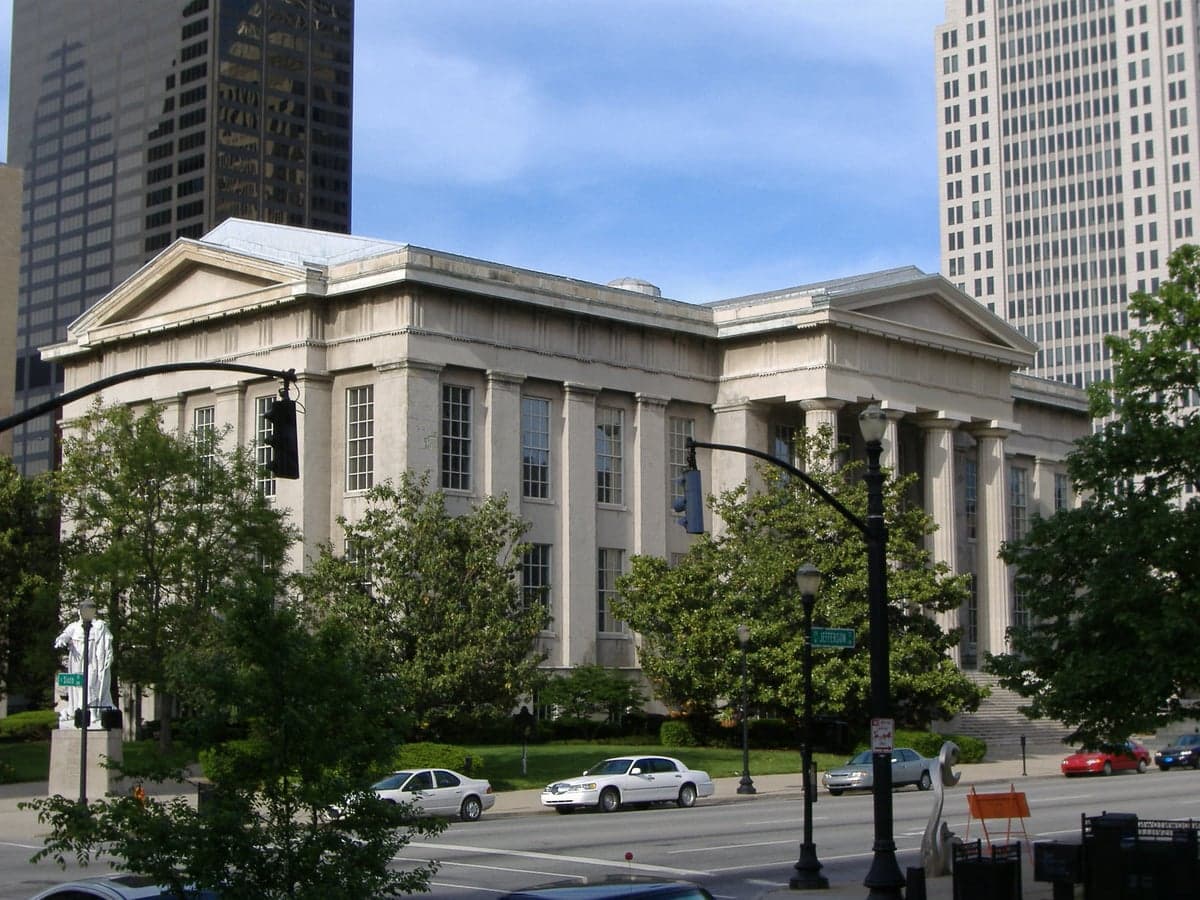
Photo: Wikipedia
Political ClimatePolitical Climate in Jefferson County
Showing district-level results — no local-only data available.
Local Political AnalysisPolitical Analysis of Jefferson County
Look, I’ve lived in Jefferson County my whole life, and I’ve watched this place change. The political climate here is solidly blue, with a Cook PVI of D+10, meaning it leans about 10 points more Democratic than the national average. That’s a stark contrast to the rest of Kentucky, which sits at R+15. The shift has been steady over the last two decades, driven mostly by Louisville’s growth and the suburban sprawl around it. If you’re coming from a red county, you’ll feel the difference in local elections, school board decisions, and even how people talk about taxes and property rights.
How it compares
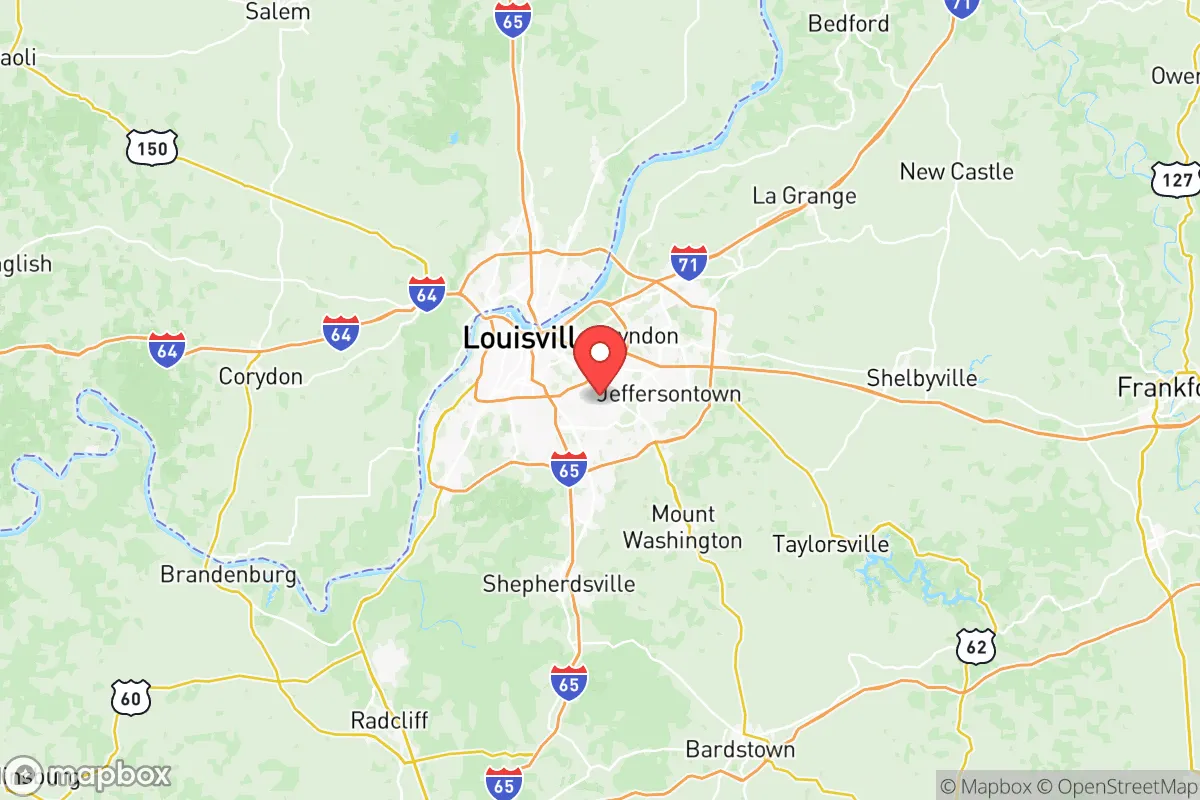
The gap between Jefferson County and the rest of Kentucky isn’t just a statistic—it’s a lived reality. Drive 20 minutes east to Shelby County, and you’re in deep red territory where folks still wave Trump flags. Here in Jefferson, you’ve got a mix. The city of Louisville itself is overwhelmingly blue, especially in neighborhoods like the Highlands, Germantown, and Old Louisville. But head out to the eastern suburbs—places like Middletown, Prospect, and parts of Fern Creek—and you’ll find precincts that vote reliably Republican. The swing areas are in the middle-ring suburbs like Jeffersontown and Okolona, where you’ll see a 50-50 split in local races. That’s where the real tension plays out: in school board meetings and zoning hearings, where progressive policies from the city center clash with more traditional, conservative values from the outskirts.
What this means for residents
For a conservative-leaning resident, the biggest concern here is government overreach. Louisville Metro Council has pushed through a number of ordinances in recent years that feel like they’re testing the limits of personal freedom—think mask mandates that lingered longer than most, strict noise ordinances that target private property use, and a push for higher density zoning that reduces your say over your own neighborhood. The local school board has also moved left, with curriculum changes that prioritize social justice over core academics. If you value local control and minimal interference from city hall, you’ll find yourself voting against the grain more often than not. The tax burden is higher here than in surrounding counties, too, with property taxes funding a lot of city programs you might not agree with. It’s not a disaster, but it’s a constant friction.
Culturally, Jefferson County is a world apart from the rest of Kentucky. Louisville has a vibrant arts scene, a strong food culture, and a more diverse population—about 30% of residents are Black, and there’s a growing Hispanic community. That diversity is a strength, but it also means the political conversation is different. You’ll hear more about equity, inclusion, and climate action than you would in rural Kentucky. The local paper, the Courier Journal, leans left, and most of the city’s major employers—like Humana, UPS, and the University of Louisville—tend to support progressive initiatives. If you’re looking for a place where your conservative values are the norm, this isn’t it. But if you can handle being in the minority and want to keep an eye on how far the pendulum swings, Jefferson County offers a front-row seat to the cultural battle playing out across the country. Just know that the trend line is blue, and it’s not turning back anytime soon.

State Political ClimatePolitical Climate in Kentucky
State Political AnalysisPolitical Environment in the State
Kentucky is a deeply red state with a Cook PVI of R+15, meaning it votes about 15 points more Republican than the national average in presidential elections. The dominant coalition is a mix of rural conservatives, evangelical Christians, and working-class voters who have shifted rightward over the past two decades, particularly as the Democratic Party’s national brand has moved left. While Kentucky was once a reliably Democratic state at the local level—electing Democrats to state legislature seats well into the 1990s—the past 10-20 years have seen a near-total realignment, with Republicans now holding supermajorities in both chambers of the General Assembly, all but one of the state’s congressional seats, and both U.S. Senate seats. The shift accelerated after 2010, driven by cultural backlash to Obama-era policies and a growing distrust of federal overreach.
Urban vs. rural divide
The political map of Kentucky is starkly divided between its few urban centers and the vast rural expanse. Louisville (Jefferson County) and Lexington (Fayette County) are the two blue dots in a sea of red, consistently voting Democratic by double digits in statewide races. Louisville’s urban core and Lexington’s university-driven population tilt left, but even these cities have conservative suburbs like Prospect and Nicholasville that lean Republican. The real engine of the state’s red lean is the rest of the state: counties like Pike, Knox, and Graves routinely vote 70-80% Republican. The Northern Kentucky suburbs around Cincinnati—places like Florence and Independence—are reliably conservative but slightly more moderate than deep rural areas. The Bowling Green area (Warren County) has become a conservative stronghold, driven by growth in manufacturing and a strong military presence at Fort Knox. The Ashland region in the east has seen a dramatic flip from union Democrat to Trump Republican, reflecting the broader realignment of working-class voters.
Policy environment
Kentucky’s policy environment is aggressively conservative on most fronts. The state has a flat income tax that is being phased down from 5% to 4% by 2026, with a goal of elimination—a clear signal of a low-tax philosophy. There is no state property tax, and sales tax is capped at 6%. The regulatory posture is business-friendly, with right-to-work laws and a tort reform system that caps non-economic damages. On education, Kentucky has a robust school choice movement: the state passed a school choice tax credit scholarship program in 2021, and in 2024 expanded it to allow education savings accounts (ESAs) for low-income families. However, the state’s public school system remains underfunded relative to national averages, and teacher protests in 2018 and 2019 highlighted tensions over pension reform. Healthcare is a mixed bag: Kentucky expanded Medicaid under the Affordable Care Act in 2014, but the state has since imposed work requirements (currently tied up in court) and moved toward a managed-care model. Election laws are strict: voter ID is required, early voting is limited to three days (though a 2024 law expanded it to two weeks for primary and general elections), and absentee voting requires an excuse. The state also passed a constitutional carry law in 2019, allowing permitless concealed carry of firearms.
Trajectory & freedom
Kentucky is moving in a decidedly more free direction on most fronts, though not without some concerning trends. On the positive side, the state has expanded gun rights significantly: the 2019 constitutional carry law was followed by a 2023 law prohibiting local governments from enacting stricter gun ordinances than the state. Parental rights have been strengthened: a 2022 law requires schools to notify parents of any changes to a student’s health or well-being, and a 2023 law banned gender-affirming care for minors. Medical autonomy has been protected through a strong Right to Try law and a 2024 law shielding doctors who refuse to perform procedures they find morally objectionable. Property rights are solid, with a 2022 law limiting the use of eminent domain for private development. However, there are red flags: the state’s occupational licensing regime remains burdensome, and a 2023 law expanding the state’s power to revoke licenses for non-payment of student loans raised eyebrows. The biggest concern for freedom-minded residents is the state’s tax burden—while income tax is being cut, property taxes are levied at the local level and can be high in growing areas like Georgetown and Richmond. The state also has a broadband expansion program that some see as necessary infrastructure, others as government overreach.
Civil unrest & political movements
Kentucky has seen its share of political flashpoints, though they are less frequent than in coastal states. The most notable recent unrest was the Breonna Taylor protests in Louisville in 2020, which led to several nights of property damage and a heavy police response. That event galvanized a progressive activist movement in Louisville, but it also hardened conservative sentiment in the rest of the state. The 2020 election integrity debate was muted compared to other states, but there were calls for audits in some rural counties. Immigration politics are relatively quiet, as Kentucky has a small foreign-born population (about 4%), but there have been localized tensions in Shelbyville and Louisville over refugee resettlement. The state has no sanctuary cities, and a 2023 law requires local law enforcement to cooperate with ICE. There is a small but vocal secessionist movement in eastern Kentucky, tied to the broader Appalachian identity politics, but it has no real political traction. The most visible political movement in recent years has been the school choice advocacy, which has successfully pushed through legislation despite opposition from teachers’ unions. The 2024 election saw a surge in turnout in rural counties, driven by concerns over border security and transgender policies.
Projection
Over the next 5-10 years, Kentucky is likely to become even more conservative, but with some important caveats. In-migration is modest but growing, with people moving from California, Illinois, and Ohio for lower housing costs and a more traditional lifestyle. These newcomers tend to be conservative-leaning, reinforcing the state’s red tilt. However, the Louisville and Lexington metros are growing faster than rural areas, which could slowly shift the state’s political center of gravity if those cities continue to attract younger, more diverse populations. The Northern Kentucky suburbs are also seeing an influx of professionals from Cincinnati, which could moderate the region slightly. The biggest wildcard is the opioid crisis and its aftermath: eastern Kentucky is still struggling with population loss and economic decline, which could either deepen conservative resentment or open the door to populist third-party movements. The state’s flat tax phase-down will likely continue, making Kentucky more attractive to businesses and high-income earners. The school choice expansion will probably accelerate, potentially leading to a voucher-like system within a decade. The biggest risk for freedom-minded residents is that the state’s Medicaid expansion creates a long-term dependency that could lead to higher taxes or federal control. Overall, a newcomer moving to Kentucky today can expect to find a state that is solidly conservative, with a government that is generally friendly to personal liberty, but with the usual caveats about local property taxes and occupational licensing.
Bottom line for a new resident: Kentucky offers a strong conservative environment with low taxes, robust gun rights, and a government that respects parental authority. The urban-rural divide is real, so choose your location carefully—Bowling Green, Richmond, or Florence are safer bets for a conservative lifestyle than Louisville or Lexington. The state is trending in the right direction on most freedom metrics, but keep an eye on local property taxes and the ongoing fight over school funding. If you value a community where traditional values are the norm and government overreach is still relatively limited, Kentucky is a solid choice.
* Values derived from national, state, county, city and local statistics and may differ in a specific area. Last updated: 2026-05-12T12:12:53.000Z
Narrative content on this page is AI-generated and may contain mistakes. Verify any details that matter before acting on them.
ReloMaps may earn a commission from affiliate links at no extra cost to you.

