Photo: Wikipedia
Political ClimatePolitical Climate in Montgomery County
Showing district-level results — no local-only data available.
Local Political AnalysisPolitical Analysis of Montgomery County
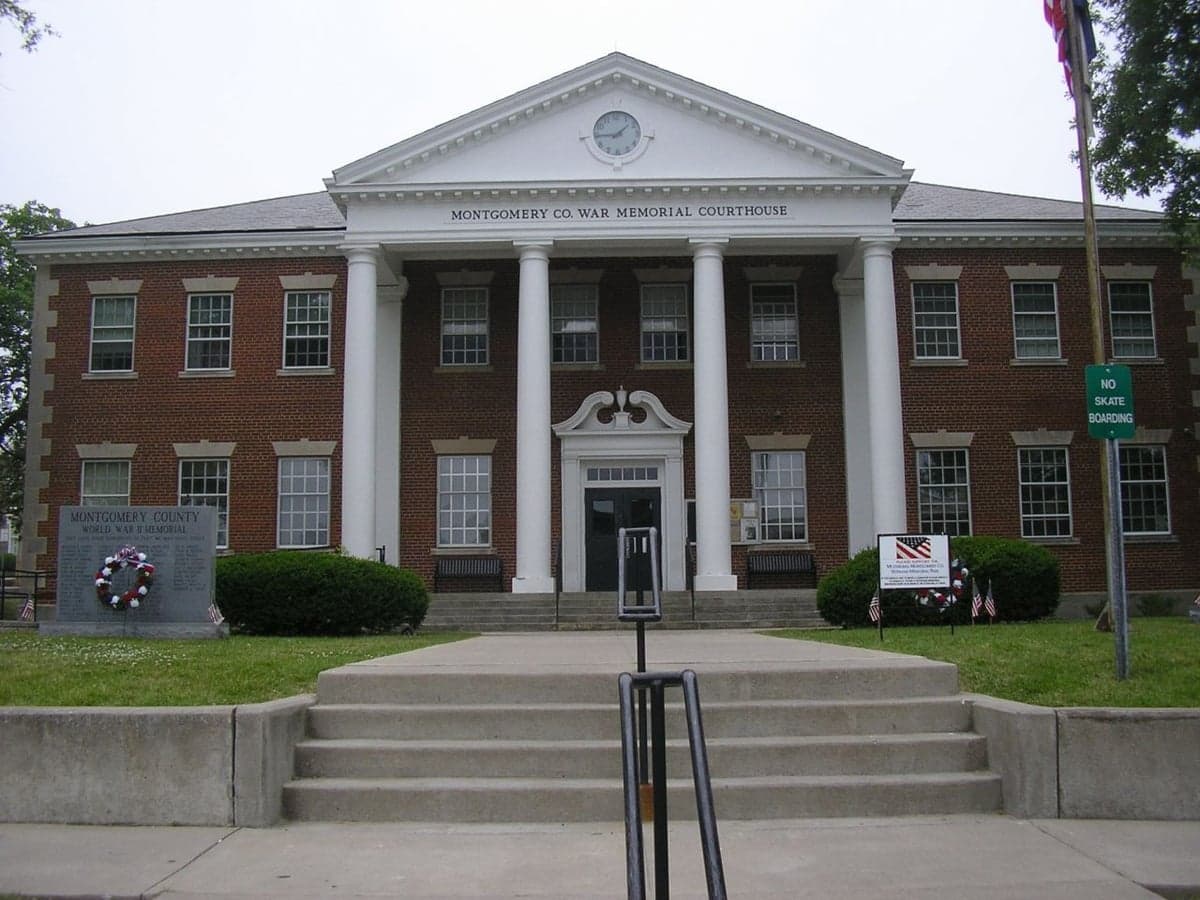
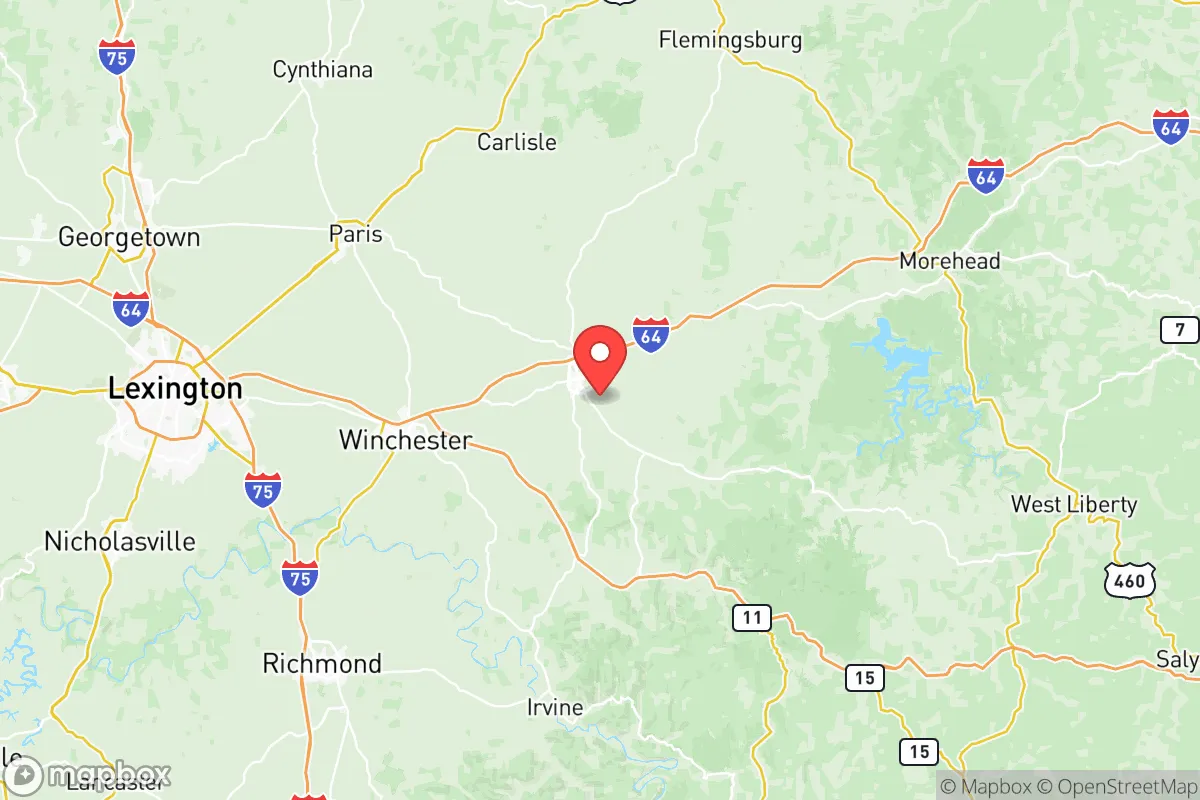
Montgomery County, Kentucky, sits in a political space that's noticeably more moderate than the deep-red state that surrounds it. With a Cook Partisan Voting Index (PVI) of R+7, the county leans Republican, but it's a full eight points less conservative than Kentucky's statewide PVI of R+15. This isn't a recent fluke; the county has a history of being a bellwether, often voting for the winner in statewide races, though the GOP tide has been rising steadily here since the early 2000s. The real story, however, is the variation within the county itself, where you can find everything from solidly blue precincts to deep-red rural pockets.
How it compares
The gap between Montgomery County's R+7 and Kentucky's R+15 is significant and tells you a lot about the local political landscape. The city of Mount Sterling, the county seat and economic hub, is where the moderation is most visible. Its downtown and older neighborhoods, particularly around the courthouse square, have a noticeable Democratic presence, fueled by a mix of longtime residents, small business owners, and a growing number of younger professionals. In contrast, the rural precincts outside the city limits—places like Jeffersonville and the area around Camargo—are deeply Republican, often voting 70-80% for GOP candidates. The swing precincts are typically found in the newer subdivisions on the outskirts of Mount Sterling, where families moving from more liberal areas (like Lexington, just 40 minutes west) are slowly shifting the balance. While the county as a whole hasn't voted for a Democratic presidential candidate since 1996, local races—like the county judge-executive or school board—are often competitive, with Democrats still holding a few seats.
What this means for residents
For a conservative resident, Montgomery County feels like a comfortable place to live. The local GOP is well-organized, and the county's Republican lean means most local offices, from the sheriff to the fiscal court, are held by Republicans. You'll find strong support for Second Amendment rights, low taxes, and a general skepticism of state-level mandates from Frankfort. For a liberal resident, the situation is more nuanced but not hostile. You can find like-minded people in Mount Sterling's downtown and in local activist groups, and the county's moderate streak means that overtly partisan issues rarely dominate local discourse. The practical reality is that most people here prioritize local concerns—like the condition of the water system, the quality of the schools, or the expansion of the local hospital—over national political battles. The county's political identity is less about ideological purity and more about a pragmatic, "let's get things done" attitude that has historically kept the extremes at bay.
Cultural and policy distinctions
One of the most telling cultural distinctions is the county's relationship with the state's alcohol laws. Montgomery County is a "wet" county, meaning alcohol sales are legal, which sets it apart from many of its more conservative neighbors in eastern Kentucky. This is a direct result of local votes and reflects the county's more moderate, business-friendly outlook. You'll also notice a stronger emphasis on local economic development, with the county actively courting manufacturing and logistics jobs (thanks to its location on I-64) rather than relying solely on the coal or tobacco industries that dominate other parts of the state. The local school system, Montgomery County Schools, is a point of pride and a unifying issue, with both Republicans and Democrats supporting increased funding and vocational programs. In short, the political climate here is less about red vs. blue and more about a shared identity as a community that values its independence, its local institutions, and its ability to chart its own course, even if that course sometimes diverges from the rest of Kentucky.

State Political ClimatePolitical Climate in Kentucky
State Political AnalysisPolitical Environment in the State
Kentucky is a deeply red state with a Cook PVI of R+15, meaning it votes about 15 points more Republican than the national average in presidential elections. Over the last 10-20 years, the state has shifted sharply rightward, driven by the collapse of the old Blue Dog Democrat coalition in rural areas and the cultural realignment of working-class voters. While Democrats once held a near-lock on state government, Republicans now control the governorship, supermajorities in both legislative chambers, all but one of the six congressional seats, and both U.S. Senate seats. The shift is most visible in places like Ashland and Paducah, which were reliably Democratic for generations but now vote Republican by wide margins.
Urban vs. rural divide
The political map of Kentucky is a classic urban-rural split, but with a twist: even the state's largest city, Louisville (Jefferson County), is not a deep-blue stronghold like Atlanta or Chicago. Louisville leans Democratic but has a significant Republican minority, especially in its eastern suburbs like Anchorage and Middletown. Lexington (Fayette County) is the most reliably blue city in the state, driven by the University of Kentucky and a growing professional class, but it is surrounded by deep-red rural counties. Northern Kentucky—the suburban counties of Boone, Kenton, and Campbell across the Ohio River from Cincinnati—is a Republican stronghold, with Boone County voting about 60% Republican in recent cycles. The rural west, including Owensboro and Hopkinsville, is solidly red, while the eastern coalfields, once a Democratic bastion under the "union Democrat" model, have flipped hard to the GOP. The only reliably blue counties outside Louisville and Lexington are a handful of small, historically Democratic pockets like Franklin County (Frankfort, the state capital) and Boyd County (Ashland), which still lean Democratic but are trending red.
Policy environment
Kentucky's policy environment is conservative across the board, with a few notable exceptions. The state has a flat income tax rate that is being phased down from 5% to 4% by 2026, with a goal of eventual elimination. Property taxes are low, and there is no state-level estate or inheritance tax. The regulatory posture is business-friendly, with a right-to-work law and a tort reform cap on non-economic damages. Education policy is a flashpoint: the state has a robust charter school law (passed in 2017) but no private school voucher program yet, though a 2024 bill creating education savings accounts for special-needs students passed. Healthcare is a mixed bag: Kentucky expanded Medicaid under the Affordable Care Act, but the state has imposed work requirements (currently tied up in court) and has a strong anti-abortion stance, with a near-total ban on abortion after six weeks (with no exceptions for rape or incest). Election laws are moderately restrictive: voter ID is required, early voting is limited to three days (including a Saturday), and no-excuse absentee voting was eliminated after the pandemic. Gun laws are among the most permissive in the nation: constitutional carry (no permit needed to carry a concealed firearm) was enacted in 2019, and there is no red-flag law.
Recent policy direction
The last five years have seen a steady march of conservative legislation. In 2023, the legislature passed a sweeping "Parents' Bill of Rights" (SB 150) that bans gender-affirming care for minors, restricts classroom discussion of sexual orientation and gender identity, and requires schools to notify parents of any changes in a student's mental or physical health. The same session saw a near-total abortion ban (HB 3) with no exceptions for rape or incest, and a law (SB 102) that allows concealed carry in K-12 schools for school staff who complete training. On the property rights front, the state passed a law (HB 5) in 2024 that limits local governments' ability to regulate short-term rentals like Airbnb. On taxation, the income tax rate was cut from 5% to 4% in 2024, with triggers for further cuts tied to revenue growth. On voting, the legislature passed a law (SB 1) in 2021 that shortened the early voting window and eliminated no-excuse absentee voting, though it also added a state holiday for Election Day. On privacy and surveillance, Kentucky has no comprehensive data privacy law, but it did pass a law (HB 5) in 2024 that restricts the use of facial recognition technology by law enforcement. On medical and bodily autonomy, the state has banned gender-affirming care for minors and restricted abortion, but it has also expanded access to telehealth and allowed pharmacists to prescribe birth control.
Civil unrest & political movements
Kentucky has seen its share of political flashpoints. The 2020 protests in Louisville over the death of Breonna Taylor were among the largest in the nation, with weeks of demonstrations, property damage, and a heavy police response. The city remains a focal point for racial justice activism, and the state legislature responded with a package of police reform bills (including a ban on no-knock warrants) in 2021. On the right, the "Let Them Play" movement—parents demanding the resumption of high school sports during COVID—was particularly strong in Northern Kentucky and Bowling Green, and it helped fuel the 2022 election wave that gave Republicans a supermajority. Immigration politics are less visible than in border states, but there is a small but vocal movement in Louisville and Lexington to declare sanctuary city status, which has been met with state-level preemption laws banning such policies. Election integrity controversies have been muted compared to other states, though the 2020 election saw a brief push for an audit in Fayette County that went nowhere. Secession or nullification rhetoric is rare, though there is a small "State of Franklin" movement in eastern Kentucky that talks about joining West Virginia.
Projection
Over the next 5-10 years, Kentucky is likely to become even more Republican, but the margin of increase will slow. The key demographic driver is the continued out-migration of young, college-educated liberals from rural areas to Louisville and Lexington, and the in-migration of retirees and remote workers from the Midwest and Northeast to places like Bowling Green and Richmond. These newcomers tend to be moderate Republicans or independents, not hardline conservatives. The state's population is aging and growing slowly, which will reinforce the Republican lean. However, the urban centers—especially Louisville and Lexington—will continue to drift left, creating a more polarized state. The most likely scenario is that Kentucky remains R+15 to R+18, with Republicans holding supermajorities in the legislature but occasionally losing the governorship (as they did in 2019 and 2023) to a moderate Democrat like Andy Beshear. The policy direction will continue to be conservative but pragmatic: more tax cuts, more school choice, and continued restrictions on abortion and transgender rights, but with a willingness to compromise on issues like Medicaid expansion and infrastructure spending.
For a new resident, the bottom line is this: if you are a conservative, you will find Kentucky deeply welcoming, with low taxes, permissive gun laws, and a government that shares your values. If you are a liberal, you will find the state challenging—your vote will rarely matter in statewide elections, and you will face a legislature that is actively hostile to many of your priorities. But you will also find vibrant, blue-leaning communities in Louisville and Lexington where you can live comfortably, and a governor who has vetoed some of the most extreme legislation. The state is not a monolith, and the urban-rural divide means that your experience will depend heavily on where you choose to live. The trajectory is clear: Kentucky is getting redder, but it is also getting more polarized, and the cultural battles of the next decade will be fought in the statehouse and in the suburbs of Louisville and Northern Kentucky.
* Values derived from national, state, county, city and local statistics and may differ in a specific area. Last updated: 2026-09-20T02:44:48.000Z
Narrative content on this page is AI-generated and may contain mistakes. Verify any details that matter before acting on them.
ReloMaps may earn a commission from affiliate links at no extra cost to you.

