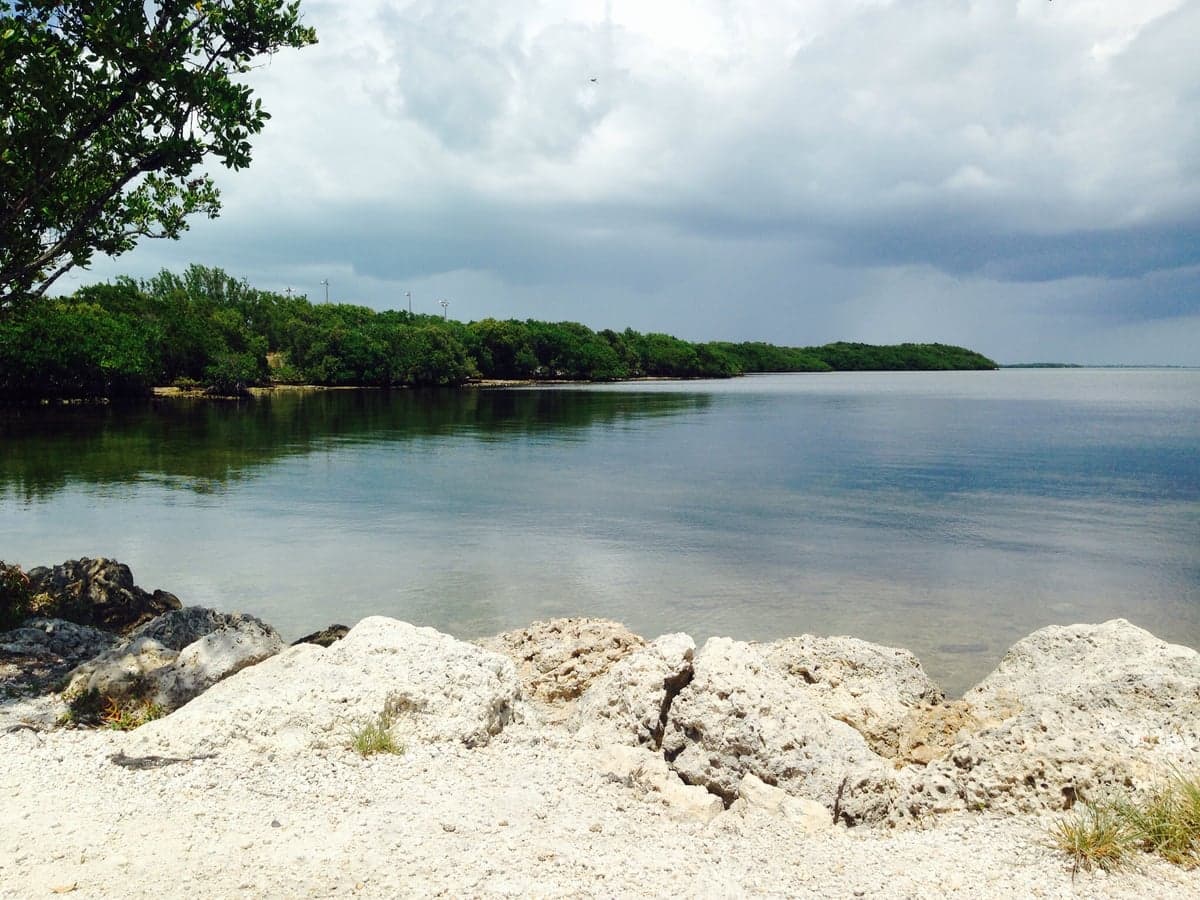
Photo: Wikipedia
Strategic Assessment of Key Largo, FL
Workable tactical position. Some exposure to population density or targets, but generally defensible in a crisis.
What does the Strategic Assessment tell us?
Our Strategic Assessment grades tactical survivability of an area. Major population centers, military targets, fallout zones, natural disasters, and border exposure all drive risk — lower exposure means a more defensible position in a crisis.
This is heavily inspired by Joel Skousen's Strategic Relocation book. Highly recommended you checkout the book ($)What does this tell us?
Our Strategic Assessment grades tactical survivability of an area. Major population centers, military targets, fallout zones, natural disasters, and border exposure all drive risk — lower exposure means a more defensible position in a crisis.
This is heavily inspired by Joel Skousen's Strategic Relocation book. Highly recommended you checkout the book ($)Strategic Pillars

Key Distances
Regional Safe Places
Below is our recommended "safe zones" in Florida and the surrounding area based on our strategic heuristics. For most people, it's unrealistic to live in a “safe zone” full-time due to work, family or other personal reasons. They tend to be more rural. However, many of these areas are perfect for second homes and retreat properties that double as a vacation home or even a short-term rental.

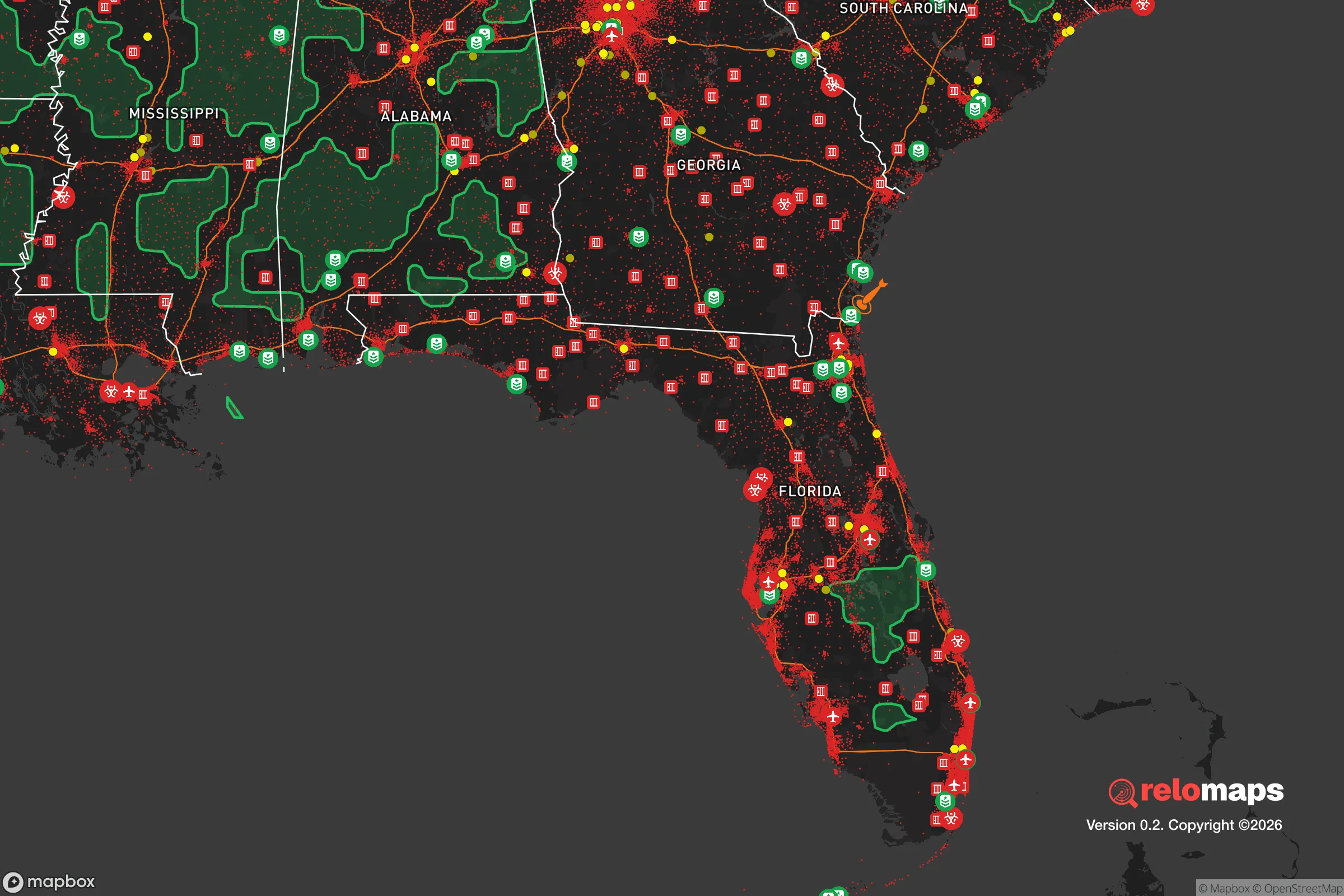


Important Note: For informational purposes only. This does not mean nothing bad ever happens in the green zones. Please use common sense. This is based on public data and modeled with AI. We tried to take a conservative approach but mistakes happen. We update this regularly as new information becomes available.
Solar Generator Recommendations
Backup power matters more here than in safer locations. We've picked three solar generators across budgets and capacity tiers — start with the budget unit if you only need a few essentials, or step up if you want to run a fridge and HVAC for days at a time.

Jackery Portable Power Station Explorer 300
Budget OptionPower on the Go: Weighing only 11 lbs, it's convenient to set up and store with book-sized foldable solar panels

BLUETTI Portable Power Station AC180
Designed for both indoor and outdoor scenarios, AC180 is highly capable as it has a robost capacity and continuous output power.

EF ECOFLOW DELTA Pro Ultra Power Station
Upgraded PickEcoFlow DELTA Pro Ultra is a whole-home energy system designed to grow with your family. Integrated with the Smart Home Panel 2, it scales to meet your evolving energy needs — keeping your home powered, intelligent, and secure through every stage of life.
We earn a commission, at no additional cost to you.
Strategic Assessment Analysis
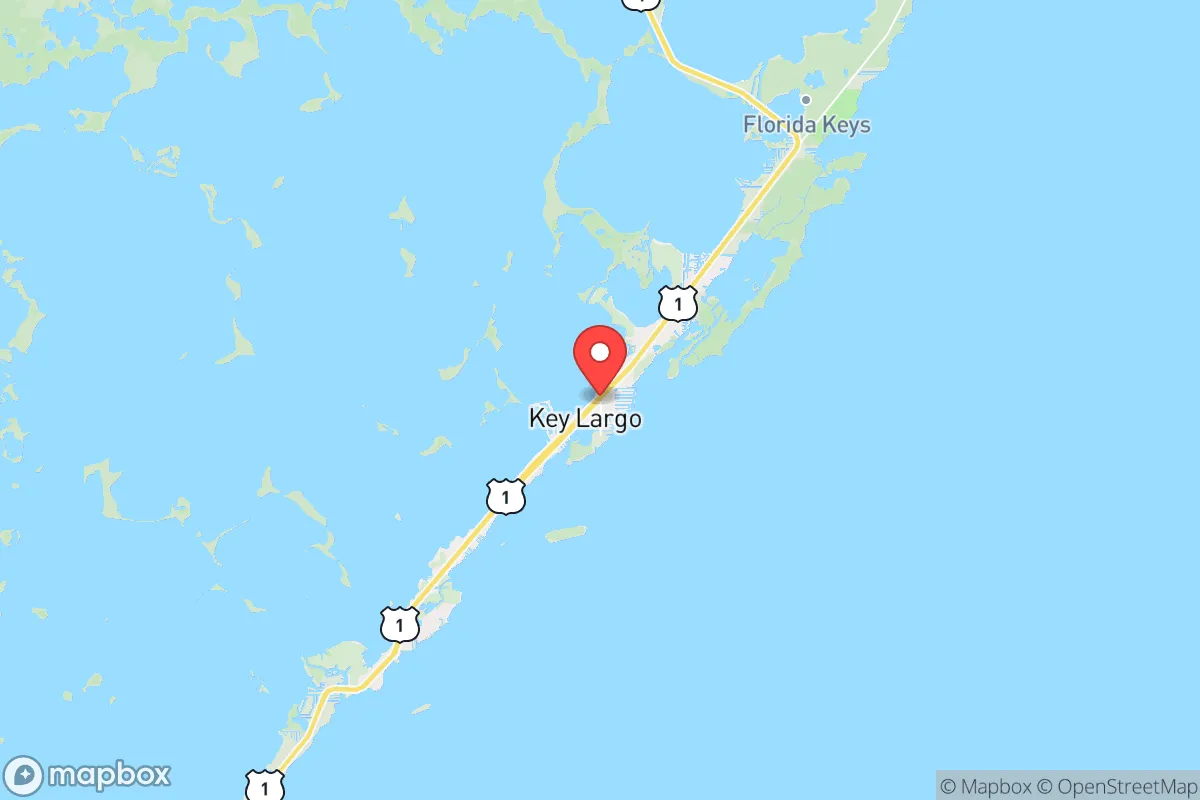
Key Largo offers a unique strategic proposition for those prioritizing resilience and geographic isolation, but it comes with significant trade-offs that demand careful consideration. Located at the northern gateway of the Florida Keys, this island community sits roughly 60 miles south of Miami and 100 miles north of Key West, placing it within striking distance of major population centers while maintaining a distinct separation from the mainland. For a relocator with a survivalist mindset, the area’s primary advantage is its natural moat—the Atlantic Ocean and Florida Bay—which inherently limits access and creates a defensible perimeter, but the same geography introduces vulnerabilities that could prove catastrophic in a crisis.
Geographic position and natural advantages for strategic relocation
Key Largo’s position as the first island in the Keys chain gives it a dual character: it’s close enough to the mainland for supply runs and medical access, yet far enough to avoid the immediate chaos of a metropolitan collapse. The Overseas Highway (U.S. Route 1) is the sole road artery, a single two-lane bridge-and-causeway system that can be monitored and controlled with relative ease. In a grid-down scenario, this chokepoint becomes a tactical asset—anyone approaching from the north must cross the Jewfish Creek Bridge, which could be defended or disabled to buy time. The surrounding waters offer abundant marine life for subsistence fishing, and the shallow flats of Florida Bay provide opportunities for crabbing and lobstering without requiring a deep-sea vessel. The subtropical climate eliminates the need for winter heating, reducing reliance on external energy grids, and the limestone bedrock allows for rainwater catchment and well drilling in some areas, though freshwater is a persistent concern. For a prepper, the ability to live off the land and sea here is real, but it demands knowledge of local tides, currents, and seasonal fish migrations that take years to master.
Risks, exposures, and proximity to fallout-relevant landmarks
The same geography that provides isolation also creates acute exposure to natural and man-made threats. Key Largo sits in the bullseye of Atlantic hurricane alley—the area has been directly hit by Category 4 and 5 storms, including Hurricane Irma in 2017, which caused widespread flooding and power outages lasting weeks. Storm surge is the primary killer here; much of the island’s developed land sits at sea level, and a major hurricane would inundate virtually every structure, making evacuation the only viable option. That evacuation route—U.S. 1 north to the mainland—is a single road that becomes gridlocked with tens of thousands of vehicles during a mandatory evacuation order, turning a 60-mile drive into a 12-hour ordeal. Beyond weather, the proximity to Miami (a prime target for civil unrest, mass casualty events, and potential terrorist attacks due to its population density and international port) means that fallout from a mainland crisis—refugees, supply chain disruptions, or secondary attacks—could spill southward. The Turkey Point Nuclear Generating Station, located about 40 miles north in Homestead, is a specific concern: a catastrophic failure or sabotage event there would place Key Largo downwind of any radioactive release, with prevailing winds pushing contamination directly over the Keys. Additionally, the island’s desalination plants and power substations are vulnerable to sabotage or natural failure, creating a single-point-of-failure risk for water and electricity that a relocator cannot ignore.
Practical resilience for a relocator: food, water, energy, and defensibility
For a single individual or family willing to invest in preparation, Key Largo can support a resilient lifestyle, but it requires a shift in mindset from suburban convenience to island self-sufficiency. Freshwater is the most critical vulnerability—the island relies on a combination of a mainland pipeline (the Florida Keys Aqueduct Authority) and local reverse-osmosis plants, both of which are dependent on grid power and vulnerable to disruption. A prepper should plan for at least 30 days of stored potable water per person, plus a high-quality rain catchment system with first-flush diverters and UV filtration. Solar panels are viable year-round, but must be hurricane-rated and securely mounted; battery storage (lithium iron phosphate) is essential, as grid outages are common even in mild weather. Food resilience is strong if you’re willing to fish, crab, and forage—mangrove snapper, yellowtail, and stone crab are abundant, and the backcountry flats offer conch and lobster during season. However, hunting is virtually nonexistent (no large game), and gardening is limited by salt spray and sandy soil, though raised beds with imported soil can produce tomatoes, peppers, and herbs. Defensibility is the area’s strongest suit: the island’s linear layout means you can monitor the only road in and out, and the dense mangrove shoreline makes unauthorized boat landings difficult. A well-chosen property on a canal with deep-water access allows for a secondary escape route by boat, which is a critical redundancy. The local population is small (roughly 12,000 year-round residents) and generally tight-knit, which can foster mutual aid networks, but also means that outsiders are noticed quickly—a double-edged sword for those seeking low-profile relocation.
The overall strategic picture for Key Largo is one of high reward paired with high risk. For a relocator who prioritizes natural barriers, maritime subsistence, and a small, manageable community, this island offers a defensible redoubt that is hard to match in the continental U.S. But the trade-offs are severe: a single road for evacuation, hurricane exposure that demands annual preparation, and proximity to a nuclear plant and a major city that could become sources of fallout or refugee flows. This is not a location for passive survival—it demands active, ongoing investment in water storage, storm hardening, and boat-based mobility. For those willing to treat it as a seasonal or part-time retreat rather than a permanent bunker, Key Largo can serve as a strategic fallback position. But for a full-time relocation with a family, the risks of being trapped on a narrow island during a cascading disaster may outweigh the defensive benefits. The smart play is to view Key Largo as one node in a broader resilience network, not a standalone solution—and to have a pre-planned evacuation route to a secondary location inland, ideally in the Florida panhandle or Georgia, before hurricane season begins each June.

* Values derived from national, state, county, city and local statistics and may differ in a specific area. Last updated: 2026-05-13T16:56:27.000Z
Narrative content on this page is AI-generated and may contain mistakes. Verify any details that matter before acting on them.
ReloMaps may earn a commission from affiliate links at no extra cost to you.

