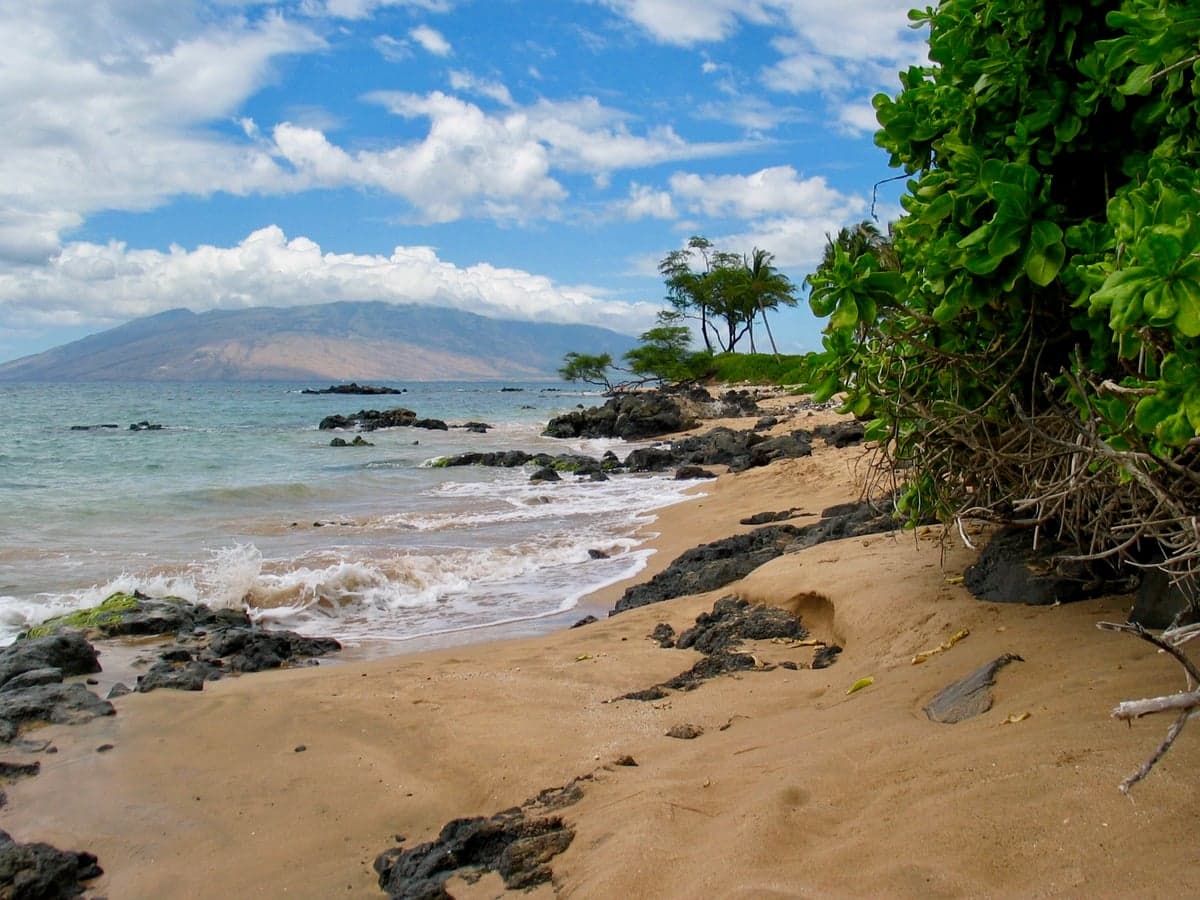
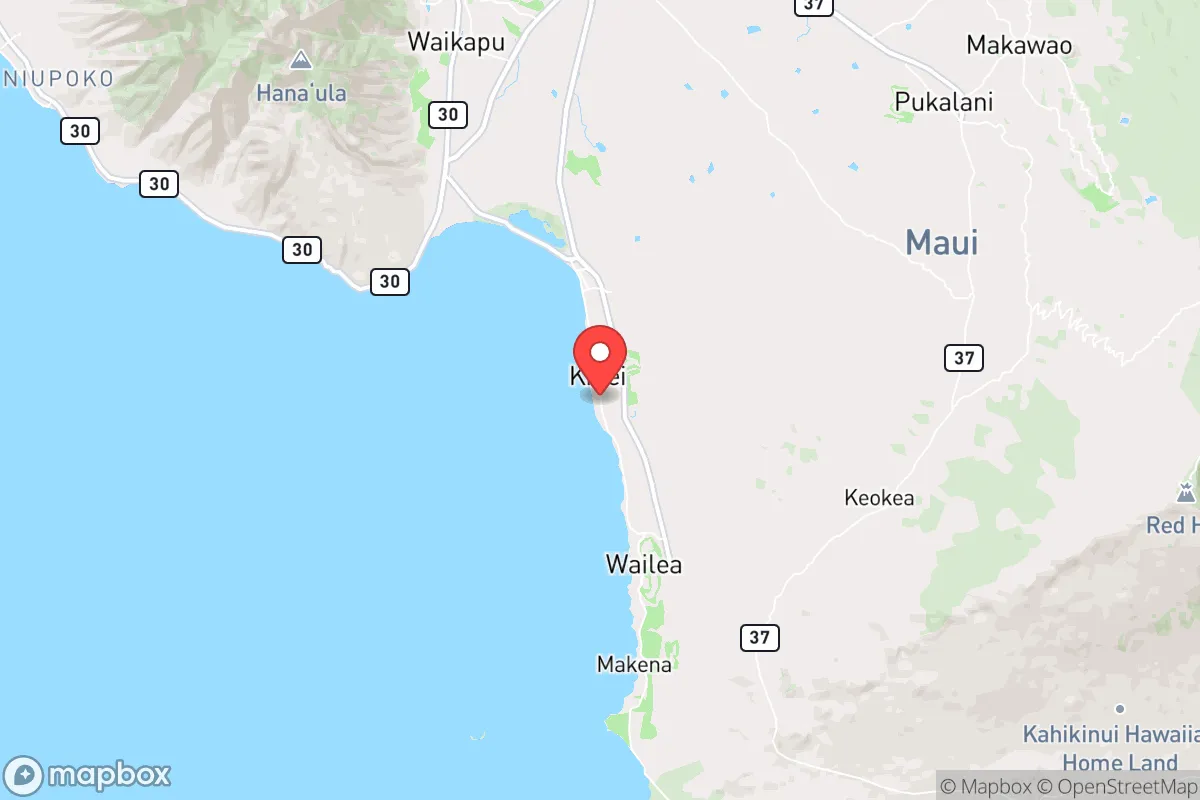
Photo: Wikipedia
Personal Sovereignty in Kihei, HI
Moderate friction. Expect trade-offs in some aspect of personal liberty and independence.
What does Personal Sovereignty tell us?
Personal Sovereignty measures your capacity for self-reliance and independence with minimal government friction. Higher scores mean fewer barriers between you and the way you want to live... but it assumes you have the space you need and good neighbors.
What does this tell us?
Personal Sovereignty measures your capacity for self-reliance and independence with minimal government friction. Higher scores mean fewer barriers between you and the way you want to live... but it assumes you have the space you need and good neighbors.
State Policy
Energy independence: Importer (2% of energy produced in-state)
Personal Liberty
Homesteading

Personal Liberty Analysis
Kihei, on Maui’s sun-drenched southwestern coast, presents a deeply conflicted environment for personal sovereignty. While the island’s physical isolation from the mainland offers a natural buffer against federal overreach, the State of Hawaii imposes some of the most restrictive laws in the nation on firearms, property use, and taxation, making genuine autonomy a constant uphill battle. For a survivalist or prepper, Kihei’s tropical climate and strong local community networks are assets, but they are heavily offset by a dense regulatory framework that limits self-reliance and demands significant financial resources to navigate. This is not a place where one can simply disappear into the woods; it is a place where sovereignty must be carefully carved out within a system that is often hostile to it.
Tax burden and regulatory posture: How Hawaii’s policies affect your wallet and freedom
Hawaii’s tax burden is among the highest in the nation, and Kihei residents feel it acutely. The state levies a general excise tax (GET) of 4% on nearly all goods and services, including groceries and rent, which is passed directly to consumers. There is no local sales tax, but the GET effectively functions as one, and it compounds with every transaction. Property taxes in Maui County are relatively moderate compared to the mainland, but home values in Kihei are astronomical, with median prices well over $1 million, meaning the actual dollar amount paid is substantial. For a prepper, this tax structure is a constant drain on resources that could otherwise go toward supplies, land, or equipment. The regulatory posture is equally burdensome: Hawaii has some of the strictest land-use laws in the country, with a powerful state Land Use Commission that zones nearly all land into urban, agricultural, or conservation districts. Building permits are notoriously slow and expensive, and any significant modification to a property—from adding a shed to installing a rainwater catchment system—can require months of approvals. This creates a high barrier to self-sufficiency, as even basic improvements are subject to government oversight.
Self-defense and gun law specifics: What you can and cannot do in Kihei
For those prioritizing the right to self-defense, Kihei is a challenging location. Hawaii has some of the most restrictive gun laws in the United States, and enforcement is strict. Open carry is completely prohibited, and concealed carry was effectively impossible for decades until the 2022 Bruen decision forced the state to issue permits. However, the process remains onerous: applicants must demonstrate "good moral character," pass a background check, complete a training course, and pay substantial fees. Even then, permits are issued at the discretion of the county police chief, and many areas—including schools, parks, and government buildings—are designated as "gun-free zones." Assault weapons and large-capacity magazines are banned, and there is a 14-day waiting period for all firearm purchases. For a survivalist, this means that the ability to defend one’s home or family with a firearm is heavily restricted. Non-lethal options like pepper spray are legal, but the overall environment is one where the state has prioritized control over individual readiness. The practical takeaway: if self-defense is a top priority, Kihei requires a legal strategy that is far more complex than in most mainland states.
Self-reliance and homesteading viability: Lot sizes, zoning, and off-grid feasibility
True homesteading in Kihei is nearly impossible due to zoning and lot constraints. Most residential lots in Kihei are small—typically 5,000 to 10,000 square feet—and are zoned for single-family homes within dense subdivisions. Agricultural zoning exists in the upcountry areas of Maui, but those are a 30- to 60-minute drive from Kihei and come with their own restrictions. Off-grid living is effectively illegal in most of Kihei: the county requires connection to the municipal water and sewer systems, and solar panels must be grid-tied unless you obtain a rare variance. Rainwater catchment is allowed in some rural areas but is heavily regulated for potable use. Raising livestock—chickens, goats, or pigs—is restricted to lots of one acre or more in specific agricultural districts, which are scarce and expensive. For a prepper, this means that self-reliance in Kihei is less about land-based homesteading and more about urban preparedness: stockpiling supplies, building a community network, and having a plan to relocate to a more rural part of the island if SHTF. The high cost of land and the regulatory hurdles make it a poor choice for anyone seeking to live off the grid.
Personal liberties: Parental rights, medical autonomy, speech, and property
On personal liberties, Kihei reflects Hawaii’s broader progressive governance. Parental rights are generally respected in education, with homeschooling and private school options available, though the state requires annual testing and curriculum approval. Medical autonomy is heavily restricted: Hawaii has strict vaccine mandates for school attendance, and during the COVID-19 pandemic, the state imposed some of the longest-lasting emergency orders in the country, including travel quarantines and indoor mask mandates. For those who value medical freedom, this history is a red flag. Free speech is protected under the First Amendment, but the state has laws against "hate speech" and disorderly conduct that can be applied broadly. Property rights are the weakest point: the state’s strong zoning laws and the county’s building codes mean that what you can do on your own land is heavily dictated by government. Eminent domain is a real concern, especially for large infrastructure projects. For a survivalist, the key takeaway is that Kihei offers a decent baseline of personal freedoms in speech and parenting, but medical autonomy and property rights are significantly curtailed compared to many mainland states.
Overall, Kihei’s sovereignty profile is a mixed bag that requires careful trade-offs. The natural isolation and strong community ties are genuine advantages for those seeking to build a resilient life, but the high tax burden, restrictive gun laws, and heavy regulation of land use make it a poor fit for anyone prioritizing maximum personal autonomy. Compared to states like Texas, Idaho, or Montana, Kihei ranks low on the sovereignty scale. For a prepper or survivalist, it is a location that demands a high degree of legal compliance and financial resources, and it offers limited room for independent action. If you are willing to work within the system and can afford the cost of living, Kihei can be a beautiful and functional base—but it is not a place for those who want to live entirely on their own terms.

* Values derived from national, state, county, city and local statistics and may differ in a specific area. Last updated: 2026-04-24T00:41:08.000Z
Narrative content on this page is AI-generated and may contain mistakes. Verify any details that matter before acting on them.
ReloMaps may earn a commission from affiliate links at no extra cost to you.

