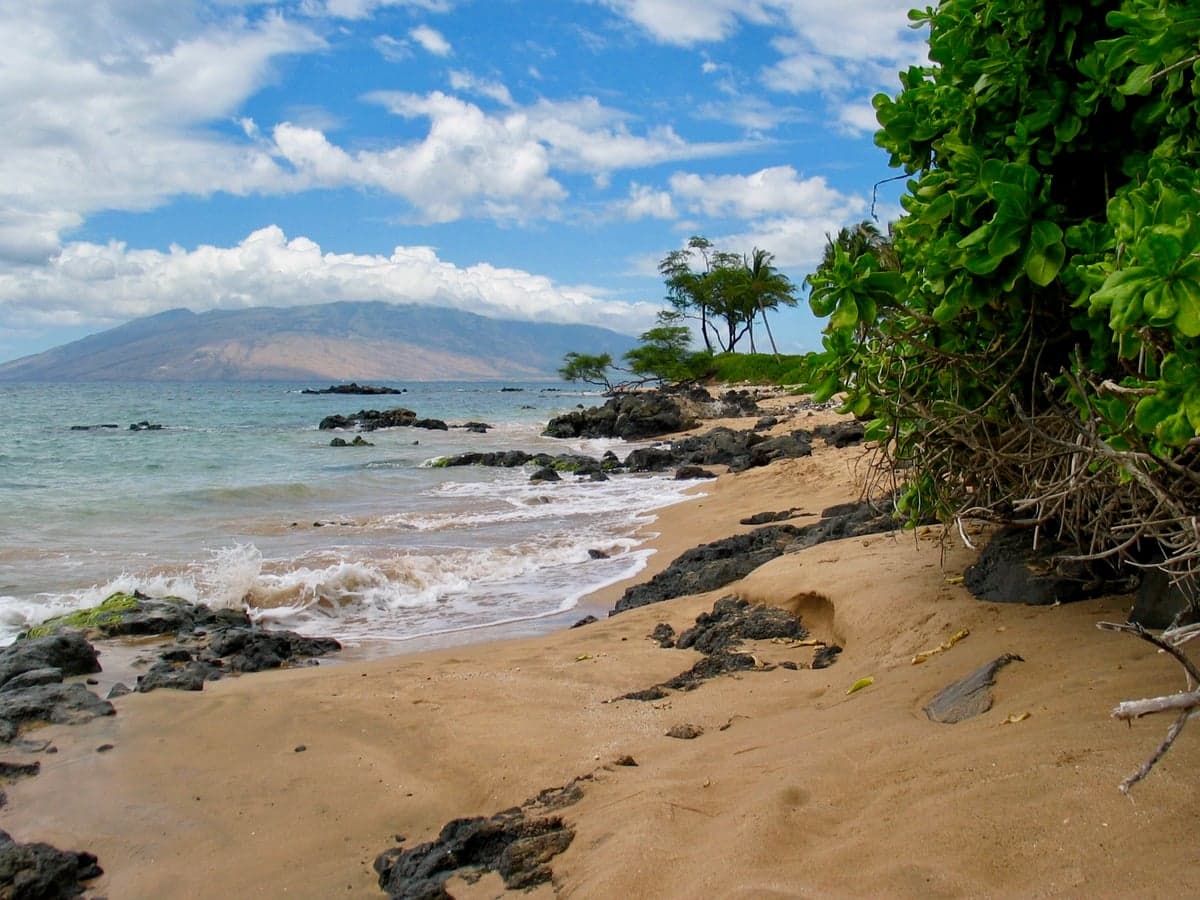
Photo: Wikipedia
Political ClimatePolitical Climate in Kihei, HI
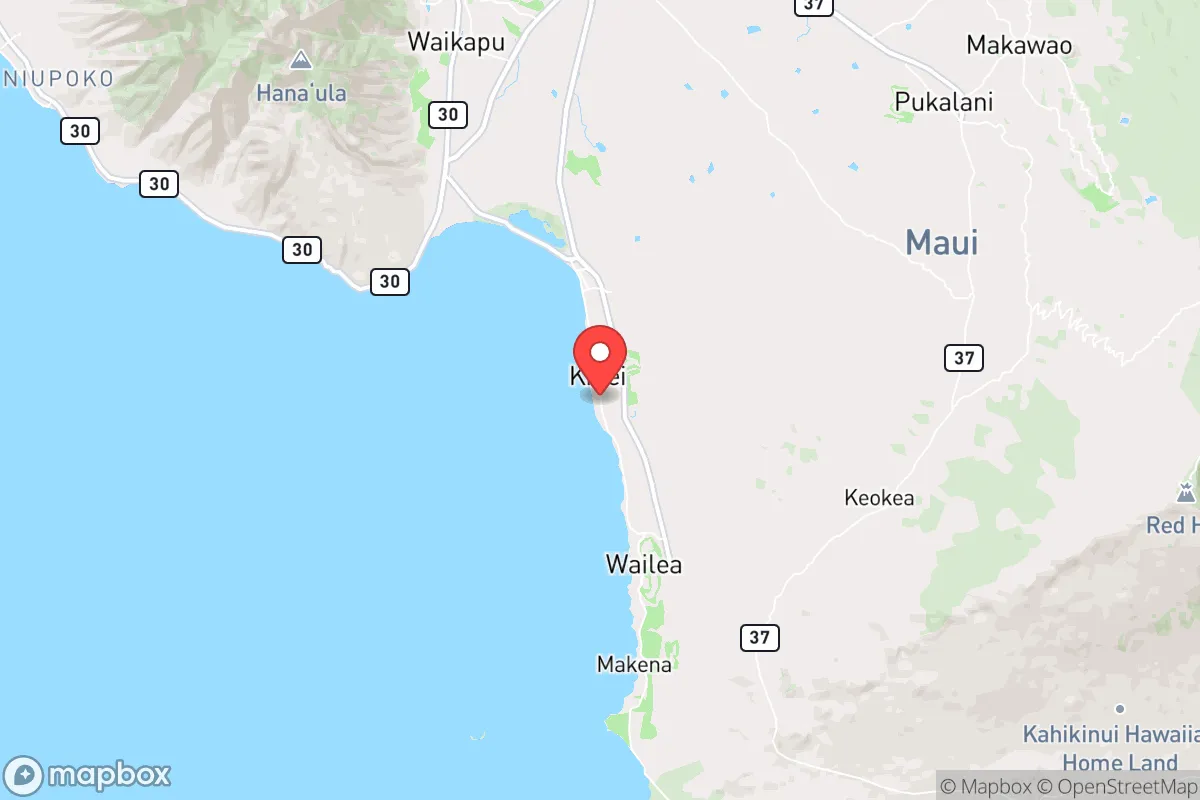
District shown is the primary district for this city’s centroid. Cities may span multiple districts.
Local Political AnalysisPolitical Analysis of Kihei, HI
Kihei leans heavily Democratic, with a Cook PVI of D+12, meaning the area votes about 12 points more Democratic than the national average. This isn't a recent shift—it's been a long-term trend, but the pace has accelerated since 2020. If you've lived here as long as I have, you've watched the local politics go from a laid-back, live-and-let-live vibe to something a lot more activist and top-down. The old-timers who just wanted to fish and surf are being replaced by transplants from the mainland who bring their progressive playbook with them, and it's changing the feel of the place fast.
How it compares
Drive 15 minutes north to Wailea, and you'll find a similar political tilt—maybe even a bit more liberal, given the high-end resort crowd and second-home owners who vote for environmental regulations and tourism taxes. But head east to Kahului or Wailuku, and you'll see a different picture. Those towns are more working-class, with a mix of native Hawaiian families and Filipino communities who tend to be more moderate or even conservative on issues like property rights, fishing access, and local control. The contrast is stark: in Kihei, you'll see "Save the Reef" bumper stickers on Teslas; in Kahului, you'll see "Keep Government Out of My Backyard" on old Ford trucks. The state legislature in Honolulu is solidly Democratic, but the local county council in Maui County has seen some pushback from more conservative voices in the upcountry and rural areas.
What this means for residents
For those of us who value personal freedom, the trend in Kihei is concerning. The county has been aggressive with short-term rental bans and vacation rental restrictions, which sound good on paper but have crushed small property owners who rely on that income to afford their own mortgages. There's also a growing push for plastic bag bans, single-use plastic bans, and even sunscreen bans—all sold as environmental protection, but each one chips away at your right to choose what you buy and use. The local government has also floated ideas like mandatory composting and water use restrictions that go beyond common sense. If you're the type who doesn't want a bureaucrat telling you what kind of car to drive or how to landscape your yard, Kihei's political trajectory is something to watch closely. The younger crowd moving in seems fine with it, but a lot of us who've been here since the 90s feel like we're losing the place we loved.
One cultural distinction that stands out is the strong native Hawaiian sovereignty movement on the island. While it's not a majority view, it's vocal and influential, and it often aligns with progressive environmental policies. This can create strange alliances—like when native groups and mainland environmentalists team up to block development projects that would bring jobs and housing. The result is a political climate where personal property rights and economic freedom often take a backseat to collective goals. In the long term, I see Kihei becoming even more aligned with the progressive coastal cities of the mainland—think Santa Cruz or Portland, but with palm trees. If that sounds like your kind of place, you'll fit right in. If not, you might want to look at the more rural parts of Maui or the Big Island, where the politics still lean a little more toward individual liberty.

State Political ClimatePolitical Climate in Hawaii
State Political AnalysisPolitical Environment in the State
Hawaii has been a one-party Democratic stronghold for decades, with Democrats holding supermajorities in both legislative chambers and every statewide office since 1962, but the real story is the growing tension between the entrenched progressive machine on Oahu and a quiet, frustrated conservative minority scattered across the outer islands. The state voted for Hillary Clinton by 32 points in 2016 and Joe Biden by 29 points in 2020, but those numbers hide a slow rightward drift in rural precincts and among Native Hawaiian communities fed up with government overreach. Over the last 20 years, the Democratic grip has tightened in Honolulu while loosening in places like Hawaii County, where Trump improved his margin by 5 points between 2016 and 2020, signaling a realignment that could reshape local politics if in-migration patterns hold.
Urban vs. rural divide
The political map of Hawaii is essentially a battle between the urban core of Honolulu on Oahu and the rest of the state. Honolulu County, home to nearly 70% of the population, drives the state's deep blue lean, with precincts in Waikiki, Manoa, and Kailua routinely delivering 70-80% Democratic margins. But drive an hour north to the North Shore or windward side, and you'll find pockets of libertarian-leaning farmers and surfers who vote split-ticket. The real conservative strongholds are on the Big Island, where Hawaii County voted for Trump in 2020 by a narrow margin in precincts like Puna and Ka'u, and on Maui, where upcountry areas like Kula and Makawao lean Republican. Kauai is more mixed, with Lihue and Kapaa trending blue but Hanalei and Waimea showing independent streaks. The rural-urban divide is stark: in 2022, the most conservative state House district (Hawaii's 6th, covering parts of Kona) went Republican by 12 points, while the most liberal district (Honolulu's 25th, covering Manoa) went Democratic by 55 points. This geographic split means that while Democrats control everything, they can't ignore the outer islands' growing frustration with Honolulu-centric policies on housing, tourism, and land use.
Policy environment
Hawaii's policy environment is a textbook case of progressive one-party rule with minimal friction. The state has the highest combined tax burden in the nation, with a 4.4% personal income tax on the lowest bracket and 11% on the top bracket, plus a general excise tax of 4% that applies to nearly every transaction, including rent and groceries. Property taxes are relatively low (around 0.3% of assessed value), but that's cold comfort when the median home price on Oahu is over $1 million. Education policy is dominated by a single statewide school district, the Hawaii Department of Education, which has been criticized for bloated administration and low test scores—only 38% of students were proficient in reading in 2023. School choice is virtually nonexistent, with charter schools capped and no voucher program. Healthcare is heavily regulated, with the state's Prepaid Health Care Act mandating employer-provided insurance for anyone working 20+ hours a week, which drives up small business costs. Election laws are among the most restrictive in the nation: Hawaii has no voter ID requirement, allows same-day registration, and mails ballots to all registered voters, which conservatives argue undermines election integrity. The state also has some of the strictest gun laws in the country, including a 14-day waiting period, a ban on "assault weapons," and a requirement that all firearm sales go through a licensed dealer—no private transfers allowed.
Trajectory & freedom
Hawaii is becoming less free by almost any measure, with recent legislation expanding government control over personal choices. In 2023, the legislature passed Act 2, which codified abortion access as a "fundamental right" and removed parental consent requirements for minors, overriding a 2022 law that had required notification. The same session saw Act 40, which banned the sale of flavored tobacco products and e-cigarettes, and Act 48, which created a state-run "Office of Gun Violence Prevention" with subpoena power over firearm dealers. On the property rights front, the state's Land Use Commission continues to block new housing developments, citing environmental reviews, which has driven up home prices and pushed young families to the mainland. The 2024 legislative session saw a push for "rent control" bills that would cap annual increases at 5%, which landlords argue will reduce housing supply further. On the positive side for conservatives, the state's "Second Amendment Preservation Act" (passed in 2021) prohibits state enforcement of certain federal gun laws, though it's largely symbolic. The overall trajectory is clear: more taxes, more regulation, and less personal autonomy, especially for gun owners, parents, and small business owners.
Civil unrest & political movements
Hawaii has a long history of civil unrest, but the flashpoints have shifted from labor strikes to cultural and environmental activism. The most visible movement in recent years is the Mauna Kea protests (2019-2020), where thousands of Native Hawaiians and allies blocked construction of the Thirty Meter Telescope, leading to hundreds of arrests and a lasting distrust of state government. That movement has morphed into a broader "Hawaiian sovereignty" push, with groups like the Nation of Hawaii and Ka Lahui Hawaii advocating for independence or self-governance, though they remain fringe. On the right, the Hawaii Republican Party is small but active, with a strong presence in the "Hawaii Patriots" group that organized protests against COVID-19 mandates in 2020-2021, including a 2021 rally at the state capitol that drew 2,000 people. Immigration politics are muted because Hawaii's geographic isolation limits illegal border crossings, but the state is a sanctuary jurisdiction—Honolulu County has a policy of not cooperating with ICE detainers. Election integrity is a growing concern among conservatives: in 2020, Hawaii was one of five states that sent ballots to all registered voters without requiring a signature match, and a 2022 audit found 1,200 "irregularities" in voter rolls, though no fraud was proven. The most visible flashpoint for a new resident would be the constant tension between tourism-dependent locals and the state's progressive environmental regulations, which often pit economic freedom against green mandates.
Projection
Over the next 5-10 years, Hawaii will likely become more progressive and more expensive, driven by demographic shifts and in-migration patterns. The state's population is aging and shrinking—it lost 10,000 residents between 2020 and 2023, mostly to Texas, Nevada, and Arizona—but those leaving are disproportionately middle-class families and conservatives, while new arrivals from California and the East Coast tend to be wealthier and more liberal. This "brain drain" of conservatives will deepen the Democratic supermajority, making it harder to pass tax relief or regulatory reform. The housing crisis will worsen as the state's Land Use Commission continues to block development, pushing home prices even higher and forcing more locals to leave. On the political front, expect more progressive legislation: a state-level "wealth tax" is being discussed, along with a universal basic income pilot program. The only wildcard is the growing Native Hawaiian sovereignty movement, which could fracture the Democratic coalition if it gains enough traction to field independent candidates. For a conservative moving in now, the realistic expectation is that Hawaii will feel more like California every year—higher taxes, more regulations, and less personal freedom—unless a major economic downturn forces a reckoning.
For a new resident, the bottom line is that Hawaii offers unmatched natural beauty and a unique culture, but it comes with a heavy price tag in both dollars and personal freedom. If you value low taxes, school choice, gun rights, and limited government, this state will frustrate you. The best strategy is to buy property on the Big Island or Kauai, where conservative voices are stronger and property taxes are lower, and to get involved in local Republican or libertarian groups to push back against the Honolulu machine. But don't expect the political climate to shift anytime soon—Hawaii is a deep blue state that's only getting bluer, and anyone moving here should be prepared to live under one-party rule for the foreseeable future.
* Values derived from national, state, county, city and local statistics and may differ in a specific area. Last updated: 2026-04-24T00:41:08.000Z
Narrative content on this page is AI-generated and may contain mistakes. Verify any details that matter before acting on them.
ReloMaps may earn a commission from affiliate links at no extra cost to you.

