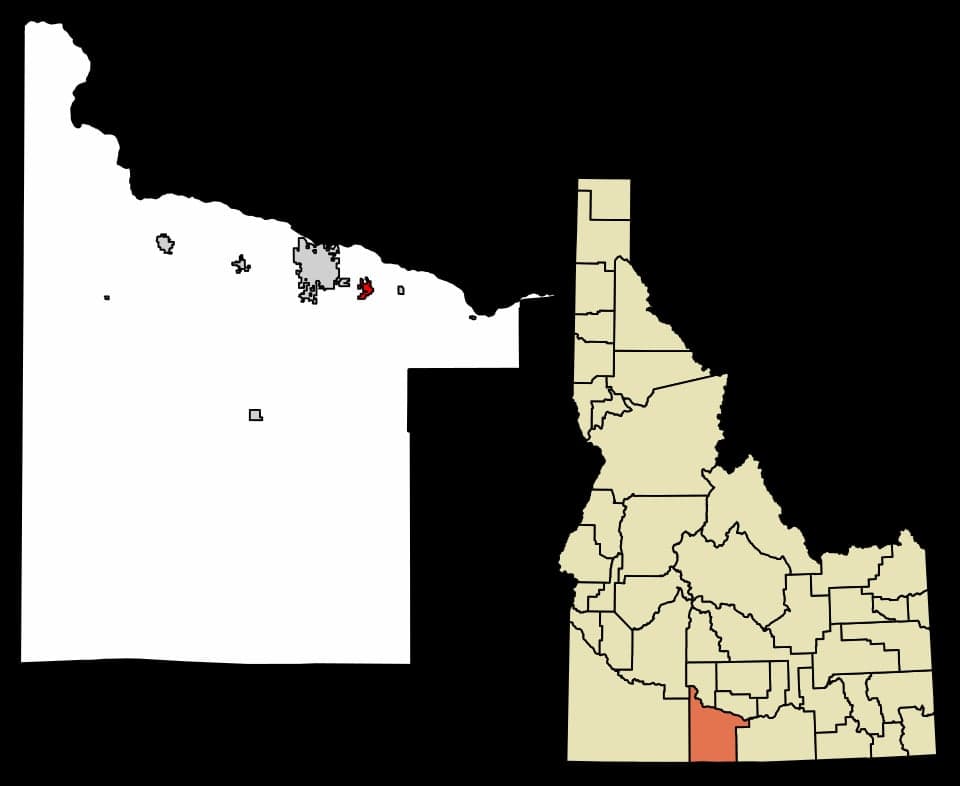
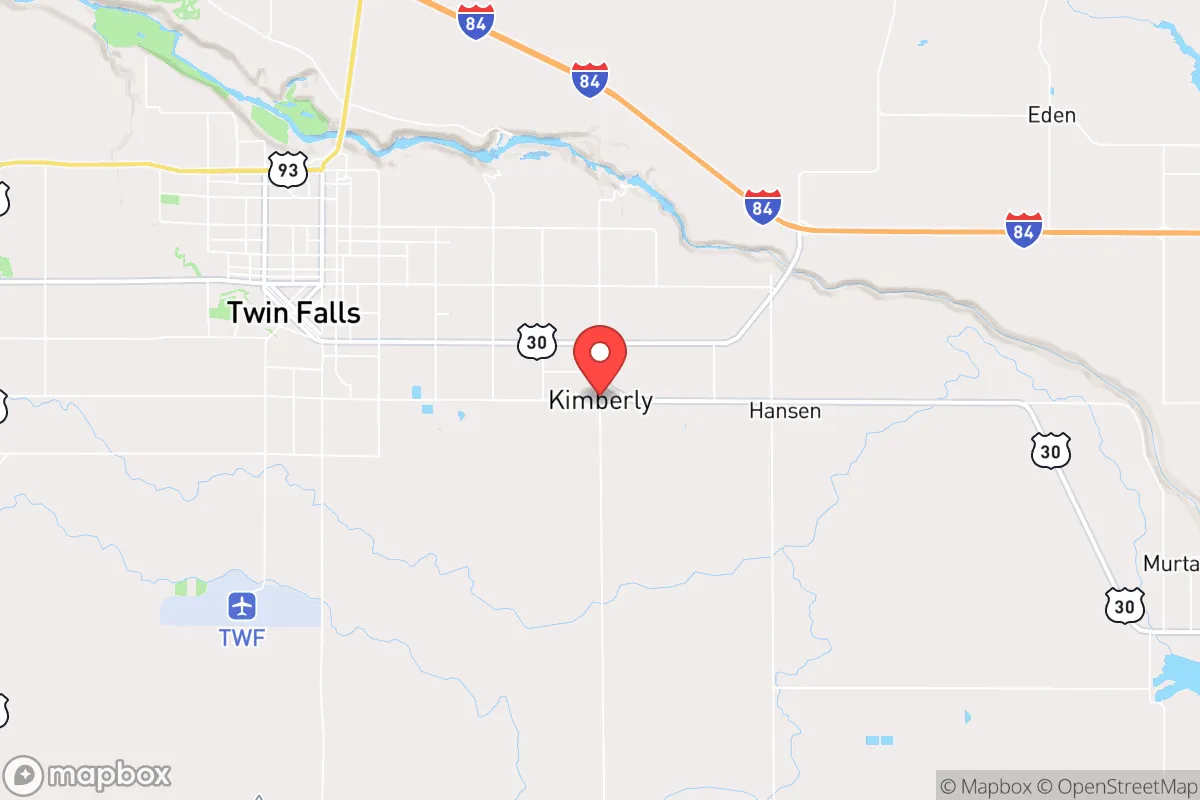
Photo: Wikipedia
Personal Sovereignty in Kimberly, ID
Moderate friction. Expect trade-offs in some aspect of personal liberty and independence.
What does Personal Sovereignty tell us?
Personal Sovereignty measures your capacity for self-reliance and independence with minimal government friction. Higher scores mean fewer barriers between you and the way you want to live... but it assumes you have the space you need and good neighbors.
What does this tell us?
Personal Sovereignty measures your capacity for self-reliance and independence with minimal government friction. Higher scores mean fewer barriers between you and the way you want to live... but it assumes you have the space you need and good neighbors.
State Policy
Energy independence: Importer (25% of energy produced in-state)
Personal Liberty
Homesteading

Personal Liberty Analysis
Kimberly, Idaho, offers one of the strongest personal sovereignty environments in the Pacific Northwest, functioning as a practical outpost for those prioritizing autonomy over convenience. Located in the Magic Valley region, this small agricultural town of roughly 4,000 residents sits in a state that consistently ranks among the most freedom-oriented in the nation. For individuals and families operating from a survivalist or prepper mindset, Kimberly provides a legal and cultural framework where government overreach is minimized, self-reliance is the norm, and the default posture of local governance is hands-off. The trade-off is clear: you trade urban amenities and institutional safety nets for a place where your decisions about your property, your family, and your future are largely your own.
Tax burden and regulatory posture: How Idaho’s fiscal policies protect your income and property
Idaho’s tax structure is designed to keep the state government lean and your wallet full. There is no state inheritance tax, no estate tax, and no tax on Social Security benefits, which matters for long-term preppers building multi-generational holdings. The state income tax is a flat 5.8% as of 2026, a single-rate system that eliminates the progressive brackets that punish higher earners and small business owners. Property taxes in Twin Falls County, where Kimberly sits, average around 0.69% of assessed value, well below the national average of roughly 1.1%. For a $300,000 home, that’s about $2,070 annually — a fraction of what you’d pay in coastal states. More importantly, Idaho’s regulatory environment is among the most business-friendly in the country. The state has a right-to-work law, no onerous state-level occupational licensing for common trades, and a permitting process for rural construction that is straightforward rather than adversarial. Kimberly itself operates with a minimal municipal code; there are no city income taxes, no business license fees for home-based enterprises, and zoning is permissive enough that running a small farm or workshop from your residential lot is rarely a fight. For the sovereignty-minded, this means less of your time and money goes to government compliance and more stays in your control.
Self-defense and gun law specifics: Constitutional carry and castle doctrine in practice
Idaho is a constitutional carry state, meaning no permit is required to carry a concealed firearm for anyone legally allowed to possess one. This applies in Kimberly as it does everywhere in the state. There are no magazine capacity restrictions, no firearm registration, and no waiting periods for purchases. The state preempts all local gun ordinances, so Kimberly’s city council cannot impose its own restrictions — a critical protection against the patchwork of local gun laws seen in states like Colorado or Washington. Idaho’s castle doctrine is robust: there is no duty to retreat in any place where you are lawfully present, including your home, vehicle, or place of business. The "stand your ground" statute extends to public spaces, and the legal presumption is that a person using deadly force against an unlawful intruder acted reasonably. For preppers, this means your bug-out location, your vehicle, and your primary residence are legally defensible without having to second-guess retreat obligations. Additionally, Idaho has strong firearm preemption laws that prevent local authorities from confiscating weapons during declared emergencies — a direct response to overreach seen in other states during civil unrest. The sheriff in Twin Falls County is elected and generally pro-Second Amendment, meaning enforcement posture aligns with state law rather than federal overreach.
Self-reliance and homesteading viability: Lot sizes, zoning, and off-grid feasibility in Kimberly
Kimberly’s agricultural roots make it a natural fit for those seeking genuine self-reliance. Within the city limits, standard residential lots range from 0.25 to 0.5 acres, but the real opportunity lies just outside town in unincorporated Twin Falls County, where 1-to-5-acre parcels are common and affordable — often under $10,000 per acre. Zoning in the county is permissive: raising chickens, goats, or a small herd of cattle is generally allowed without special permits. There are no HOA-style restrictions in most rural subdivisions, so you won’t face fines for having a garden, a workshop, or a visible generator. Off-grid feasibility is high. Idaho has no state-level ban on rainwater collection, and Kimberly’s average annual rainfall of about 10 inches means you’ll need a well for reliable water — but well permits are straightforward and drilling costs in the Magic Valley run $15–$30 per foot. Solar panels are unregulated at the county level, and net metering is available through Idaho Power, though many preppers opt for fully off-grid battery systems to avoid utility dependence. Septic systems are the norm outside city limits, and composting toilets are legal. The county does not enforce building codes in unincorporated areas for owner-occupied structures, meaning you can build a cabin, a root cellar, or a workshop to your own standards without government inspection — a rare freedom in the modern United States.
Personal liberties: Parental rights, medical autonomy, speech, and property protections
Idaho has some of the strongest parental rights laws in the country. The state’s "Parents’ Bill of Rights" statute explicitly affirms that parents have the fundamental right to direct their children’s education, healthcare, and upbringing. This means no school district can administer medical surveys, mental health screenings, or gender-related curricula without parental consent. Kimberly’s school district, part of the Twin Falls School District, is small enough that parents have direct access to administrators and teachers — there’s no bureaucratic wall. On medical autonomy, Idaho has banned vaccine passports and prohibits discrimination based on vaccination status. The state also has a broad medical freedom law that allows individuals to refuse any medical treatment without penalty, and there is no state-level mandate for childhood vaccines to attend public school (only a requirement for information disclosure). Free speech protections are strong: Idaho has no hate speech laws that criminalize political or religious expression, and the state’s public universities have been explicitly barred from creating "free speech zones" — speech is protected everywhere on campus. Property rights are constitutionally protected, and Idaho has a robust eminent domain statute that requires "public use" in the traditional sense, not economic development takings. For the sovereignty-minded, this means your land, your children, and your body are legally yours to govern — the state’s role is limited to enforcing contracts and preventing harm, not dictating lifestyle.
In the broader landscape of American personal sovereignty, Kimberly, Idaho, ranks among the top-tier locations for those seeking to minimize government entanglement while maintaining access to modern infrastructure. Compared to rural areas in the Pacific coastal states or the Northeast, where zoning, taxation, and regulatory overreach can strangle self-reliance, Kimberly offers a legal environment that defaults to freedom. The trade-offs are real: winters are cold, the nearest major city (Boise) is two hours away, and the local economy is tied to agriculture and light manufacturing rather than high-tech. But for the individual or family whose priority is autonomy — the ability to own firearms without restriction, build on your land without permits, educate your children without state interference, and keep more of what you earn — Kimberly represents a rare convergence of legal protections, cultural alignment, and practical affordability. It is not a utopia, but it is a place where the government’s role is clearly bounded, and your sovereignty is the starting point, not an exception.

* Values derived from national, state, county, city and local statistics and may differ in a specific area. Last updated: 2026-05-03T05:01:02.000Z
Narrative content on this page is AI-generated and may contain mistakes. Verify any details that matter before acting on them.
ReloMaps may earn a commission from affiliate links at no extra cost to you.

