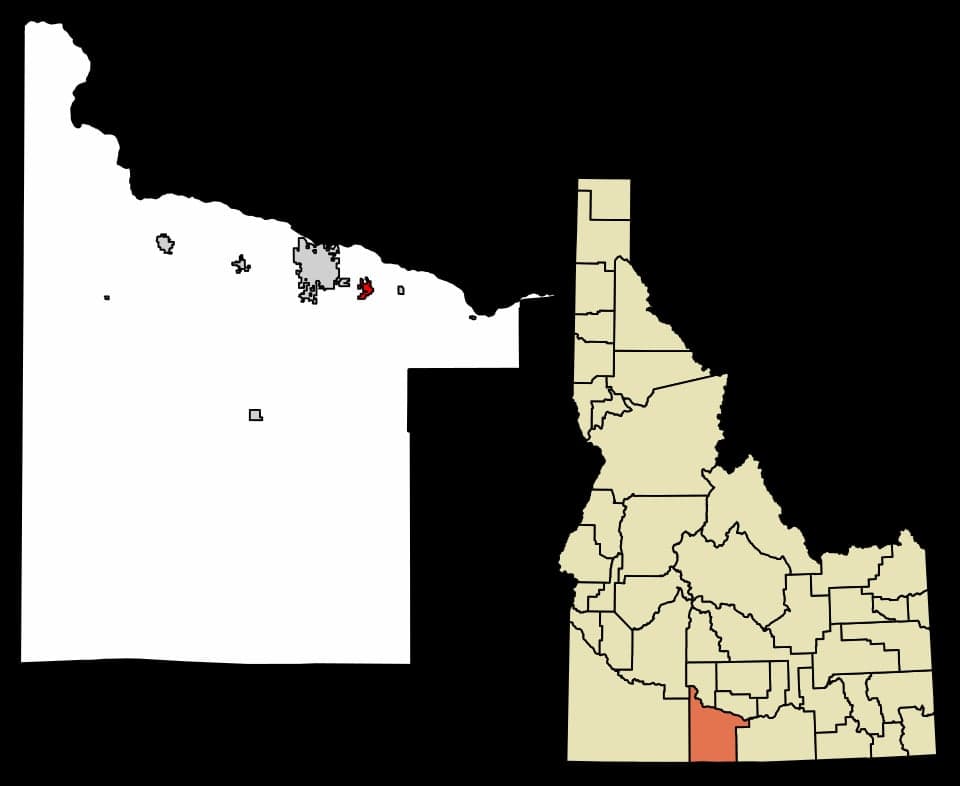
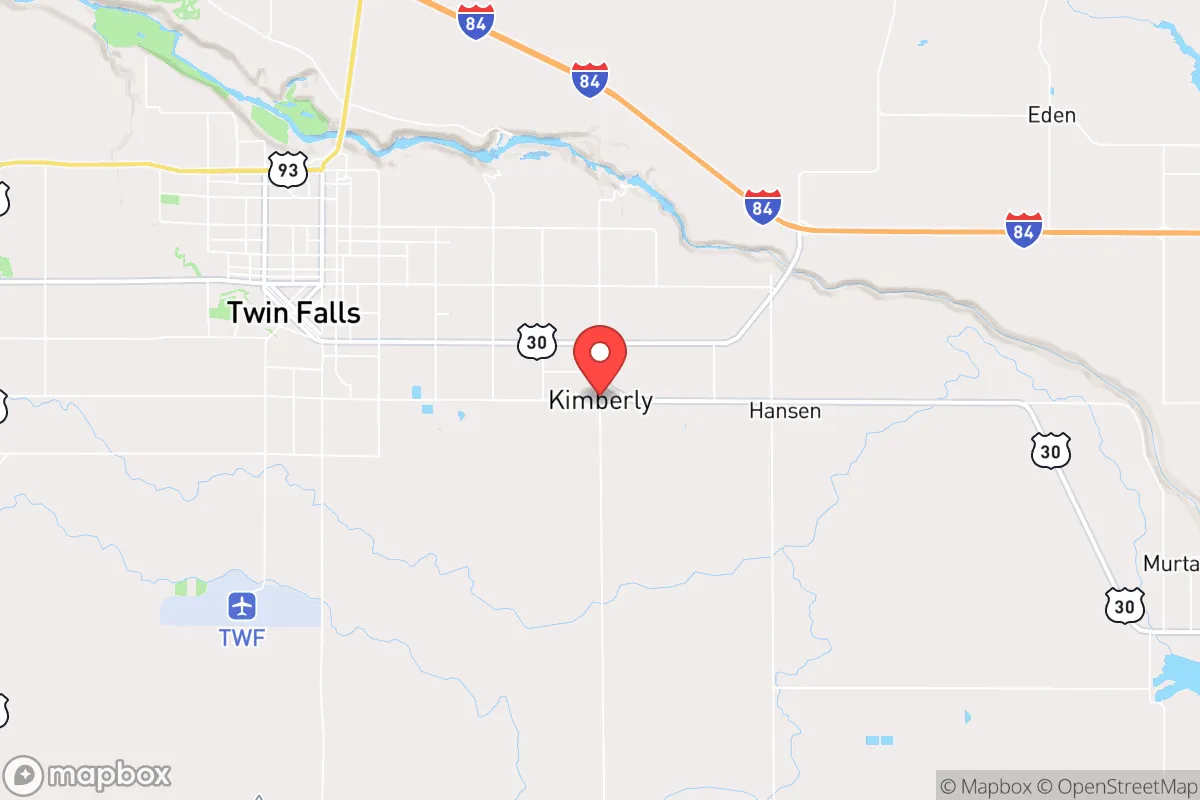
Photo: Wikipedia
Political ClimatePolitical Climate in Kimberly, ID
District shown is the primary district for this city’s centroid. Cities may span multiple districts.
Local Political AnalysisPolitical Analysis of Kimberly, ID
Kimberly, Idaho, is about as solidly conservative as small-town America gets, and that’s been the case for as long as anyone around here can remember. The Cook PVI rating of R+13 tells the story, but it doesn’t capture the feel on the ground—this isn’t a place where you see yard signs for the other side, and local elections are decided in Republican primaries. If you’re looking at the political trajectory, it’s been remarkably stable, though there’s a quiet undercurrent of concern as the Treasure Valley’s growth pushes south. More people are moving in from places like California and Oregon, and while most of them come here because they want the same freedoms we do, you do see a few who try to bring their old voting habits with them. So far, Kimberly has held firm, but keeping an eye on local school board and city council races is smart—that’s where the slow shifts start.
How it compares
Drive 15 minutes north to Twin Falls, and you’ll find a slightly more mixed political landscape—still red, but with a noticeable blue streak around the college and hospital districts. Kimberly, by contrast, feels like a time capsule of traditional values. The surrounding farming communities—places like Hansen, Murtaugh, and even Filer—lean even harder into that conservative identity, but Kimberly has a bit more of a suburban feel, which sometimes attracts folks who want the quiet life without fully embracing the local culture. Compared to Boise, which has drifted noticeably leftward in the last decade, Kimberly is a breath of fresh air. The contrast is stark: in Boise, you see bike lanes and density debates; here, the big political fights are about water rights and keeping the county fairgrounds open. That’s the kind of politics most of us prefer—local, practical, and free from the nonsense coming out of Washington, D.C.
What this means for residents
For the people living here, the political climate means a lot of personal freedom and very little government overreach. You don’t have to worry about heavy-handed zoning rules telling you what you can do with your own property, and the local sheriff’s office has made it clear they won’t enforce federal mandates they see as unconstitutional. That’s a big deal for anyone who values their Second Amendment rights or doesn’t want the county telling them how to run their small business. The school system here still teaches kids how to think, not what to think, and parents have a real say in curriculum decisions. That said, the threat of progressive ideology creeping in is real—it usually shows up in the form of grant-funded programs or outside consultants pushing DEI training in the schools. The community has been good at sniffing that out and pushing back, but it takes vigilance. If you’re the kind of person who wants to be left alone to live your life, raise your family, and worship how you see fit, Kimberly is about as good as it gets in Idaho right now.
One thing that sets Kimberly apart culturally is its strong sense of neighborly independence. There’s no HOA breathing down your neck, no city council trying to ban gas stoves, and no one telling you what kind of flag you can fly in your front yard. The local churches are full, the 4-H program is thriving, and the annual Kimberly Days celebration is still about community, not politics. Looking ahead, the biggest concern is that as the area grows, the political character could dilute if newcomers don’t understand why people moved here in the first place. For now, though, Kimberly remains a place where common sense still rules, and that’s something worth holding onto.

State Political ClimatePolitical Climate in Idaho
State Political AnalysisPolitical Environment in the State
Idaho has become one of the most reliably conservative states in the nation, with a Republican trifecta controlling the governorship, supermajorities in both legislative chambers, and a solid +30-point lean in presidential elections. Over the past 20 years, the state has shifted from a more libertarian-leaning Western conservatism to a culturally assertive, policy-driven Republicanism, driven largely by an influx of out-of-state transplants fleeing progressive governance in California, Oregon, and Washington. The dominant coalition is a blend of rural ranchers, Mormon communities, and newly arrived conservatives who see Idaho as a last redoubt of traditional values.
Urban vs. rural divide
The political map of Idaho is starkly divided between a handful of blue-leaning urban islands and a deep-red rural expanse. The Treasure Valley, anchored by Boise, Meridian, and Nampa, is the state’s population center and the only region where Democrats are competitive. Ada County (Boise) has trended purple in recent cycles, with Biden winning it by 2 points in 2020, though it swung back slightly in 2024. However, the surrounding counties—Canyon, Gem, Payette—are deeply red, with Trump winning Canyon County by 25 points. The northern panhandle, including Coeur d’Alene and Post Falls, has seen explosive growth from California and Washington transplants, but those newcomers are overwhelmingly conservative, keeping Kootenai County reliably Republican. The rural south and east, including Idaho Falls, Rexburg, and Twin Falls, are among the most conservative areas in the country, often voting 80%+ Republican. The only other blue spot is Moscow, home to the University of Idaho, which votes Democratic but has little statewide influence.
Policy environment
Idaho’s policy environment is aggressively pro-business, low-tax, and culturally conservative. The state has a flat income tax of 5.8% (recently cut from 6%), no corporate income tax on pass-through entities, and a property tax system that heavily favors homeowners over commercial interests. The legislature has passed some of the nation’s strongest parental rights laws, including the Idaho Parental Rights Act (2022), which requires schools to notify parents of any curriculum involving sexuality or gender identity and prohibits classroom instruction on these topics in K-5. In 2023, the state enacted a near-total abortion ban, with exceptions only for rape, incest, and the life of the mother. Election laws are among the most secure in the country: voter ID is required, same-day registration is not allowed, and the state uses paper ballots with hand-count audits. The regulatory environment is light—no state-level OSHA, no rent control, and minimal land-use restrictions outside of Boise. However, the state’s education funding remains low per pupil, and school choice advocates have pushed for vouchers, which have so far been blocked by rural Republicans wary of funding private schools.
Trajectory & freedom
Idaho is arguably becoming more free for conservatives, but the definition of freedom is shifting. On gun rights, the state passed constitutional carry in 2016 and has preempted all local gun ordinances, meaning Boise cannot impose its own restrictions. In 2023, the legislature passed a law prohibiting the enforcement of federal gun laws that violate the Second Amendment, a direct challenge to federal overreach. On medical freedom, Idaho banned COVID-19 vaccine mandates for state employees and contractors, and in 2024 passed a law prohibiting mRNA vaccine mandates for any employer. Property rights have been strengthened by the Private Property Rights Protection Act (2021), which requires compensation for any regulation that reduces property value by more than 20%. However, the state has also expanded government power in areas like school curriculum and library content, with a 2023 law allowing parents to sue libraries for distributing "harmful materials" to minors. This has created tension between libertarians who want less government and social conservatives who want more cultural enforcement. The net trajectory is toward a state that protects individual rights in the traditional sense (guns, property, medical choice) while actively restricting progressive social policies.
Civil unrest & political movements
Idaho has seen relatively little civil unrest compared to coastal states, but there are notable flashpoints. The most visible is the anti-government militia movement, centered in the panhandle around Sandpoint and Bonners Ferry, where groups like the Three Percenters and Oath Keepers have a presence. In 2020, a small protest in Coeur d’Alene turned violent when a left-wing counter-protester was shot, but such incidents are rare. The state has seen a surge in school board activism, with conservative parents packing meetings over critical race theory and LGBTQ curriculum, leading to the recall of several progressive board members in Boise and Meridian. Immigration politics are less heated than in border states, but the legislature passed a law in 2024 requiring local law enforcement to cooperate with ICE, and there is a growing movement to designate Idaho a "sanctuary for the unborn" by restricting travel for abortion. The most controversial recent flashpoint was the University of Idaho student murders in 2022, which sparked national attention and local debates about campus safety and media coverage. Overall, the political climate is tense but orderly—most activism happens at the ballot box and in school board meetings, not in the streets.
Projection
Over the next 5-10 years, Idaho will likely become more conservative, not less, due to the demographic profile of in-migrants. The state is growing by about 2% annually, and the vast majority of newcomers are conservatives from California, Oregon, and Washington who are explicitly fleeing progressive policies. This is already shifting the suburbs of Boise—places like Eagle and Star—from purple to red. The rural areas will remain deeply conservative, and the only potential for a blue shift is if Boise continues to attract tech workers from Seattle and San Francisco, but even that is mitigated by the fact that many of those workers are remote and politically moderate. The legislature will likely continue to push the envelope on cultural issues, including a possible school voucher program, a ban on gender-affirming care for minors (already passed in 2023), and further restrictions on abortion travel. The biggest risk to this trajectory is if the state’s rapid growth strains infrastructure and housing, leading to a backlash against development that could fracture the conservative coalition. But for now, Idaho is on a clear path toward becoming the most culturally conservative state in the West.
For a new resident, the bottom line is this: Idaho offers a policy environment that aligns closely with traditional conservative values—low taxes, strong gun rights, parental control in education, and minimal government interference in your personal life. You will find like-minded neighbors in most places outside of downtown Boise, and the state’s political trajectory is moving in your direction. However, be prepared for a rapidly growing population that is changing the landscape, and understand that the state’s libertarian streak is being tempered by a more assertive social conservatism. If you value personal freedom in the classical sense—property, speech, self-defense—Idaho is one of the best bets in the country. If you want a hands-off government that leaves you alone entirely, you may find the culture wars creeping into your daily life, especially around schools and libraries. Choose your county carefully: Kootenai and Madison are solid red, while Ada and Latah are the only places where you’ll encounter significant political diversity.
* Values derived from national, state, county, city and local statistics and may differ in a specific area. Last updated: 2026-05-03T05:01:02.000Z
Narrative content on this page is AI-generated and may contain mistakes. Verify any details that matter before acting on them.
ReloMaps may earn a commission from affiliate links at no extra cost to you.

