Photo: Wikipedia
Demographics of King Cove, AK
Affluence Level in King Cove, AK
A below-average socioeconomic profile. Incomes, home values, and educational attainment trail the U.S., with higher poverty and unemployment.
People of King Cove, AK
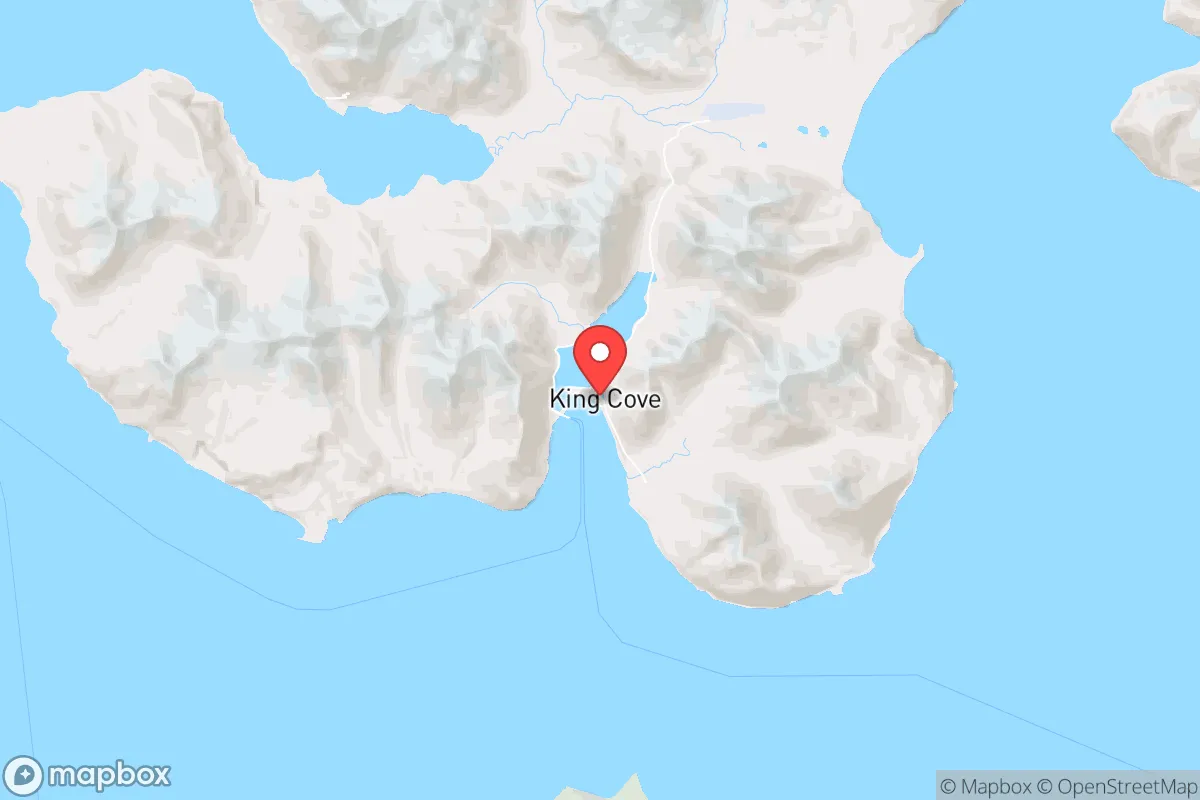
The people of King Cove, Alaska, today form a tight-knit, industrious community of 1,204 residents defined by its remote Aleutian location and a distinctive demographic profile that sets it apart from most of the state. The population is heavily male (roughly 56%), with a median age of 33.5, and is characterized by a unique blend of Alaska Native heritage, a substantial East/Southeast Asian presence (23.9% of the population), and a small but notable Hispanic community (10.7%). This is not a transient hub but a working town anchored by a single dominant industry, where daily life revolves around the fish processing plant and the surrounding rugged landscape.
How the city was settled and grew
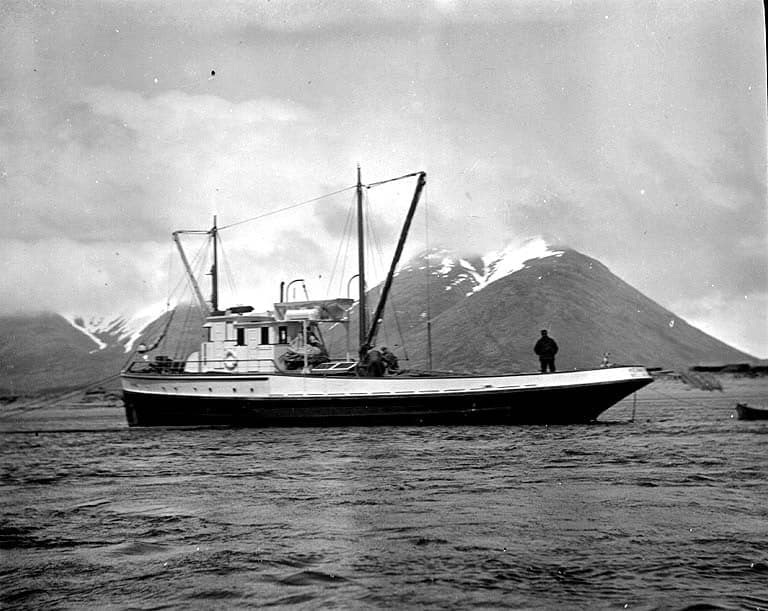
King Cove’s human history is almost entirely a 20th-century story, driven not by gold or oil but by the commercial fishing industry. The area was originally used by the Aleut (Unangan) people as a seasonal hunting and fishing camp, but no permanent settlement existed until the 1910s. The first permanent residents were a mix of Aleut families and a few Euro-American fishermen who built small cabins along the shoreline in what is now known as Old Town, the original core of the community along the cove’s northern edge. The real transformation came in 1911 with the establishment of a salmon cannery by the Pacific American Fisheries company. This cannery drew a wave of workers, including a significant number of Filipino and Chinese laborers who arrived as transient cannery crews. Many of these workers stayed, forming the foundation of the East/Southeast Asian community that remains a defining feature of King Cove today. These early Asian settlers lived in company-built bunkhouses and small homes in the area now referred to as Cannery Row, a narrow strip of land directly adjacent to the processing facilities. By the 1930s, the village had a small but stable population of around 100, with the Aleut families concentrated in Old Town and the cannery workers clustered near the plant.
Modern era (post-1965)
The post-1965 era brought dramatic change, driven by the modernization of the fishing industry and the construction of a modern fish processing plant by Peter Pan Seafoods in the 1970s. This facility, which remains the town’s economic anchor, required a larger, more stable workforce. The company began actively recruiting workers from the Philippines and, to a lesser extent, Vietnam and other Southeast Asian countries. These new arrivals settled in a newly developed area known as Peter Pan Heights, a cluster of company-owned housing and duplexes built on the hillside overlooking the plant. This neighborhood became the heart of the town’s Asian community, with many families living there year-round. Simultaneously, the Alaska Native Claims Settlement Act (ANCSA) of 1971 led to the formation of the King Cove Corporation, which allocated land and resources to local Aleut shareholders. Many Aleut families moved from Old Town into newer, single-family homes in a subdivision called Aleut Ridge, built on higher ground to the east. The Hispanic population, which now stands at 10.7%, began arriving in the 1990s and 2000s, primarily from Mexico and Central America, drawn by seasonal processing jobs. These workers often live in temporary housing near the plant or in rental units scattered throughout South Cove, a lower-density area south of the main cannery. The white population, now just 10.0%, is largely composed of plant managers, state employees (teachers, health workers), and a few long-time fishing families, many of whom live in the Harbor View neighborhood, which offers the best views of the lagoon and the Bering Sea.
The future
The population of King Cove is currently in a state of slow decline, having dropped from a peak of roughly 1,400 in the 1990s to 1,204 today. The trend is toward a more homogenized, industry-dependent community rather than a diversifying one. The East/Southeast Asian population, while still substantial, is aging, and fewer young Filipino workers are arriving to replace retirees, as the processing industry increasingly relies on temporary H-2B visa workers rather than permanent settlers. The Hispanic community is growing slightly, but it remains transient, with most workers returning to the Lower 48 or their home countries after a few seasons. The Aleut population is stable but aging, with younger members often leaving for Anchorage or the Lower 48 for education and employment. Over the next 10-20 years, King Cove will likely become smaller, older, and more dependent on a rotating workforce, with fewer permanent families and a less distinct ethnic enclave structure. The neighborhoods of Peter Pan Heights and Cannery Row may see declining occupancy, while Aleut Ridge and Harbor View will likely remain the most stable residential areas.
For someone moving to King Cove now, the bottom line is that this is a place where community identity is forged by shared labor and isolation, not by suburban sprawl or rapid growth. The town is becoming a more purely industrial outpost, with a shrinking permanent population and a growing reliance on temporary workers. New residents should expect a tight social fabric where the fish plant dictates the rhythm of life, and where ethnic neighborhoods, while still present, are less distinct than they were a generation ago. It is a place for those who value purpose over convenience and who are comfortable with a community that is slowly contracting rather than expanding.

* Values derived from national, state, county, city and local statistics and may differ in a specific area. Last updated: 2026-04-19T19:27:44.000Z
Narrative content on this page is AI-generated and may contain mistakes. Verify any details that matter before acting on them.
ReloMaps may earn a commission from affiliate links at no extra cost to you.

