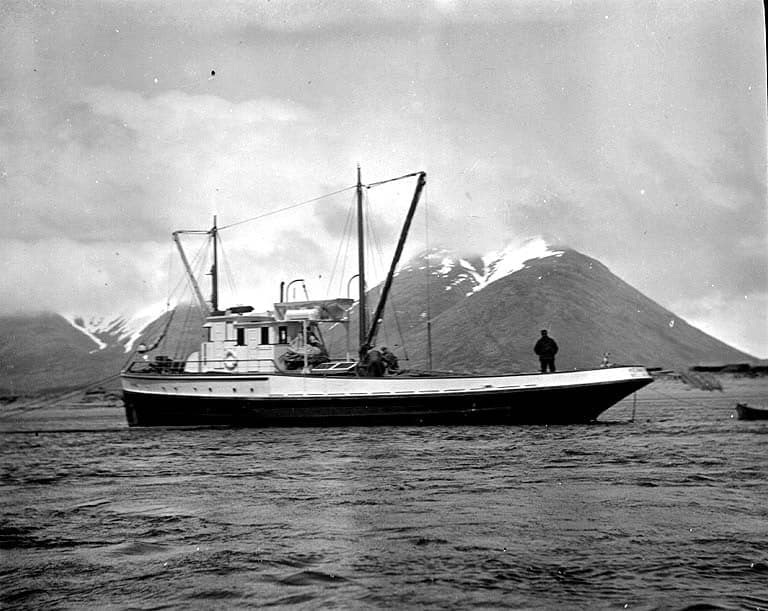
Photo: Wikipedia
Strategic Assessment of King Cove, AK
Strong survivability profile. Good buffer from population centers, with manageable environmental and tactical risks.
What does the Strategic Assessment tell us?
Our Strategic Assessment grades tactical survivability of an area. Major population centers, military targets, fallout zones, natural disasters, and border exposure all drive risk — lower exposure means a more defensible position in a crisis.
This is heavily inspired by Joel Skousen's Strategic Relocation book. Highly recommended you checkout the book ($)What does this tell us?
Our Strategic Assessment grades tactical survivability of an area. Major population centers, military targets, fallout zones, natural disasters, and border exposure all drive risk — lower exposure means a more defensible position in a crisis.
This is heavily inspired by Joel Skousen's Strategic Relocation book. Highly recommended you checkout the book ($)Strategic Pillars

Key Distances
Regional Safe Places
Below is our recommended "safe zones" in Alaska and the surrounding area based on our strategic heuristics. For most people, it's unrealistic to live in a “safe zone” full-time due to work, family or other personal reasons. They tend to be more rural. However, many of these areas are perfect for second homes and retreat properties that double as a vacation home or even a short-term rental.
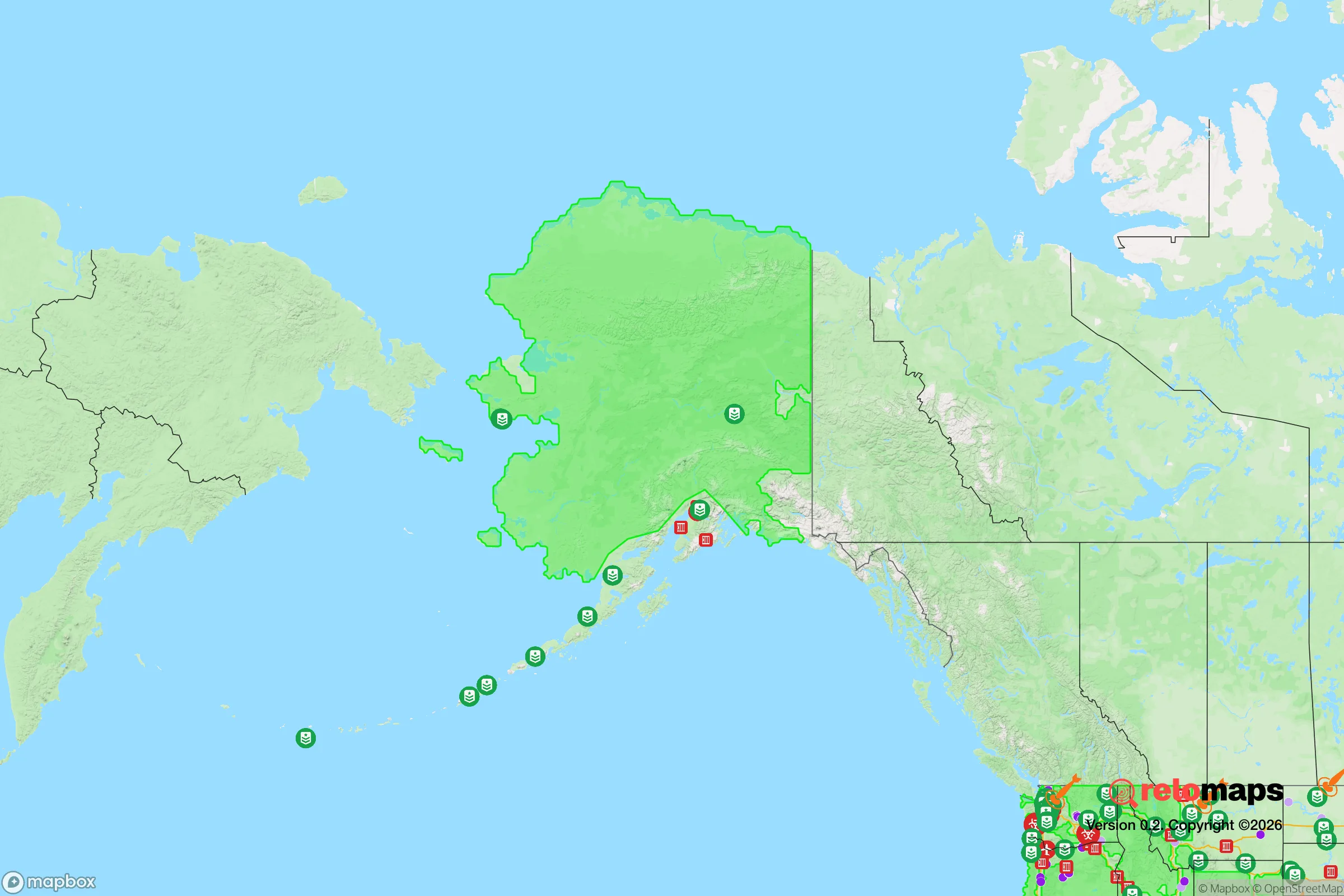
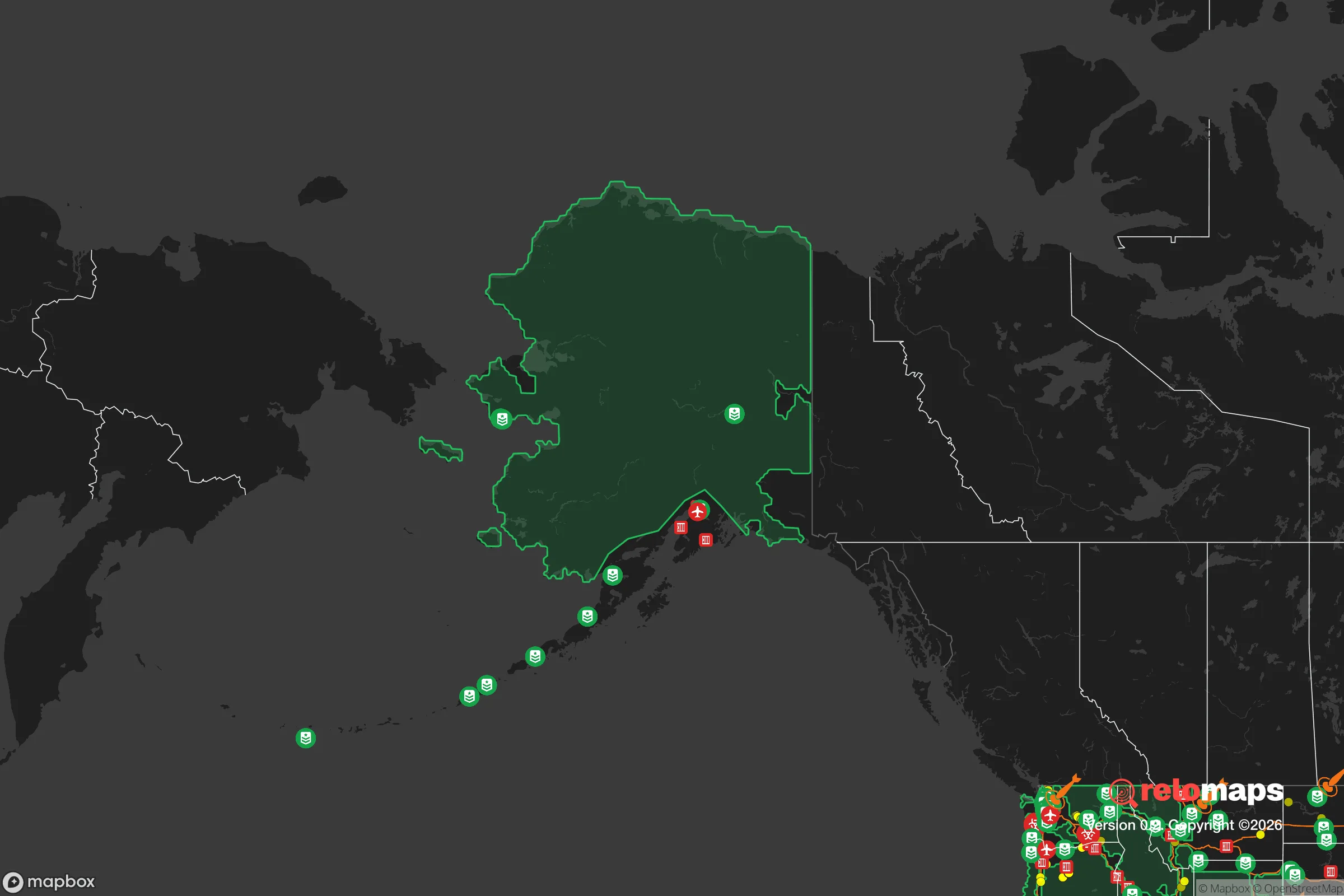


Important Note: For informational purposes only. This does not mean nothing bad ever happens in the green zones. Please use common sense. This is based on public data and modeled with AI. We tried to take a conservative approach but mistakes happen. We update this regularly as new information becomes available.
Solar Generator Recommendations
Backup power matters more here than in safer locations. We've picked three solar generators across budgets and capacity tiers — start with the budget unit if you only need a few essentials, or step up if you want to run a fridge and HVAC for days at a time.

Jackery Portable Power Station Explorer 300
Budget OptionPower on the Go: Weighing only 11 lbs, it's convenient to set up and store with book-sized foldable solar panels

BLUETTI Portable Power Station AC180
Designed for both indoor and outdoor scenarios, AC180 is highly capable as it has a robost capacity and continuous output power.

EF ECOFLOW DELTA Pro Ultra Power Station
Upgraded PickEcoFlow DELTA Pro Ultra is a whole-home energy system designed to grow with your family. Integrated with the Smart Home Panel 2, it scales to meet your evolving energy needs — keeping your home powered, intelligent, and secure through every stage of life.
We earn a commission, at no additional cost to you.
Strategic Assessment Analysis
King Cove, Alaska, represents one of the most strategically defensible and resilient relocation options available in North America for those prioritizing long-term survival and autonomy. Located on the Alaska Peninsula, roughly 600 miles southwest of Anchorage, this remote fishing community of approximately 800 people sits at the edge of the continent, offering a combination of geographic isolation, abundant natural resources, and a fiercely independent local culture that aligns well with a conservative, self-reliant mindset. For the prepper or survivalist assessing worst-case scenarios—civic collapse, grid failure, or pandemic—King Cove provides a genuine off-grid fallback, but it comes with extreme trade-offs in logistics, climate, and access that must be understood before committing.
Geographic position and natural advantages for long-term survival
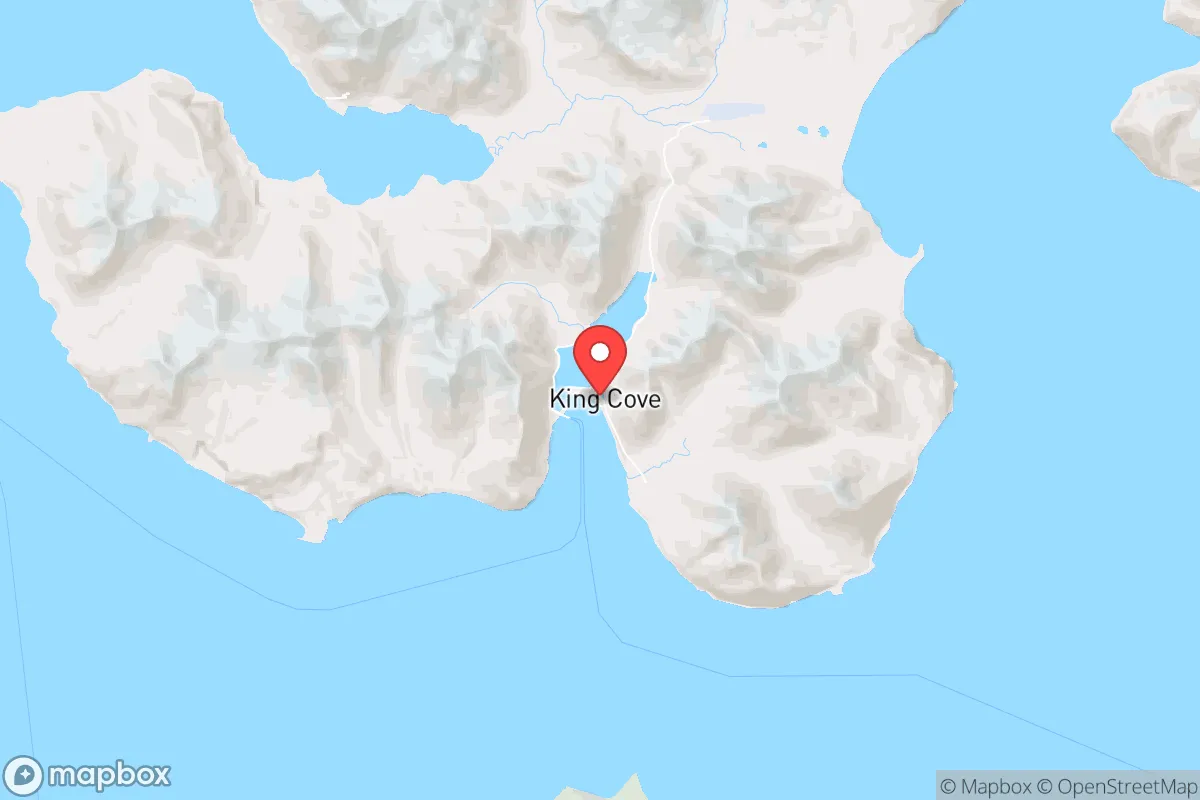
King Cove’s location is its primary strategic asset. It sits on the southern shore of the Alaska Peninsula, facing the Pacific Ocean, with the Bering Sea to the north and the Gulf of Alaska to the south. This position places it far from any major population centers—the nearest city of any size is Cold Bay, about 35 miles away by air, and Anchorage is a 2-hour flight or a multi-day boat journey. The surrounding terrain is rugged, volcanic, and largely roadless, with no highway connecting King Cove to the rest of Alaska. The only access is by air or sea, which means any large-scale civil unrest or disease outbreak in the Lower 48 would take weeks or months to reach this community, if it ever did. The area’s natural harbor is deep and protected, historically used by the U.S. military during World War II as a staging base, which speaks to its defensibility. The surrounding waters are rich in salmon, halibut, crab, and marine mammals, and the land supports caribou, moose, and waterfowl. For a family or individual willing to hunt, fish, and preserve food, King Cove offers a near-permanent food supply that does not depend on supply chains. The volcanic soil also supports hardy berries and edible plants, though large-scale gardening is limited by the short, cool growing season.
Risks, exposures, and proximity to fallout-relevant landmarks
While King Cove is remote, it is not free from risks that a survivalist must weigh. The most immediate natural threat is volcanic activity. The Alaska Peninsula is part of the Pacific Ring of Fire, and several active volcanoes lie within 100 miles, including Pavlof Volcano, which erupted as recently as 2022, sending ash plumes that grounded air travel and coated the area in fine, abrasive grit. Ashfall can contaminate water supplies, damage engines, and cause respiratory issues, so any prepper must plan for filtration and shelter-in-place protocols. Earthquakes are also frequent, with the region experiencing magnitude 5-6 events annually, and the potential for a tsunami exists given the coastal location—though King Cove’s harbor is somewhat sheltered by the surrounding islands. From a man-made threat perspective, King Cove’s distance from major military or industrial targets is a major plus. The nearest significant infrastructure is the Cold Bay Airport, a former military airfield that is now a civilian and cargo hub, but it is not a high-value target in a conflict scenario. There are no nuclear power plants, major military bases, or large cities within hundreds of miles. The closest potential fallout concern would be a strike on Anchorage or the Joint Base Elmendorf-Richardson, but prevailing winds and distance make significant fallout reaching King Cove unlikely. The real risk is not external attack but internal collapse of supply chains—King Cove relies heavily on barge and air shipments for fuel, medical supplies, and manufactured goods. A nationwide grid failure or port shutdown would hit this community hard within weeks, though the local fishing fleet and subsistence lifestyle provide a buffer that most urban areas lack.
Practical resilience for a relocator: food, water, energy, and defensibility
For someone serious about self-sufficiency, King Cove offers a rare combination of abundant natural resources and a small, tight-knit population that can be organized for mutual defense. The primary food source is the ocean. Residents with a boat or access to the shore can catch salmon, halibut, and crab year-round, and the state allows subsistence harvest of marine mammals like seal and sea lion. Hunting on the peninsula yields caribou and moose, and bird hunting is productive in season. The short growing season (roughly June to August) limits gardening to cold-hardy crops like potatoes, kale, and root vegetables, but a greenhouse with supplemental lighting could extend production. Fresh water is plentiful from streams and lakes, but must be treated or boiled due to potential contamination from wildlife and volcanic ash. Energy is the weak point. King Cove is not connected to the road or power grid; electricity comes from diesel generators, and heating is primarily by fuel oil or wood. A relocator would need to bring or establish solar panels, wind turbines, or a small hydro system to achieve energy independence, and even then, the long, dark winters (with only 6-7 hours of daylight in December) limit solar output. Defensibility is excellent. The community is compact, with a single road leading to the airport and harbor. The surrounding terrain is impassable to vehicles, and the population is small enough that outsiders are immediately noticed. Local residents are armed—Alaska has some of the most permissive gun laws in the country, and hunting is a way of life—so any threat from outside would face a heavily armed, experienced population. The main challenge is not defending against a mob but maintaining social cohesion in a crisis; King Cove has a history of strong community bonds, but isolation can also breed conflict when resources are tight.
The overall strategic picture for King Cove is one of extreme trade-offs. It offers near-total isolation from the chaos of the Lower 48, a reliable subsistence food base, and a defensible position that would be difficult for any large force to threaten. For a single individual or family willing to accept the harsh climate, the logistical difficulty of moving supplies, and the need to master hunting, fishing, and cold-weather survival, it is one of the few places in the United States where you could realistically ride out a societal collapse without relying on government or corporate infrastructure. However, it is not a place for beginners. The learning curve is steep, the cost of relocation is high (air freight alone can run thousands of dollars for a household’s worth of gear), and the social isolation can be crushing for those not accustomed to small-town life. For the conservative prepper who values freedom, self-reliance, and distance from the crumbling urban centers, King Cove is a serious option—but only if you are prepared to become a true Alaskan, not just a survivalist with a cabin. The community will test your skills, your patience, and your resolve, but for those who make it work, it offers a level of security that few other locations can match.

* Values derived from national, state, county, city and local statistics and may differ in a specific area. Last updated: 2026-04-19T19:27:44.000Z
Narrative content on this page is AI-generated and may contain mistakes. Verify any details that matter before acting on them.
ReloMaps may earn a commission from affiliate links at no extra cost to you.

