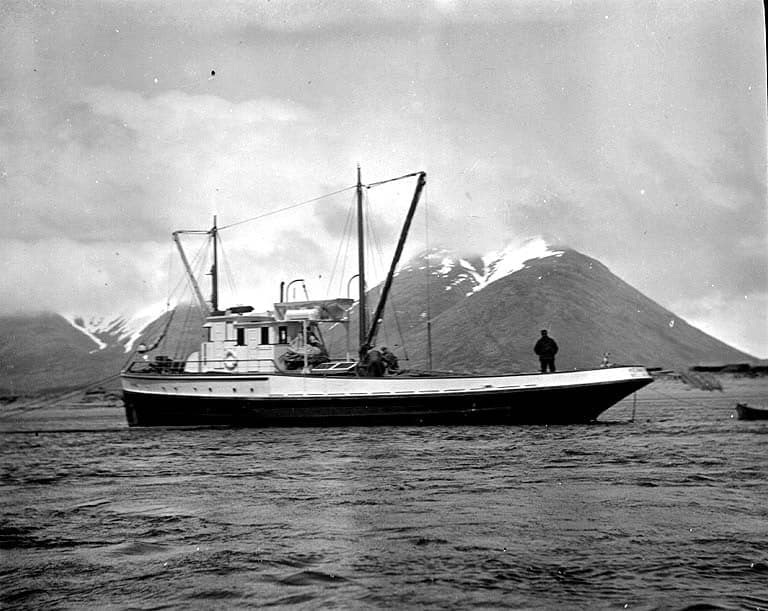
Photo: Wikipedia
Political ClimatePolitical Climate in King Cove, AK
District shown is the primary district for this city’s centroid. Cities may span multiple districts.
Inherited from parent state — no local data available.
Local Political AnalysisPolitical Analysis of King Cove, AK
King Cove is about as solidly conservative as they come in Alaska, and that’s not changing anytime soon. The Cook PVI of R+6 tells you the baseline, but it doesn’t capture the full picture: this is a working-class fishing community where folks value self-reliance, local control, and keeping government out of their daily lives. The political lean here isn’t just Republican—it’s a deep-seated skepticism of outside interference, whether from Juneau or D.C. If you look at the voting trends over the last decade, King Cove has actually drifted further right, even as some parts of the state have flirted with more moderate or progressive candidates. The 2020 and 2024 presidential results here were lopsided, with Trump winning by margins well above the PVI suggests, and local races rarely see a competitive Democrat. The trajectory is clear: as the rest of the country gets pulled into culture wars and top-down mandates, King Cove is digging in its heels.
How it compares
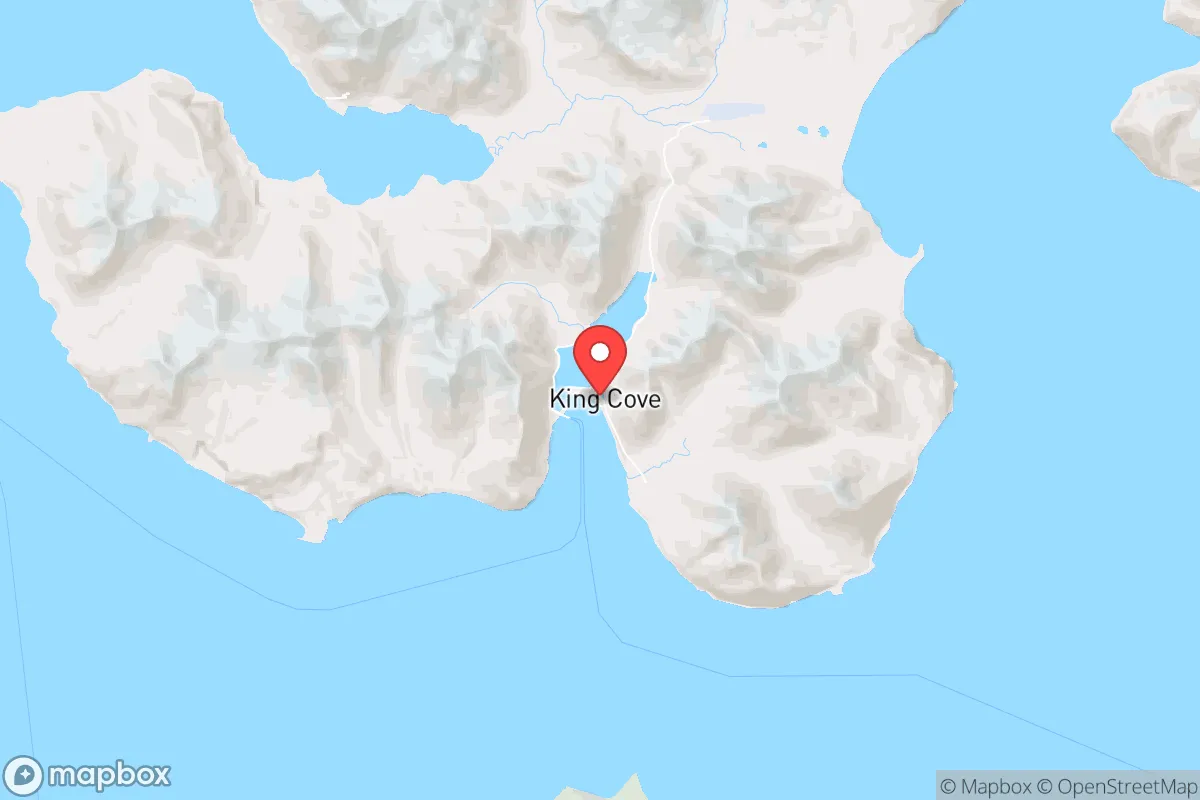
To understand King Cove’s politics, you have to look at its neighbors. Cold Bay, just 35 miles west, is a much smaller community with a heavier federal government presence (the Fish and Wildlife Service runs the show there), and it leans noticeably more moderate—you’ll see a few Biden signs in yards during election years, which would be unthinkable here. Sand Point, another fishing hub to the east, is more mixed, with a growing Filipino-American population that tends to vote more pragmatically, often splitting tickets. But King Cove is the outlier: it’s the most consistently conservative town on the Alaska Peninsula. The contrast is stark when you compare it to Homer across the bay, which is practically a different planet politically—art galleries, yoga studios, and a city council that’s passed sanctuary city resolutions. King Cove residents see Homer as a cautionary tale of what happens when progressive ideology takes root: higher taxes, more regulations on fishing and development, and a general erosion of the “live and let live” ethos that built Alaska. The difference isn’t just cultural—it’s a direct reflection of how each community views government overreach. Here, we see it as a threat to our way of life; there, they seem to welcome it.
What this means for residents
For the people who live here, the political climate translates into a very specific set of realities. First, you can expect minimal government interference in your daily business. The local government is small, practical, and focused on infrastructure—roads, the airport, the clinic—not social engineering. There’s no push for zoning laws that tell you what color to paint your house or how many chickens you can keep. Second, the school board and city council are reliably conservative, which means curriculum stays focused on basics, not critical race theory or gender ideology. Parents here have a real say in what their kids are taught, and that’s not something you can take for granted in many places anymore. Third, the fishing industry—the lifeblood of the town—is protected by a political culture that prioritizes resource extraction over environmental activism. You won’t see the kind of permit restrictions or marine sanctuary proposals that plague communities like Cordova or Sitka. The downside? If you’re not conservative, you might feel isolated. There’s little room for progressive activism, and the social pressure to conform is real. But for most residents, that’s a feature, not a bug.
One cultural distinction worth noting: King Cove has a strong Alaska Native (Aleut/Unangax̂) presence, and that community tends to vote conservative as well, though with a pragmatic twist. They’re fiercely protective of subsistence rights and wary of federal land designations—the long fight over the Izembek National Wildlife Refuge road is a perfect example. That battle, where the federal government blocked a road needed for emergency medical access, cemented the local view that outside bureaucrats don’t care about rural Alaskans. It’s a unifying issue that cuts across party lines, but it reinforces the conservative narrative: government overreach is real, it’s dangerous, and it’s only getting worse. Looking ahead, the biggest concern is that as Alaska’s population shifts and Anchorage and the Mat-Su Valley become more purple, the state legislature could impose policies—like higher minimum wages, stricter fishing quotas, or carbon taxes—that hurt communities like King Cove. The long-term trend is worrying, but for now, this town remains a stronghold of traditional values and personal freedom. If that’s what you’re looking for, you’ll fit right in.

State Political ClimatePolitical Climate in Alaska
State Political AnalysisPolitical Environment in the State
Alaska has long been a politically unique state, leaning Republican in presidential elections but with a fiercely independent streak that makes it less predictable than many red states. Over the past 20 years, the state has shifted from reliably red to a more volatile mix, with the GOP still dominant in rural and suburban areas but facing growing challenges from a moderate-liberal coalition centered in Anchorage and Juneau. The 2022 governor’s race, won by conservative Republican Mike Dunleavy, and the 2024 presidential results, where Donald Trump carried the state by about 13 points, show the GOP still holds the edge, but the margin has narrowed as in-migration from blue states and a growing urban population have nudged the state leftward.
Urban vs. rural divide
The political map of Alaska is starkly divided between its small urban centers and vast rural expanse. Anchorage, home to roughly 40% of the state’s population, is the key battleground—it voted for Joe Biden in 2020 by a slim margin, driven by liberal-leaning neighborhoods like Spenard and downtown, while conservative strongholds in Eagle River and Chugiak kept the city competitive. Juneau, the capital, is reliably Democratic, with its government-worker base and environmentalist leanings. Fairbanks, the interior hub, is more conservative but has a notable libertarian streak, with voters often favoring candidates who promise limited government and resource development. The Matanuska-Susitna Borough, north of Anchorage, is the state’s fastest-growing conservative bastion, with towns like Wasilla and Palmer solidly red, fueled by families seeking lower taxes and more space. Rural villages, especially in the Bush, lean Democratic due to strong ties to federal programs and tribal governance, but their low population density limits their electoral impact.
Policy environment
Alaska’s policy environment is a mixed bag for conservatives. On the plus side, there is no state income tax or sales tax, and the Permanent Fund Dividend (PFD) puts cash directly in residents’ pockets—a powerful check on government overreach. The state has a right-to-work law, and gun rights are among the strongest in the nation, with no permit required for concealed carry and no state-level assault weapons ban. However, the education system is heavily centralized and unionized, with the Alaska Department of Education imposing mandates that have frustrated parents in conservative areas like the Mat-Su Borough, where school board battles over curriculum transparency have erupted. Healthcare is dominated by a few large systems, and the state’s Medicaid expansion under the Affordable Care Act remains popular, even among many Republicans. Election laws are relatively clean, with no-excuse absentee voting and automatic voter registration, but the 2020 switch to ranked-choice voting (passed by ballot initiative) has been a major flashpoint, with conservatives arguing it dilutes voter intent and empowers moderate factions.
Trajectory & freedom
Alaska’s trajectory on personal freedom is a tale of two trends. On one hand, the state has expanded liberty in key areas: the 2022 passage of Senate Bill 89 strengthened parental rights in education, requiring schools to notify parents of curriculum changes and allowing them to opt their children out of controversial materials. Gun rights were bolstered by the 2023 repeal of a law requiring a 10-day waiting period for handgun purchases, and the state has resisted federal overreach on land use and resource extraction. On the other hand, the ranked-choice voting system, implemented in 2022, has been a blow to electoral freedom, forcing candidates to appeal to a broader, often more moderate, electorate and making it harder for pure conservatives to win. The state’s heavy reliance on federal funding—about 40% of its budget—creates a dependency that limits its ability to push back against federal mandates, a concern for those wary of government overreach. The 2024 legislative session saw a failed attempt to repeal ranked-choice voting, signaling that the fight for electoral integrity is far from over.
Civil unrest & political movements
Political activism in Alaska is less about street protests and more about organized movements and legal battles. The most visible flashpoint in recent years has been the fight over ranked-choice voting, with conservative groups like Alaskans for Honest Elections gathering signatures to repeal it, while progressive and moderate forces defend it. The 2020 election integrity debate was muted compared to the Lower 48, but concerns about ballot harvesting in rural villages have been raised by GOP officials. Immigration politics are less prominent here, but the state’s small refugee resettlement program in Anchorage has drawn some local opposition. The “secession” rhetoric common in other states is rare, but there is a strong strain of nullification sentiment, particularly around federal land management—Alaskans frequently chafe at federal control over 60% of the state’s land, with movements like the “Alaska Land Sovereignty Act” pushing for state control. The 2023 protests over the proposed Pebble Mine in Bristol Bay showed the environmental left’s organizing power, but conservative counter-movements focused on resource development remain robust in places like Fairbanks and the North Slope.
Projection
Over the next 5-10 years, Alaska is likely to become more politically competitive, but not necessarily more progressive. In-migration from blue states, particularly to Anchorage and the Mat-Su Borough, is slowly shifting the urban vote leftward, while rural conservative areas are losing population due to economic stagnation. The ranked-choice voting system, if it survives legal challenges, will continue to favor moderate candidates, potentially pushing the state toward a more centrist Republicanism like that of Senator Lisa Murkowski. However, the state’s libertarian DNA—its distrust of government, love of individual freedom, and resistance to taxes—will keep it from fully embracing progressive policies. The biggest wildcard is the Permanent Fund Dividend: if the state’s finances force cuts to the PFD, it could spark a populist backlash that either strengthens the conservative base or opens the door to a more radical, anti-establishment movement. For someone moving in now, expect a state where freedom is still the default, but the political ground is shifting under your feet.
For a new resident, the bottom line is that Alaska offers a rare combination of low taxes, strong gun rights, and a culture of self-reliance that is increasingly hard to find in the Lower 48. But the political climate is not static—the ranked-choice voting system, the growing influence of Anchorage’s liberal enclaves, and the state’s dependence on federal money are real concerns for those who value limited government. If you’re looking for a place where your vote still counts and your freedoms are respected, Alaska is a solid bet, but keep an eye on the ballot measures and the school board races in places like Wasilla and Palmer—that’s where the future of the state is being decided.
* Values derived from national, state, county, city and local statistics and may differ in a specific area. Last updated: 2026-04-19T19:27:44.000Z
Narrative content on this page is AI-generated and may contain mistakes. Verify any details that matter before acting on them.
ReloMaps may earn a commission from affiliate links at no extra cost to you.

