 Popular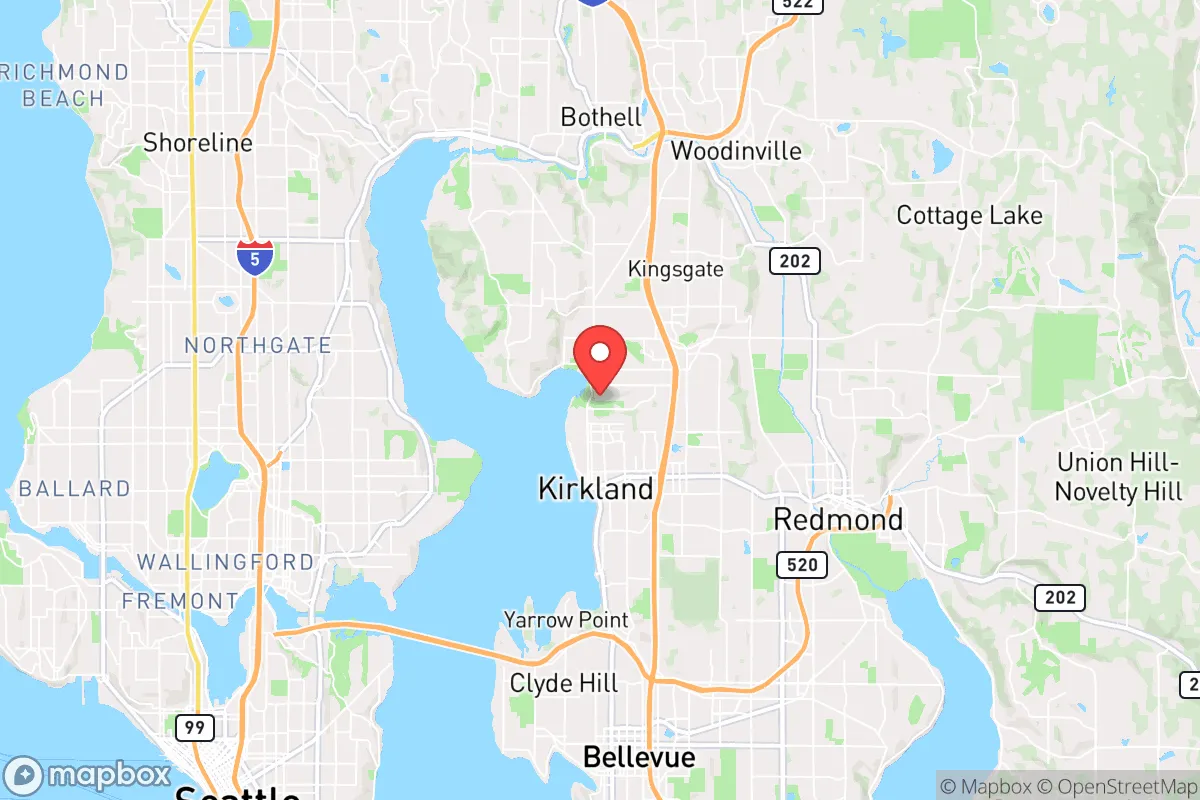

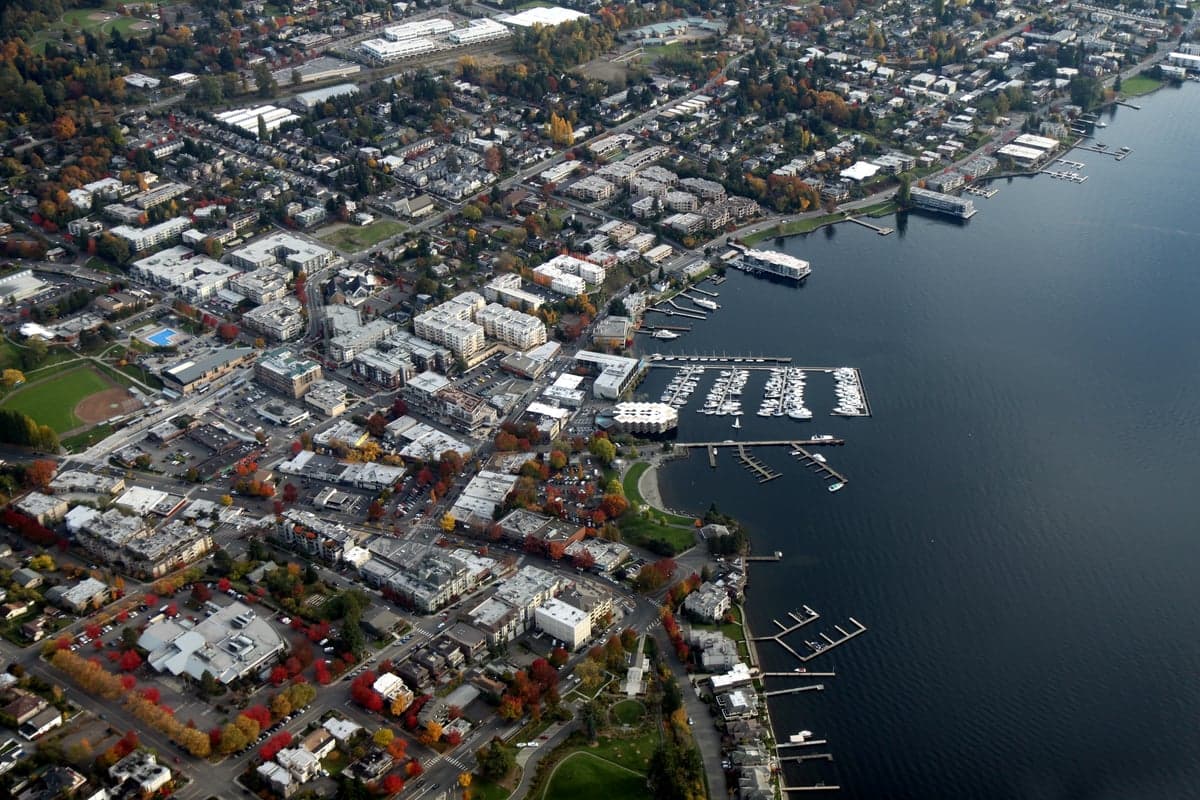
Photo: Wikipedia
Demographics of Kirkland, WA
Affluence Level in Kirkland, WA
A wealthy area with high-earning, well-educated households. Incomes, home values, and educational attainment meaningfully outpace national averages.
People of Kirkland, WA
Kirkland, Washington, is a city of 91,614 residents that blends a historic small-town core with a modern, tech-driven identity. It is notably dense for a suburban city, with a highly educated workforce—64.4% of adults hold a bachelor’s degree or higher—and a population that is 65.2% White, 12.1% East/Southeast Asian, 5.6% Indian (subcontinent), 7.8% Hispanic, and 1.5% Black. The city’s character is shaped by its position on Lake Washington, its role as a satellite to Seattle and Redmond, and a population that is increasingly diverse yet remains majority-White and affluent.
How the city was settled and grew
Kirkland’s original inhabitants were the Duwamish and Snoqualmie peoples, who used the lakefront for fishing and trade. Euro-American settlement began in the 1860s, but the city’s founding boom came in the 1880s when Peter Kirk, a British steel magnate, envisioned a steel mill and company town. The mill never materialized, but the platting of the Kirkland Downtown core and the Norkirk neighborhood attracted Scandinavian and German immigrants who worked in logging, shipbuilding, and small-scale farming. By the early 1900s, Kirkland was a modest resort and commuter town, with summer homes along the lake. The Houghton neighborhood, annexed in 1968, developed as a separate community of working-class families, many of them Norwegian and Swedish immigrants employed in Seattle’s maritime industries. The Juanita area, also annexed later, grew as a rural crossroads for dairy farmers and fruit growers. Through the mid-20th century, Kirkland remained overwhelmingly White and relatively small, reaching just over 10,000 residents by 1960.
Modern era (post-1965)
The 1965 Hart-Cellar Act and the rise of the tech industry transformed Kirkland’s population. The completion of the Evergreen Point Floating Bridge in 1963 made the city a viable bedroom community for Seattle and, later, for Microsoft’s Redmond campus. The Bridle Trails neighborhood, with its large lots and equestrian zoning, attracted upper-middle-class White families and some East/Southeast Asian professionals in the 1980s and 1990s. The Finn Hill area, a post-war suburban development, saw an influx of Indian (subcontinent) and East/Southeast Asian families drawn to the area’s highly rated Lake Washington School District. By 2000, Kirkland’s foreign-born population had risen to 18%, with the largest groups being Chinese, Indian, and Korean. The Hispanic population, while smaller, concentrated in the Totem Lake area, where lower-cost apartments and service-industry jobs provided a foothold. The city’s Black population has remained small (1.5%), with no single neighborhood concentration, reflecting broader regional patterns of low Black homeownership and suburban exclusion.
The future
Kirkland’s population is projected to grow to roughly 100,000 by 2040, driven by infill development and transit-oriented zoning around the new Sound Transit light rail station at Totem Lake. The East/Southeast Asian and Indian communities are growing steadily, with Indian families particularly drawn to the North Rose Hill and Kingsgate neighborhoods for their school access and newer housing stock. The Hispanic population is plateauing, as rising home prices push lower-income families to more affordable suburbs like Bothell or Renton. The White share is slowly declining but remains dominant, especially in the lakefront and Bridle Trails enclaves. The city is not tribalizing into distinct ethnic enclaves—most neighborhoods are mixed—but income segregation is sharpening, with the Juanita and Finn Hill areas becoming more uniformly affluent. The next decade will likely see Kirkland become slightly more diverse, more expensive, and more oriented toward transit, but its core identity as a White-majority, highly educated, family-focused suburb will persist.
For a conservative-leaning individual or family considering a move, Kirkland offers a stable, safe, and well-governed environment with strong schools and low crime. The population is becoming more diverse in a gradual, organic way, not through rapid demographic disruption. The city’s future is one of managed growth, where new residents—especially those in tech and professional fields—will find a community that values order, education, and property rights. It is not a place of radical change, but of steady, predictable evolution.

* Values derived from national, state, county, city and local statistics and may differ in a specific area. Last updated: 2026-04-21T11:17:20.000Z
Narrative content on this page is AI-generated and may contain mistakes. Verify any details that matter before acting on them.
ReloMaps may earn a commission from affiliate links at no extra cost to you.

