Photo: Wikipedia
Strategic Assessment of Kirkwood, MO
Meaningful friction. Expect exposure to either population pressure, blast zones, or natural disaster risk. Consider buying a retreat property.
What does the Strategic Assessment tell us?
Our Strategic Assessment grades tactical survivability of an area. Major population centers, military targets, fallout zones, natural disasters, and border exposure all drive risk — lower exposure means a more defensible position in a crisis.
This is heavily inspired by Joel Skousen's Strategic Relocation book. Highly recommended you checkout the book ($)What does this tell us?
Our Strategic Assessment grades tactical survivability of an area. Major population centers, military targets, fallout zones, natural disasters, and border exposure all drive risk — lower exposure means a more defensible position in a crisis.
This is heavily inspired by Joel Skousen's Strategic Relocation book. Highly recommended you checkout the book ($)Strategic Pillars

Key Distances
Regional Safe Places
Below is our recommended "safe zones" in Missouri and the surrounding area based on our strategic heuristics. For most people, it's unrealistic to live in a “safe zone” full-time due to work, family or other personal reasons. They tend to be more rural. However, many of these areas are perfect for second homes and retreat properties that double as a vacation home or even a short-term rental.


Important Note: For informational purposes only. This does not mean nothing bad ever happens in the green zones. Please use common sense. This is based on public data and modeled with AI. We tried to take a conservative approach but mistakes happen. We update this regularly as new information becomes available.
Solar Generator Recommendations
Backup power matters more here than in safer locations. We've picked three solar generators across budgets and capacity tiers — start with the budget unit if you only need a few essentials, or step up if you want to run a fridge and HVAC for days at a time.

Jackery Portable Power Station Explorer 300
Budget OptionPower on the Go: Weighing only 11 lbs, it's convenient to set up and store with book-sized foldable solar panels

BLUETTI Portable Power Station AC180
Designed for both indoor and outdoor scenarios, AC180 is highly capable as it has a robost capacity and continuous output power.

EF ECOFLOW DELTA Pro Ultra Power Station
Upgraded PickEcoFlow DELTA Pro Ultra is a whole-home energy system designed to grow with your family. Integrated with the Smart Home Panel 2, it scales to meet your evolving energy needs — keeping your home powered, intelligent, and secure through every stage of life.
We earn a commission, at no additional cost to you.
Strategic Assessment Analysis
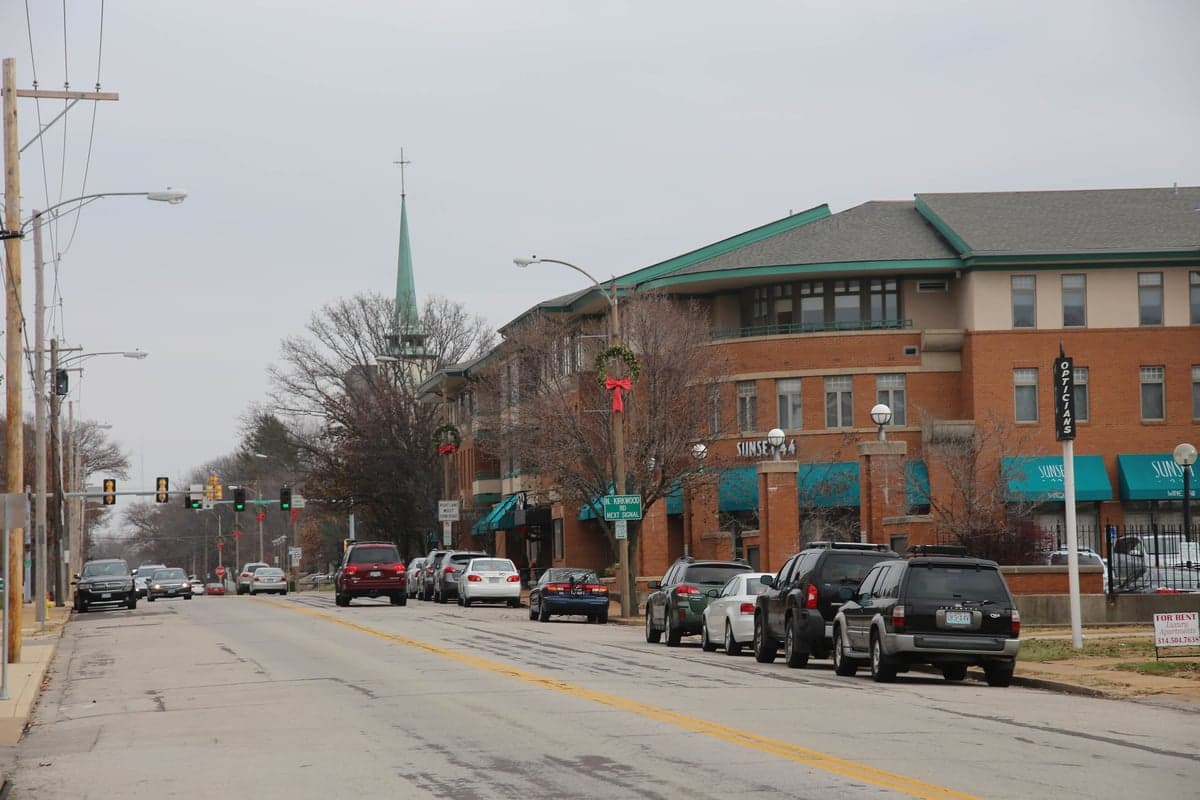
Kirkwood, Missouri, sits in a peculiar strategic position that demands a clear-eyed assessment. It offers genuine resilience advantages—stable geology, a robust local economy, and a community with a history of self-reliance—but its proximity to St. Louis and the geopolitical vulnerabilities of the Midwest corridor cannot be ignored. For a conservative relocator weighing long-term preparedness against daily livability, Kirkwood is a mixed bag: it provides a defensible suburban base with access to resources, yet it lies within the blast-radius shadow of a major metropolitan target and the nation’s primary nuclear-weapons manufacturing complex.
Geographic position and natural advantages for long-term stability
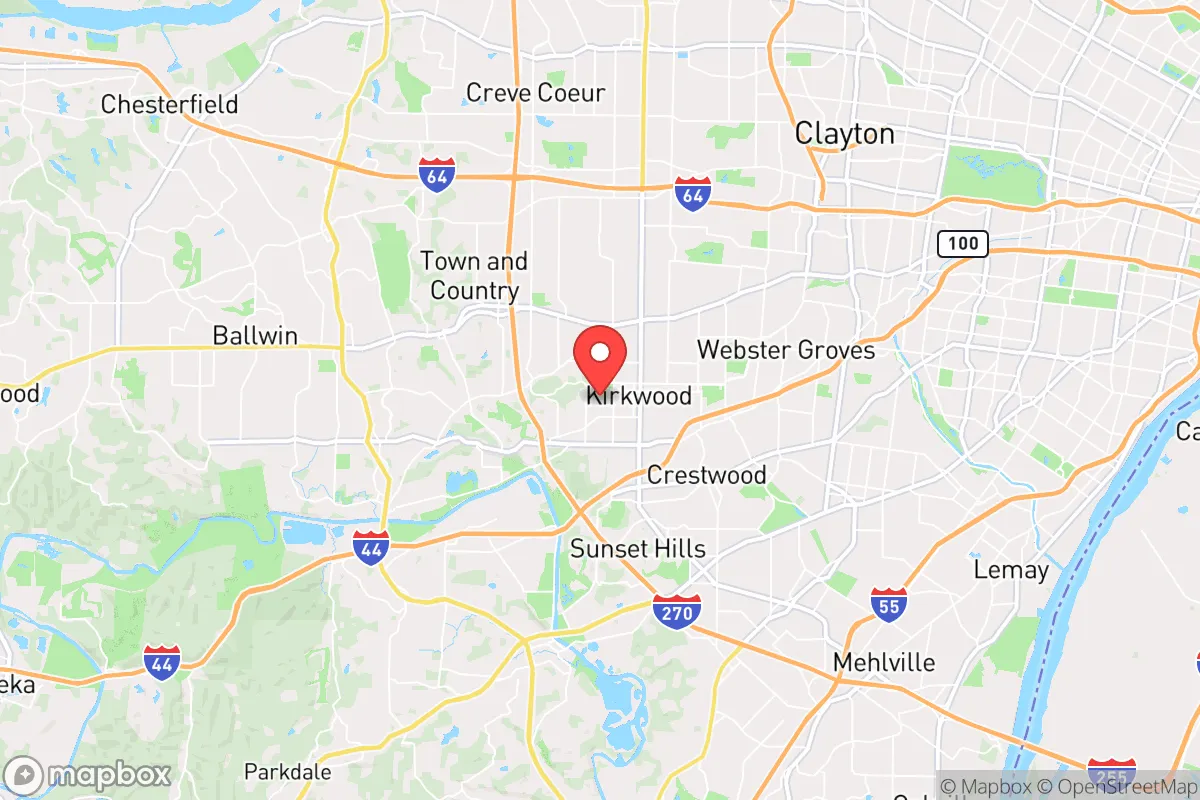
Kirkwood’s location in west St. Louis County places it on the Missouri River bluffs, roughly 15 miles southwest of downtown St. Louis. The area sits atop the Ozark Plateau’s northern edge, meaning bedrock is relatively shallow—good for basement construction and well drilling. The local topography is rolling hills with hardwood forest cover, offering natural concealment and multiple egress routes via state highways 44, 141, and 100. Unlike coastal or seismically active regions, Kirkwood faces no hurricane, tsunami, or major earthquake threat. The New Madrid Seismic Zone is 150 miles south, and while a major quake there would rattle the region, modern building codes in St. Louis County mitigate catastrophic collapse risk. The climate is four-season continental: hot, humid summers and cold winters, but with reliable annual rainfall (about 40 inches) that supports local agriculture and groundwater recharge. For a prepper, this means you can garden, harvest rainwater, and maintain off-grid water supplies without fighting desert conditions or floodplain saturation.
Risks, exposures, and proximity to fallout-relevant landmarks
The elephant in the room is Kirkwood’s proximity to St. Louis—a major logistics hub with a population of 2.8 million in the metro area. In a scenario of civil unrest, supply-chain collapse, or a coordinated attack, St. Louis is a high-probability target. Lambert International Airport, the Mississippi River barge traffic, and the rail yards in East St. Louis are all critical infrastructure that would draw disruption. More concerning for the fallout-aware: the nation’s sole nuclear weapons assembly and disassembly facility, the National Nuclear Security Administration’s Pantex Plant, is in Texas, but the Boeing Defense, Space & Security facility in nearby Hazelwood (15 miles northeast) produces components for missile systems and could be a secondary target. Additionally, the Weldon Spring Chemical Plant site (20 miles west) is a former uranium processing facility now a Superfund site—not an active threat, but a reminder that the region has a legacy of radiological material handling. Kirkwood itself is not downwind of any active nuclear power plant (the closest is Callaway County, 80 miles west), but prevailing winds from the southwest mean fallout from a St. Louis strike would likely drift northeast, away from Kirkwood. The real risk is not direct blast but the cascading effects: refugee flow, resource scarcity, and the breakdown of law enforcement in a metro area that already struggles with crime rates well above national averages.
Practical resilience for a relocator: food, water, energy, and defensibility
For a family or individual serious about self-sufficiency, Kirkwood offers a workable but not ideal baseline. Water is the strongest suit. The Meramec River runs just south of town, and the Kirkwood area sits atop the Ozark Aquifer—a limestone-based groundwater system that yields decent well water at depths of 100–300 feet. Municipal water comes from the Missouri River, treated at the Howard Bend plant, but a prepper should assume that treatment could fail during a prolonged grid-down event. Rainwater catchment is viable given annual precipitation, and the rolling terrain allows for gravity-fed cistern systems. Food security is moderate. Kirkwood is a historic railroad town with a walkable downtown, but it’s not agricultural—the nearest farmland is in Jefferson County, 20 minutes south. You can raise chickens within city limits (with a permit), but large-scale gardening requires acreage, which is expensive in this affluent suburb (median home price around $450,000). The Kirkwood Farmers’ Market is excellent for normal times, but in a crisis, you’d need to rely on stored supplies or rural property connections. Energy resilience is average. Ameren Missouri provides grid power, and natural gas is widely available. Solar potential is decent (4.5 peak sun hours per day), but homeowners’ association restrictions in many Kirkwood neighborhoods limit panel installation. Backup generators are common among prepper-minded residents, and propane is readily available at local suppliers like Ferrellgas. Defensibility is the weak point. Kirkwood is a dense suburb with a grid street pattern and multiple entry points via major roads. It’s not a natural redoubt. However, the community has a strong neighborhood watch culture and a well-funded police department (Kirkwood PD has about 50 sworn officers). The city’s location on a bluff provides some tactical advantage—you can see threats approaching from the east and north. For a relocator, the smart play is to buy on the western edge of town, near the Meramec River greenway, where lots are larger and rural transition zones offer escape routes toward Franklin County.
The overall strategic picture for a conservative relocator
Kirkwood is not a survivalist’s paradise, and it’s not meant to be. It’s a strategic compromise: a well-run, historically conservative suburb (St. Louis County voted +14 for Trump in 2024, but Kirkwood itself is more moderate) with good schools, low crime relative to the metro, and a community that values preparedness—the local chapter of the Missouri Preparedness Network meets monthly. The biggest liability is the proximity to St. Louis, which in a worst-case scenario becomes a liability rather than an asset. But if you accept that no location within 50 miles of a major city is truly safe from civil unrest, Kirkwood offers a defensible, resource-rich base with multiple escape corridors. The key is to treat it as a forward operating base, not a final redoubt. Maintain a rural bug-out location in the Ozarks (within 90 minutes), keep a well-stocked pantry, and build relationships with like-minded neighbors. Kirkwood’s resilience lies in its community institutions—the library, the police force, the churches—not in its geography. For a conservative relocator who wants a comfortable daily life with a serious preparedness posture, it’s a viable choice. Just don’t mistake it for a bunker.

* Values derived from national, state, county, city and local statistics and may differ in a specific area. Last updated: 2026-04-30T13:24:11.000Z
Narrative content on this page is AI-generated and may contain mistakes. Verify any details that matter before acting on them.
ReloMaps may earn a commission from affiliate links at no extra cost to you.

