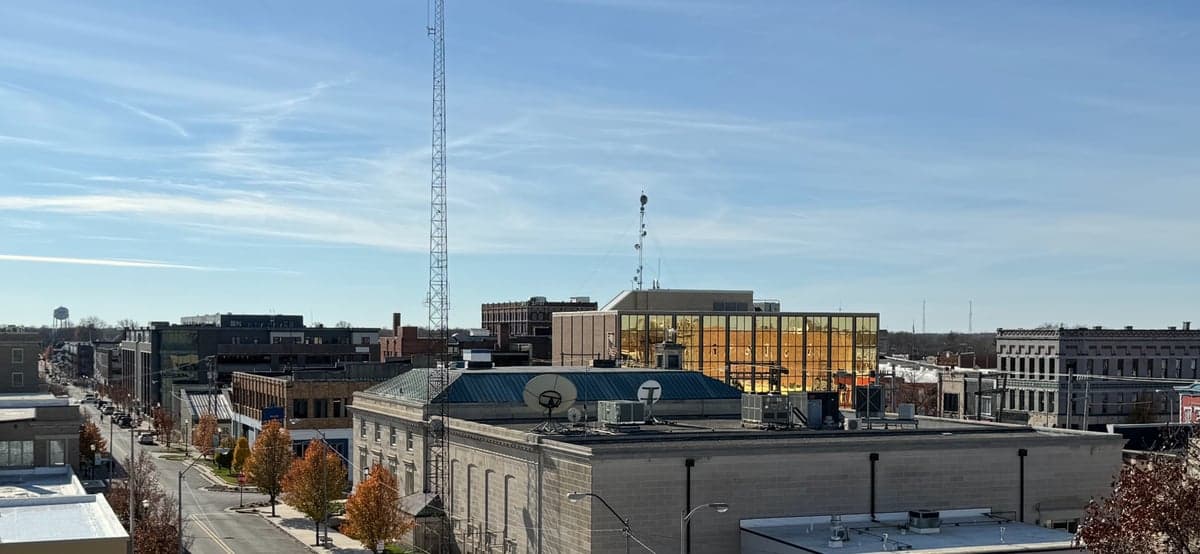
Photo: Wikipedia
Political ClimatePolitical Climate in Kokomo, IN
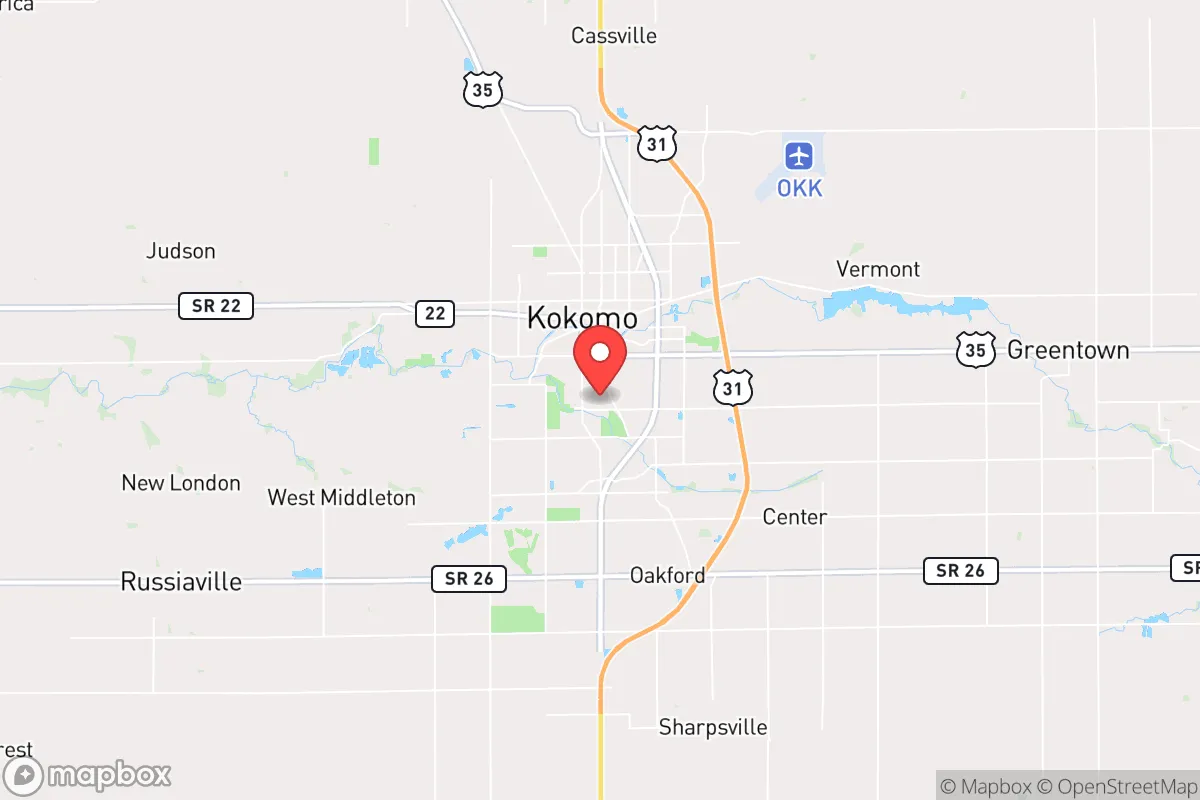
District shown is the primary district for this city’s centroid. Cities may span multiple districts.
Local Political AnalysisPolitical Analysis of Kokomo, IN
Kokomo, Indiana, has long been a solidly conservative area, and that hasn't changed much. The Cook PVI of R+8 tells you the baseline, but it doesn't capture the feel on the ground. For decades, this was a union-heavy, blue-collar town that voted Democrat for local offices but always leaned Republican in national races. That's shifted. Now, even the local races are trending red, and the old-school conservative values—personal responsibility, limited government, and a healthy skepticism of federal overreach—are the default setting for most folks around here. You see it in the way people talk about the Second Amendment or property rights; it's not a debate, it's a given.
How it compares
Drive thirty minutes south to Indianapolis, and you're in a different world politically. Indy is a blue island in a red sea, with a much more progressive city council and a mayor who pushes things like sanctuary city policies and higher taxes. Kokomo is the opposite. We don't have that kind of top-down government meddling. Compare us to Bloomington, too—that's a college town where the university culture drives a lot of left-leaning activism. Even nearby towns like Peru or Logansport, while still conservative, have a more mixed vibe because of their larger Hispanic populations and different economic bases. Kokomo is more homogeneous in its politics. The surrounding Howard County is reliably Republican, and the city council reflects that. You won't find a lot of talk about defunding the police or radical zoning changes here. The contrast is stark: Kokomo feels like a place where common sense still rules, not where government is trying to micromanage your life.
What this means for residents
For someone moving here, the biggest takeaway is that your personal freedoms are respected. There's no city ordinance telling you what kind of lightbulb to use or what you can plant in your front yard. The tax burden is low compared to states like Illinois or California, and the local government isn't constantly dreaming up new fees or regulations. You can own a firearm without a bunch of hoops, and there's no push for red flag laws or magazine bans at the local level. The school board is conservative, so you're not seeing critical race theory or gender ideology shoved into the curriculum. That said, there are some tensions. The city has seen a small influx of younger, more progressive transplants from Indy or out of state, and they've tried to push things like a "welcoming city" resolution or more bike lanes. Those efforts usually get shot down, but it's a reminder that the culture war is real, even here. The long-term concern is that if these trends continue, we could see more government overreach—like higher property taxes to fund pet projects or zoning changes that hurt property rights. For now, though, Kokomo remains a place where you can live your life without the government breathing down your neck.
Culturally, Kokomo is still a town that values hard work and self-reliance. The old Chrysler plant (now Stellantis) and the GM plant are still big employers, but the union influence has waned, and the workforce is more independent-minded. You'll hear people talk about "keeping the government out of my business" as a point of pride. There's no city-wide mask mandate or vaccine passport nonsense here—that kind of stuff was rejected early on. The biggest policy distinction is probably the lack of a local income tax, which is rare for an Indiana city of this size. That keeps more money in your pocket. If you're looking for a place where the government stays small and leaves you alone, Kokomo is about as good as it gets in central Indiana. Just keep an eye on those newcomers trying to change things—they're persistent, but the old guard is still in charge.

State Political ClimatePolitical Climate in Indiana
State Political AnalysisPolitical Environment in the State
Indiana has been a reliably red state for decades, but its conservatism is of a specific, pragmatic Midwestern variety rather than the firebrand style seen out West. The state has voted Republican in every presidential election since 2008, with Donald Trump winning it by 16 points in 2024, a slight improvement over his 2020 margin. However, the political landscape is far from monolithic; the story of Indiana is a tale of a shrinking, deep-red rural base holding off a slow but steady blueing of its suburban and urban cores, driven largely by in-migration from the coasts and the growth of its major university towns.
Urban vs. rural divide
The political map of Indiana is a classic study in contrast. Indianapolis (Marion County) is the state’s Democratic stronghold, consistently voting blue by double digits, but its suburbs—places like Hamilton County (Carmel, Fishers, Noblesville)—are the true battlegrounds. Hamilton County was once a Republican lock, but it has shifted noticeably leftward in recent cycles, with Trump only winning it by 9 points in 2024 after a 20-point win in 2016. This is the epicenter of the state’s demographic change: educated, affluent professionals moving in for jobs at companies like Eli Lilly and Salesforce, bringing more moderate or even left-leaning views on social issues. Meanwhile, the rest of the state is deeply red. Fort Wayne (Allen County) remains a Republican stronghold, though its growing Hispanic population is beginning to nudge it slightly toward the center. Evansville (Vanderburgh County) in the southwest is reliably red, while Bloomington (Monroe County), home to Indiana University, is a deep-blue island of progressive activism in a sea of red. The rural counties—like Pulaski, Jasper, and Newton in the northwest—routinely vote 75-80% Republican, driven by strong agricultural and manufacturing interests. The divide isn’t just about party; it’s about culture. Rural voters see Indianapolis and its suburbs as a different world, one increasingly disconnected from their values on guns, family, and faith.
Policy environment
Indiana’s policy environment is broadly conservative, but with a pragmatic, business-friendly bent. The state has a flat income tax rate of 3.05% (down from 3.15% in 2025), with a scheduled phase-down to 2.9% by 2027—a clear win for fiscal conservatives. Property taxes are relatively low, capped at 1% of assessed value for owner-occupied homes. There is no inheritance or estate tax. On education, Indiana has a robust school choice system, including a voucher program that allows parents to use public funds for private or religious schools—a policy that has expanded significantly under Governor Eric Holcomb and the Republican supermajority. However, the state has also seen a push for more centralized control over curriculum, with the 2022 law (HEA 1134) requiring schools to post all instructional materials online, a move that supporters say increases transparency but critics call a chilling effect on teachers. Healthcare is a mixed bag: Indiana expanded Medicaid under the HIP 2.0 program, but the state has also passed some of the most restrictive abortion laws in the nation, including a near-total ban (Senate Enrolled Act 1) in 2023, with exceptions only for rape, incest, and life of the mother. Election laws are tight: voter ID is required, and the state has purged inactive voters from rolls, though it has not gone as far as some Southern states in restricting mail-in voting. Overall, the policy environment is friendly to business and traditional values, but the growing influence of suburban moderates is beginning to chip away at the most hardline positions.
Trajectory & freedom
The trajectory of freedom in Indiana is a mixed bag, trending in two directions at once. On the positive side for conservatives, the state has been a leader in Second Amendment rights. In 2022, Indiana became a constitutional carry state (HEA 1296), meaning no permit is required to carry a handgun in public. This was a major victory for gun rights advocates. On parental rights, the state passed a law in 2023 (HEA 1608) requiring schools to notify parents if a child requests a name or pronoun change, and it banned instruction on human sexuality in grades K-3. These are seen as wins for family autonomy. However, there are concerning trends. The state’s medical autonomy took a hit with the near-total abortion ban, which, while popular with the base, has created a legal and medical gray area that some doctors say is driving OB-GYNs out of the state. On property rights, Indiana has a strong tradition of limited government, but the expansion of regional development authorities (like the one in Hamilton County) has given local governments more power to seize land for economic development projects, a trend that worries libertarians. The biggest red flag for freedom-minded residents is the growing influence of corporate interests in state policy, particularly around energy and environmental regulations. The state has resisted aggressive green mandates, but the pressure from federal policies and large employers like Amazon and Google is slowly pushing Indiana toward more renewable energy requirements, which could eventually raise costs for consumers.
Civil unrest & political movements
Indiana has seen its share of political flashpoints, though they tend to be less explosive than in coastal states. The most visible recent unrest was the 2020 George Floyd protests in Indianapolis, which saw significant property damage and a curfew imposed by the mayor. This event galvanized both the left (with groups like Black Lives Matter Indianapolis) and the right (with the formation of more active local militia groups). On the immigration front, Indiana is not a sanctuary state; in fact, the legislature passed a law in 2011 (HEA 1402) that required local law enforcement to check immigration status of those arrested, though it was later softened. The issue has flared up again with the influx of migrants to cities like Logansport and Goshen, where meatpacking plants have drawn large Hispanic populations, creating cultural tensions in previously homogeneous towns. Election integrity has been a hot topic, with the state’s Republican Secretary of State, Diego Morales, pushing for stricter voter roll maintenance and opposing any expansion of mail-in voting. There have been no major election fraud scandals, but the issue remains a rallying cry for the base. The most visible political movement in recent years has been the Moms for Liberty chapter in Hamilton County, which has been highly active in school board meetings, pushing for book bans and curriculum oversight. This reflects a broader trend of suburban parents feeling that their local schools are drifting leftward, a concern that is driving many to consider private or homeschool options.
Projection
Over the next 5-10 years, Indiana is likely to remain a red state, but the shade of red will continue to fade in its growing suburbs. The in-migration from Illinois and California, driven by lower taxes and housing costs, is accelerating, and these newcomers tend to be more moderate or even liberal on social issues. The key battleground will be Hamilton County; if it flips blue, the entire state’s political calculus changes. However, the rural areas are not shrinking as fast as in some other states, and the state’s strong agricultural and manufacturing base provides a counterweight. The biggest wildcard is the Republican primary; the party is increasingly split between the pragmatic, business-friendly wing (represented by Governor Holcomb) and a more populist, culture-war-focused faction (represented by figures like Senator Mike Braun and Attorney General Todd Rokita). If the populists take full control, the state could see more aggressive legislation on immigration, education, and social issues, which might accelerate the suburban exodus to the Democrats. For a new resident, the bottom line is this: Indiana offers a low-tax, business-friendly environment with strong protections for gun rights and parental choice in education. But the culture war is coming to the suburbs, and if you value a quiet, stable community, you’ll want to look closely at the local school board dynamics and the direction of your county commission. The state is still a great place for conservative families, but it’s no longer a sleepy backwater—it’s a battleground for the soul of the Midwest.
For a new resident, the practical takeaway is clear: Indiana offers a low-tax, business-friendly environment with strong protections for gun rights and parental choice in education. But the culture war is coming to the suburbs, and if you value a quiet, stable community, you’ll want to look closely at the local school board dynamics and the direction of your county commission. The state is still a great place for conservative families, but it’s no longer a sleepy backwater—it’s a battleground for the soul of the Midwest.
* Values derived from national, state, county, city and local statistics and may differ in a specific area. Last updated: 2026-04-22T09:59:26.000Z
Narrative content on this page is AI-generated and may contain mistakes. Verify any details that matter before acting on them.
ReloMaps may earn a commission from affiliate links at no extra cost to you.

