Personal Sovereignty in Kotlik, AK
Strong independent fundamentals that actively favor personal liberty and low regulation.
What does Personal Sovereignty tell us?
Personal Sovereignty measures your capacity for self-reliance and independence with minimal government friction. Higher scores mean fewer barriers between you and the way you want to live... but it assumes you have the space you need and good neighbors.
What does this tell us?
Personal Sovereignty measures your capacity for self-reliance and independence with minimal government friction. Higher scores mean fewer barriers between you and the way you want to live... but it assumes you have the space you need and good neighbors.
State Policy
Energy independence: Net exporter (350% of energy produced in-state)
Personal Liberty
Homesteading

Personal Liberty Analysis
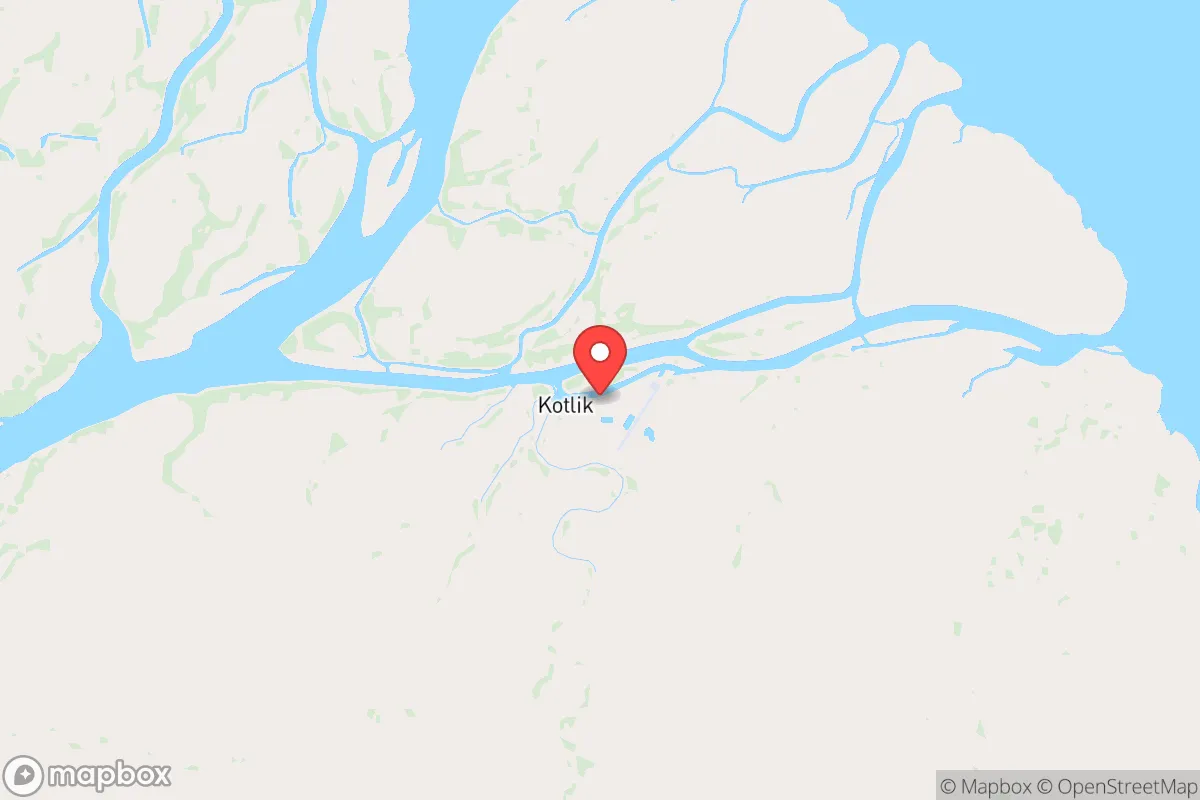
Kotlik, Alaska, offers a personal sovereignty environment that is as raw and untamed as the surrounding Yukon-Kuskokwim Delta, but it comes with a unique set of trade-offs that a survivalist or prepper must weigh carefully. While the state of Alaska is constitutionally and culturally oriented toward individual liberty, the practical reality in a remote, fly-in village like Kotlik is that personal autonomy is heavily mediated by geography, infrastructure, and the federal-tribal legal landscape. For a conservative-leaning individual or family seeking to maximize freedom from government overreach, Kotlik presents a paradox: extreme physical isolation from federal enforcement, but also a near-total dependence on state and federal systems for basic survival, from fuel to food to medical evacuation. The sovereignty you gain here is less about legal protections and more about the stark, unavoidable reality that in a crisis, you are entirely on your own.
Tax burden and regulatory posture in a remote Alaskan village
Alaska’s state-level tax posture is among the most favorable in the nation for those seeking to minimize government extraction. There is no state income tax, no state sales tax, and no state property tax, which means the state government takes a remarkably small cut of your earnings or assets. Kotlik itself, as a second-class city, does not levy a local sales tax or property tax, so your financial sovereignty is largely intact from direct taxation. However, the regulatory posture is more complex. Because Kotlik is located within the Yukon-Kuskokwim Delta, much of the land is subject to federal jurisdiction through the U.S. Fish and Wildlife Service (Yukon Delta National Wildlife Refuge) and the Bureau of Land Management. This means that activities like subsistence hunting, fishing, and trapping—core to a self-reliant lifestyle—are governed by federal and state seasons, bag limits, and gear restrictions. The Alaska Department of Fish and Game enforces these regulations, and while local subsistence priorities are recognized, the bureaucracy can feel like an overreach for those accustomed to absolute freedom. The practical effect is that you can live off the land, but you must navigate a permitting and reporting system that a hardcore prepper would find intrusive. The trade-off is that enforcement is minimal due to the village's remoteness, but the legal risk remains real if you are caught violating rules.
Self-defense and gun law specifics in Kotlik and Alaska
Alaska is a constitutional carry state, meaning no permit is required to carry a concealed or open firearm for self-defense, and Kotlik residents enjoy this right fully. The state preempts most local gun ordinances, so the village council cannot impose its own restrictions. For a prepper, this is a critical advantage: you can own, carry, and use firearms for defense without government permission. However, there are practical constraints. Kotlik is a dry village—alcohol is banned—and firearms are a common tool for subsistence, not just defense. The bigger sovereignty concern is that federal law still applies, including the Gun Control Act and restrictions on firearm possession by certain individuals. Additionally, the remote location means that if you ever need to use a firearm in self-defense, you will be dealing with Alaska State Troopers who may take days to arrive, and the legal aftermath could involve both state and federal authorities. There is no local police force; law enforcement is provided by the Alaska State Troopers based in Bethel, a 90-mile flight away. This creates a de facto self-defense environment where you are your own first responder, but the legal system can still reach you. For a survivalist, the gun laws are excellent, but the enforcement vacuum is a double-edged sword—it grants freedom but also means you must be prepared to handle the consequences of any defensive action entirely on your own.
Self-reliance and homesteading viability: lot sizes, zoning, and off-grid feasibility
Kotlik is a Yup'ik village with a traditional subsistence lifestyle, and the concept of homesteading here is fundamentally different from the Lower 48. Most land in and around Kotlik is held under the Alaska Native Claims Settlement Act (ANCSA) by the Kotlik Native Corporation (Kotlik Yupik Corporation) or is part of the Yukon Delta National Wildlife Refuge. This means private land ownership is extremely limited; you cannot simply buy a lot and build a cabin. Zoning is minimal—there is no formal zoning code in Kotlik—but building requires approval from the village council and often from the Native corporation if the land is corporation-owned. Off-grid feasibility is high in theory, but in practice, the village has a centralized water and sewer system (though many homes use honey buckets), and electricity is provided by a diesel-powered grid. Going fully off-grid would require a massive investment in solar, wind, or a personal diesel generator, plus fuel storage for the long, dark winters. Lot sizes are not standardized, but typical residential lots are small by rural standards—often less than a quarter-acre. For a prepper seeking true self-reliance, the lack of private land and the high cost of logistics (everything must be flown or barged in) make Kotlik a challenging environment. You can hunt, fish, and trap, but you cannot easily build a fortified, independent homestead with a large garden and livestock. The permafrost and short growing season further limit agricultural self-sufficiency. The sovereignty here is in the ability to live off the wild resources, not in land ownership or agricultural independence.
Personal liberties: parental rights, medical autonomy, speech, and property
Alaska has strong protections for parental rights under state law, including a presumption that parents have the right to direct the upbringing, education, and healthcare of their children. Kotlik’s school is part of the Lower Yukon School District, and while the state mandates certain curricula, parents have significant leeway to homeschool or opt out of specific programs. Medical autonomy is a major concern in Kotlik. The village has a small health clinic run by the Yukon-Kuskokwim Health Corporation (YKHC), a tribal health organization. For anything beyond basic care, you must be medevaced to Bethel or Anchorage. This creates a situation where your medical sovereignty is severely constrained by geography—you cannot simply choose a doctor or hospital. For a prepper concerned about government overreach in healthcare, this is a vulnerability: you are dependent on a single, federally funded system. Speech and property rights are protected under the Alaska Constitution, which has a strong privacy clause. There is no local censorship, and the village is too small for the kind of social enforcement seen in larger communities. Property rights, however, are limited by the ANCSA land tenure system. You can own a home, but the land beneath it is likely leased from the Native corporation, meaning you do not have fee-simple ownership. This is a significant erosion of traditional property sovereignty. For a conservative concerned with the erosion of property rights, this is a red flag.
Overall, Kotlik offers a form of personal sovereignty that is less about legal protections and more about the raw, unfiltered reality of living in a place where government is distant and nature is immediate. Compared to the Lower 48, you will face far less regulatory harassment in daily life—no building permits, no zoning boards, no sales tax. But you will also face a level of dependence on federal and tribal systems that a hardcore survivalist might find troubling. The trade-off is clear: maximum freedom from day-to-day government interference, but minimal infrastructure and legal recourse. For a single individual or family willing to embrace a subsistence lifestyle and accept the risks of extreme isolation, Kotlik can be a bastion of personal autonomy. For those seeking a more conventional prepper setup with private land, a bunker, and a garden, the Yukon-Kuskokwim Delta is likely not the right fit. The sovereignty here is wild, untamed, and unforgiving—exactly what some are looking for, and exactly what others should avoid.

* Values derived from national, state, county, city and local statistics and may differ in a specific area. Last updated: 2026-04-19T19:29:30.000Z
Narrative content on this page is AI-generated and may contain mistakes. Verify any details that matter before acting on them.
ReloMaps may earn a commission from affiliate links at no extra cost to you.

