Demographics of Kotlik, AK
Affluence Level in Kotlik, AK
A low-income area with significant economic hardship. Household wealth and educational attainment are well below national averages.
People of Kotlik, AK
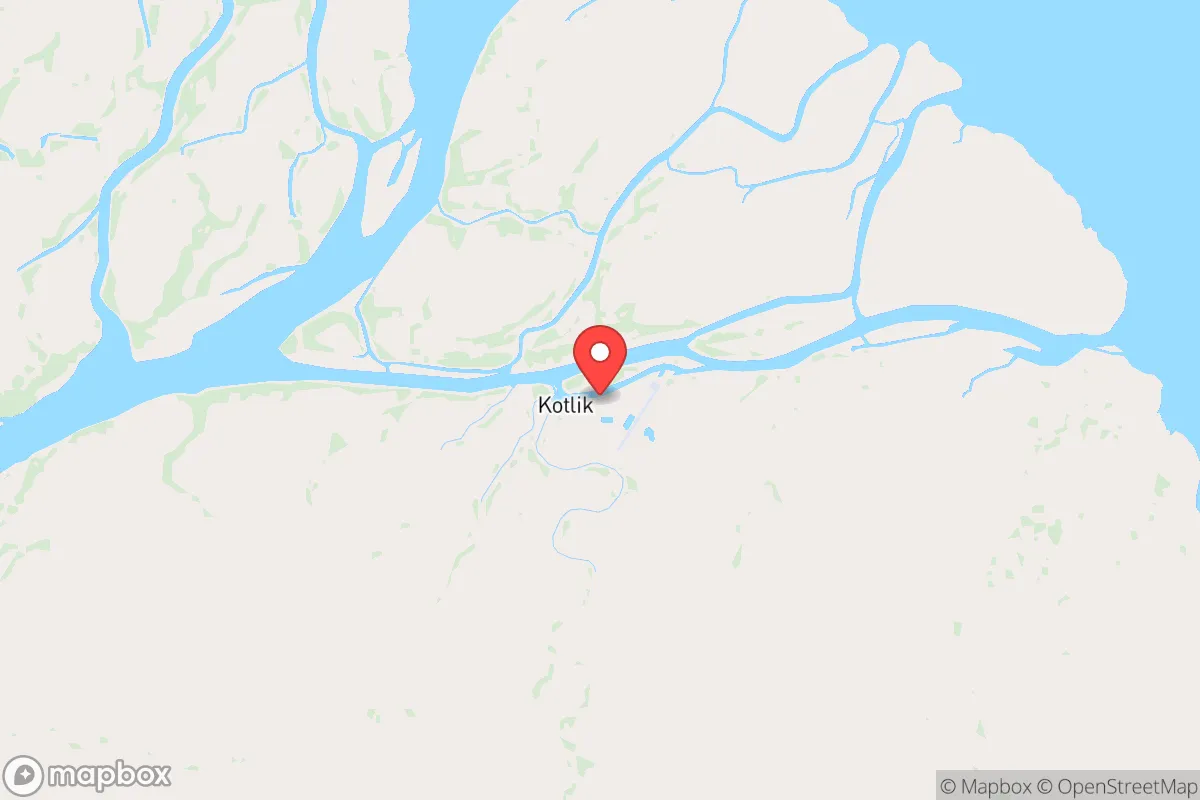
The people of Kotlik, Alaska, are overwhelmingly Alaska Native, primarily Yup’ik, with a population of 1,166 as of the most recent estimates. The city is 98.3% Alaska Native or American Indian, with only 1.4% identifying as White and negligible shares of Hispanic, Black, or Asian residents (0.0% to 0.3%). This is a tight-knit, subsistence-oriented community on the Yukon River’s north bank, where English and Yup’ik are spoken daily, and where traditional fishing and hunting remain central to life. Kotlik is not a melting pot but a culturally cohesive village with a distinct identity shaped by centuries of indigenous habitation and a relatively recent formal incorporation.
How the city was settled and grew
Kotlik’s human history begins with the Yup’ik people, who have occupied the Yukon-Kuskokwim Delta for thousands of years. The site itself was a seasonal fishing and trading camp, not a permanent year-round village, until the early 20th century. The first major wave of permanent settlement came in the 1930s and 1940s, when Yup’ik families from surrounding areas—especially from the villages of Emmonak and Alakanuk—moved to Kotlik to access the new Bureau of Indian Affairs (BIA) school and a growing trading post. These families built homes along the riverfront in what is now known as Old Kotlik, a neighborhood of traditional wooden houses and fish camps that still forms the historic core. A second wave occurred in the 1950s and 1960s, driven by the construction of a BIA-run airstrip and a health clinic, which drew additional Yup’ik families from upriver villages like Pilot Station and St. Mary’s. These newcomers settled in the area now called New Town, a slightly more planned section with newer housing and a community center. The city was officially incorporated in 1970, but its population has remained almost entirely Yup’ik, with no significant non-Native influx.
Modern era (post-1965)
After the 1971 Alaska Native Claims Settlement Act (ANCSA), Kotlik’s population stabilized as the village gained formal land rights and a tribal government through the Yukon-Kuskokwim Health Corporation and the Association of Village Council Presidents. The post-1965 period saw no significant in-migration from outside Alaska; instead, the population grew through natural increase—high birth rates among Yup’ik families—and a slow return of some younger adults who had left for education or work in Bethel or Anchorage. The Boardwalk neighborhood, a cluster of homes near the school and the Yukon River, became the primary area for younger families and returnees in the 1980s and 1990s. Meanwhile, Upper Kotlik, a newer subdivision built in the 2000s with state-funded housing, absorbed most of the population growth from the past two decades. The foreign-born share is negligible at 0.3%, and the White population has never exceeded 2%, reflecting the village’s geographic isolation and the lack of economic drivers—like mining or oil—that might attract outsiders. The college-educated share is just 3.2%, consistent with a subsistence-based economy where formal higher education is less common than vocational training in fishing, hunting, and village governance.
The future
Kotlik’s population is projected to remain overwhelmingly Yup’ik, with slow growth driven by high birth rates and limited out-migration. The village is not homogenizing or tribalizing into distinct enclaves—it is already culturally and ethnically homogeneous. The key demographic trend is a slight aging of the population, as younger adults increasingly leave for education or jobs in Bethel, Anchorage, or the Lower 48, though many return. The Ridge area, a newer housing development on higher ground built after flood concerns in the 2010s, is expected to absorb future growth as riverbank erosion threatens Old Kotlik and Boardwalk. No significant immigrant or non-Native influx is anticipated, given the lack of industry and the high cost of living. Over the next 10–20 years, Kotlik will likely remain a culturally Yup’ik village with a stable population around 1,100–1,200, sustained by subsistence traditions and tribal governance.
For someone moving in now, Kotlik is a place where community life revolves around the Yup’ik language, subsistence fishing and hunting, and tribal institutions. It is not a diverse or growing town, but a culturally intact village where newcomers—almost always Alaska Native—will find a strong sense of identity and mutual support. Non-Native residents are rare and should expect to integrate into a close-knit, tradition-focused society with limited infrastructure and a high reliance on air and river travel.

* Values derived from national, state, county, city and local statistics and may differ in a specific area. Last updated: 2026-04-19T19:29:30.000Z
Narrative content on this page is AI-generated and may contain mistakes. Verify any details that matter before acting on them.
ReloMaps may earn a commission from affiliate links at no extra cost to you.

