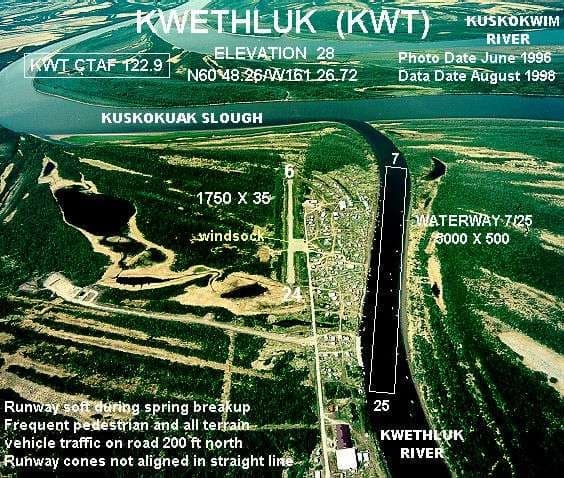
Photo: Wikipedia
Personal Sovereignty in Kwethluk, AK
Strong independent fundamentals that actively favor personal liberty and low regulation.
What does Personal Sovereignty tell us?
Personal Sovereignty measures your capacity for self-reliance and independence with minimal government friction. Higher scores mean fewer barriers between you and the way you want to live... but it assumes you have the space you need and good neighbors.
What does this tell us?
Personal Sovereignty measures your capacity for self-reliance and independence with minimal government friction. Higher scores mean fewer barriers between you and the way you want to live... but it assumes you have the space you need and good neighbors.
State Policy
Energy independence: Net exporter (350% of energy produced in-state)
Personal Liberty
Homesteading

Personal Liberty Analysis
Kwethluk, Alaska, offers a level of personal sovereignty that is increasingly rare in the Lower 48, but it comes with a unique set of trade-offs that demand serious consideration. For the survivalist or prepper, the village's remote location in the Yukon-Kuskokwim Delta provides a natural buffer against federal overreach and the chaos of urban collapse, but it also means you are largely on your own when things go sideways. The state of Alaska has a strong tradition of individual liberty, but local governance in a small, predominantly Yup'ik village can impose its own informal constraints on autonomy. If your priority is maximum personal freedom with minimal government interference, Kwethluk is a compelling option—but only if you are prepared for the harsh realities of life off the road system.
Tax burden and regulatory posture in a remote Alaskan village
Alaska is one of the most tax-friendly states in the nation, and Kwethluk benefits directly from that. There is no state income tax and no state sales tax, which means the government takes a much smaller cut of your earnings than in almost any other state. The local village council does not impose a municipal sales tax either, so your money stays in your pocket. Property taxes are also absent at the local level, though the state levies a modest property tax that is among the lowest in the country—typically under 1% of assessed value. For a prepper focused on financial independence, this low-tax environment is a major advantage. However, the regulatory posture is a mixed bag. Alaska generally has a light touch on business and land use, but the village is subject to federal jurisdiction through the Indian Reorganization Act and the Alaska Native Claims Settlement Act, which can complicate land ownership and development. The state's permitting process for building and resource extraction is far less burdensome than in the Lower 48, but you will still need to navigate the Alaska Department of Environmental Conservation for any significant construction or waste management. Overall, the tax burden is near-zero, and the regulatory climate is permissive by national standards, but the remote location means you are largely self-regulating—which is exactly how many preppers want it.
Self-defense rights and gun law specifics in rural Alaska
Alaska is a constitutional carry state, and that applies fully in Kwethluk. No permit is required to carry a concealed firearm for anyone legally allowed to possess one, and there is no state-level registration or waiting period for purchasing firearms. The state also has a strong "Stand Your Ground" law, meaning you have no duty to retreat before using deadly force if you are lawfully present and believe it is necessary to prevent death or great bodily harm. For the survivalist, this is a critical protection against government overreach in self-defense situations. However, there are practical limitations in Kwethluk. The village is a "dry" community, meaning alcohol is banned, and while that does not directly affect gun rights, it reflects a local culture that may frown on open displays of weaponry. Additionally, federal law still applies on tribal lands, and the village is within the Yukon Delta National Wildlife Refuge, which is managed by the U.S. Fish and Wildlife Service. This means federal firearms restrictions—such as the Gun Control Act—still apply, and you cannot carry in certain federal buildings or facilities. For hunting, Alaska allows residents to carry firearms for protection against bears and other wildlife, which is a practical necessity in the bush. The bottom line: your Second Amendment rights are robust in Kwethluk, but you must be aware of the overlapping federal jurisdiction and the social norms of a small, tight-knit community.
Self-reliance and homesteading viability in the Yukon-Kuskokwim Delta
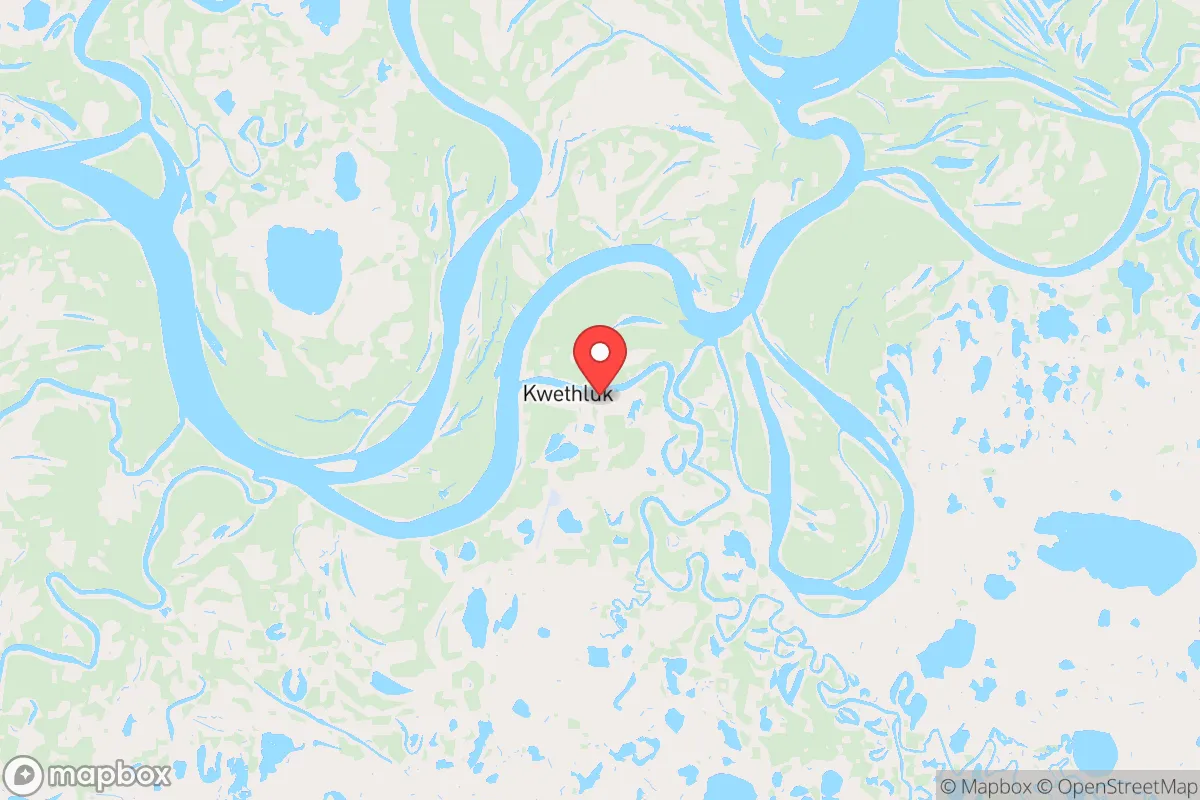
Kwethluk is a prime location for those seeking true self-reliance, but it is not for the faint of heart. The village sits on the Kuskokwim River, and the surrounding land is vast, with no road connections to the rest of Alaska—everything comes in by barge, plane, or snowmachine. Lot sizes in the village are typically small, often less than an acre, but the Bureau of Land Management and state land sales offer opportunities for larger parcels outside the village boundaries. Zoning is minimal; the village council has some say over land use, but there is no formal zoning code like you would find in a city. Off-grid living is not just feasible—it is the norm. Most homes rely on generators, solar panels, or small wind turbines for electricity, and water is often hauled from the river or collected from rain. Sewage is handled via honey buckets or outhouses, as there is no centralized sewer system. For the prepper, this means you can build a completely self-sufficient homestead without worrying about utility companies or municipal codes. However, the growing season is short—only about 90 days—so gardening is limited to cold-hardy crops like potatoes, cabbage, and greens. Hunting and fishing are the primary food sources, with salmon, moose, and caribou being staples. The state allows subsistence hunting and fishing for residents, and there are no bag limits for many species in rural areas. If you are serious about homesteading, Kwethluk offers the ultimate test of self-reliance, but you must be prepared for extreme isolation, harsh winters, and the logistical challenge of getting supplies.
Personal liberties: parental rights, medical autonomy, speech, and property
Alaska has a strong tradition of protecting individual liberties, and Kwethluk reflects that. Parental rights are robust; the state does not have a mandatory vaccination law for schoolchildren, and parents can opt out of any vaccine for medical, religious, or personal reasons. Homeschooling is legal and lightly regulated—you simply need to notify the local school district and provide an annual assessment. Medical autonomy is also strong, with no state-level mandates for medical treatments or procedures. The Alaska Supreme Court has upheld the right to refuse medical treatment, and there are no laws forcing you to take medications or submit to government health programs. Free speech is protected under the state constitution, which is even more expansive than the First Amendment in some areas, and there are no local ordinances restricting political speech or assembly. Property rights are generally respected, but there is a catch: much of the land around Kwethluk is owned by native corporations or the federal government, so private land ownership is limited. You can buy land from the state or from private sellers, but you cannot simply stake a claim like in the old days. The village council also has the authority to regulate certain activities, such as alcohol possession and building standards, which can feel like a local overreach if you are used to total autonomy. Overall, Kwethluk offers a high degree of personal liberty compared to most of the country, but the remote, communal nature of village life means you must navigate local customs and tribal governance.
In the broader context of personal sovereignty, Kwethluk stands out as a place where government overreach is minimal by design—the sheer remoteness makes it hard for any authority to enforce rules. Compared to urban centers in the Lower 48, where surveillance, taxation, and regulation are pervasive, Kwethluk offers a rare sanctuary for those who value independence above convenience. The trade-off is that you are trading the protections of a modern state for the raw reality of self-sufficiency. If you are a prepper or survivalist looking to escape the creeping control of federal and state governments, Kwethluk is a viable option, but only if you are willing to accept that your greatest freedom is also your greatest responsibility: you are truly on your own.

* Values derived from national, state, county, city and local statistics and may differ in a specific area. Last updated: 2026-04-19T19:31:32.000Z
Narrative content on this page is AI-generated and may contain mistakes. Verify any details that matter before acting on them.
ReloMaps may earn a commission from affiliate links at no extra cost to you.

