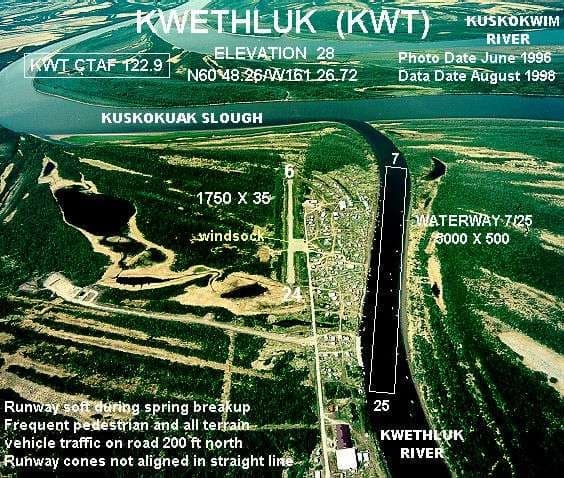
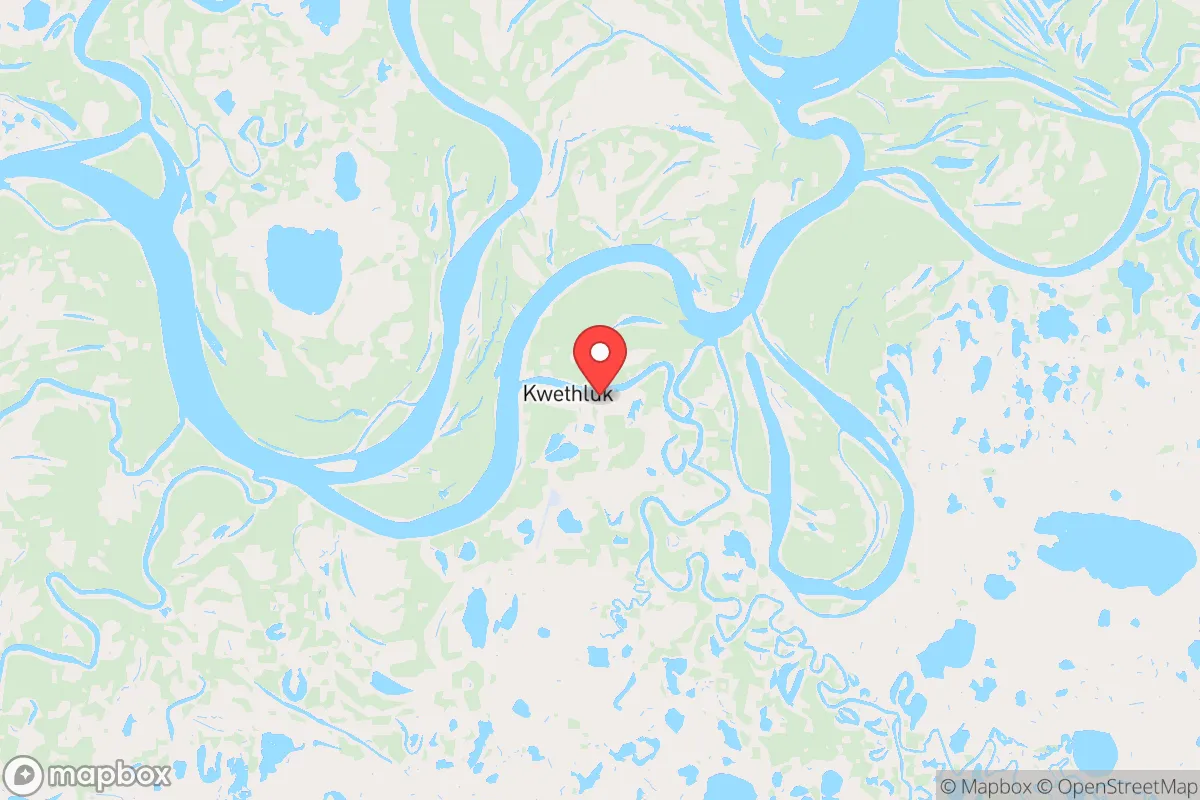
Photo: Wikipedia
Quality of Life in Kwethluk, AK
Above-average quality of iife. The area offers a reasonable cost of living, decent mobility, and a mix of neighborhood amenities.
What does Quality of Life tell us?
Quality of Life blends cost of living, nearby amenities, socioeconomic signals, and neighborhood character. City-level scores represent the whole municipality; individual neighborhoods can differ.
What does this tell us?
Quality of Life blends cost of living, nearby amenities, socioeconomic signals, and neighborhood character. City-level scores represent the whole municipality; individual neighborhoods can differ.
Cost of Living
48% below national average
The Real Cost of Living in Kwethluk, AK for 2026
| Tier | Individual | Family (4) |
|---|---|---|
| Survival | $13k | $25k |
| Comfortable | $22k | $32k |
| Luxury | $80k+ | $125k+ |
| Elite (Top 5%) | $95k+ | $147k+ |
150%
The Area Signal
A metric tracking the socioeconomic signals of the area.


Limited data for this area
Limited data for this area
Hobbies
Explore the areaGroceries
1 within 10 miles
Gas
0 within 10 miles
Hospital
3 within 20 miles
Airport
Kwethluk Airport
Post Office
USPS — Bethel, AK
Critical Amenities
Quality-of-Life Analysis
Kwethluk, Alaska, is a remote Yup'ik village on the Kuskokwim River with a cost of living far below the national average, yet its economic profile is defined by subsistence living and limited cash income rather than affluence. The population of roughly 800 residents is predominantly Alaska Native, and daily life centers on fishing, hunting, and community traditions rather than wage-based employment. This is not a place of wealth accumulation; it is a place where affordability stems from necessity and a subsistence economy.
Cost of living, housing affordability, and how Kwethluk compares to Bethel
Kwethluk's overall cost of living index stands at 52, roughly half the U.S. average of 100, making it one of the most affordable places in Alaska by raw numbers. The median home value is $63,700, and median rent is $825 — both dramatically lower than in nearby Bethel, where the median home value exceeds $200,000 and rents often surpass $1,200. However, these low figures reflect a housing stock that is largely older, smaller, and often lacking modern plumbing or insulation. Many homes are overcrowded, and the village has no formal real estate market; most housing is tribally owned or passed through family networks. Goods are expensive due to air and barge freight costs — a gallon of milk can run $8–$10 — so the low COL index masks the high price of everyday necessities. Compared to Anchorage (index ~130), Kwethluk offers cheap shelter but costly staples, and the lack of a wage economy means most residents rely on subsistence harvests for food.
What daily life is like for families: amenities, schools, and community rhythm
Kwethluk has no restaurants, no grocery store (residents order from Bethel or Anchorage via mail plane), and no paved roads — travel within the village is by foot, ATV, or snowmachine. The Kwethluk School, part of the Lower Kuskokwim School District, serves grades K–12 with about 200 students and offers a Yup'ik immersion program alongside state standards. Daily life follows the seasons: summer is set-net fishing for salmon on the Kuskokwim, fall is berry picking and moose hunting, winter is trapping and ice fishing. Electricity is provided by a local diesel generator, and running water is not universal — many homes rely on hauled water and honey buckets. Internet is available but slow and expensive, limiting remote work or online schooling. The community gathers at the tribal hall for potlatches, dances, and basketball games, which are the primary social outlets. There is no hospital; the village has a health clinic staffed by community health aides, with serious cases medevaced to Bethel.
This environment suits people who already have deep family ties to the village and are committed to a subsistence lifestyle. Outsiders — teachers, health workers, or seasonal researchers — can adapt if they are self-sufficient, tolerant of isolation, and respectful of Yup'ik culture. Kwethluk is not a place for career climbers, retirees seeking amenities, or families reliant on modern conveniences. It is a place where quality of life is measured not by income or square footage, but by connection to the land, community interdependence, and the ability to live with limited infrastructure. Those who thrive here are those who value cultural continuity over material comfort.

Crime in Kwethluk, AK
Higher crime rates than 66% of comparable U.S. locations.
Violent CrimeViolent Crime Analysis
Property CrimeProperty Crime Analysis
Crime Analysis
Kwethluk, a small Yup'ik community on the Kuskokwim River in western Alaska, reports crime rates that significantly exceed both state and national averages, presenting a challenging safety environment for residents. With a violent crime rate of 726.6 per 100,000 people and a property crime rate of 1,909.5 per 100,000, the village faces public safety issues that are more typical of larger, urban areas than a remote community of roughly 800 residents. These figures indicate that crime is a tangible concern in daily life, driven by factors including limited law enforcement resources, geographic isolation, and socioeconomic pressures common to rural Alaska.
Crime in context
Kwethluk's violent crime rate of 726.6 per 100,000 is more than double the national average of 380 per 100,000 and far exceeds Alaska's already elevated state rate of approximately 640 per 100,000. Property crime in Kwethluk, at 1,909.5 per 100,000, also surpasses the national average of 1,954 per 100,000 but is notably lower than Alaska's statewide property crime rate of roughly 2,500 per 100,000. The data suggests that while property crime is somewhat less prevalent than in other parts of Alaska, violent offenses—particularly assault and sexual assault—are disproportionately high. This pattern is consistent with many remote Alaska Native villages, where substance abuse, lack of economic opportunity, and understaffed police departments contribute to elevated violence. The community is served by the Kwethluk Police Department and relies on the Yukon-Kuskokwim Health Corporation for victim services, but response times and investigative capacity are limited by the village's remote location.
What residents experience
For those living in Kwethluk, safety concerns are often centered on interpersonal violence and alcohol-related incidents. The high violent crime rate translates into a tangible risk of assault, with domestic violence and sexual assault being particularly underreported but pervasive issues. Property crimes like burglary and theft are also common, often targeting homes and vehicles when residents are away. The community's isolation means that offenders are frequently known to victims, which can complicate reporting and prosecution. Alaska's justice system, particularly in rural areas, has faced criticism for progressive sentencing policies and a lack of detention facilities, which can result in offenders being released quickly back into the community. This dynamic, where sympathetic treatment of offenders may prioritize rehabilitation over public safety, can erode trust in the justice system and leave residents feeling vulnerable. The nearest state trooper post is in Bethel, a 30-minute flight away, meaning local police often handle incidents alone.
Neighborhood-level crime data for Kwethluk is not publicly available due to the village's small size, but anecdotal reports indicate that crime is not evenly distributed. Areas closer to the school, clinic, and tribal office tend to see more foot traffic and informal surveillance, while outlying homes along the river may experience higher rates of burglary and vandalism. Seasonal patterns also emerge: crime often spikes during summer months when the river is navigable and outsiders can more easily access the village. Overall, Kwethluk requires residents to maintain a high level of situational awareness, secure property diligently, and rely on close community ties for mutual protection.
* Values derived from national, state, county, city and local statistics and may differ in a specific area. Last updated: 2026-04-19T19:31:32.000Z
Narrative content on this page is AI-generated and may contain mistakes. Verify any details that matter before acting on them.
ReloMaps may earn a commission from affiliate links at no extra cost to you.

