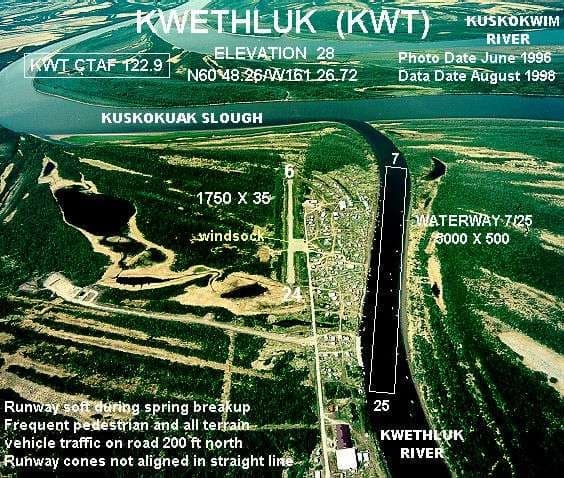
Photo: Wikipedia
Strategic Assessment of Kwethluk, AK
Strong survivability profile. Good buffer from population centers, with manageable environmental and tactical risks.
What does the Strategic Assessment tell us?
Our Strategic Assessment grades tactical survivability of an area. Major population centers, military targets, fallout zones, natural disasters, and border exposure all drive risk — lower exposure means a more defensible position in a crisis.
This is heavily inspired by Joel Skousen's Strategic Relocation book. Highly recommended you checkout the book ($)What does this tell us?
Our Strategic Assessment grades tactical survivability of an area. Major population centers, military targets, fallout zones, natural disasters, and border exposure all drive risk — lower exposure means a more defensible position in a crisis.
This is heavily inspired by Joel Skousen's Strategic Relocation book. Highly recommended you checkout the book ($)Strategic Pillars

Key Distances
Regional Safe Places
Below is our recommended "safe zones" in Alaska and the surrounding area based on our strategic heuristics. For most people, it's unrealistic to live in a “safe zone” full-time due to work, family or other personal reasons. They tend to be more rural. However, many of these areas are perfect for second homes and retreat properties that double as a vacation home or even a short-term rental.
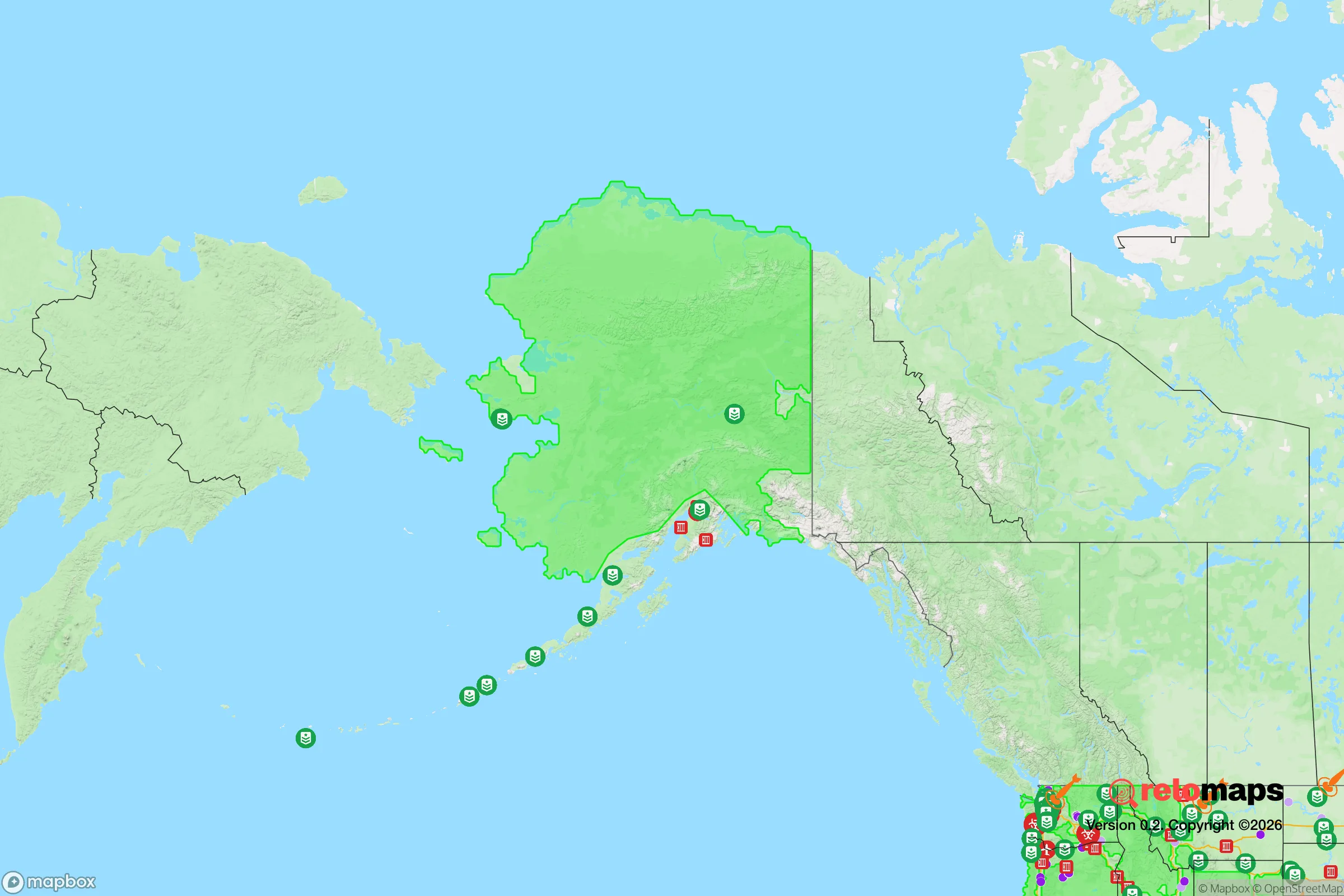
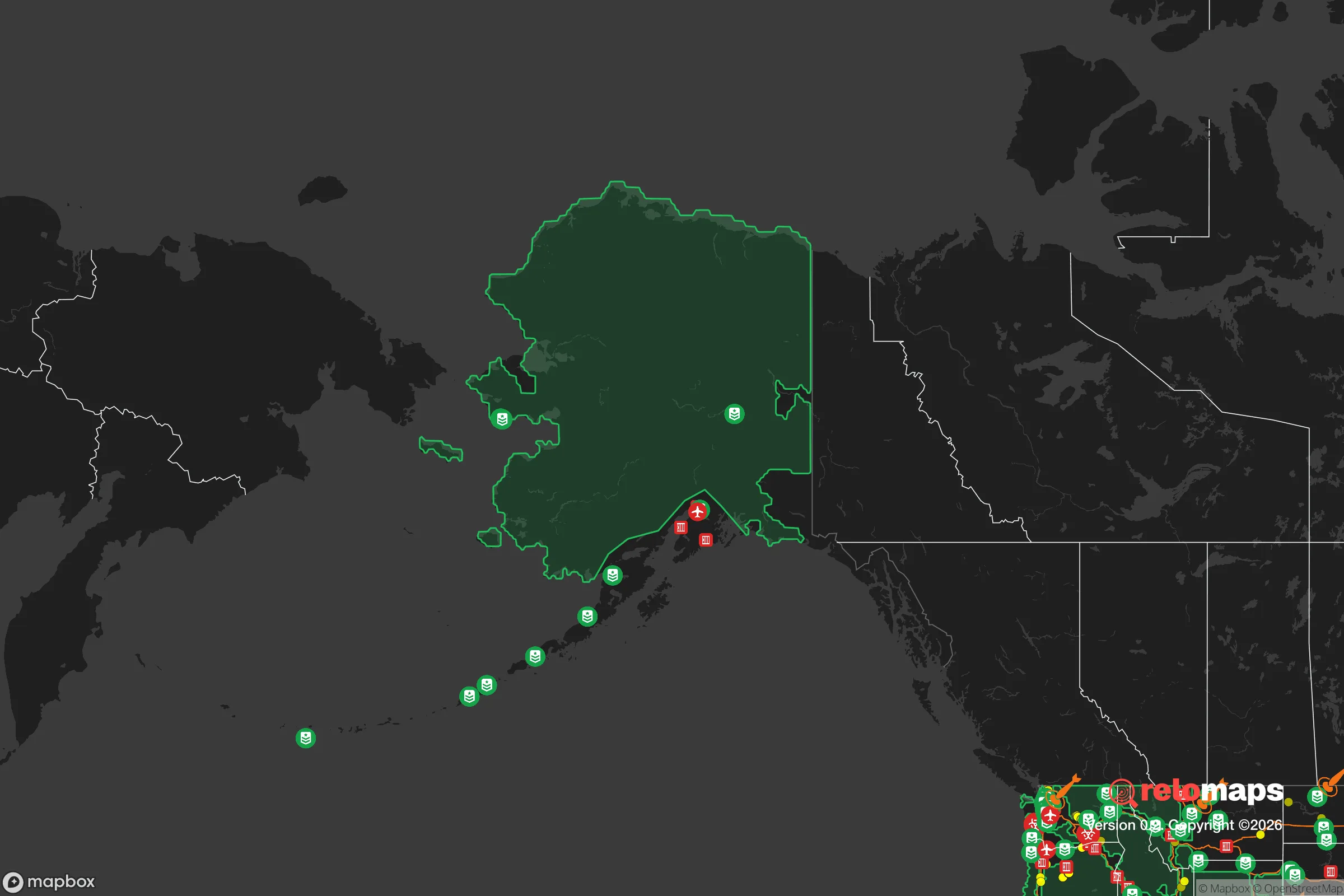


Important Note: For informational purposes only. This does not mean nothing bad ever happens in the green zones. Please use common sense. This is based on public data and modeled with AI. We tried to take a conservative approach but mistakes happen. We update this regularly as new information becomes available.
Solar Generator Recommendations
Backup power matters more here than in safer locations. We've picked three solar generators across budgets and capacity tiers — start with the budget unit if you only need a few essentials, or step up if you want to run a fridge and HVAC for days at a time.

Jackery Portable Power Station Explorer 300
Budget OptionPower on the Go: Weighing only 11 lbs, it's convenient to set up and store with book-sized foldable solar panels

BLUETTI Portable Power Station AC180
Designed for both indoor and outdoor scenarios, AC180 is highly capable as it has a robost capacity and continuous output power.

EF ECOFLOW DELTA Pro Ultra Power Station
Upgraded PickEcoFlow DELTA Pro Ultra is a whole-home energy system designed to grow with your family. Integrated with the Smart Home Panel 2, it scales to meet your evolving energy needs — keeping your home powered, intelligent, and secure through every stage of life.
We earn a commission, at no additional cost to you.
Strategic Assessment Analysis
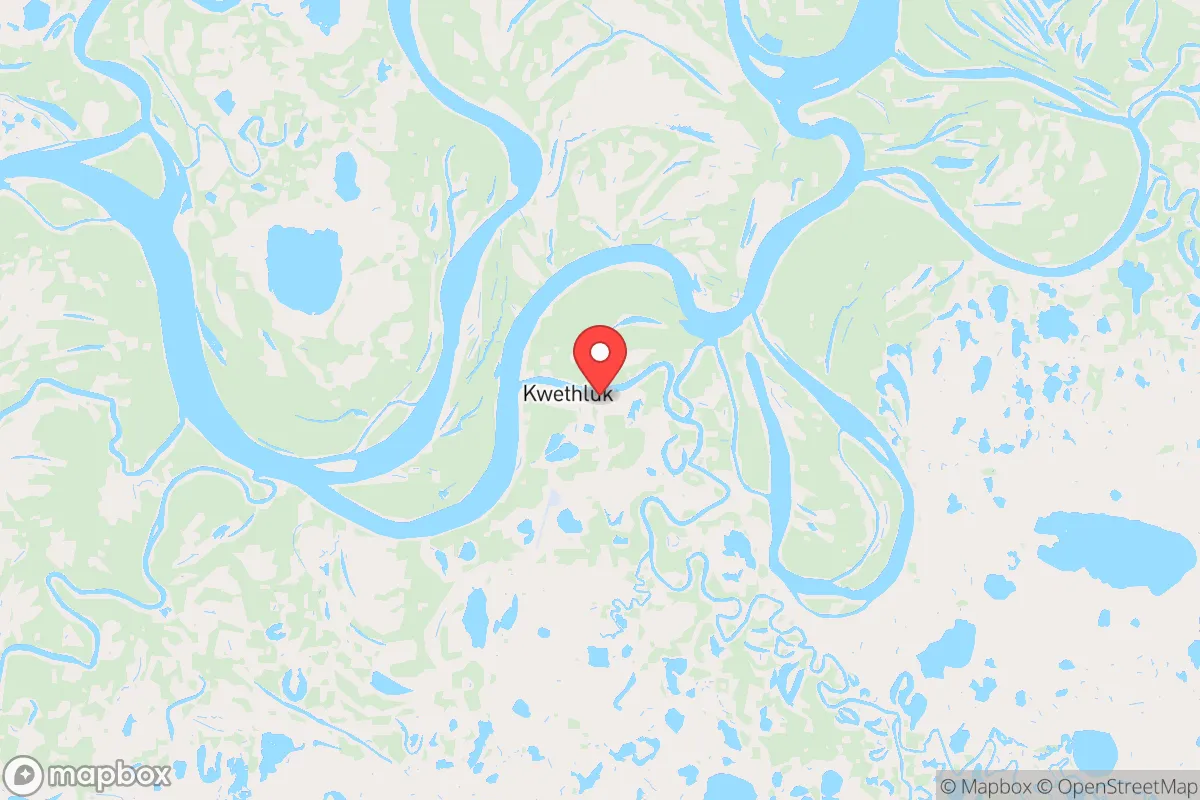
Kwethluk, Alaska, offers a strategic relocation option for those prioritizing resilience and self-sufficiency, but it demands a serious commitment to isolation and harsh conditions. Located on the Kwethluk River near the Kuskokwim River in western Alaska, this Yup'ik village of roughly 750 people sits about 30 miles northeast of Bethel, the regional hub. For a conservative-leaning individual or family concerned with civic unrest, mass casualty events, and societal collapse, Kwethluk’s extreme remoteness is its primary advantage—there is no road access, no connection to the continental power grid, and no nearby urban centers to draw chaos. However, this same isolation creates significant logistical challenges that must be weighed carefully against the benefits of being far from fallout zones and population centers.
Geographic position and natural advantages for long-term survival
Kwethluk’s location in the Yukon-Kuskokwim Delta provides a natural buffer against the kind of cascading failures that could cripple urban areas. The village is surrounded by tundra, rivers, and wetlands, making it nearly impossible for large-scale movement or military-style operations to reach it without significant effort. The nearest city of any size is Anchorage, over 400 miles away as the crow flies, and Bethel—the closest town with a hospital and airport—is only accessible by boat, snowmachine, or small plane. This geographic isolation means that in the event of a national emergency, Kwethluk would likely be overlooked by both relief efforts and threats. The region’s abundant fish and game—salmon, moose, caribou, and waterfowl—offer a reliable food source for those willing to learn traditional subsistence practices. The river system also provides a natural transportation network for small boats and snowmachines, allowing residents to move supplies or relocate to even more remote areas if necessary. For a prepper, the lack of infrastructure is a feature, not a bug: no power lines to fail, no pipelines to rupture, and no highways to clog with refugees.
Risks, exposures, and proximity to fallout-relevant landmarks
While Kwethluk is far from major cities, it is not entirely free from strategic risks. The primary concern is its proximity to Bethel, which hosts a regional airport and serves as a logistical hub for the entire delta. Bethel’s population of roughly 6,500 could become a source of instability if food supplies or fuel shipments are disrupted, potentially drawing desperate individuals toward smaller villages like Kwethluk. Additionally, the Kuskokwim River is a major transportation corridor, and any large-scale disaster affecting Bethel could push people upriver. On the positive side, there are no military bases, nuclear power plants, or major industrial facilities within 200 miles. The nearest potential fallout target would be Joint Base Elmendorf-Richardson near Anchorage, but prevailing winds and distance make direct contamination unlikely. The real risk here is not fallout but supply chain collapse—Kwethluk relies almost entirely on air and barge deliveries for fuel, ammunition, medical supplies, and manufactured goods. A nationwide disruption could leave the village without heating oil or propane within weeks, forcing residents to rely on wood stoves and traditional methods. For a relocator, this means stockpiling fuel and spare parts before any crisis hits is non-negotiable.
Practical resilience for a relocator: food, water, energy, and defensibility
For those serious about self-sufficiency, Kwethluk offers a rare combination of natural resources and low population density. The river provides clean water year-round, though treatment is necessary to avoid parasites. Fishing is the backbone of local subsistence—salmon runs are reliable, and a family can put up hundreds of pounds of dried or frozen fish each summer. Moose and caribou hunting are also viable, but require knowledge of the terrain and seasonal patterns. Gardening is limited by the short growing season and permafrost, but cold frames and raised beds can produce hardy vegetables like potatoes and cabbage. Energy is the biggest challenge: the village generates electricity from diesel generators, and heating is primarily done with fuel oil or wood. A prepper would need to invest in a high-efficiency wood stove, a backup generator, and a substantial fuel cache. Solar panels are possible during the long summer days but are nearly useless in winter. Defensibility is excellent—the village is compact, with most homes clustered along the river, and the surrounding tundra offers little cover for an approaching threat. A small group of armed residents could effectively control access points, especially during breakup season when the river is impassable. However, the social dynamics matter: Kwethluk is a tight-knit Yup'ik community with its own cultural norms and governance. An outsider arriving without building relationships or contributing to the community will face suspicion and isolation. For a conservative family willing to integrate, learn the language, and participate in subsistence activities, the village can be a secure haven. For a lone individual expecting to keep to themselves, it will be a lonely and difficult existence.
The overall strategic picture for Kwethluk is one of high reward paired with high risk. It offers near-total isolation from the chaos of urban America, abundant natural resources, and a defensible position that would be difficult for any organized threat to penetrate. The trade-offs are severe: extreme cold, limited medical care, dependence on seasonal hunting and fishing, and a complete lack of modern conveniences. For a prepper who values independence and is willing to adapt to a subsistence lifestyle, Kwethluk is one of the few places in the United States where you can truly disappear from the grid. But it is not a place for beginners—success here requires months of preparation, a willingness to learn from the local community, and a realistic understanding that even the best-laid plans can be undone by a single bad winter or a failed salmon run. If you are looking for a location that combines strategic depth with genuine remoteness, Kwethluk deserves serious consideration. Just be prepared to work harder than you ever have before.

* Values derived from national, state, county, city and local statistics and may differ in a specific area. Last updated: 2026-04-19T19:31:32.000Z
Narrative content on this page is AI-generated and may contain mistakes. Verify any details that matter before acting on them.
ReloMaps may earn a commission from affiliate links at no extra cost to you.

