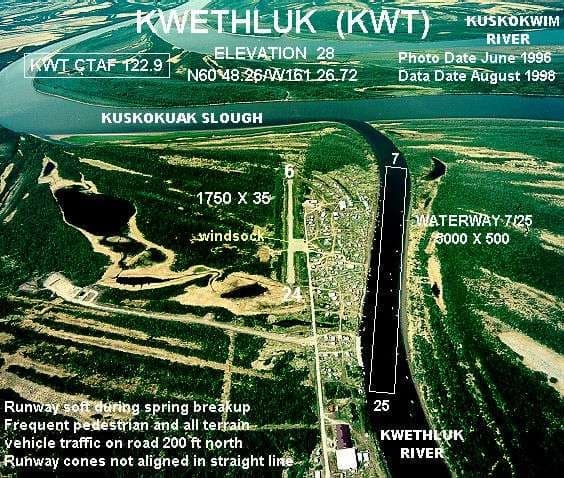
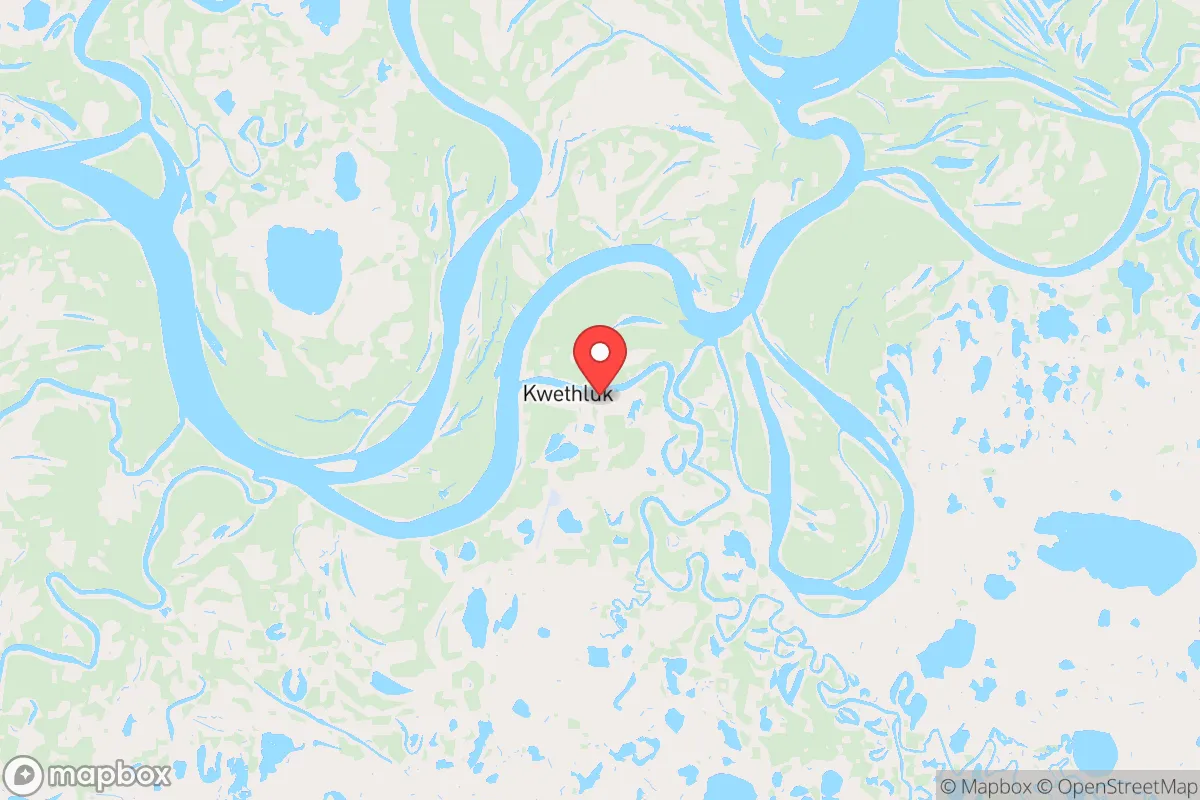
Photo: Wikipedia
Political ClimatePolitical Climate in Kwethluk, AK
District shown is the primary district for this city’s centroid. Cities may span multiple districts.
Inherited from parent state — no local data available.
Local Political AnalysisPolitical Analysis of Kwethluk, AK
Kwethluk, Alaska, is a small Yup’ik village that has historically leaned conservative, with a Cook PVI of R+6 reflecting a reliable Republican tilt in federal elections. But like many rural communities across the state, the political winds here are shifting, and not necessarily for the better. The old-school values of self-reliance, subsistence living, and minimal government interference are still the backbone of daily life, but outside influences—from Anchorage to Washington D.C.—are creeping in, pushing progressive policies that feel out of touch with how we actually live. If you’re looking at Kwethluk as a place to relocate, you need to understand that the political climate is a tug-of-war between tradition and the slow march of ideology that threatens personal freedoms.
How it compares
Compared to nearby hubs like Bethel, which is more politically mixed and leans slightly left due to its larger population and government-sector jobs, Kwethluk remains a conservative stronghold. Bethel’s city council has debated everything from land-use restrictions to social programs that feel like overreach, while Kwethluk’s tribal council and local leaders still prioritize subsistence rights and local control. Even Anchorage, with its growing progressive activism, feels like a different world. The contrast is stark: in Kwethluk, you’re less likely to see debates about zoning or climate mandates, and more likely to hear folks talking about protecting their fishing and hunting rights from federal overreach. The R+6 rating isn’t just a number—it’s a reflection of a community that votes to keep government out of their backyards.
What this means for residents
For residents, this political climate means a greater degree of personal freedom—at least for now. You won’t find the same level of bureaucracy or progressive social engineering that’s creeping into larger towns. But there’s a growing concern: state and federal mandates on everything from fuel regulations to education standards are starting to trickle down, and they don’t always respect local ways. The push for “equity” initiatives in schools or environmental restrictions on subsistence activities feels like a direct threat to how we’ve lived for generations. If you value the right to live your life without a government checklist, Kwethluk is still a good bet, but you’ll need to stay engaged locally to keep it that way. The long-term trajectory is worrying—if progressive ideology gains a foothold here, it could mean more red tape on fishing permits, more oversight on land use, and less trust in local decision-making.
Culturally, Kwethluk stands apart because of its deep connection to subsistence and traditional governance. The tribal council holds significant sway, and there’s a strong distrust of outside mandates—whether from Juneau or the feds. One notable policy distinction is the community’s resistance to blanket environmental restrictions that don’t account for local needs; for example, there’s been pushback against proposed limits on river access that would impact salmon fishing. The vibe here is casual but serious: we don’t want to be told how to live by people who’ve never set foot on the Kuskokwim. If that resonates with you, Kwethluk’s political climate is a breath of fresh air—but keep an eye on the horizon, because the winds of change are blowing, and not everyone’s on board with where they’re headed.

State Political ClimatePolitical Climate in Alaska
State Political AnalysisPolitical Environment in the State
Alaska has long been a political outlier, even among red states. It leans Republican at the presidential level, but with a fiercely independent streak that makes its politics less predictable than the Deep South. The state voted for Donald Trump by 10 points in 2020 and 13 points in 2024, but it also elected a Democratic U.S. House member, Mary Peltola, in a 2022 special election, and has a long history of electing moderate-to-liberal Republicans like the late Ted Stevens and Lisa Murkowski. Over the last 20 years, the biggest shift has been the slow erosion of the old "big tent" Republican coalition, replaced by a more polarized, Trump-aligned GOP that now dominates the legislature, while the Anchorage and Juneau areas have moved leftward. The result is a state that feels more divided than its raw partisan numbers suggest.
Urban vs. rural divide
The political map of Alaska is a study in contrasts. Anchorage, home to 40% of the state's population, is the swing region that decides most elections. Its liberal-leaning downtown and midtown precincts are offset by conservative strongholds in Eagle River and Chugiak. The 2022 U.S. House race saw Anchorage split almost evenly, with Peltola winning the city by a few thousand votes. Juneau, the capital, is reliably Democratic, driven by state government workers and a strong environmentalist presence. Fairbanks is more conservative, but its university community and military base create a mixed bag. The real red meat is in the Mat-Su Borough (Palmer, Wasilla, and the surrounding valley), which votes 70%+ Republican and is the engine of the state's conservative movement. Rural Alaska, including the vast Bush communities like Bethel, Nome, and Barrow (Utqiaġvik), votes heavily Democratic due to strong tribal ties and support for federal subsidies, but turnout is low. The urban-rural split is stark: the three largest cities (Anchorage, Juneau, Fairbanks) are purple to blue, while the rest of the state is deep red or tribal blue.
Policy environment
Alaska's policy environment is a mixed bag for conservatives. On the plus side, there is no state income tax and no statewide sales tax, though local sales taxes can hit 7% in places like Anchorage. The state's Permanent Fund Dividend (PFD) — an annual check to every resident from oil revenues — is a sacred cow that keeps government small in theory, but it also creates a massive entitlement that politicians dare not touch. Gun rights are strong: Alaska is a constitutional carry state, with no permit required for concealed carry, and preemption laws prevent local governments from enacting their own restrictions. Education policy is a flashpoint. The state has a flat per-student funding formula, but rural schools are chronically underfunded, and there is no school choice program beyond a weak charter school law. Healthcare is dominated by the Alaska Tribal Health System and a few large hospital networks; the state expanded Medicaid under Obamacare in 2015, a move that still rankles fiscal conservatives. Election laws are among the most progressive in the nation: Alaska uses a top-four primary system and ranked-choice voting (RCV), passed by ballot initiative in 2020. This system has been blamed for electing Peltola and for making it harder for hardline conservatives to win primaries. A repeal effort is underway, but it failed in 2024.
Trajectory & freedom
Alaska's trajectory on personal freedom is a tug-of-war. On the positive side, gun rights have expanded: in 2023, the legislature passed a law prohibiting local governments from banning firearms in public buildings, and in 2024, it passed a "Second Amendment Sanctuary" resolution. Parental rights saw a win with the 2023 passage of a law requiring schools to notify parents of any changes to a student's health or well-being, including gender identity discussions. Medical autonomy is strong: Alaska has no vaccine mandates for adults, and the 2024 legislative session killed a bill that would have required COVID-19 shots for school attendance. However, property rights are under pressure from the federal government, which owns 60% of Alaska's land. The Biden administration's 2023 decision to block oil and gas leasing in the Arctic National Wildlife Refuge (ANWR) was seen as a federal overreach. On taxation, the state remains free of income tax, but the PFD has been cut twice in the last decade to balance budgets, signaling that the oil revenue model is fraying. The biggest threat to freedom is the ranked-choice voting system, which many conservatives view as a rigged system that dilutes their votes. A 2024 ballot initiative to repeal RCV failed by a narrow margin, but the fight continues.
Civil unrest & political movements
Alaska has a low level of visible civil unrest compared to the Lower 48, but the political movements are real. The Alaska Independence Party (AIP), which once elected Governor Wally Hickel, still advocates for secession or a "free Alaska" under a revised statehood compact. It's a fringe movement but has a vocal presence in the Mat-Su Valley. On the left, environmental activist groups like the Alaska Wilderness League and the Sierra Club are highly organized, staging protests in Anchorage and Juneau against oil drilling and mining. The 2023 "Stop Willow" protests in Anchorage drew a few hundred activists opposing the Willow oil project on the North Slope. Immigration politics are muted because Alaska has a small foreign-born population, but there is a growing concern about illegal immigration via the Canadian border, with the state's northern border being largely unmonitored. Election integrity is a hot-button issue: the 2020 and 2022 elections saw allegations of voter fraud in the Bush (rural Alaska), where ballot collection is common and oversight is weak. The 2024 election saw a lawsuit from the Alaska GOP over the ranked-choice tabulation process, which was dismissed. Sanctuary policies are not a major issue, but Anchorage passed a "Welcoming City" resolution in 2021, which conservatives view as a soft sanctuary policy. The most visible flashpoint for a new resident would be the constant tension between resource development (oil, mining, fishing) and environmental regulation, which plays out in local news and at the ballot box.
Projection
Over the next 5-10 years, Alaska is likely to become more polarized, not less. The demographic trends are working against the conservative coalition: Anchorage is becoming younger and more diverse, with a growing Hispanic and Asian population that leans left. The Mat-Su Valley is growing fast and staying deep red, but its population is still a fraction of Anchorage's. The biggest wildcard is the oil revenue decline. As production falls, the PFD will shrink, and the state will face pressure to either cut services or impose a state income tax. That tax debate will be the defining political battle of the next decade. If a tax is imposed, it will likely drive out the remaining libertarian-leaning conservatives. The ranked-choice voting system is probably here to stay for the near term, which means the GOP will have to run more moderate candidates to win statewide. That will frustrate the base but may keep the state from flipping blue. The federal land issue will intensify: if a future Republican administration opens ANWR and the National Petroleum Reserve, it could boost the economy and reinforce the conservative resource-development coalition. If not, the state will continue to bleed population and political influence. Someone moving in now should expect a state that is still red, but with a growing blue urban core and a constant battle over the size and scope of government.
For a new resident, the bottom line is this: Alaska offers a high degree of personal freedom — no income tax, strong gun rights, and a culture of self-reliance — but that freedom is under constant pressure from federal overreach, a shrinking oil economy, and a voting system that favors moderates. If you're a conservative who values low taxes and outdoor living, you'll find a lot to like, especially in the Mat-Su Valley or Fairbanks. But if you're looking for a reliably red state where your vote counts in a winner-take-all system, Alaska's ranked-choice voting and independent streak will frustrate you. The state is a frontier in more ways than one: it's a place where the political future is still being written, and your vote — and your voice — can actually matter. Just be prepared for a fight over what kind of Alaska you want to live in.
* Values derived from national, state, county, city and local statistics and may differ in a specific area. Last updated: 2026-04-19T19:31:32.000Z
Narrative content on this page is AI-generated and may contain mistakes. Verify any details that matter before acting on them.
ReloMaps may earn a commission from affiliate links at no extra cost to you.

