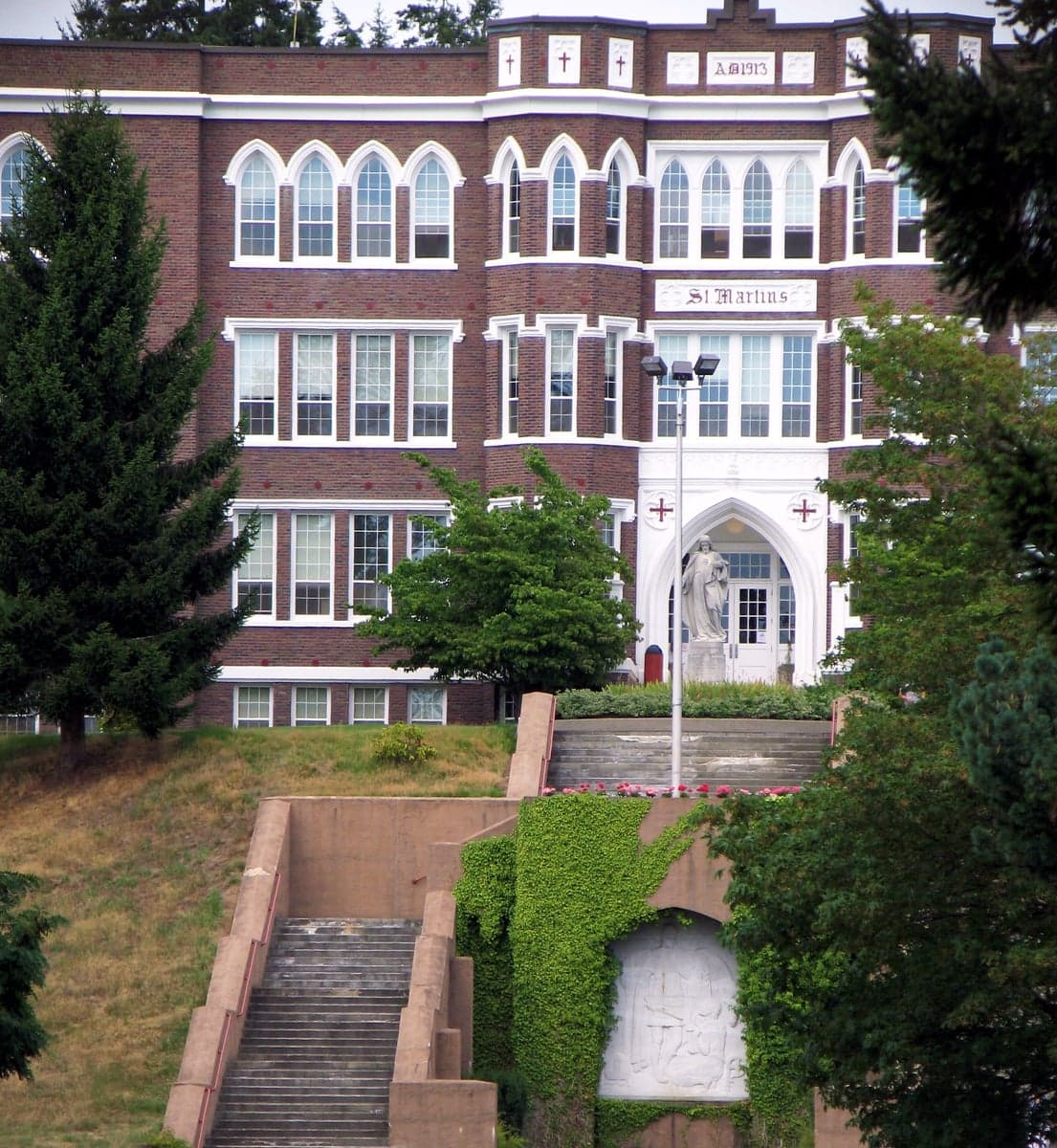
Photo: Wikipedia
Personal Sovereignty in Lacey, WA
Viable for self-reliance. Generally workable, though some barriers may limit total independence.
What does Personal Sovereignty tell us?
Personal Sovereignty measures your capacity for self-reliance and independence with minimal government friction. Higher scores mean fewer barriers between you and the way you want to live... but it assumes you have the space you need and good neighbors.
What does this tell us?
Personal Sovereignty measures your capacity for self-reliance and independence with minimal government friction. Higher scores mean fewer barriers between you and the way you want to live... but it assumes you have the space you need and good neighbors.
State Policy
Energy independence: Importer (55% of energy produced in-state)
Personal Liberty
Homesteading

Personal Liberty Analysis
For the individual or family approaching relocation from a survivalist or prepper mindset, Lacey, Washington presents a complex calculus of personal sovereignty. While the city itself sits within a state known for aggressive progressive governance, its specific location in Thurston County offers a few practical advantages for those seeking to maximize autonomy, particularly in the realms of self-defense, property use, and tax burden. The key is understanding where state-level overreach ends and local, actionable freedoms begin—and Lacey’s position as a mid-sized city on the edge of rural Thurston County provides a strategic foothold for those who value self-reliance over government dependency.
Tax burden and regulatory posture for the self-reliant individual
Washington State’s lack of a personal income tax is a significant draw for those looking to keep more of their earnings for preparedness and investment. Lacey residents pay no state income tax, but the trade-off is a reliance on high sales taxes and property taxes. The combined state and local sales tax rate in Lacey is approximately 9.1%, which hits daily purchases hard. Property taxes in Thurston County are moderate relative to the Seattle metro area, but they still represent a fixed annual cost that funds a school system and local government that many conservative-leaning residents view as bloated. The regulatory posture in Lacey is decidedly more permissive than in Olympia or Seattle, but it is still subject to Washington’s overarching state mandates. For example, the state’s Growth Management Act forces strict urban growth boundaries, which limits the ability to buy cheap land and build freely outside designated areas. This is a direct constraint on the prepper’s dream of remote, unregulated property. However, within city limits, zoning for home-based businesses and accessory dwelling units is relatively straightforward, allowing for some income diversification and multi-generational living arrangements that bolster self-sufficiency.
Self-defense and gun law specifics in a restrictive state
Washington State has become increasingly hostile to the Second Amendment, and Lacey residents are not immune. The state’s 2023 ban on standard-capacity magazines (over 10 rounds) and the passage of a permit-to-purchase requirement for semi-automatic rifles are direct infringements on the right to keep and bear arms. Additionally, the state’s “duty to retreat” law outside the home is a significant concern for those who prioritize self-defense. In Lacey, you cannot legally carry a concealed firearm without a permit, and open carry is generally permitted but subject to local restrictions and public scrutiny. The practical reality for a survivalist is that you can own firearms, but the state has created a bureaucratic maze of waiting periods, background checks, and storage requirements that erode the principle of immediate self-defense. The city itself has a relatively low violent crime rate compared to Tacoma or Seattle, but property crime is a persistent issue. For the prepper, the best strategy is to invest in a quality safe, maintain a low profile regarding your armory, and be prepared to travel to more gun-friendly counties (like Lewis or Mason) for training and range access. The legal environment here is a clear example of government overreach into personal security, and it requires constant vigilance to stay compliant while maintaining readiness.
Self-reliance and homesteading viability: lot sizes, zoning, and off-grid feasibility
For those seeking to live off the grid or establish a serious homestead, Lacey itself is a poor fit. The city’s zoning is predominantly suburban, with standard lot sizes of 6,000 to 10,000 square feet. This is enough for a large garden, a few chickens, and maybe a small greenhouse, but it is not conducive to livestock, extensive water catchment, or solar arrays that would make you truly independent. The city’s building codes and homeowners’ association restrictions in many neighborhoods further limit the ability to install rainwater collection systems, composting toilets, or visible solar panels without permits and inspections. However, the unincorporated areas of Thurston County just outside Lacey—particularly toward Rainier, Tenino, and the southern reaches near the Nisqually River—offer larger parcels (1-5 acres) with fewer restrictions. In these areas, you can legally drill a well, install septic, and build a shop or barn without the same level of municipal oversight. The county’s zoning code does allow for “rural residential” and “agricultural” designations, which permit small-scale farming and livestock. Off-grid living is technically possible in these outlying areas, but you will still be subject to state health codes for water and waste, and the county requires building permits for any permanent structure. The bottom line: Lacey proper is for suburban prepping (bugging in with supplies), while the surrounding rural fringe is where you can actually establish a self-reliant homestead.
Personal liberties: parental rights, medical autonomy, speech, and property
Washington State has a track record of eroding parental rights, particularly in education and medical decisions. The state mandates comprehensive sex education, allows minors to consent to certain medical treatments without parental notification, and has a strong vaccine mandate for school attendance. For parents who want to opt out of public school indoctrination, Lacey has a robust homeschooling community and several private religious schools, but the state’s oversight of home-based instruction is more intrusive than in Idaho or Montana. Medical autonomy is another area of concern. The state’s response to the COVID-19 pandemic included vaccine mandates for healthcare workers and state employees, and it maintains a strict prescription drug monitoring program. For those who value the right to choose their own medical treatments—including off-label uses or alternative therapies—the regulatory environment is hostile. Free speech is generally protected, but the state’s “malicious harassment” law and hate crime statutes are broadly interpreted, and local government in Lacey has shown a willingness to enforce noise and nuisance ordinances against political signage or gatherings that are deemed disruptive. Property rights are the strongest liberty in Lacey. While the Growth Management Act limits development, the city’s zoning code is relatively stable, and there are no rent control measures. You can buy, sell, and improve your property with reasonable certainty, though you must navigate the permit process for any major changes. The overall picture is one of a state that actively works to centralize authority, but Lacey’s local culture still allows for a degree of personal freedom if you are willing to fight for it.
In the broader context of the Pacific Northwest, Lacey offers a middle-ground sovereignty profile. It is far more free than Seattle or Portland, where crime and government overreach are rampant, but it is significantly less autonomous than rural Idaho or eastern Washington. For the survivalist or prepper, the strategic value of Lacey lies in its proximity to federal land (the Capitol State Forest and Fort Lewis), its relatively affordable housing compared to the rest of the Puget Sound region, and its access to a community of like-minded individuals who are quietly building resilience. The trade-off is constant vigilance against state-level encroachment on your rights. If you are willing to navigate the regulatory landscape, maintain a low profile, and invest in legal compliance, Lacey can be a viable base of operations. But if you are looking for a place where you can live completely free from government interference, you will need to look further east or south. Lacey is a compromise—a place where you can build a life of self-reliance, but only if you are prepared to fight for every inch of your personal sovereignty.

* Values derived from national, state, county, city and local statistics and may differ in a specific area. Last updated: 2026-04-21T10:58:23.000Z
Narrative content on this page is AI-generated and may contain mistakes. Verify any details that matter before acting on them.
ReloMaps may earn a commission from affiliate links at no extra cost to you.

