Photo: Wikipedia
Quality of Life in Lacey, WA
A high quality of life with strong walkability, manageable living costs, healthy neighborhood signals, and solid amenity access.
What does Quality of Life tell us?
Quality of Life blends cost of living, nearby amenities, socioeconomic signals, and neighborhood character. City-level scores represent the whole municipality; individual neighborhoods can differ.
What does this tell us?
Quality of Life blends cost of living, nearby amenities, socioeconomic signals, and neighborhood character. City-level scores represent the whole municipality; individual neighborhoods can differ.
Cost of Living
54% above national average
The Real Cost of Living in Lacey, WA for 2026
| Tier | Individual | Family (4) |
|---|---|---|
| Survival | $28k | $53k |
| Comfortable | $79k | $116k |
| Luxury | $116k+ | $180k+ |
| Elite (Top 5%) | $136k+ | $211k+ |
75%
The Area Signal
A metric tracking the socioeconomic signals of the area.
Hobbies
Explore the areaGroceries
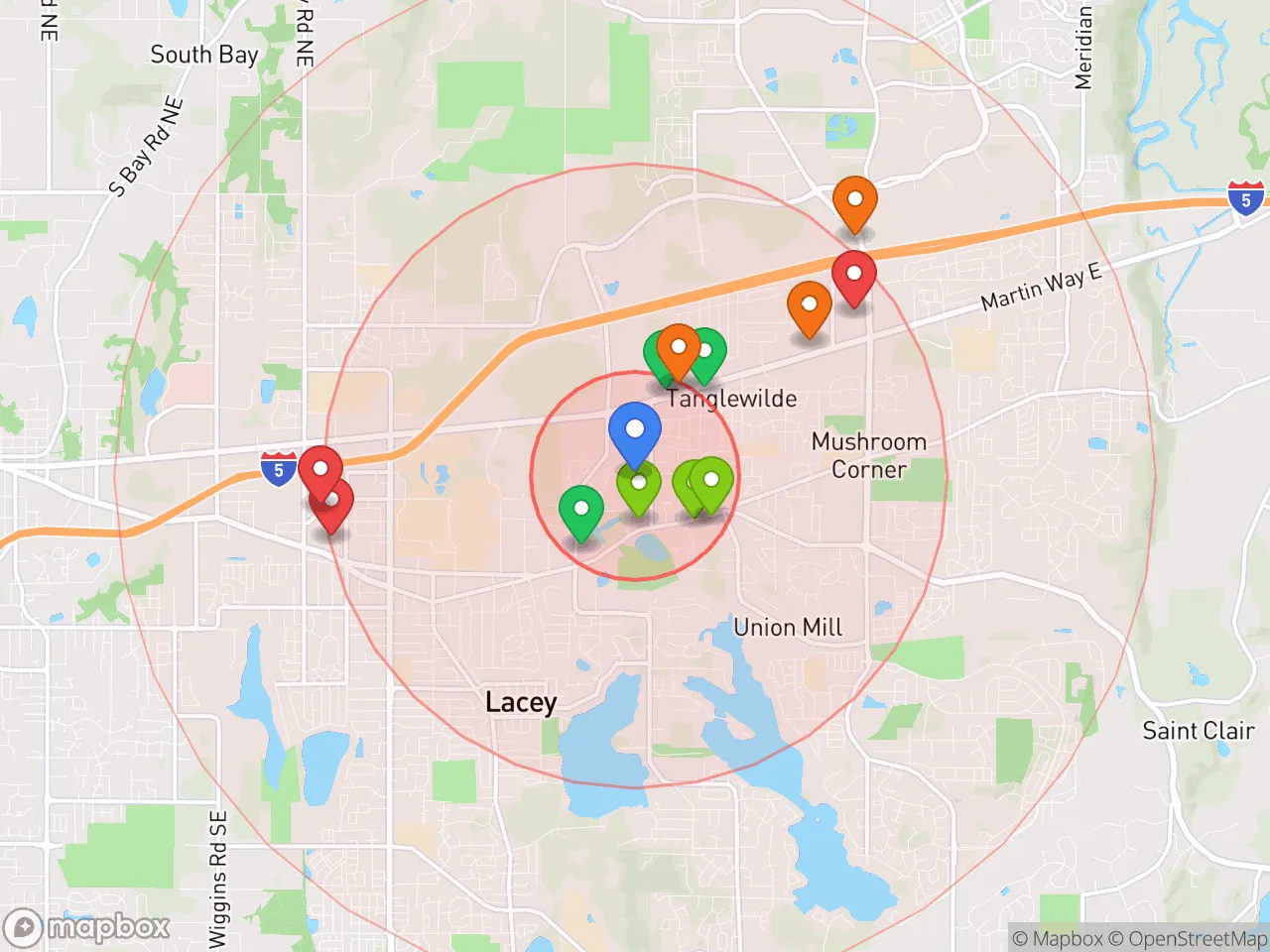
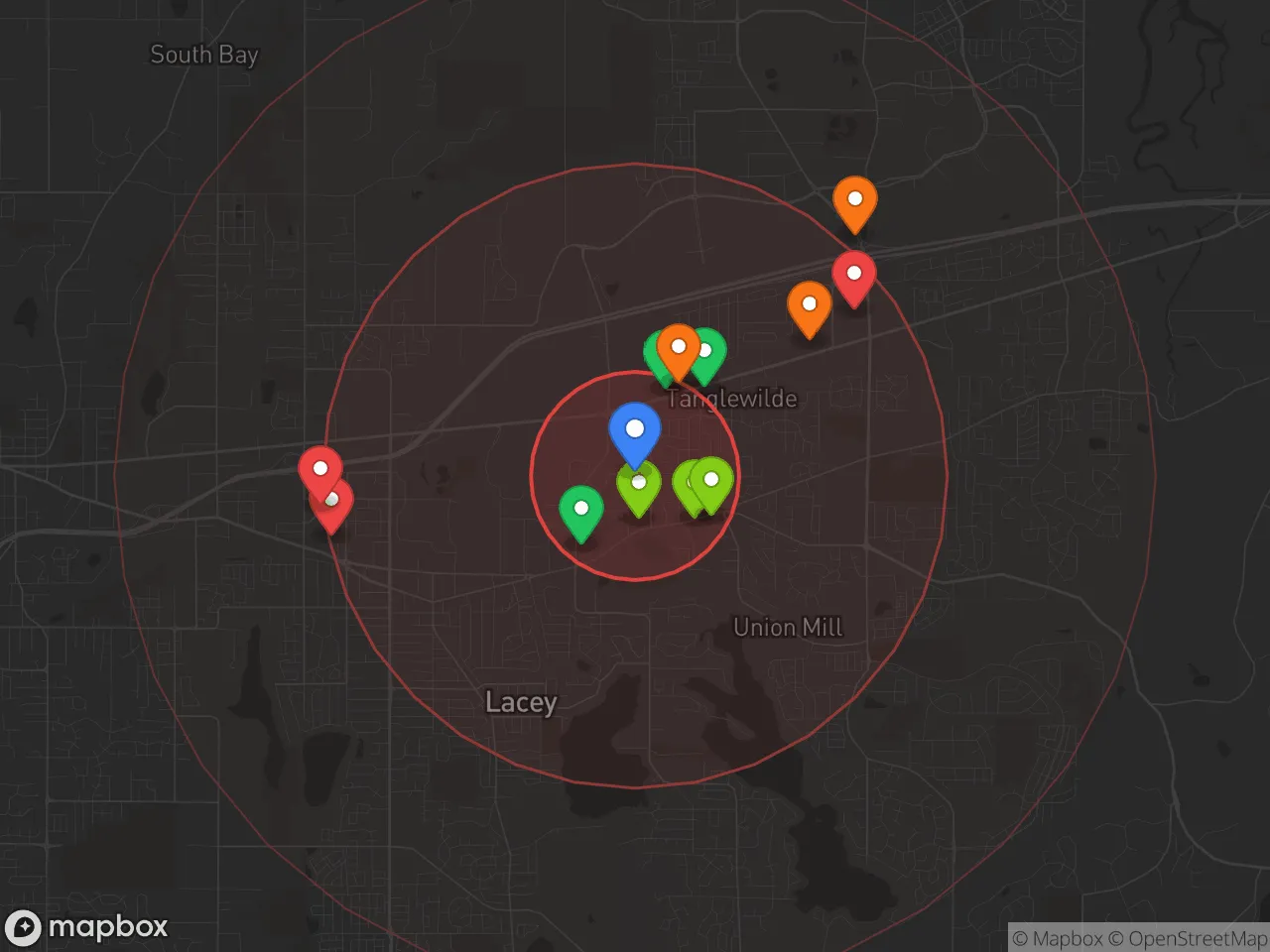
8 within 10 miles
Gas
20 within 10 miles
Hospital
11 within 20 miles
Airport
SEA — Seattle–Tacoma International
Post Office
USPS — Lacey, WA
Critical Amenities
Quality-of-Life Analysis
Lacey, Washington, presents a quality of life defined by solidly middle-to-upper-middle-class affluence, with a cost of living index of 154—well above the national average of 100. The city attracts a mix of military families tied to nearby Joint Base Lewis-McChord, state government employees commuting to Olympia, and professionals drawn to the region’s outdoor recreation and slower pace. Median household incomes in Lacey consistently outpace state averages, supporting a stable, family-oriented demographic that values proximity to nature without sacrificing suburban conveniences.
Cost of living, housing affordability, and how Lacey compares to Olympia and Tacoma
Lacey’s cost of living is 54% higher than the U.S. average, driven largely by housing. The median home value sits at $427,900, significantly below Seattle’s median but roughly 10-15% higher than comparable homes in neighboring Olympia. Renters face a median monthly cost of $1,805, which is about $200 less than in Tacoma but $150 more than in Tumwater. The average commute of 26 minutes is manageable, with most residents driving to jobs in Olympia (10-15 minutes south) or to Joint Base Lewis-McChord (20-25 minutes north). While housing is expensive relative to national norms, it remains more attainable than in King County, making Lacey a pragmatic choice for buyers priced out of Seattle but unwilling to sacrifice commute times for deeper affordability in Centralia or Chehalis.
What daily life is like for families: schools, parks, and local amenities
Daily life in Lacey revolves around its strong public school system, part of the North Thurston Public Schools district, which includes well-rated elementary schools like Lakes Elementary and the STEM-focused Chinook Middle School. The city boasts over 20 parks, with Woodland Creek Community Park offering 100 acres of trails, sports fields, and a dog park—a central gathering point for families. The Lacey Community Center hosts year-round programs for seniors and youth, while the nearby Lacey Timberland Library provides a modern, busy hub for events and study. Retail is anchored by the Lacey Marketplace and the Hawks Prairie corridor, which feature big-box stores, chain restaurants, and a growing number of local breweries like Top Rung Brewing Company. The rhythm is distinctly suburban: residents commute to Olympia or Tacoma for work, return for evening soccer games or lake walks at Long Lake Park, and spend weekends hiking at nearby Millersylvania State Park or paddleboarding on Puget Sound. Healthcare access is solid, with Providence St. Peter Hospital in Olympia and several urgent-care clinics within a 10-minute drive.
Lacey is best suited for families, military personnel, and state government employees who prioritize good schools, safe neighborhoods, and outdoor access over urban nightlife or walkability. Singles and young professionals may find the social scene limited compared to downtown Olympia, but the city’s lower crime rates and strong community programs make it a reliable choice for raising children or establishing a long-term home base. Those seeking a quieter, nature-adjacent lifestyle with solid public services will find Lacey a practical, if not inexpensive, fit.

Crime in Lacey, WA
Generally safer than 56% of comparable U.S. locations.
Violent CrimeViolent Crime Analysis
Property CrimeProperty Crime Analysis
Crime Analysis
Lacey, Washington, reports a violent crime rate of 216.5 incidents per 100,000 residents and a property crime rate of 1,918 per 100,000, placing it in a middle tier for safety within Thurston County. While these figures are below the national average for violent crime, the property crime rate is notably elevated, and the broader regional context—including progressive prosecutorial policies in nearby Olympia and Thurston County—raises concerns about recidivism and public safety. Residents should weigh these statistics against the reality that local justice system leniency can contribute to repeat offenses and a diminished sense of security.
Crime in context
Lacey’s violent crime rate of 216.5 per 100,000 is 38% lower than the national average of roughly 380 per 100,000, but its property crime rate of 1,918 per 100,000 is about 8% higher than the U.S. average of 1,770 per 100,000. Compared to Washington state’s overall violent crime rate of 290 per 100,000, Lacey fares better, yet the property crime figure exceeds the state average of 1,850 per 100,000. These numbers, however, do not capture the impact of progressive criminal justice policies in Thurston County, where district attorneys and judges have adopted diversion programs and reduced sentencing guidelines. Such approaches, while intended to reduce incarceration, can result in more offenders returning to the streets quickly, increasing the likelihood of repeat property crimes and, in some cases, violent encounters.
What residents experience
Daily life in Lacey involves a tangible awareness of property crime, with theft from vehicles, package theft, and burglary being the most commonly reported issues. Residents frequently note that car prowls and garage break-ins occur even in well-trafficked neighborhoods, and police response times can be delayed due to staffing constraints. Violent crime is less common but not absent; incidents of assault and robbery are concentrated in areas near commercial corridors like Martin Way and Pacific Avenue. The influence of progressive prosecutorial policies means that many property crime offenders face minimal consequences, leading to frustration among victims who see the same individuals reoffending. For families and retirees, this creates a persistent low-level anxiety, particularly after dark or when leaving homes unattended.
Neighborhood-level variation
Safety in Lacey varies significantly by neighborhood. Areas west of I-5, such as the Woodland Creek and Chambers Prairie neighborhoods, generally report lower crime rates and are considered safer, with more community watch activity and better street lighting. In contrast, neighborhoods near the Lacey Transit Center and along Martin Way East experience higher concentrations of both property and violent crime, often linked to transient populations and proximity to commercial zones. The Hawks Prairie area, a newer development, has mixed reports—while violent crime is low, property crime remains a concern due to easy highway access for fleeing offenders. Prospective residents should research specific block-level data and consider that progressive justice policies in the county mean even safer neighborhoods are not immune to spillover crime from nearby areas with higher offense rates.
* Values derived from national, state, county, city and local statistics and may differ in a specific area. Last updated: 2026-04-21T10:58:23.000Z
Narrative content on this page is AI-generated and may contain mistakes. Verify any details that matter before acting on them.
ReloMaps may earn a commission from affiliate links at no extra cost to you.

