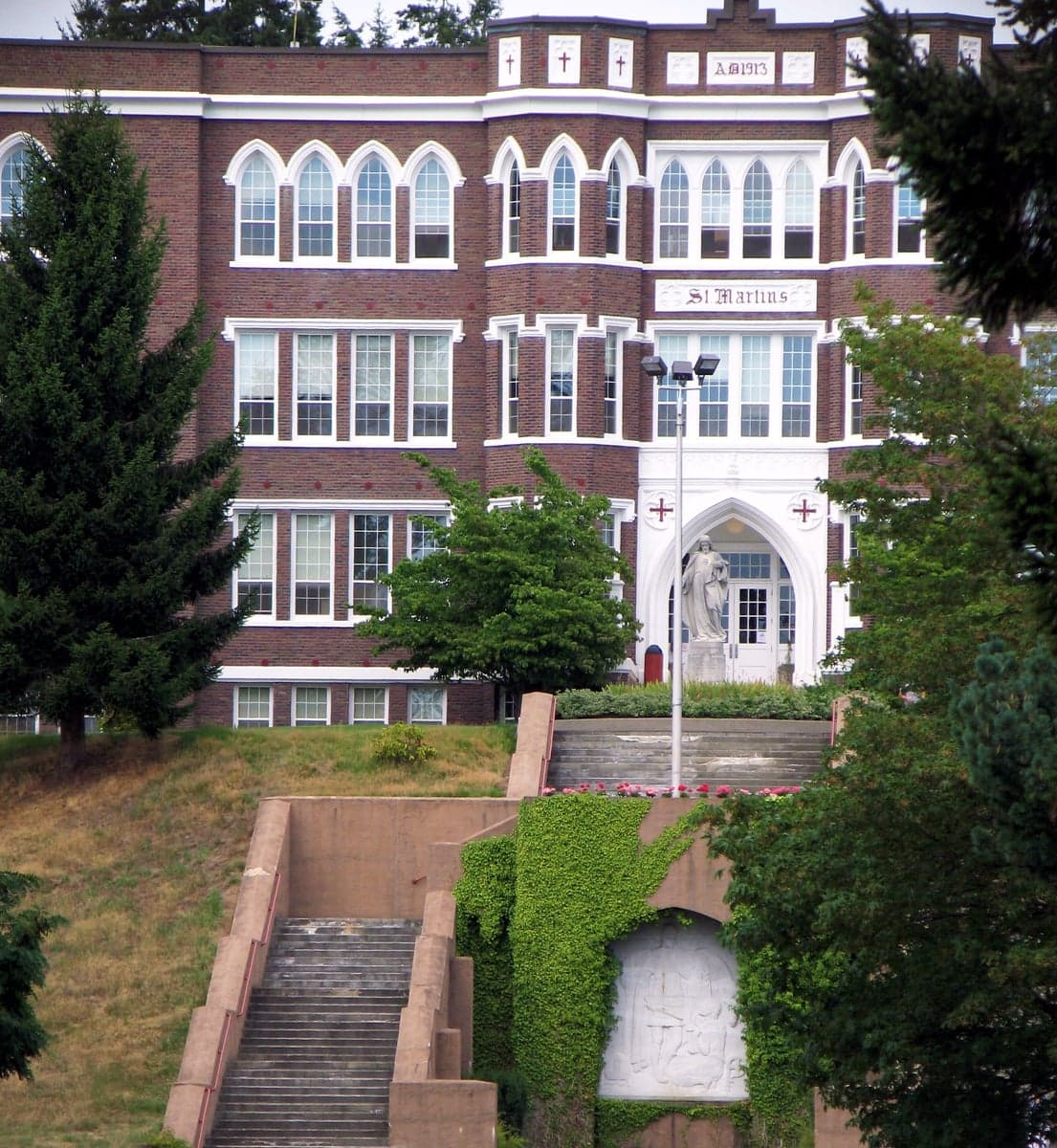
Photo: Wikipedia
Political ClimatePolitical Climate in Lacey, WA
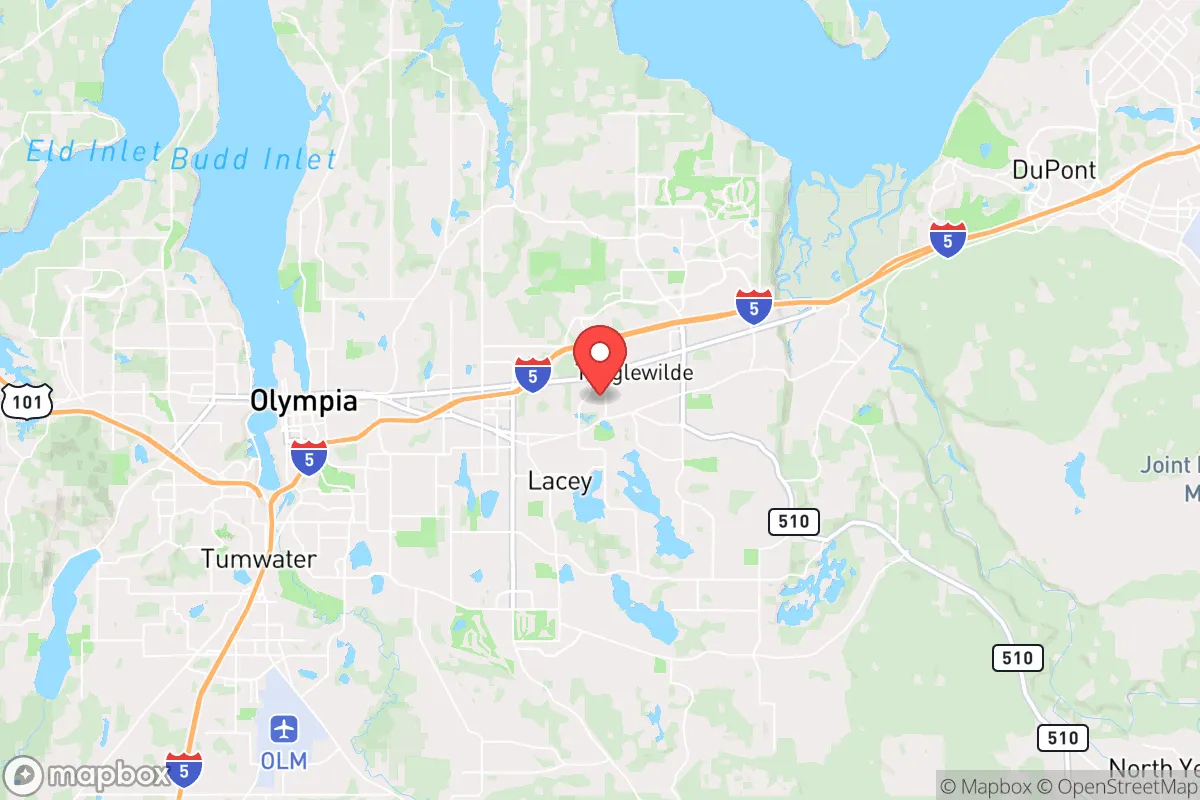
District shown is the primary district for this city’s centroid. Cities may span multiple districts.
Local Political AnalysisPolitical Analysis of Lacey, WA
Lacey, Washington, leans solidly Democratic, with a Cook PVI of D+9, meaning it votes about nine points more Democratic than the national average. This wasn't always the case—I remember when this town was a quiet, blue-collar community where folks kept to themselves and the biggest political debate was over the new stoplight on Pacific Avenue. Over the last decade, though, the area has shifted hard left, driven by an influx of state workers and transplants from King County who brought their progressive politics with them. The trajectory is clear: Lacey is becoming a mirror of Olympia next door, and that’s a real concern for anyone who values personal freedoms and limited government.
How it compares
To understand Lacey’s politics, you have to look at its neighbors. Head east to Yelm or south to Tenino, and you’ll find communities that still vote reliably conservative—places where the Second Amendment is a given and property rights aren’t up for debate. Even Tumwater, just to the north, has a more moderate streak than Lacey. But Lacey itself is increasingly indistinguishable from Olympia, the state capital, where government jobs and progressive activism dominate. The difference is stark: in the 2024 election, Thurston County as a whole went blue, but Lacey’s precincts were among the bluest in the county, while rural areas like Bucoda and Rainier stayed red. If you’re looking for a place where your vote for smaller government might actually matter, Lacey is not it—you’d be better off in the outskirts of Rochester or Centralia.
What this means for residents
For those of us who’ve lived here a while, the political shift has real consequences. The city council has pushed through zoning changes that make it easier for developers to build high-density housing, which sounds good on paper but has led to overcrowded schools and strained infrastructure. More troubling is the growing appetite for new regulations—things like plastic bag bans, stricter rental inspections, and even talk of rent control. These policies might play well in Seattle, but they chip away at the kind of personal autonomy that made this area livable. Property taxes have crept up, and there’s a sense that the government is getting more involved in daily life, from how you heat your home to what you can plant in your yard. It’s not a crisis yet, but the trend is unmistakable.
Culturally, Lacey is losing its small-town character. The old hardware store on College Street is gone, replaced by a chain coffee shop. The annual Fourth of July parade feels more like a political rally for local Democrats than a community celebration. And while the city touts its diversity and inclusion initiatives, many long-time residents feel like their voices are being drowned out by newcomers who don’t share the same values. In the long term, if this trajectory holds, Lacey will likely become a bedroom community for Olympia’s government workforce, with all the taxes, regulations, and cultural shifts that come with it. For now, it’s still a decent place to live—but you have to keep an eye on what’s coming down the pipeline.

State Political ClimatePolitical Climate in Washington
State Political AnalysisPolitical Environment in the State
Washington State has shifted from a purple swing state to a solidly blue stronghold over the past two decades, with Democrats controlling the governorship, both U.S. Senate seats, and both chambers of the legislature since 2017. The state’s overall partisan lean is now roughly D+8 to D+10 in presidential elections, driven overwhelmingly by the Seattle metro area, which casts about 40% of the state’s total vote. However, this blue veneer masks a deep and growing urban-rural chasm, with large swaths of Eastern Washington and the rural Olympic Peninsula voting as red as any county in Idaho or Montana. For a conservative considering relocation, the key question is whether you can carve out a life in one of the state’s red or purple enclaves without being crushed by the policy machine in Olympia.
Urban vs. rural divide
The political map of Washington is a tale of two states. King County (Seattle) alone delivers roughly 30% of the state’s total vote and typically goes D+40 or more. Add in neighboring Snohomish County (Everett) and Pierce County (Tacoma), and the I-5 corridor from Olympia north to the Canadian border accounts for nearly 70% of the electorate. These three counties are the engine of every Democratic victory. Meanwhile, the rest of the state — including the entire eastern half — votes reliably Republican. Spokane County, the state’s second-most populous, has been trending redder, flipping from a swing county to R+12 by 2024, driven by growth in conservative-leaning suburbs like Spokane Valley and Liberty Lake. The Tri-Cities (Kennewick, Pasco, Richland) are solidly red, as are Yakima, Walla Walla, and virtually every county east of the Cascades. The rural Olympic Peninsula — places like Forks, Port Angeles, and Aberdeen — also vote heavily Republican, though with lower turnout. The divide is stark: drive 30 minutes east from Seattle into the Cascade foothills, and you’ll find Trump signs still standing from 2020. The state’s political future hinges on whether the Seattle metro’s growth continues to outpace the rest of the state, or whether the exodus of conservatives to red counties like Spokane and Clark (Vancouver) can shift the balance.
Policy environment
Olympia has been on a progressive policy tear for the last decade, and the results are a mixed bag for conservatives. Washington has no state income tax, which is a major draw for high earners and business owners, but the state makes up for it with some of the highest sales taxes in the nation (state rate 6.5%, but local add-ons push it to 9-10% in many cities) and a high property tax burden. The regulatory environment is among the most aggressive in the country: the state has a carbon cap-and-trade program (Climate Commitment Act), a strict plastic bag ban, and a ban on natural gas in new construction that took effect in 2024. Education policy is dominated by the teachers’ union, with per-pupil spending among the highest in the nation but mediocre outcomes — only about 50% of students meet grade-level standards in math and reading. Healthcare is heavily regulated, with a state-run insurance exchange and some of the strictest abortion and gender-affirming care laws in the country. Election laws are among the most liberal: Washington has universal mail-in voting (every registered voter gets a ballot automatically), same-day registration, and no voter ID requirement at the polls (though signature verification is used). For a conservative, the policy environment feels like a one-party state where your vote in state elections is largely irrelevant unless you live in a swing district like the 3rd Congressional District (SW Washington) or the 8th (central Washington).
Trajectory & freedom
On the freedom index, Washington is moving in the wrong direction for conservatives. The state has become a national leader in restricting gun rights: In 2023, the legislature passed a ban on “assault weapons” (semi-automatic rifles with certain features), a ban on high-capacity magazines, and a 10-day waiting period for all firearm purchases. A state Supreme Court ruling in 2024 upheld a ban on open carry at public meetings and protests. Parental rights have taken a hit: the state passed a law in 2023 that allows minors 13 and older to receive gender-affirming care without parental consent, and schools are not required to notify parents if a child changes their name or pronouns. Medical autonomy is constrained by the state’s vaccine mandates for healthcare workers and schoolchildren (though religious exemptions exist for K-12). Property rights are under pressure from the state’s Growth Management Act, which limits development in rural areas and has driven up housing costs. On the plus side, the state’s strong economy and lack of income tax still offer a degree of economic freedom, and the state’s initiative process (I-976, I-2066) has occasionally allowed voters to push back on tax increases and energy mandates. But the trend is clear: Olympia is adding restrictions faster than voters can repeal them.
Civil unrest & political movements
Washington has a long history of political activism, and the last five years have been particularly volatile. Seattle’s 2020 Capitol Hill Autonomous Zone (CHAZ) was a national flashpoint, with six blocks of the city occupied by protesters for two weeks, leading to multiple shootings and a police retreat that became a symbol of progressive governance failures. The state has also seen repeated clashes over immigration: Washington is a “sanctuary state” (since 2019), meaning local law enforcement cannot cooperate with federal immigration authorities, and the state has sued the Trump administration multiple times over border policies. On the right, the “Three Percent” and “Oath Keepers” have a presence in Eastern Washington, and the state has seen several armed standoffs over land use and property rights. The 2020 election integrity debate was intense here, with the state’s all-mail voting system drawing scrutiny — though no widespread fraud was found, the state’s lack of voter ID remains a concern for many conservatives. More recently, the “parental rights” movement has gained steam in suburban school board races, particularly in conservative-leaning suburbs like Puyallup, Bonney Lake, and the Spokane Valley. The state’s political flashpoints are real and visible: you’ll see Pride flags and BLM signs in Seattle, and Trump flags and “Don’t Tread on Me” banners in the rural areas. The two Washingtons coexist uneasily.
Projection
Over the next 5-10 years, Washington is likely to become more blue, not less. Demographic trends favor the Democrats: the state’s fastest-growing counties are King (Seattle) and Clark (Vancouver), both of which are trending blue. Clark County, once a reliable red county, flipped to Biden in 2020 and is now a swing county, thanks to an influx of California transplants and Portland exiles. The state’s population is also becoming more diverse and more urban, with the Seattle metro absorbing most of the growth. The rural counties are losing population or stagnating, which means their political weight is shrinking. The state’s initiative process may provide some brakes — voters rejected a carbon tax in 2018 and a capital gains tax in 2021 — but the legislature has become adept at passing laws that are difficult to repeal. The state Supreme Court is solidly liberal and has shown little restraint in upholding progressive legislation. For a conservative moving in now, the realistic expectation is that Olympia will continue to pass gun control, expand government healthcare, and restrict parental rights. The best-case scenario is that you live in a red county like Spokane or Yakima, where local government is more aligned with your values, but you’ll still be subject to state laws you didn’t vote for.
Bottom line: Washington is a beautiful state with a strong economy and no income tax, but it’s also a state where your political voice is largely irrelevant unless you live in one of the few swing districts. If you’re a conservative who values outdoor recreation, a robust job market, and low taxes, you can make it work — especially in Spokane, the Tri-Cities, or the Vancouver area. But you need to accept that you’ll be living in a state where the government is actively working against many of your core values, from gun rights to parental authority to fiscal restraint. It’s not a place for someone who wants to feel politically at home; it’s a place for someone who’s willing to fight for their corner of a blue state. If that sounds exhausting, you might be happier in Idaho or Montana. If you’re up for the challenge, Washington still offers a lot — just know what you’re signing up for.
* Values derived from national, state, county, city and local statistics and may differ in a specific area. Last updated: 2026-04-21T10:58:23.000Z
Narrative content on this page is AI-generated and may contain mistakes. Verify any details that matter before acting on them.
ReloMaps may earn a commission from affiliate links at no extra cost to you.

