Photo: Wikipedia
Quality of Life in Lafayette, IN
Above-average quality of iife. The area offers a reasonable cost of living, decent mobility, and a mix of neighborhood amenities.
What does Quality of Life tell us?
Quality of Life blends cost of living, nearby amenities, socioeconomic signals, and neighborhood character. City-level scores represent the whole municipality; individual neighborhoods can differ.
What does this tell us?
Quality of Life blends cost of living, nearby amenities, socioeconomic signals, and neighborhood character. City-level scores represent the whole municipality; individual neighborhoods can differ.
Cost of Living
24% below national average
The Real Cost of Living in Lafayette, IN for 2026
| Tier | Individual | Family (4) |
|---|---|---|
| Survival | $17k | $31k |
| Comfortable | $31k | $45k |
| Luxury | $83k+ | $129k+ |
| Elite (Top 5%) | $98k+ | $152k+ |
118%
The Area Signal
A metric tracking the socioeconomic signals of the area.
Hobbies
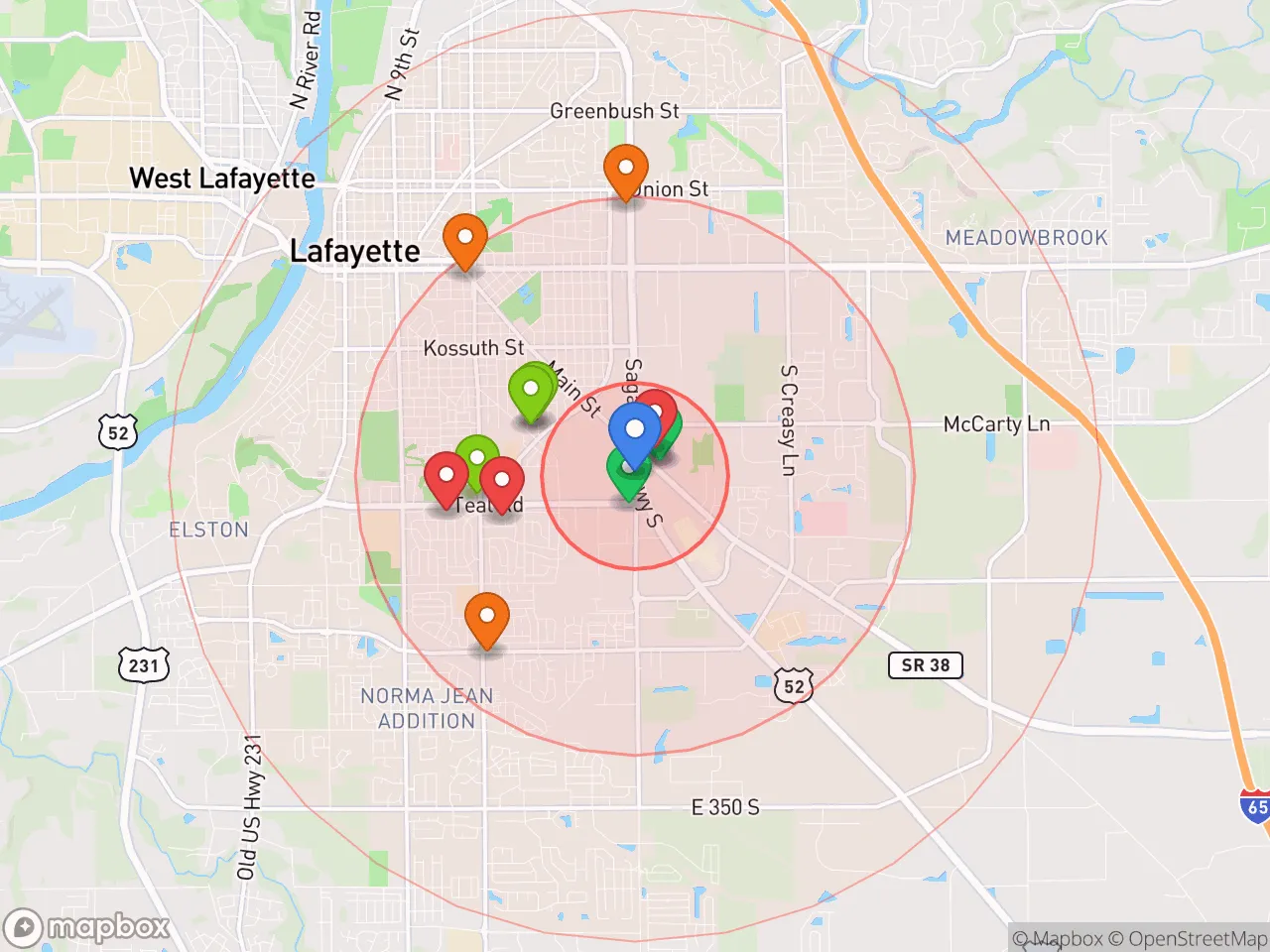
Explore the areaGroceries
7 within 10 miles
Gas
20 within 10 miles
Hospital
5 within 20 miles
Airport
Indianapolis International Airport
Post Office
USPS — Lafayette, IN
Critical Amenities
Quality-of-Life Analysis
Lafayette, Indiana, offers a quality of life defined by genuine affordability and a grounded, family-oriented character, attracting a mix of Purdue University faculty, manufacturing professionals, and young families seeking a lower cost of living. With a cost of living index of 76—well below the national average of 100—the city provides a financial cushion that is increasingly rare in the Midwest. The typical resident enjoys a short, predictable commute and a pace of life that balances small-town comfort with the amenities of a regional economic hub.
Cost of living and housing affordability compared to West Lafayette and Indianapolis
The most striking feature of life in Lafayette is its housing market. The median home value sits at $157,600, a figure that is roughly half the national median and significantly lower than in neighboring West Lafayette, where Purdue University drives demand and prices. Median rent is equally accessible at $1,039, making it feasible for single-income households and young renters to live comfortably. The average commute time is just 16.1 minutes, a stark contrast to the 30+ minute averages in larger metros like Indianapolis. This combination of low housing costs and minimal commuting time frees up disposable income for local spending, dining, and recreation, creating a daily life that feels less financially strained than in many other parts of the country.
Local amenities, schools, and the daily rhythm of life
Daily life in Lafayette revolves around a mix of outdoor access, community events, and practical conveniences. The Wabash River and the city's extensive trail system, including the Wabash Heritage Trail, provide immediate recreational options for walking, cycling, and kayaking. The downtown area along Main Street has seen revitalization, with independent coffee shops, breweries, and the historic Lafayette Theatre offering cultural anchors. For families, the Tippecanoe School Corporation and Lafayette School Corporation serve the area, with several schools earning state recognition for academic growth. The presence of Purdue University in adjacent West Lafayette adds a layer of cultural and athletic events—Big Ten sports, lectures, and performances—that would be absent in a similarly sized city without a major university. Grocery stores, healthcare facilities (including IU Health Arnett Hospital), and retail are spread across the city, keeping errands short and the daily rhythm unhurried.
Who thrives best in Lafayette's environment
Lafayette is best suited for people who prioritize financial stability and a slower, more predictable routine over the high-energy, high-cost dynamism of a major metropolis. It is an excellent fit for first-time homebuyers who want to enter the market without taking on crushing debt, for remote workers who want to maximize their income in a low-cost setting, and for families who value short commutes and access to parks and community sports leagues. Professionals in manufacturing, logistics, and education—the city's largest employment sectors—will find the job market aligned with the cost of living. Those seeking a vibrant nightlife scene or a dense urban environment may find Lafayette too quiet, but for anyone looking to stretch a dollar further while still enjoying a solid public school system and proximity to a major research university, the city delivers a compelling, low-stress quality of life.

Crime in Lafayette, IN
Crime rates similar to the national median for U.S. locations.
Violent CrimeViolent Crime Analysis
Property CrimeProperty Crime Analysis
Crime Analysis
Lafayette, Indiana, reports a violent crime rate of 390.2 incidents per 100,000 residents and a property crime rate of 1,663.7 per 100,000, placing it above national averages for both categories. As a mid-sized city in Tippecanoe County, its safety profile is shaped by its proximity to the larger Indianapolis metropolitan area and local criminal justice policies. Prospective residents should weigh these statistics carefully, particularly given the area's progressive judicial environment, which can influence recidivism and public safety outcomes.
Crime in context
Lafayette's violent crime rate of 390.2 per 100,000 is roughly 11% higher than the national average of approximately 350 per 100,000cars, and significantly exceeds the Indiana state average of about 320 per 100,000. Property crime in Lafayette, at 1,663.7 per 100,000, is also elevated—about 15% above the national figure of roughly 1,450 per 100,000. These numbers place Lafayette in a higher-risk tier compared to smaller, more rural Indiana communities, though it is not as dangerous as some larger Midwestern cities. The presence of a large university (Purdue University in neighboring West Lafayette) and a regional economic hub contributes to a transient population and property crime opportunities, such as theft from vehicles and bicycles.
What residents experience
Residents commonly report property crime as the most tangible safety concern, with theft, burglary, and vehicle break-ins occurring regularly in both residential and commercial areas. Violent crime, while less frequent, includes aggravated assault and robbery, often concentrated in specific corridors like the downtown area and near low-income housing complexes. A key factor affecting safety is the local justice system: Tippecanoe County has seen a trend toward progressive prosecution and sentencing reforms, including diversion programs and reduced bail requirements. While these policies aim to reduce incarceration, they also result in repeat offenders returning to the streets more quickly, which can erode deterrence and increase victimization rates. Residents frequently express frustration that property crimes are treated leniently, with many thefts and burglaries resulting in minimal jail time or probation.
Neighborhood-level variation
Safety in Lafayette varies considerably by neighborhood. The south and central areas near downtown experience the highest crime concentrations, particularly along the Sagamore Parkway corridor and near the Union Street commercial district. In contrast, the northwest side and areas near the Wabash River tend to have lower crime rates, with more stable, family-oriented subdivisions. The adjacent city of West Lafayette, home to Purdue University, maintains significantly lower crime rates due to robust campus policing and a higher-income demographic. For those considering a move, choosing a neighborhood north of State Road 26 or west of 18th Street generally offers a safer environment, while properties near the downtown core or along the Earl Avenue corridor require more vigilance. Prospective residents should also note that the progressive judicial philosophy in Tippecanoe County means that even in lower-crime neighborhoods, the broader risk of encountering repeat offenders remains a concern for long-term safety planning.
* Values derived from national, state, county, city and local statistics and may differ in a specific area. Last updated: 2026-04-22T10:29:40.000Z
Narrative content on this page is AI-generated and may contain mistakes. Verify any details that matter before acting on them.
ReloMaps may earn a commission from affiliate links at no extra cost to you.

