Photo: Wikipedia
Political ClimatePolitical Climate in Lafayette, IN
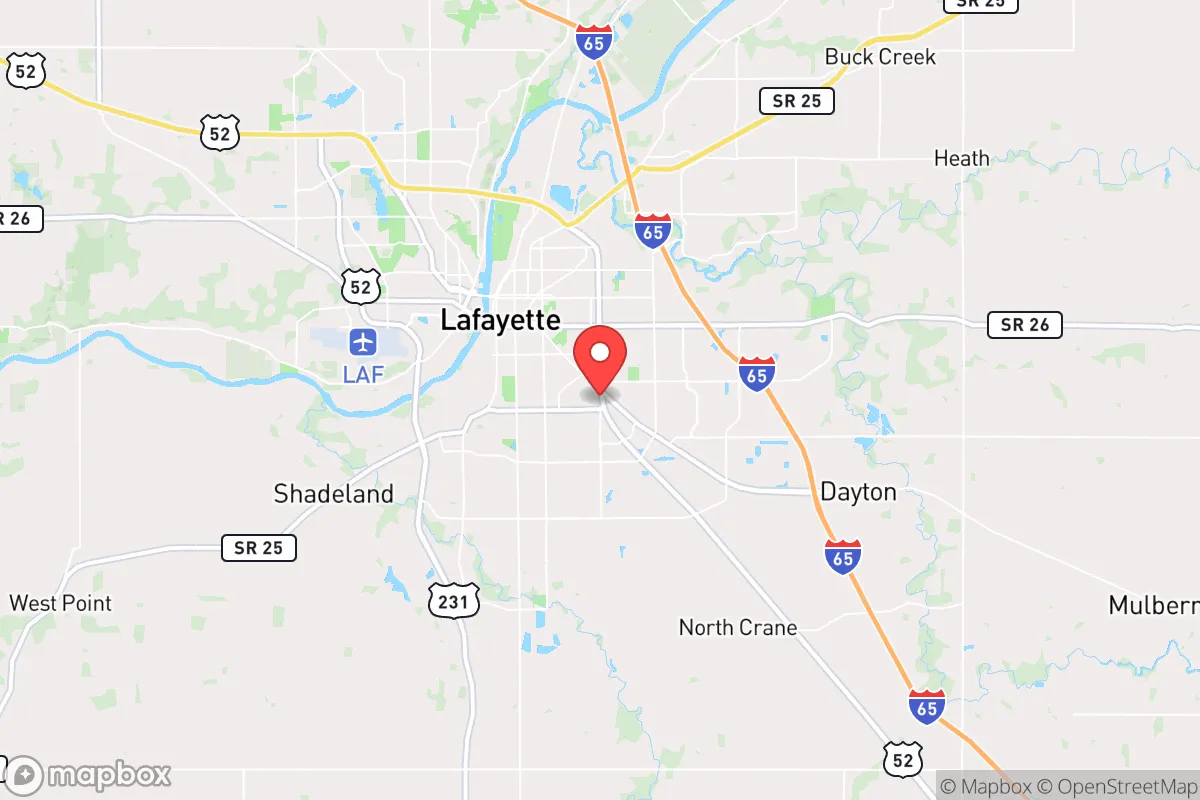
District shown is the primary district for this city’s centroid. Cities may span multiple districts.
Local Political AnalysisPolitical Analysis of Lafayette, IN
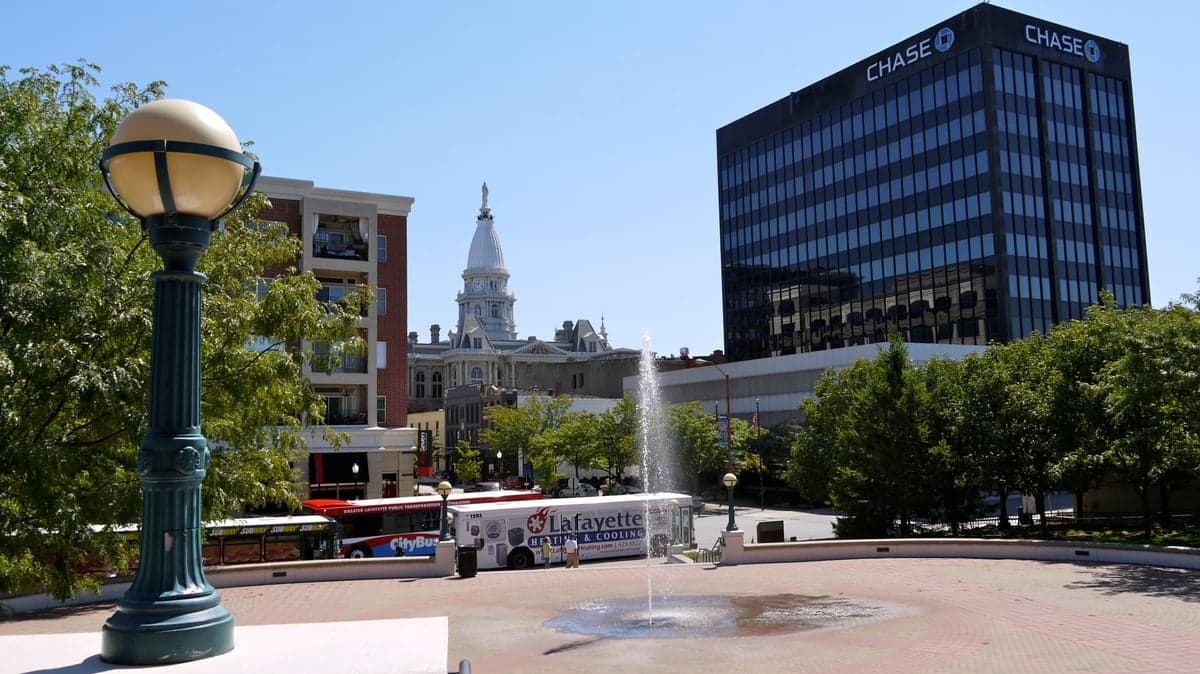
Lafayette, Indiana, sits in a reliably conservative corner of the state, with a Cook PVI of R+15 that reflects a deep-rooted preference for limited government and traditional values. For decades, this area has been a quiet stronghold where folks generally believe in personal responsibility and keeping government out of your business, but you can feel the winds shifting a bit as the city grows. The surrounding county, Tippecanoe, has historically voted red, but the city itself—especially with Purdue University's influence—has started to show some cracks in that solid foundation. If you're looking for a place where your rights to speak freely, keep and bear arms, and live without constant bureaucratic interference are still respected, Lafayette is still a good bet, but you need to know where the lines are being drawn.
How it compares
Drive just 20 minutes south to West Lafayette, and you're in a completely different world—that's where the university campus dominates, and the political vibe is much more progressive, with a lot of young voters and faculty pushing for bigger government solutions. The contrast is stark: West Lafayette votes reliably blue in most elections, while the rural areas north and east of Lafayette, like Battle Ground or Dayton, are even more conservative than the city itself. Compared to larger Indiana cities like Indianapolis or Bloomington, Lafayette still feels like a place where common sense prevails, but the university's influence is slowly pulling the city council and school board toward more progressive policies. If you're worried about government overreach, you'll find more allies in the county's farming communities than in the downtown coffee shops near campus.
What this means for residents
For a long-time resident, the biggest concern is how the city's growth is bringing in folks who want to change the rules. We've seen pushes for stricter zoning laws that limit what you can do with your own property, and there's been chatter about "equity" initiatives in local schools that sound a lot like top-down social engineering. The good news is that the county commissioners and most of the city council still lean conservative, so major overreaches—like heavy-handed mask mandates or business shutdowns—have been kept in check. But you have to stay engaged, because the progressive minority is organized and vocal, especially on issues like housing regulations and police funding. If you value your Second Amendment rights, you'll be relieved to know that Indiana is a constitutional carry state, and Lafayette's local leadership hasn't tried to chip away at that, unlike what you see in more liberal cities.
One thing that sets Lafayette apart is its strong sense of community self-reliance—people here still help their neighbors without waiting for a government program. The local economy is driven by manufacturing and agriculture, not by government grants or tech startups, which keeps the political culture grounded in practical concerns. But keep an eye on the school board elections; that's where the battle for the area's future is really being fought. If you're considering a move here, you'll find a place where your personal freedoms are still largely respected, but you'll need to be willing to speak up to keep it that way. The long-term trajectory depends on whether the conservative majority stays active or lets the progressive minority set the agenda.

State Political ClimatePolitical Climate in Indiana
State Political AnalysisPolitical Environment in the State
Indiana has been a reliably Republican state for decades, but the nature of that lean has shifted significantly over the past 10-20 years. While the state hasn't voted for a Democratic presidential candidate since 2008 (when Barack Obama narrowly won it), the GOP's dominance has deepened and become more culturally conservative, driven by a growing urban-rural split and an influx of voters from neighboring blue states. The dominant coalition is now a mix of rural and small-town conservatives, suburban fiscal conservatives, and a growing number of socially conservative ex-urbanites, with the state legislature holding a supermajority that has pushed a distinctly right-of-center agenda.
Urban vs. rural divide
The political map of Indiana is a classic tale of two states. The urban core of Indianapolis (Marion County) is a deep blue island, consistently voting Democratic by double digits. However, the surrounding suburban counties—Hamilton, Hendricks, and Johnson—are heavily Republican, though Hamilton County has shown slight shifts toward the center in recent cycles. Lake County (Gary and its suburbs) in the northwest is another Democratic stronghold, driven by union and minority voters. The rest of the state is overwhelmingly red. Fort Wayne (Allen County) leans Republican but is more moderate than the rural areas. Evansville (Vanderburgh County) is a reliably red city in a red region. The real engine of the GOP's power is the vast rural expanse—counties like Kosciusko, Dubois, and Rush routinely vote 75-80% Republican. The divide isn't just about population density; it's cultural. Rural and small-town Indiana sees itself as the "real" Indiana—traditional, churchgoing, and skeptical of the coastal influence that bleeds into Indianapolis.
Policy environment
Indiana's policy environment is a model of conservative governance, with a strong emphasis on low taxes and limited regulation. The state has a flat income tax of 3.15% (down from 3.23% in 2023, with a scheduled phase-down to 2.9% by 2029). Property taxes are among the lowest in the nation, capped at 1% of assessed value for owner-occupied homes. There is no estate or inheritance tax. The regulatory posture is business-friendly, with a right-to-work law (enacted in 2012) and a tort reform system that caps damages. On education, Indiana has a robust school choice program—the Choice Scholarship program is one of the largest in the country, allowing state funds to follow students to private or religious schools. The state also has a strong parental rights law (HEA 1608, passed in 2023) that requires schools to notify parents of any changes in a child's mental, emotional, or physical health. On healthcare, Indiana expanded Medicaid under the Affordable Care Act (the "Healthy Indiana Plan"), but it did so with a conservative twist—requiring monthly premiums and a health savings account-like structure. Election laws are strict: voter ID is required, early voting is limited to 28 days, and absentee voting requires an excuse. The state has not adopted no-excuse mail-in voting.
Trajectory & freedom
Indiana is moving in a decidedly more freedom-oriented direction, particularly on issues of personal liberty and parental rights. The most significant recent legislation is the state's near-total abortion ban (SEA 1, passed in 2023), which prohibits abortion at any stage of pregnancy with narrow exceptions for rape, incest, and lethal fetal anomalies. This was a major expansion of the state's pro-life stance. On gun rights, Indiana became a constitutional carry state in 2022 (HEA 1296), meaning no permit is required to carry a handgun. The state also has a strong "Stand Your Ground" law. On medical autonomy, the state passed a law in 2023 (HEA 1577) banning gender transition procedures for minors. On property rights, Indiana has a relatively weak eminent domain framework, but recent legislation has strengthened protections for landowners against pipeline and utility easements. On taxation, the trend is clearly downward—the flat income tax is scheduled to drop further, and the state has no plans to introduce a sales tax on services. The trajectory is toward more individual liberty, less government intrusion, and a stronger emphasis on local control.
Civil unrest & political movements
Indiana has seen its share of political flashpoints, but they are generally less intense than in coastal states. The most visible recent unrest was in Indianapolis during the 2020 George Floyd protests, which saw some property damage and a heavy police response, but the city did not experience the sustained violence seen in Portland or Seattle. The state has a small but vocal progressive activist scene centered around the Indiana University campus in Bloomington and parts of Indianapolis, but it lacks the organizational muscle of left-wing groups in Illinois or Michigan. On the right, the most active movements are centered on parental rights in education and Second Amendment advocacy. The "Moms for Liberty" chapter in Hamilton County has been particularly active in school board elections. Immigration politics are relatively quiet—Indiana is not a border state, and the immigrant population is small (about 5% of the total). There are no sanctuary cities in Indiana; in fact, state law (HEA 1042, passed in 2011) prohibits sanctuary policies. Election integrity has been a hot topic since 2020, with the state legislature passing a series of laws to tighten voter rolls and require post-election audits (SEA 391, 2023). There is no significant secession or nullification movement in Indiana.
Projection
Over the next 5-10 years, Indiana is likely to become more conservative, not less. The primary driver is in-migration from Illinois, where residents are fleeing high taxes, crime, and progressive governance. These new arrivals—many from the Chicago suburbs—tend to be fiscally conservative and socially moderate, but they are not shifting the state leftward; they are reinforcing the existing GOP majority. The rural areas are aging and shrinking, but the exurban counties around Indianapolis are growing fast, and they vote Republican. The Democratic strongholds (Marion, Lake, and Monroe counties) are growing more slowly. The state's political trajectory is toward further tax cuts, expanded school choice, and continued cultural conservatism. The only wild card is the Indianapolis suburbs—places like Carmel and Fishers are becoming more diverse and educated, which could produce a slight moderation on social issues over time. But for the foreseeable future, Indiana will remain a solidly red state with a strong conservative policy environment.
For a new resident, the bottom line is this: Indiana offers a stable, low-tax, high-freedom environment where conservative values are the norm. You won't find the political chaos of Illinois or the regulatory overreach of California. The state government respects your rights—on guns, on education, on medical decisions—and is actively working to reduce your tax burden. If you're looking for a place where your vote actually counts and where the culture aligns with traditional values, Indiana is a safe bet. Just be prepared for the urban-rural divide: Indianapolis is a blue city in a red state, and if you live in the suburbs, you'll be in a bubble of like-minded conservatives. But that's not a bad thing—it's a sign that the state is working the way it should.
* Values derived from national, state, county, city and local statistics and may differ in a specific area. Last updated: 2026-04-22T10:29:40.000Z
Narrative content on this page is AI-generated and may contain mistakes. Verify any details that matter before acting on them.
ReloMaps may earn a commission from affiliate links at no extra cost to you.

