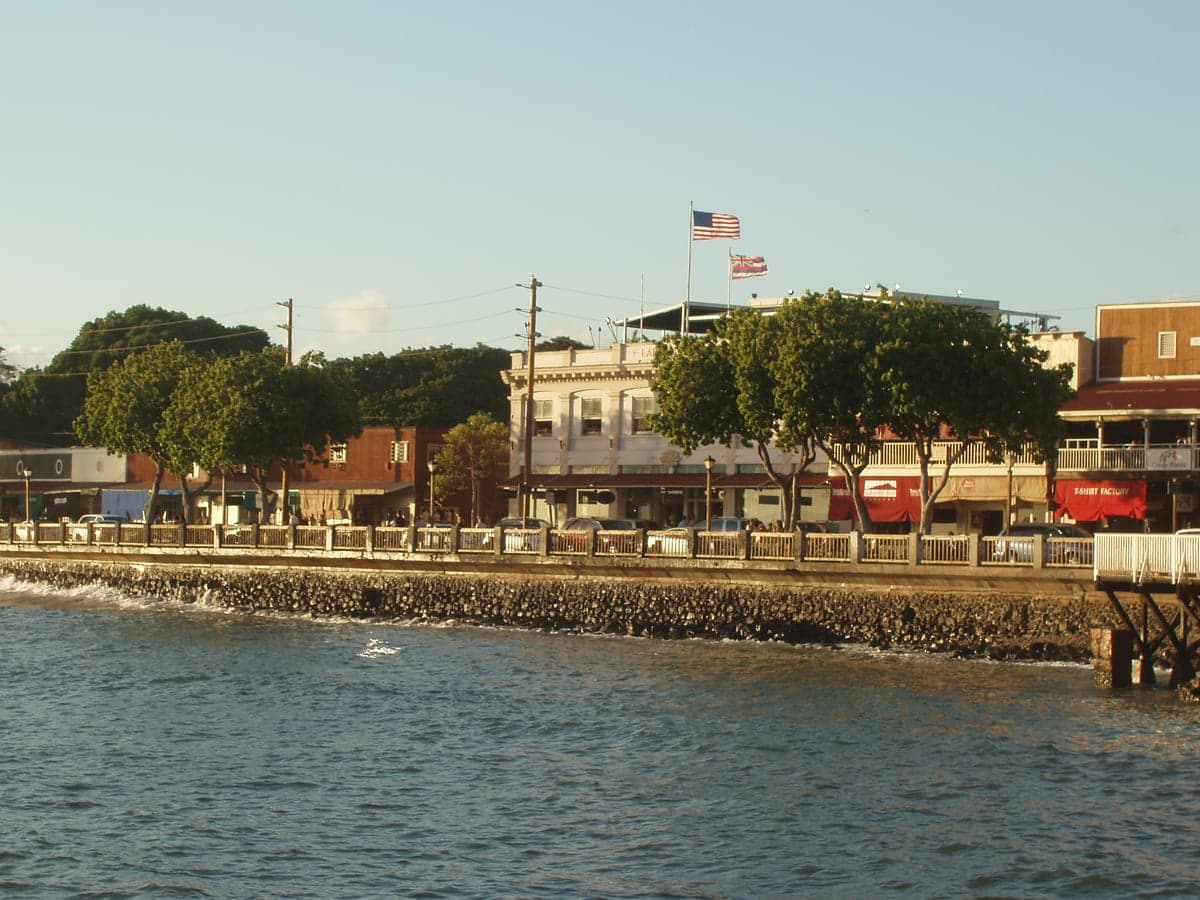
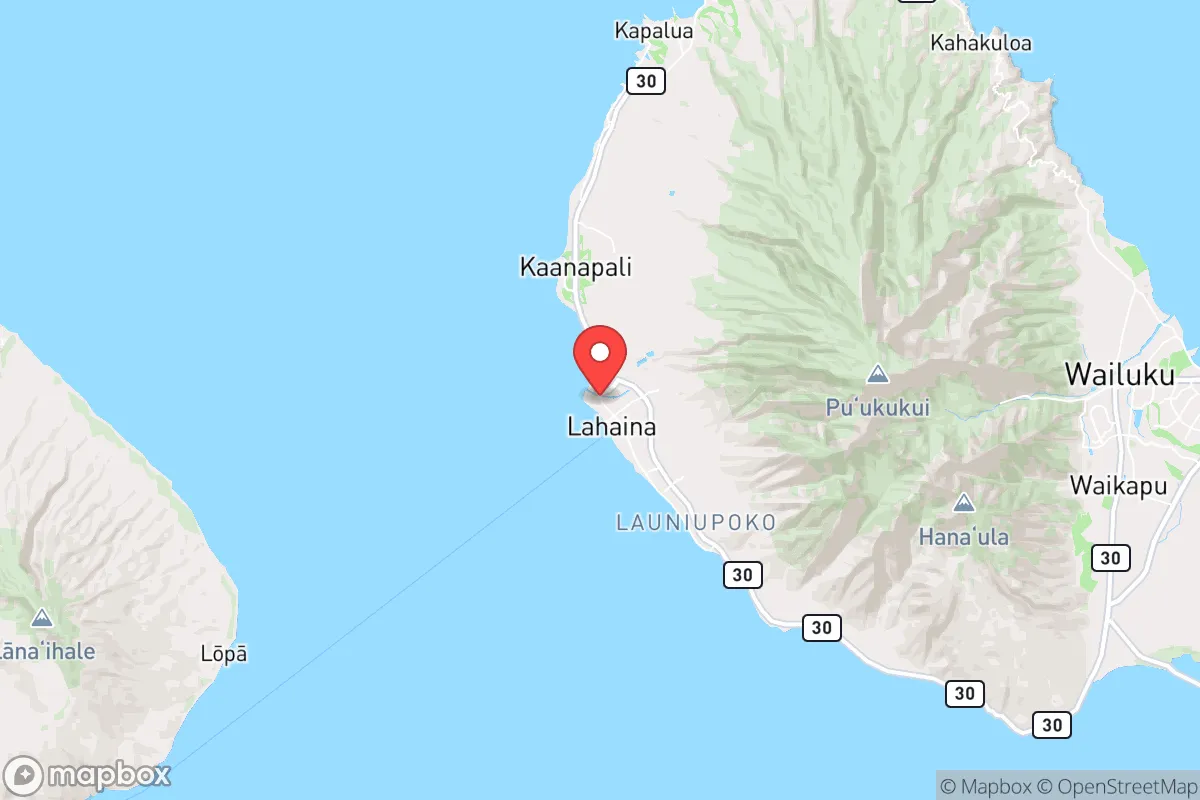
Photo: Wikipedia
Demographics of Lahaina, HI
Affluence Level in Lahaina, HI
A middle-class area roughly in line with national averages across income, home values, education, and employment.
People of Lahaina, HI
Today, Lahaina’s 11,423 residents form a community shaped by centuries of migration, with a distinctive identity rooted in Native Hawaiian heritage and a strong East/Southeast Asian presence. The population is notably diverse: 38.2% Asian (primarily Filipino and Japanese), 25.0% White, 11.3% Hispanic, and 0.4% Black, with 13.3% foreign-born. The town retains a dense, walkable core along Front Street, but the 2023 wildfire has profoundly disrupted its social fabric, scattering many long-term residents and raising urgent questions about who will return and rebuild.
How the city was settled and grew
Lahaina’s human history begins with Native Hawaiians, who established ahupuaʻa (land divisions) along the coast and in the fertile valleys of the West Maui Mountains. The area now known as Mala (north of town) and Puʻunoa (the point near the harbor) were early fishing and farming villages. After King Kamehameha I made Lahaina the capital of the Hawaiian Kingdom in 1820, the population swelled with Hawaiian chiefs, missionaries, and traders. The whaling boom (1840s–1860s) brought American, European, and Chinese sailors, who settled near the waterfront in what is now Lahaina Harbor and Banyan Tree Park area. The sugar plantation era (1870s–1940s) drove the next major wave: Japanese, Filipino, Chinese, and Portuguese laborers arrived to work the fields of Pioneer Mill Company, whose mill and camps stretched from Kahoma (the mill village) to Puʻukoliʻi (the plantation housing area). These groups built distinct ethnic neighborhoods—Japanese in Kahoma Camp, Filipinos in Puʻukoliʻi—that remained cohesive through the mid-20th century. By 1950, Lahaina was a plantation town of about 4,000, with Native Hawaiians and Asian immigrants forming the majority.
Modern era (post-1965)
The 1965 Immigration and Nationality Act opened the door for new Asian immigration, but Lahaina’s post-1965 story is more about domestic in-migration and tourism-driven growth. The decline of sugar (Pioneer Mill closed in 1999) and the rise of resort development along Kāʻanapali Beach (just north of town) transformed the economy. From the 1970s through the 2000s, Lahaina attracted mainland retirees, second-home buyers, and service workers from other Pacific islands and the Philippines. The Kahoma Village area, originally plantation housing, became a mixed-income neighborhood of Filipino, Hawaiian, and newer Hispanic families. Lahainaʻs historic district (Front Street to Wainee Street) gentrified with upscale shops and condos, drawing White professionals and wealthy part-time residents. The Asian share (38.2%) remains high, but it is aging: many Japanese-American families have lived here for three or four generations, while newer Filipino immigrants (often in service jobs) have kept the foreign-born share at 13.3%. The Hispanic population (11.3%) is a more recent arrival, concentrated in service roles in Kāʻanapali and Lahainaʻs lower-income rentals. The Native Hawaiian population, while not separately counted in the supplied data, remains a culturally central but economically strained group, many living in Puʻunoa and Mala.
The future
The August 2023 wildfire destroyed over 2,200 structures, displacing an estimated 4,500–5,000 residents—roughly 40% of Lahaina’s population. The immediate future is uncertain: many Native Hawaiian and Filipino families who lived in Kahoma and Puʻukoliʻi have not returned, while wealthier outsiders and investors are purchasing damaged lots. The demographic trajectory before the fire was toward a more homogenized, service-economy population, with younger families leaving due to high housing costs (median home price >$1 million) and older White retirees moving in. Post-fire, the trend may accelerate: rebuilding costs and insurance hurdles will likely push out lower-income renters (many of them Filipino and Hispanic), while government aid and insurance payouts may attract mainland buyers. The East/Southeast Asian community, deeply rooted in Lahaina’s history, faces an existential threat—if rebuilding is slow, the town could lose its multi-generational character. The college-educated share (24.5%) is below the national average, reflecting a workforce concentrated in hospitality and retail, not professional services.
For someone moving in now, Lahaina is a community in transition—its future depends on whether rebuilding policies prioritize displaced residents or new investors. The town’s historic diversity is at risk of being replaced by a wealthier, whiter population, but strong cultural institutions (the Lahaina Restoration Foundation, local Hawaiian homesteads) may anchor the old character. A move here means joining a place that is literally rebuilding its identity, with all the uncertainty and opportunity that entails.

* Values derived from national, state, county, city and local statistics and may differ in a specific area. Last updated: 2026-04-24T00:41:53.000Z
Narrative content on this page is AI-generated and may contain mistakes. Verify any details that matter before acting on them.
ReloMaps may earn a commission from affiliate links at no extra cost to you.

