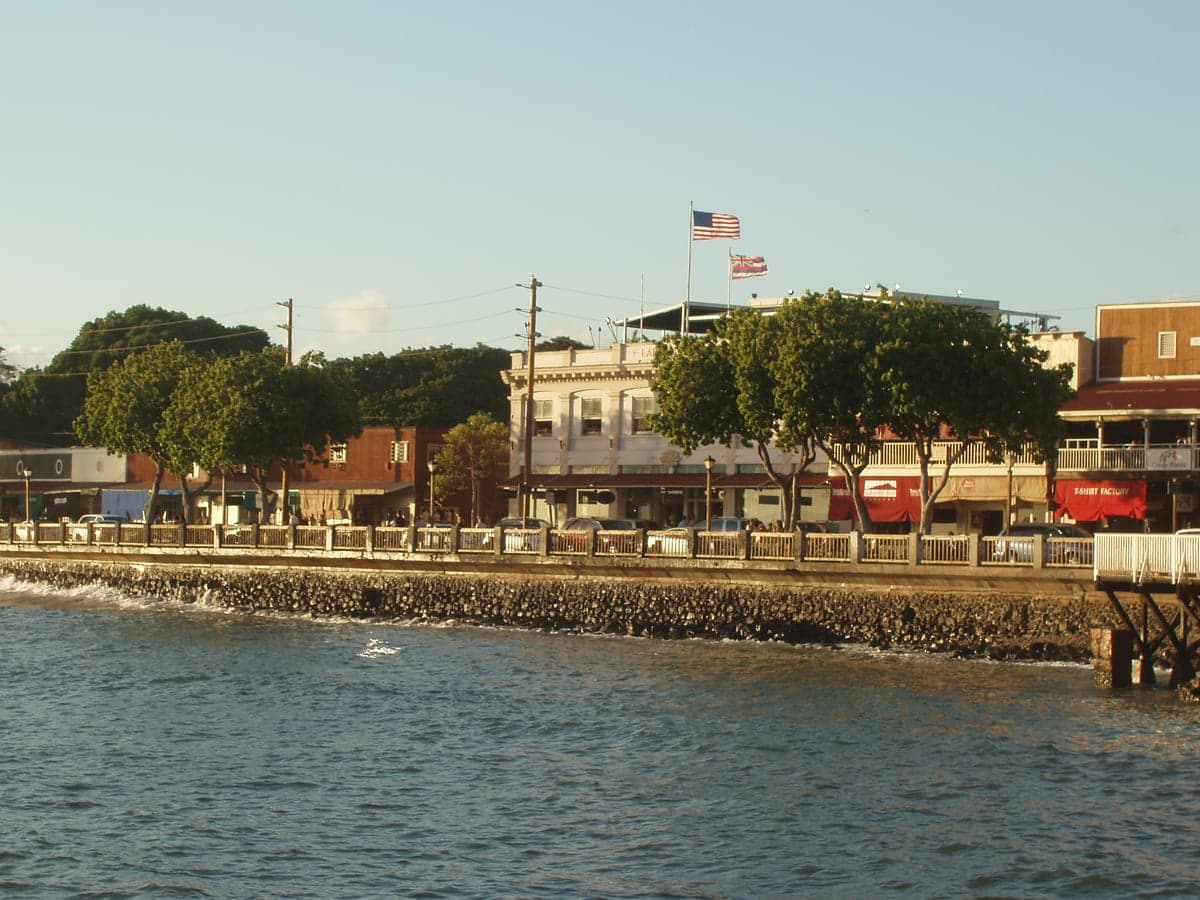
Photo: Wikipedia
Strategic Assessment of Lahaina, HI
Strong survivability profile. Good buffer from population centers, with manageable environmental and tactical risks.
What does the Strategic Assessment tell us?
Our Strategic Assessment grades tactical survivability of an area. Major population centers, military targets, fallout zones, natural disasters, and border exposure all drive risk — lower exposure means a more defensible position in a crisis.
This is heavily inspired by Joel Skousen's Strategic Relocation book. Highly recommended you checkout the book ($)What does this tell us?
Our Strategic Assessment grades tactical survivability of an area. Major population centers, military targets, fallout zones, natural disasters, and border exposure all drive risk — lower exposure means a more defensible position in a crisis.
This is heavily inspired by Joel Skousen's Strategic Relocation book. Highly recommended you checkout the book ($)Strategic Pillars

Key Distances
Regional Safe Places
Below is our recommended "safe zones" in Hawaii and the surrounding area based on our strategic heuristics. For most people, it's unrealistic to live in a “safe zone” full-time due to work, family or other personal reasons. They tend to be more rural. However, many of these areas are perfect for second homes and retreat properties that double as a vacation home or even a short-term rental.

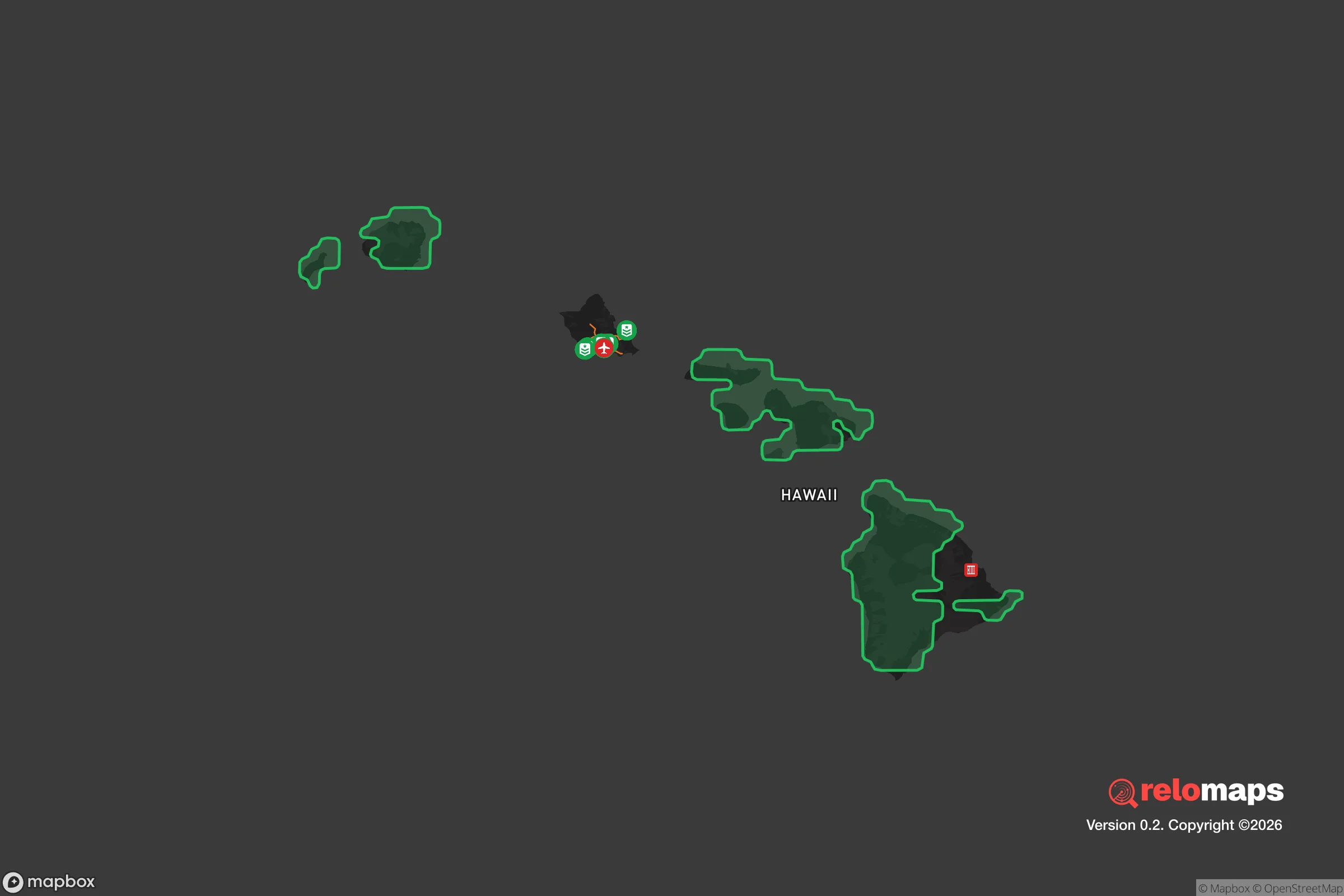


Important Note: For informational purposes only. This does not mean nothing bad ever happens in the green zones. Please use common sense. This is based on public data and modeled with AI. We tried to take a conservative approach but mistakes happen. We update this regularly as new information becomes available.
Solar Generator Recommendations
Backup power matters more here than in safer locations. We've picked three solar generators across budgets and capacity tiers — start with the budget unit if you only need a few essentials, or step up if you want to run a fridge and HVAC for days at a time.

Jackery Portable Power Station Explorer 300
Budget OptionPower on the Go: Weighing only 11 lbs, it's convenient to set up and store with book-sized foldable solar panels

BLUETTI Portable Power Station AC180
Designed for both indoor and outdoor scenarios, AC180 is highly capable as it has a robost capacity and continuous output power.

EF ECOFLOW DELTA Pro Ultra Power Station
Upgraded PickEcoFlow DELTA Pro Ultra is a whole-home energy system designed to grow with your family. Integrated with the Smart Home Panel 2, it scales to meet your evolving energy needs — keeping your home powered, intelligent, and secure through every stage of life.
We earn a commission, at no additional cost to you.
Strategic Assessment Analysis
Lahaina, on the west coast of Maui, presents a paradox for the strategic relocator: it is a place of profound natural beauty and deep historical roots, yet its recent history—specifically the catastrophic August 2023 wildfire that leveled much of the town—forces a brutally honest assessment of its viability as a long-term survival redoubt. For the conservative-minded prepper, the question isn't whether Lahaina is idyllic, but whether its geographic isolation and post-disaster rebuilding offer a net strategic advantage in a world of increasing instability, or if the risks inherent in its location and recent trauma outweigh the benefits. The answer, as with most things in Hawaii, is complicated, demanding a clear-eyed look at both the terrain and the new realities on the ground.
Geographic position and natural advantages for long-term security
Lahaina sits on the leeward side of Maui, a position that offers a distinct microclimate advantage: it is generally drier and sunnier than the windward (north and east) sides of the island. For a prepper, this means more predictable solar energy generation, less mold and structural decay, and a longer growing season for drought-tolerant crops like papaya, banana, and certain root vegetables. The town is flanked by the West Maui Mountains to the east, which act as a natural barrier to the prevailing trade winds and provide a rugged, defensible high-ground escape route if coastal conditions become untenable. The ocean to the west offers a potential avenue for resupply or evacuation via small craft, though this is a double-edged sword. The island's isolation—2,400 miles from the nearest continental landmass—is the ultimate natural barrier. In a scenario of widespread civil unrest or supply chain collapse on the mainland, Maui's distance alone provides a buffer that few locations in the lower 48 can match. The local population, while diverse, retains a strong sense of community and a "talk story" culture that can be leveraged for mutual aid networks, provided you integrate respectfully and avoid the transient tourist mentality.
Risks, exposures, and proximity to fallout-relevant landmarks
The 2023 fire was not a fluke; it was a direct consequence of the area's inherent vulnerabilities. Lahaina sits in a rain shadow, with invasive grasses that dry out and become tinder in the summer months. The town's layout, with narrow historic streets and dense construction, proved a death trap when winds from a passing hurricane fanned flames. For the strategic relocator, this is the primary exposure: wildfire risk is extreme and likely to recur as climate patterns shift. Furthermore, the town is directly in the path of Pacific storms and tsunamis. A tsunami generated by a major earthquake in the Aleutian Trench or off Japan would have little warning time for Lahaina's low-lying coastal areas. Proximity to "fallout-relevant landmarks" is a mixed bag. Maui is not near any major military or nuclear target on the mainland, but it is within the Pacific missile range. Hawaii's strategic importance to the U.S. military means that in a major conflict—particularly with a nuclear-armed power like China or North Korea—the islands are a first-tier target. Pearl Harbor and Hickam Air Force Base on Oahu are obvious, but Maui's own Kahului Airport and the Pacific Missile Range Facility on Kauai are secondary assets. Lahaina's location on the west side of Maui places it somewhat farther from the most likely impact zones on Oahu, but it is not safe. The post-fire rebuilding process has also created a new vulnerability: a massive influx of out-of-state capital and FEMA bureaucracy is reshaping the town, potentially displacing the local population and creating a transient, less resilient community. A relocator arriving now will find a town in flux, with housing scarce and prices astronomical, which strains the ability to build a stable, long-term network.
Practical resilience for a relocator: food, water, energy, and defensibility
Self-sufficiency on Maui is a serious challenge. Over 85% of Hawaii's food is imported, and Maui is no exception. The fertile central valley (Kula, Makawao) is a 45-minute drive from Lahaina over a winding mountain road that is vulnerable to landslides and traffic. For a prepper, this means you cannot rely on local grocery stores for more than a few days of supplies. You must establish your own food sources: a home garden, a network of local farmers (many of whom are small-scale and operate on trust), and a plan for protein (fishing, hunting wild pigs in the mountains, or raising chickens). Water is another critical issue. West Maui is dry; the main source is the Iao aquifer, which is already stressed by over-pumping and saltwater intrusion. Rainwater catchment is viable but requires significant investment in tanks and filtration. Energy independence is more achievable: solar with battery storage is standard on Maui, and the island's grid is notoriously fragile. A well-sized system can keep a fridge, lights, and communications running indefinitely. Defensibility is the weakest point. Lahaina is a coastal town with multiple access points from the highway and the ocean. It is not a defensible position in the classic sense. The best strategy is to live on the outskirts, on the slopes of the West Maui Mountains, where you have a view of the town and the ocean, and a route into the high country. The local police force is small and was overwhelmed during the fire; in a larger crisis, you cannot rely on them for protection. Your security will depend on your neighbors and your own situational awareness.
The overall strategic picture for Lahaina is one of high risk and high potential reward, but only for the relocator who is prepared to treat it as a serious, long-term project. The island's isolation is its greatest asset, but that same isolation makes it a logistical nightmare for anyone who shows up without a plan. The 2023 fire was a wake-up call that exposed the fragility of the entire system—water, power, transportation, and governance. For a conservative-minded individual or family looking to escape the chaos of the mainland, Lahaina offers a chance to build a life in a place where community still matters, where the pace is slower, and where the threats are natural rather than political. But you must come with capital, skills, and a willingness to adapt. You cannot buy your way into security here; you have to earn it through relationships and hard work. If you are looking for a bug-out location that is easy to reach and easy to leave, look elsewhere. If you are looking for a place to dig in, build a resilient homestead, and ride out the coming storms—both literal and figurative—Lahaina, in its post-fire rebirth, might just be the most interesting strategic bet in the Pacific. Just keep your eyes on the ridgeline and a full tank of water in the truck.

* Values derived from national, state, county, city and local statistics and may differ in a specific area. Last updated: 2026-04-24T00:41:53.000Z
Narrative content on this page is AI-generated and may contain mistakes. Verify any details that matter before acting on them.
ReloMaps may earn a commission from affiliate links at no extra cost to you.

