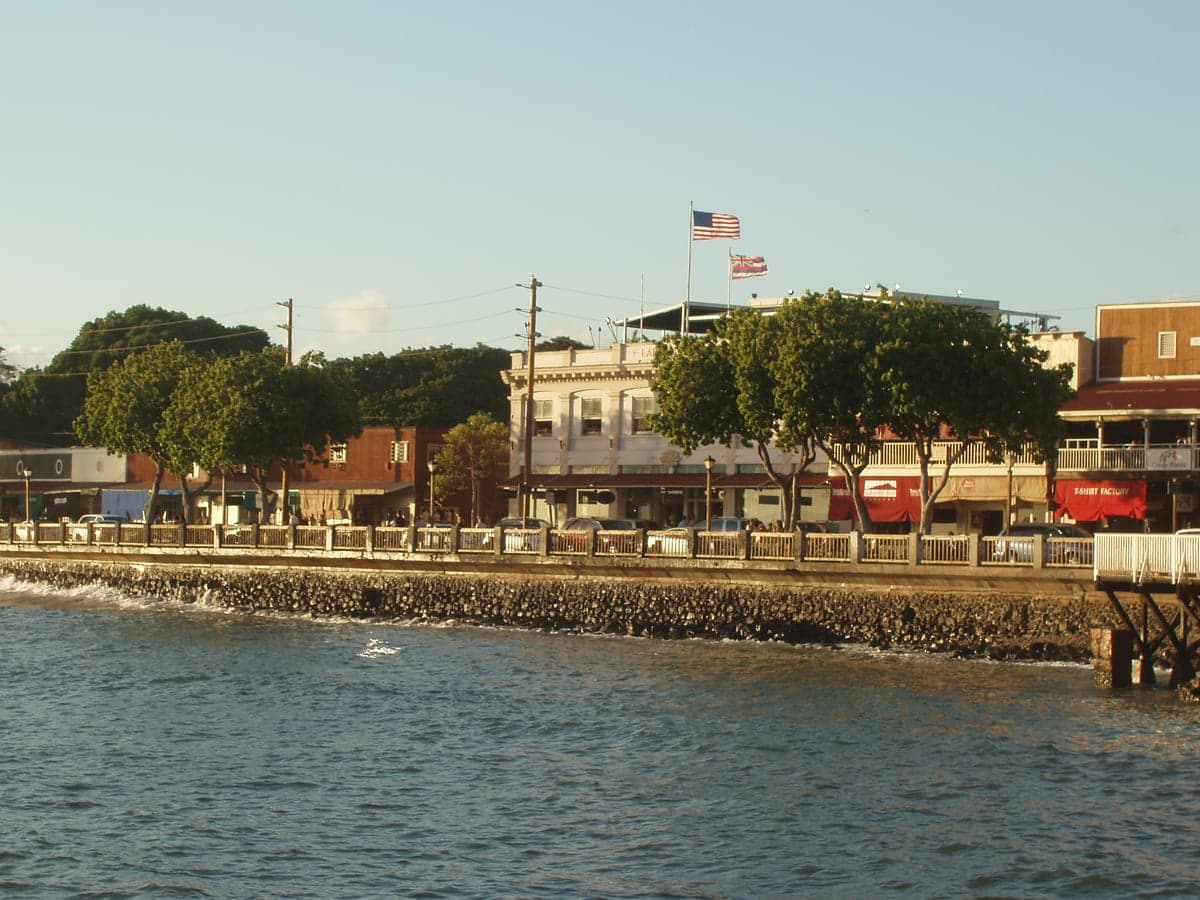
Photo: Wikipedia
Political ClimatePolitical Climate in Lahaina, HI
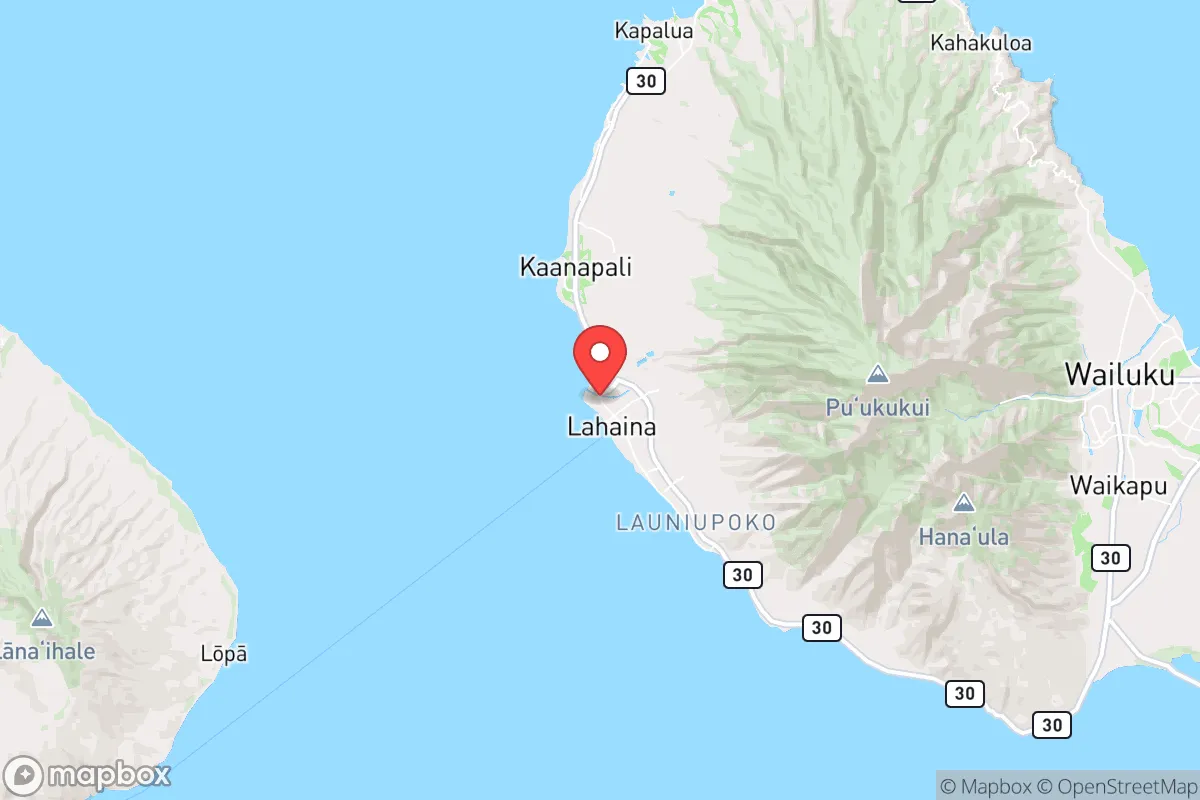
District shown is the primary district for this city’s centroid. Cities may span multiple districts.
Local Political AnalysisPolitical Analysis of Lahaina, HI
Look, I’ve lived in Lahaina long enough to remember when local politics was mostly about potholes and fishing rights, not the kind of culture-war stuff you see now. The Cook PVI rating of D+12 tells you the official story—this place leans heavily Democratic, and it’s been trending that way for a while. But if you’ve been here through the 2023 wildfire and the rebuilding that followed, you know the real political climate is a lot more complicated. The old guard of moderate Democrats who cared about property rights and local business is being pushed aside by a younger, more progressive crowd that’s all-in on state-level mandates, from housing regulations to environmental rules that feel less like common sense and more like government overreach. The trajectory is clear: Lahaina is moving left, and fast, and not everyone on the west side of Maui is happy about it.
How it compares
Drive 20 minutes up the coast to Kaanapali or Kapalua, and you’ll find a different vibe—those resort communities tend to vote more moderately, with a mix of retirees and second-home owners who are wary of the same progressive policies that are reshaping Lahaina. Head inland to Wailuku or Kahului, and you’re in the heart of Maui’s Democratic machine, where union influence and government jobs drive the politics. The real contrast, though, is with the upcountry towns like Kula or Makawao. Those areas still have a strong libertarian streak—folks who value their privacy, their guns, and their ability to build a shed without a permit from three different county boards. Lahaina used to have more of that independent spirit, but the post-fire recovery has brought a flood of new regulations and outside money that’s shifting the balance. If you’re looking for a place on Maui that still pushes back against the progressive tide, you’re better off looking at the north shore or the rural east side.
What this means for residents
For the average Lahaina resident, the political shift hits you in the wallet and in your daily freedoms. Property taxes are climbing as the county tries to fund new affordable housing mandates and climate adaptation plans—plans that sound good on paper but often mean more red tape for anyone trying to fix up their own home or start a small business. The local government has gotten more aggressive about short-term rental restrictions, which was supposed to help with housing but has mostly just squeezed out families who relied on that income. And if you value your Second Amendment rights, well, Hawaii’s already one of the toughest states in the country, and Lahaina’s local leaders are pushing for even stricter rules on carrying and storage. The progressive agenda here isn’t just about social issues—it’s about a growing list of things you can’t do without a permit, a fee, or a public hearing. For longtime residents, it feels like the government is getting more involved in your life every year, and not in a way that makes things better.
One thing that sets Lahaina apart culturally is the strong Native Hawaiian influence on local policy. That’s not necessarily a bad thing—it’s part of what makes this place unique—but it does mean that land use and development decisions often prioritize cultural preservation over individual property rights. You’ll see it in the way the county handles shoreline access, building heights, and even what kind of plants you can put in your yard. The push for “sustainability” and “resilience” after the fire has given local officials even more cover to impose rules that feel like they’re micromanaging your choices. If you’re someone who believes that freedom means being left alone to live your life, Lahaina’s political climate is going to feel increasingly suffocating. The old aloha spirit of mutual respect and personal responsibility is still here, but it’s being buried under a pile of new regulations and progressive good intentions. Keep an eye on the next few election cycles—if the trend continues, the Lahaina you knew might not be recognizable in ten years.

State Political ClimatePolitical Climate in Hawaii
State Political AnalysisPolitical Environment in the State
Hawaii has been a one-party Democratic state for decades, with Democrats holding supermajorities in both legislative chambers and every statewide office since 1962. The state’s overall partisan lean is roughly D+20 in presidential elections, but that masks a significant shift: the coalition that once balanced progressive social policy with moderate economic pragmatism has moved sharply left since 2010, driven by an influx of mainland transplants and a native-born population increasingly disillusioned with the status quo. For a conservative considering relocation, the state’s political climate is a mix of high taxes, heavy regulation, and cultural friction that feels more like a blue state on steroids than the “Aloha Spirit” you might expect.
Urban vs. rural divide
The political map of Hawaii is starkly divided between the urban core of Honolulu on Oahu and the rest of the state. Honolulu County, home to about 70% of the state’s population, votes reliably Democratic—often by margins of 60-70% in federal races. The city itself is a progressive stronghold, with high-density neighborhoods like Waikiki and Kakaako driving the leftward tilt. In contrast, the neighbor islands—Hawaii Island (the Big Island), Maui, and Kauai—are more mixed. The Big Island’s rural districts, particularly around Hilo and Puna, lean Democratic but with a libertarian streak; many residents there are off-grid homesteaders who vote blue but bristle at government overreach. Maui County is split: the tourist-heavy west side (Lahaina, Kaanapali) votes progressive, while the upcountry areas (Kula, Makawao) lean more conservative. Kauai is the most moderate of the major islands, with a strong agricultural base that tends toward fiscal conservatism. The only reliably Republican precincts are in the wealthy, gated communities of Kahala and Hawaii Loa Ridge on Oahu, and in the rural ranching areas of Waimea on the Big Island. No county has flipped red in a presidential election since 1984, but the rural-urban divide is widening as Honolulu’s progressive policies—like the 2022 ban on short-term rentals—push conservative-leaning residents to the neighbor islands.
Policy environment
Hawaii’s policy environment is a cautionary tale for conservatives. The state has the highest combined state and local tax burden in the nation, with a 4.4% income tax on the lowest bracket and a top rate of 11%—kicking in at just $200,000 for single filers. Property taxes are relatively low (about 0.3% of assessed value), but the state’s General Excise Tax (GET) of 4.5% applies to nearly everything, including rent and business-to-business transactions, effectively acting as a hidden sales tax. Education policy is dominated by a single statewide school district—the only one in the country—which means no local control over curriculum or funding. The state’s Department of Education has pushed progressive sex education and critical race theory-inspired materials since 2020, with parental opt-out rights limited. Healthcare is heavily regulated; the state mandates employer-provided insurance for anyone working 20+ hours a week, and the 2023 “Hawaii Health Connector” expansion added a public option that competes with private plans. Election laws are among the most progressive: universal mail-in voting was made permanent in 2021, same-day registration is allowed, and there are no voter ID requirements—a setup that has drawn criticism for potential fraud, though no major scandals have emerged. The state also has a “sanctuary” law (Act 2, 2019) that limits cooperation with federal immigration enforcement, and a 2023 law (Act 123) that prohibits landlords from asking about citizenship status.
Trajectory & freedom
Hawaii is becoming less free by almost any measure, and the trend has accelerated since 2020. On gun rights, the state is one of the most restrictive in the nation: a 2022 law (Act 216) banned “ghost guns” and raised the minimum age for rifle purchases to 21, while a 2023 law (Act 52) required a permit to purchase any firearm—even long guns—and mandated a 14-day waiting period. The state also has a “red flag” law (Act 1, 2021) that allows family members or police to petition for temporary seizure of firearms without a criminal conviction. On parental rights, the 2023 “Hawaii Gender-Affirming Care Act” (Act 2) prohibits medical providers from refusing treatment based on a parent’s religious or moral objections, effectively overriding parental consent for minors seeking hormone therapy or puberty blockers. Medical autonomy took a hit in 2021 when the state mandated COVID-19 vaccines for all public employees and schoolchildren—a mandate that remains in effect despite the end of the federal emergency. Property rights are under constant pressure: the 2022 “Affordable Housing Act” (Act 246) allows counties to override local zoning to approve high-density developments, and the 2023 “Land Use Commission Reform” (Act 47) made it easier for the state to condemn private land for “public benefit” projects. Taxation is the biggest freedom killer: the state’s income tax brackets are not indexed for inflation, meaning every year more of your income is pushed into higher brackets—a stealth tax hike that has no end in sight.
Civil unrest & political movements
Hawaii has a long history of civil unrest, but the flashpoints have shifted. The most visible movement is the sovereignty/independence movement, which has gained traction since the 2023 “Mauna Kea” protests over the Thirty Meter Telescope. While not explicitly conservative, the movement taps into anti-government sentiment and has drawn support from both native Hawaiian activists and libertarian-leaning mainland transplants. On the left, the “Hawaii Youth Climate Strike” and “Housing for All” groups have organized large protests in Honolulu, pushing for rent control and a ban on vacation rentals—policies that have already passed in some form. On the right, the “Hawaii Republican Party” is a shell of its former self, but grassroots groups like “Hawaii Family Forum” (anti-abortion, pro-parental rights) and “Hawaii Gun Owners” have seen membership surge since 2020. The 2022 election integrity controversy—where the state’s mail-in ballot system saw a 15% drop in ballot rejection rates compared to 2020—has fueled distrust, though no major lawsuits succeeded. Immigration politics are muted because of Hawaii’s geographic isolation, but the sanctuary law has created tension with federal authorities; in 2023, ICE was denied access to a Honolulu jail to interview a detainee, leading to a public standoff. The most visible flashpoint for a new resident would be the constant protests at the state capitol—often over housing or environmental issues—and the pervasive sense that the government is more interested in social engineering than practical problem-solving.
Projection
Over the next 5-10 years, Hawaii is likely to become more progressive and less free. Demographic trends are working against conservatives: the native-born population is aging and shrinking, while the in-migration from mainland states—particularly California, Oregon, and Washington—is bringing younger, more progressive voters. The 2023 state census estimated that 40% of new residents since 2020 came from California alone. These newcomers tend to settle in Honolulu and the tourist corridors, reinforcing the urban-left tilt. The Republican Party has no realistic path to statewide power; the best they can hope for is to hold a few legislative seats in rural districts. The real wildcard is the sovereignty movement: if it gains enough traction to push for a constitutional convention or a UN decolonization petition, it could reshape the political landscape entirely—but that’s a 15-20 year timeline at best. For now, expect more tax hikes (a 2024 bill to add a 2% surcharge on incomes over $1 million is already in committee), more gun restrictions (a “safe storage” mandate is likely by 2026), and more erosion of parental rights (a bill to remove the “conscience clause” for doctors is pending). The housing crisis will force some deregulation—the 2023 “Ohana Zones” law allows accessory dwelling units by right—but it won’t be enough to offset the cost of living.
Bottom line for a new resident: If you’re a conservative moving to Hawaii, you’re moving into a blue state that is getting bluer. The trade-off is the natural beauty and a slower pace of life, but you’ll pay for it with high taxes, limited gun rights, and a government that doesn’t share your values. The neighbor islands—especially the Big Island’s Puna district and Kauai’s north shore—offer the most political breathing room, but even there, the state’s long arm reaches. If you can afford the cost and tolerate the politics, Hawaii can still be a great place to live—just don’t expect the freedom you’d find in a red state like Texas or Florida. The Aloha Spirit is real, but it comes with a price tag and a ballot box you’ll likely lose.
* Values derived from national, state, county, city and local statistics and may differ in a specific area. Last updated: 2026-04-24T00:41:53.000Z
Narrative content on this page is AI-generated and may contain mistakes. Verify any details that matter before acting on them.
ReloMaps may earn a commission from affiliate links at no extra cost to you.

