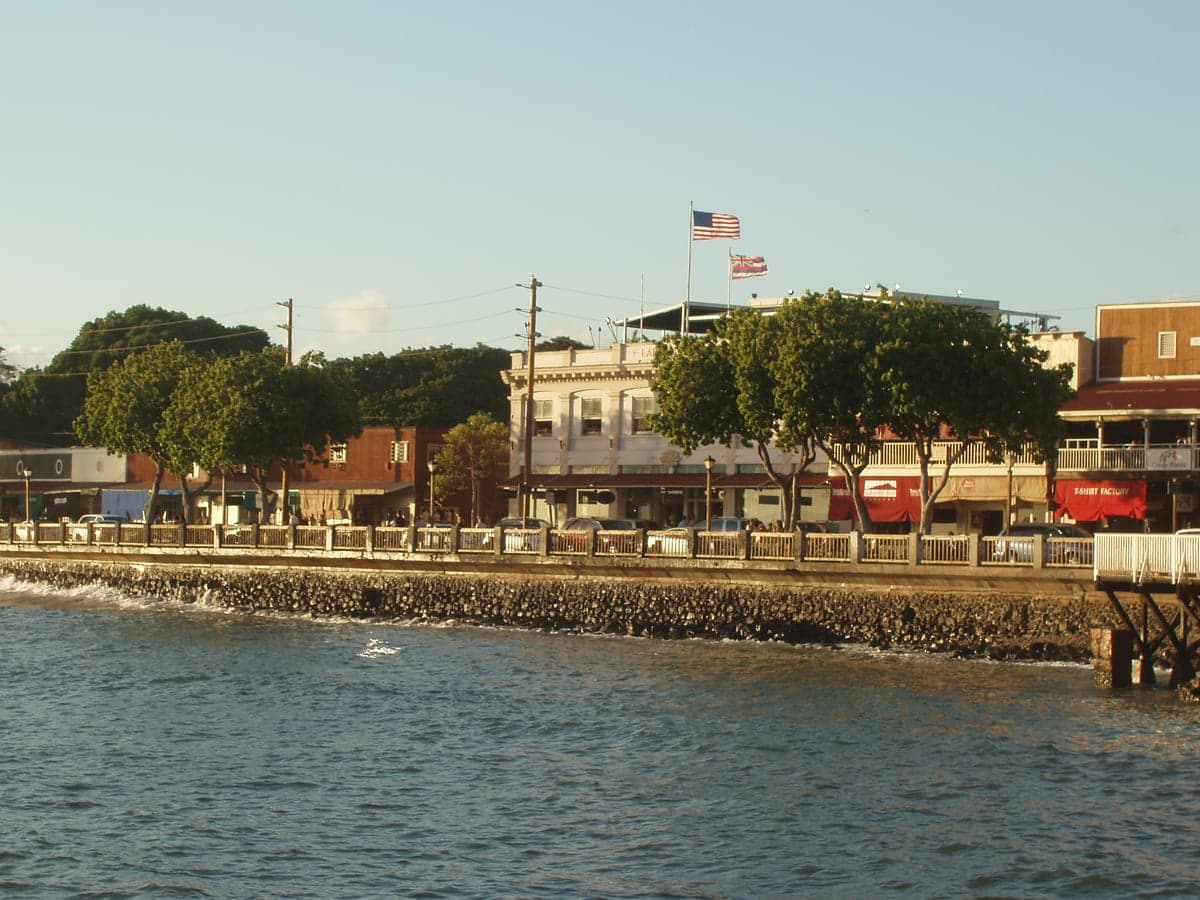
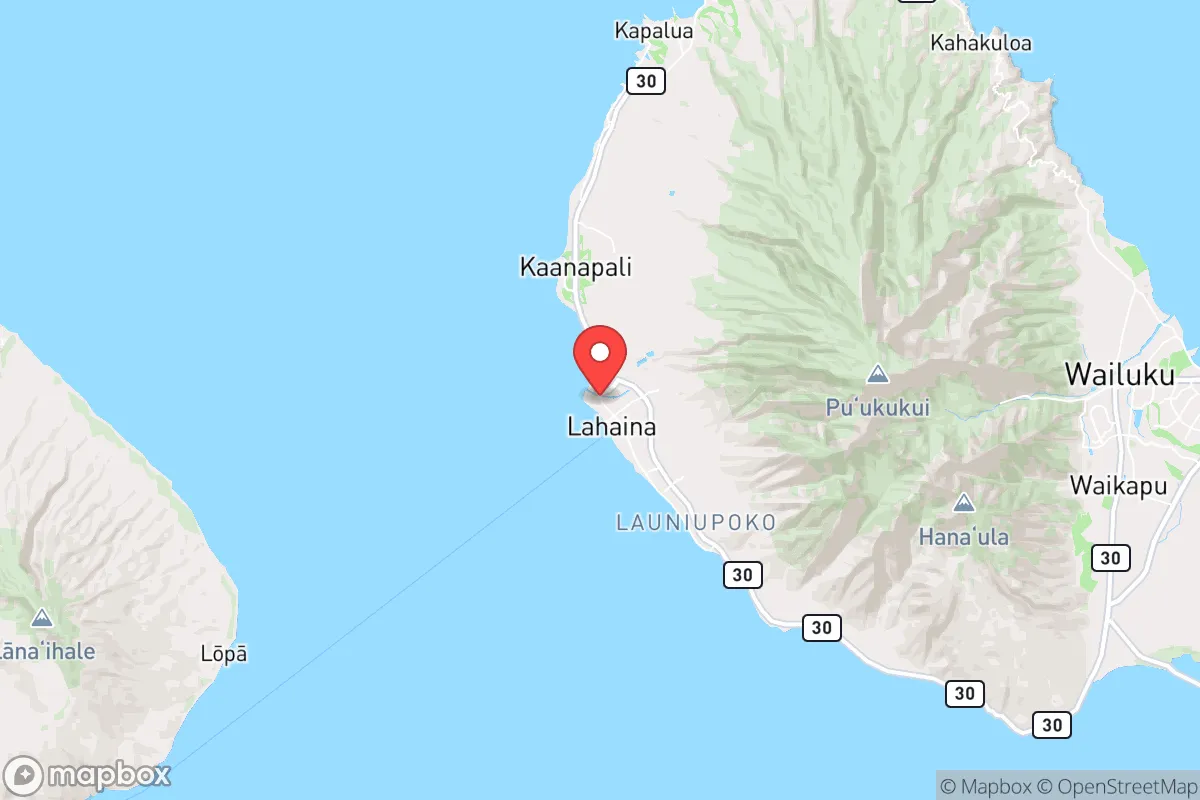
Photo: Wikipedia
Personal Sovereignty in Lahaina, HI
Moderate friction. Expect trade-offs in some aspect of personal liberty and independence.
What does Personal Sovereignty tell us?
Personal Sovereignty measures your capacity for self-reliance and independence with minimal government friction. Higher scores mean fewer barriers between you and the way you want to live... but it assumes you have the space you need and good neighbors.
What does this tell us?
Personal Sovereignty measures your capacity for self-reliance and independence with minimal government friction. Higher scores mean fewer barriers between you and the way you want to live... but it assumes you have the space you need and good neighbors.
State Policy
Energy independence: Importer (2% of energy produced in-state)
Personal Liberty
Homesteading

Personal Liberty Analysis
Lahaina, Hawaii, presents a uniquely challenging environment for personal sovereignty, where the state’s centralized governance and geographic isolation combine to create a system that heavily restricts individual autonomy. For the conservative-leaning prepper or survivalist, the island of Maui—and Lahaina specifically—operates under a framework that prioritizes collective regulation over personal freedom, from tax policy to self-defense rights. While the natural beauty and tight-knit community can feel appealing, the reality is that state-level control over nearly every aspect of daily life makes this one of the least sovereign locations in the United States for those seeking to minimize government overreach.
Tax burden and regulatory posture: How Hawaii’s state control limits financial freedom
Hawaii’s tax burden is among the highest in the nation, and Lahaina residents feel this acutely. The state imposes a progressive income tax with rates topping out at 11%, and a general excise tax (GET) of 4% that applies to nearly all goods and services—including groceries and rent—effectively functioning as a hidden sales tax. Property taxes are comparatively low (around 0.28% of assessed value for owner-occupied homes), but this is a double-edged sword: the state compensates for low property taxes by aggressively taxing income and consumption, leaving little room for financial self-reliance. Regulatory posture is equally stifling. Hawaii’s land use commission and county zoning boards exert near-total control over development, meaning any attempt to build a workshop, expand a home, or start a small business requires navigating a labyrinth of permits and environmental reviews. For the prepper looking to establish a self-sufficient homestead or side hustle, this regulatory thicket is a major obstacle—government permission is required for almost every move, and the process can take years.
Self-defense and gun law specifics: What the Second Amendment looks like in Lahaina
For those prioritizing the right to self-defense, Lahaina—and Hawaii as a whole—is a hostile environment. The state has some of the strictest gun laws in the country, effectively treating firearm ownership as a heavily regulated privilege rather than a constitutional right. To purchase a handgun, residents must obtain a permit from the county police chief, which requires a background check, a waiting period, and a demonstrated “proper reason” (historically interpreted as a specific threat, not general self-defense). Long guns are slightly easier to acquire but still require registration and a permit. Open carry is prohibited, and concealed carry was essentially banned until the 2022 Supreme Court decision in NYSRPA v. Bruen forced Hawaii to issue permits—though the state has since implemented a “may-issue” system that remains restrictive, with high fees, training requirements, and discretionary denial by police. Magazine capacity is limited to 10 rounds, and assault weapons (broadly defined) are banned. For the survivalist, this means building a meaningful arsenal for worst-case scenarios is nearly impossible. The practical takeaway: if self-defense is a core value, Lahaina is a place where the government holds the upper hand, and your ability to protect your family is legally constrained.
Self-reliance and homesteading viability: Lot sizes, zoning, and off-grid feasibility
Self-reliance in Lahaina faces severe structural barriers. The median lot size in Lahaina proper is small—often under 5,000 square feet—and zoning is predominantly residential, with strict prohibitions on agricultural use, livestock, and commercial activity in most neighborhoods. Off-grid living is effectively illegal: Hawaii law requires all dwellings to be connected to the county water and sewer systems where available, and solar panels must be grid-tied with utility approval. Rainwater catchment is allowed in some rural areas, but Lahaina’s urban core is not one of them. The county’s building code also mandates that homes meet specific structural standards (e.g., hurricane straps, impact-resistant windows) that make DIY construction costly and permit-dependent. For the prepper wanting to raise chickens, grow a substantial garden, or store emergency supplies, the regulatory environment is discouraging. Even composting toilets are subject to health department approval. The one bright spot: the climate allows year-round growing, but without land or legal clearance, that advantage is theoretical. In short, Lahaina is designed for dependence on centralized infrastructure, not for the homesteader seeking autonomy.
Personal liberties: Parental rights, medical autonomy, speech, and property
Personal liberties in Lahaina are constrained by state-level mandates that prioritize collective health and safety over individual choice. Parental rights are notably limited: Hawaii has mandatory vaccination requirements for school attendance (with narrow religious exemptions), and during the COVID-19 pandemic, the state imposed some of the longest-running mask and travel restrictions in the country, overriding parental decisions about children’s health. Medical autonomy is similarly restricted—Hawaii’s medical board aggressively prosecutes alternative practitioners, and access to off-label treatments is limited. Freedom of speech is constitutionally protected, but the state’s strong public nuisance laws and strict defamation statutes can chill political expression, particularly on social media. Property rights are the weakest link: Hawaii’s land use system gives the government broad power to restrict what you can do with your land, including via historic preservation overlays in Lahaina (which burned in the 2023 wildfires, but the regulatory framework remains). Eminent domain is used sparingly, but the state’s rent control and eviction moratoriums during emergencies show a willingness to override property owner decisions. For the conservative individual, this adds up to an environment where the government routinely asserts authority over family, health, and land decisions.
Overall, Lahaina ranks low on the personal sovereignty scale compared to mainland alternatives. While the climate and community can be appealing, the state’s high taxes, restrictive gun laws, anti-homesteading zoning, and broad government control over personal liberties make it a poor fit for those seeking maximum autonomy. For the prepper or survivalist, the trade-off is stark: you gain a beautiful island setting but lose the ability to meaningfully prepare, defend, and self-govern. If sovereignty is your priority, states like Alaska, Idaho, or Montana offer far more room to operate without the heavy hand of state oversight.

* Values derived from national, state, county, city and local statistics and may differ in a specific area. Last updated: 2026-04-24T00:41:53.000Z
Narrative content on this page is AI-generated and may contain mistakes. Verify any details that matter before acting on them.
ReloMaps may earn a commission from affiliate links at no extra cost to you.

