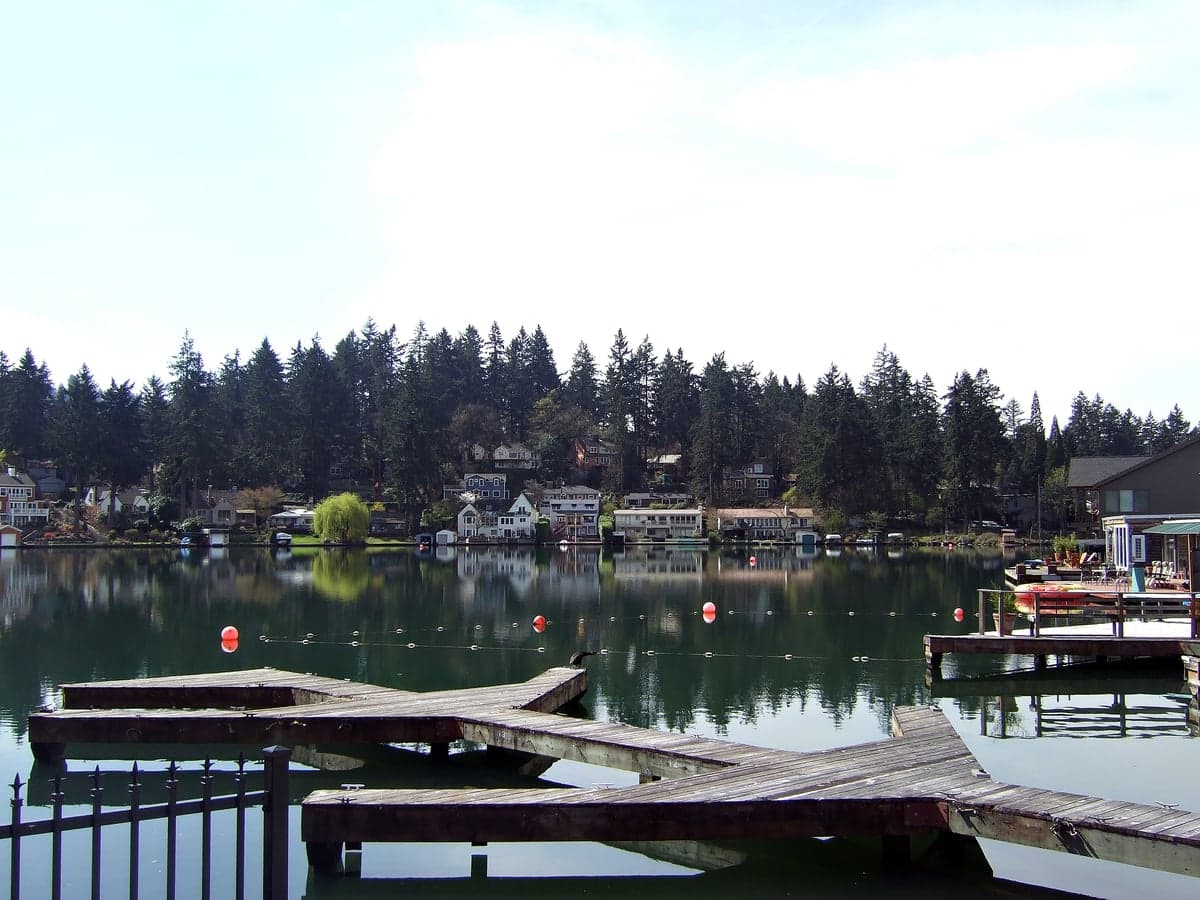
Photo: Wikipedia
Strategic Assessment of Lake Oswego, OR
Multiple tactical vulnerabilities. Population density, target proximity, or disaster risk are likely compounding. A retreat property and exit planning is required.
What does the Strategic Assessment tell us?
Our Strategic Assessment grades tactical survivability of an area. Major population centers, military targets, fallout zones, natural disasters, and border exposure all drive risk — lower exposure means a more defensible position in a crisis.
This is heavily inspired by Joel Skousen's Strategic Relocation book. Highly recommended you checkout the book ($)What does this tell us?
Our Strategic Assessment grades tactical survivability of an area. Major population centers, military targets, fallout zones, natural disasters, and border exposure all drive risk — lower exposure means a more defensible position in a crisis.
This is heavily inspired by Joel Skousen's Strategic Relocation book. Highly recommended you checkout the book ($)Strategic Pillars

Key Distances
Regional Safe Places
Below is our recommended "safe zones" in Oregon and the surrounding area based on our strategic heuristics. For most people, it's unrealistic to live in a “safe zone” full-time due to work, family or other personal reasons. They tend to be more rural. However, many of these areas are perfect for second homes and retreat properties that double as a vacation home or even a short-term rental.


Important Note: For informational purposes only. This does not mean nothing bad ever happens in the green zones. Please use common sense. This is based on public data and modeled with AI. We tried to take a conservative approach but mistakes happen. We update this regularly as new information becomes available.
Solar Generator Recommendations
Backup power matters more here than in safer locations. We've picked three solar generators across budgets and capacity tiers — start with the budget unit if you only need a few essentials, or step up if you want to run a fridge and HVAC for days at a time.

Jackery Portable Power Station Explorer 300
Budget OptionPower on the Go: Weighing only 11 lbs, it's convenient to set up and store with book-sized foldable solar panels

BLUETTI Portable Power Station AC180
Designed for both indoor and outdoor scenarios, AC180 is highly capable as it has a robost capacity and continuous output power.

EF ECOFLOW DELTA Pro Ultra Power Station
Upgraded PickEcoFlow DELTA Pro Ultra is a whole-home energy system designed to grow with your family. Integrated with the Smart Home Panel 2, it scales to meet your evolving energy needs — keeping your home powered, intelligent, and secure through every stage of life.
We earn a commission, at no additional cost to you.
Strategic Assessment Analysis
Lake Oswego, Oregon, presents a complex strategic picture for the conservative prepper or survivalist. Its immediate advantages—a defensible geography, a strong local economy, and a relatively insulated community—are directly counterbalanced by its proximity to Portland, a major urban center that represents a significant risk vector for civil unrest, supply chain collapse, and fallout from a mass casualty event. For the relocator prioritizing long-term resilience, Lake Oswego is not a standalone survival redoubt but rather a high-functioning suburban node that demands a clear-eyed assessment of its vulnerabilities and a robust personal preparedness plan.
Geographic position and natural defensive advantages
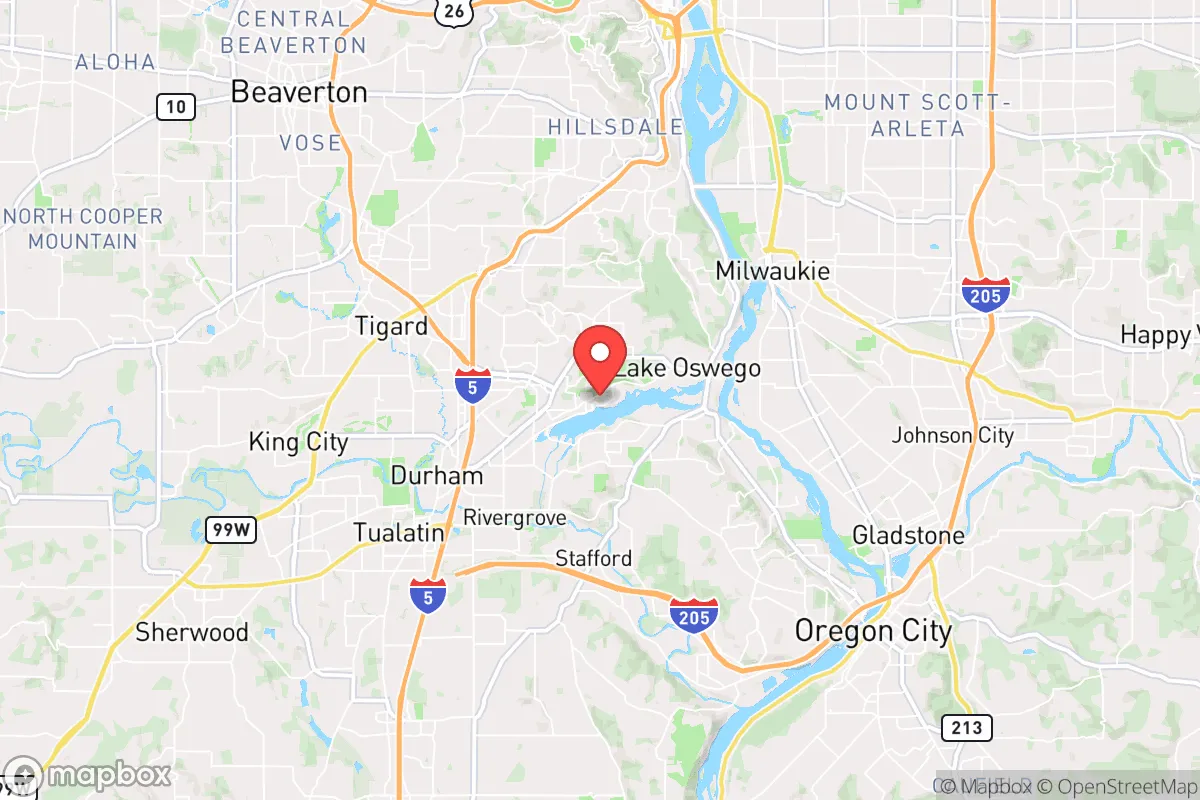
Lake Oswego sits on the west bank of the Willamette River, approximately 7 miles south of downtown Portland. Its terrain is hilly and heavily wooded, with the city itself built around the 405-acre Oswego Lake. This topography offers a natural defensive layer: the hills provide elevated vantage points, and the lake creates a physical barrier that complicates direct approach from certain directions. The city is also flanked by the Tualatin River to the south and the Willamette to the east, further limiting easy access. For a relocator, this means that while you are not in a remote mountain compound, you are in a location that is far more defensible than a flat, open suburb. The area's mature tree canopy also provides excellent concealment and natural cover, which is a non-trivial advantage in a grid-down or civil unrest scenario. The local geography also supports a moderate microclimate—cooler summers and milder winters than the surrounding valley floor—which can reduce heat-related stress on infrastructure and crops.
Risks, exposures, and proximity to fallout-relevant landmarks
The single greatest strategic liability of Lake Oswego is its proximity to Portland. In the event of a major civil unrest event, mass casualty incident, or a coordinated attack on urban infrastructure, Lake Oswego sits squarely within the blast radius of Portland's collapse. The city is directly connected to Portland via Highway 43 and Interstate 5, meaning that any mass exodus from the city will funnel through or near Lake Oswego. The Portland International Airport (PDX), a high-value target for any adversary, is only 15 miles away. Additionally, the Willamette River corridor is lined with industrial sites, including chemical storage and manufacturing facilities, that could become secondary hazards in a disaster. The nearby Portland Harbor Superfund site, a 10-mile stretch of contaminated riverbed, is a long-term environmental liability that could complicate water sourcing and local agriculture. For the prepper, this means that Lake Oswego is not a "bug-out" location—it is a "bug-in" location that requires a plan to seal off access points and manage the influx of displaced urban populations. The city's own infrastructure—power substations, water treatment plants, and fuel depots—are all within a few miles of the urban core and are vulnerable to cascading failures.
Practical resilience for a relocator: food, water, energy, and defensibility
For a single individual or family looking to establish a resilient household, Lake Oswego offers a mixed bag. The city's water supply comes from the Bull Run Watershed, which is a protected, high-quality source, but it is entirely dependent on a single pipeline system that runs through vulnerable terrain. A dedicated prepper should plan for at least two weeks of stored water per person, and ideally a rainwater catchment system, as the area receives about 45 inches of rain annually. Food resilience is moderate: the city has a strong farmers' market and several local farms within a 10-mile radius, but the soil in the immediate area is heavy clay and requires amendment for serious gardening. The local climate supports cool-season crops like kale, chard, and root vegetables, but a full year-round food supply would require greenhouse infrastructure. Energy resilience is a bright spot: the Pacific Northwest's hydroelectric grid is relatively stable, but a Cascadia Subduction Zone earthquake—a real, if low-probability, threat—would take down the entire grid for weeks. Solar is viable here, but expect only 3-4 peak sun hours in winter, so battery storage and a backup generator are essential. Defensibility is the strongest argument for Lake Oswego. The city's layout—winding roads, cul-de-sacs, and limited egress points—makes it naturally chokepoint-friendly. A small, organized neighborhood group could effectively control access to the main arteries. However, the city's high property values mean that many homes are close together, reducing standoff distance. A relocator should prioritize a home on a dead-end street with a clear line of sight to the approach, ideally with a basement or a reinforced safe room.
The overall strategic picture for Lake Oswego is one of calculated risk. It is not a wilderness retreat, nor is it a hardened bunker. It is a well-resourced, geographically advantaged suburb that offers a high baseline quality of life but demands a serious commitment to personal preparedness. For the conservative relocator who values community, local governance, and a strong tax base, Lake Oswego provides a platform for resilience—but only if you are willing to treat it as a base of operations, not a final destination. The key is to recognize that your safety here is not guaranteed by geography alone; it is earned through stockpiling, skill-building, and a clear-eyed plan for the day the city's fragile systems fail. If you are looking for a place to ride out the storm while still enjoying the benefits of a functioning modern economy, Lake Oswego can work. If you are looking for a place to disappear, look further east into the Cascades.

* Values derived from national, state, county, city and local statistics and may differ in a specific area. Last updated: 2026-05-01T13:34:10.000Z
Narrative content on this page is AI-generated and may contain mistakes. Verify any details that matter before acting on them.
ReloMaps may earn a commission from affiliate links at no extra cost to you.

