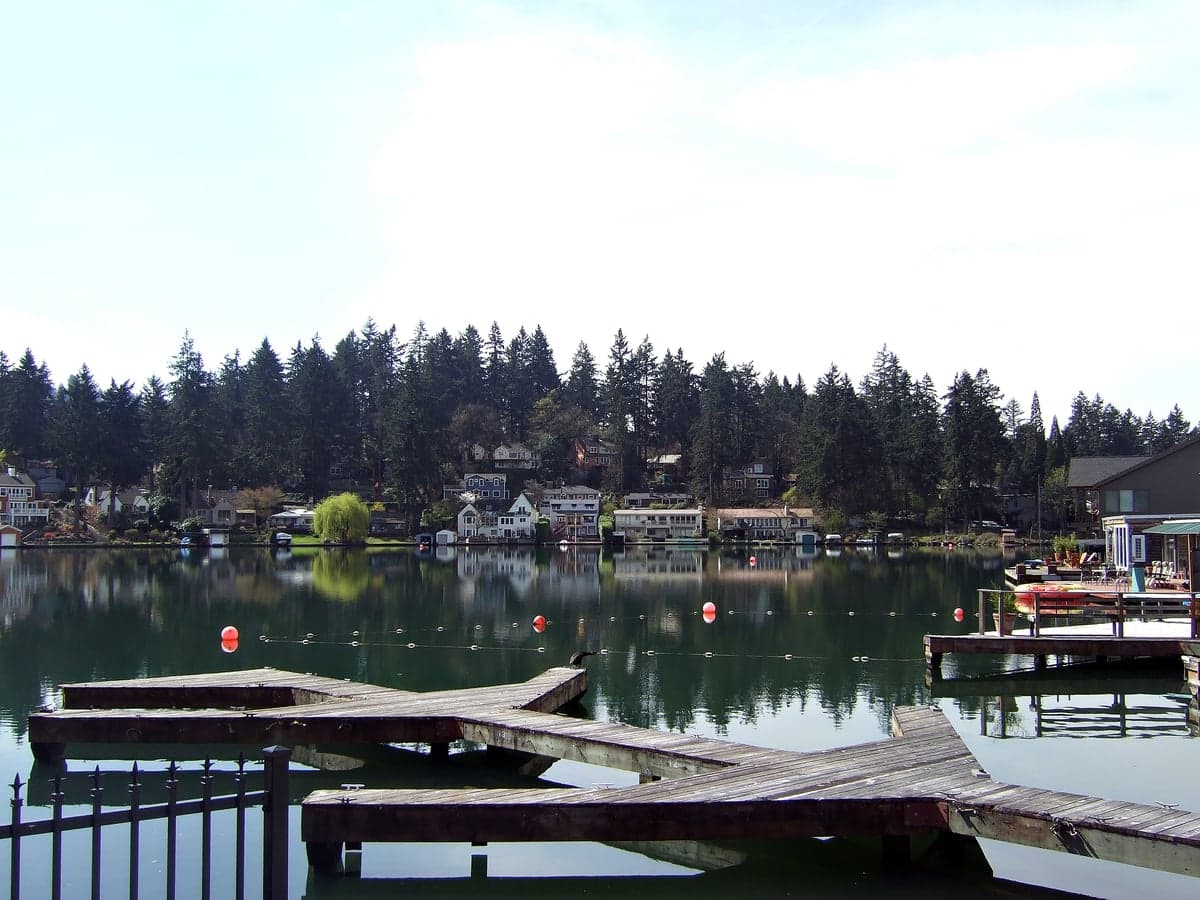
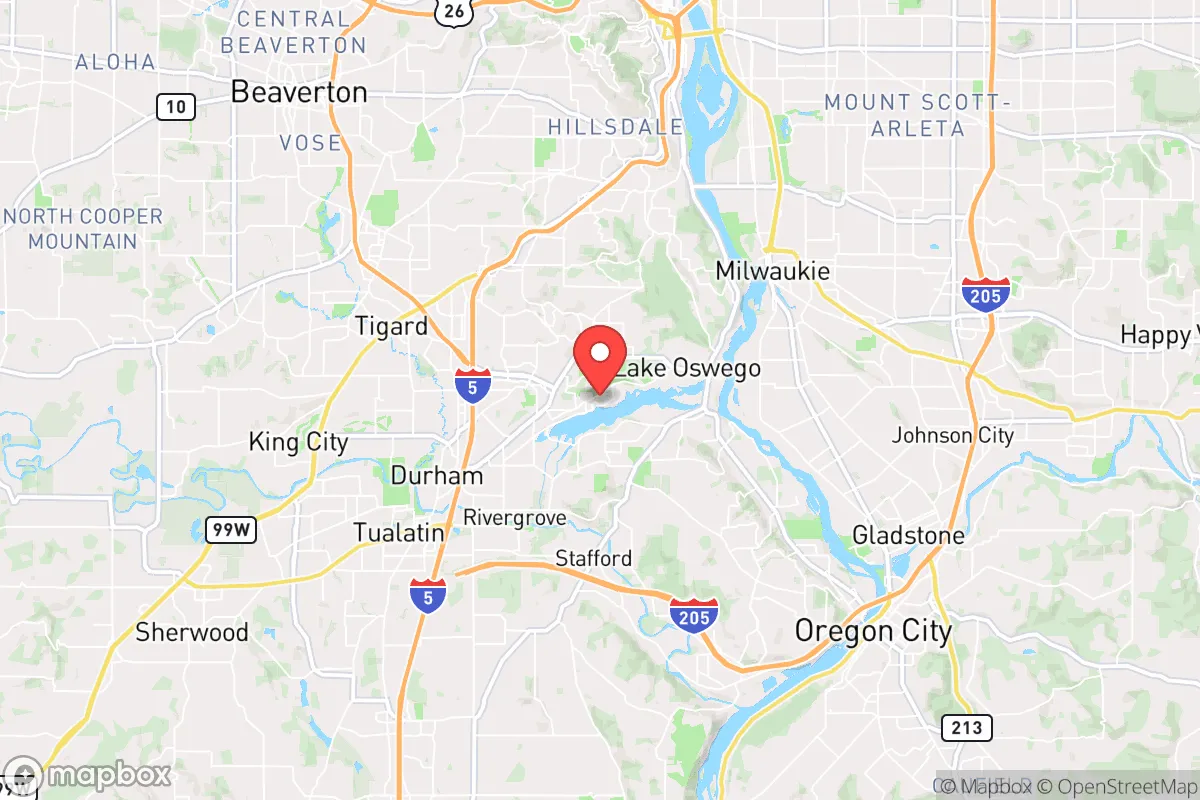
Photo: Wikipedia
Personal Sovereignty in Lake Oswego, OR
Viable for self-reliance. Generally workable, though some barriers may limit total independence.
What does Personal Sovereignty tell us?
Personal Sovereignty measures your capacity for self-reliance and independence with minimal government friction. Higher scores mean fewer barriers between you and the way you want to live... but it assumes you have the space you need and good neighbors.
What does this tell us?
Personal Sovereignty measures your capacity for self-reliance and independence with minimal government friction. Higher scores mean fewer barriers between you and the way you want to live... but it assumes you have the space you need and good neighbors.
State Policy
Energy independence: Importer (35% of energy produced in-state)
Personal Liberty
Homesteading

Personal Liberty Analysis
Lake Oswego, Oregon, presents a complex picture for those prioritizing personal sovereignty. While the city offers affluence and natural beauty, its location within a state with increasingly assertive governance means that individual autonomy is significantly constrained compared to more liberty-friendly states. For the survivalist or prepper, the trade-offs here are stark: you gain access to a high-quality, resource-rich environment, but you must navigate a dense web of state-level regulations, high taxes, and policies that often prioritize collective outcomes over individual rights. The local culture leans progressive, which can create social friction for those who openly value self-reliance and limited government, making this a location best suited for those who can maintain a low profile and operate within a restrictive legal framework.
Tax burden and regulatory posture in Lake Oswego
Oregon’s tax structure is a primary concern for anyone focused on financial sovereignty. The state has no sales tax, which is a benefit for large purchases, but it compensates with the third-highest combined state and local income tax burden in the nation. Marginal rates can exceed 9.9% at the state level, and Lake Oswego adds its own local income tax, pushing the effective rate even higher. Property taxes are also above average, with effective rates around 1.1% of assessed value, though Oregon’s Measure 50 caps annual increases, providing some predictability. For a prepper, this means a significant portion of income is diverted to state coffers, reducing capital for land, supplies, and self-sufficiency projects. The regulatory environment is equally burdensome. Oregon’s land use laws, particularly under Senate Bill 100, heavily restrict development and property use. In Lake Oswego, zoning is strict, with minimum lot sizes of 7,000 to 10,000 square feet in many residential areas, and accessory dwelling units (ADUs) are permitted but subject to extensive permitting and fees. Building codes are among the most rigorous in the nation, including strict energy efficiency mandates that can complicate off-grid or alternative construction. The state’s regulatory posture is one of active management, not laissez-faire, which directly impacts the ability to modify property for self-reliance without bureaucratic hurdles.
Self-defense rights and Oregon gun law specifics
For those prioritizing the right to keep and bear arms, Oregon has moved decisively away from a permissive stance. In 2022, voters passed Measure 114, which, though currently tied up in legal challenges, represents the state’s intent to require permit-to-purchase, a criminal background check, and a completed firearms safety course before acquiring a firearm. Magazine capacity is also restricted to 10 rounds under the measure. While a federal judge has blocked enforcement, the legal landscape remains volatile, and a future ruling could reinstate these restrictions. Lake Oswego itself is in Clackamas County, which has a more moderate sheriff’s office compared to Multnomah County, but local law enforcement generally supports state-level gun control. Open carry is legal without a permit, but it is practically discouraged in this affluent, liberal-leaning suburb. Concealed carry requires a permit, which is issued by the county sheriff and is generally shall-issue, but the process includes a background check and a fee. For the survivalist, this means that building a robust firearms inventory is legally precarious, and any future political shift could make it significantly harder. Stand-your-ground laws do not exist in Oregon; the state follows a duty-to-retreat standard in public spaces, which limits self-defense options. Home defense is protected under the Castle Doctrine, but only within the dwelling itself. Overall, Oregon’s gun laws are a major liability for those who view firearms as a cornerstone of personal sovereignty.
Self-reliance and homesteading viability in Lake Oswego
True homesteading within Lake Oswego city limits is largely impractical. The average lot size is around 0.25 acres, and zoning regulations prohibit most agricultural activities. Raising chickens is permitted with a permit and restrictions on roosters, but larger livestock like goats or pigs are banned. Off-grid living is effectively illegal; all homes must be connected to municipal water and sewer, and solar panels require permits and grid-tie agreements with Portland General Electric. Rainwater collection is allowed but limited to 1,000 gallons per property, and any system must not create a nuisance. For a prepper seeking self-sufficiency, the city’s infrastructure dependency is a critical vulnerability. However, the surrounding Clackamas County area offers more options. Properties in unincorporated areas, such as along the Clackamas River or near Oregon City, can have acreage (2-5 acres common) and allow for gardens, small orchards, and even limited livestock. The Willamette Valley’s fertile soil and moderate climate make it excellent for year-round food production, with a growing season of 180-200 days. But even there, state-level water rights laws and land use restrictions apply. For those serious about self-reliance, Lake Oswego itself is a staging ground, not a final destination; the real potential lies in acquiring rural land within a 30-60 minute drive, where you can build a more autonomous setup while maintaining access to the city’s resources.
Personal liberties: parental rights, medical autonomy, and property
Oregon’s legal framework is generally hostile to the conservative view of personal liberties. Parental rights are significantly curtailed by state law. Oregon has no parental notification requirement for minors seeking abortions, and the state allows minors to consent to certain medical treatments, including mental health care and substance abuse treatment, without parental knowledge. The Oregon Health Authority also mandates comprehensive sex education in public schools, which includes LGBTQ+ topics, and parents cannot opt their children out of these lessons. Medical autonomy is similarly constrained. Oregon has legalized physician-assisted suicide (Death with Dignity Act) and has broad vaccine mandates for school attendance, with only limited religious exemptions. During the COVID-19 pandemic, the state imposed some of the longest-lasting mask and vaccine mandates in the country, and Lake Oswego’s local government generally supported these measures. For the prepper, this means that medical decisions are heavily influenced by state policy, and the ability to refuse treatments or choose alternative therapies is limited. Property rights are also under pressure. Oregon’s land use system, as noted, restricts what you can do with your land, and the state has a strong history of environmental regulations that can impact property use, such as the Endangered Species Act protections for salmon and the Clean Water Act requirements for riparian zones. Free speech is protected under the First Amendment, but local social norms in Lake Oswego can be intolerant of conservative viewpoints, creating a chilling effect in public discourse. Overall, personal liberties in Oregon are subordinate to state authority, making it a challenging environment for those who prioritize individual sovereignty over collective governance.
In the broader context of the United States, Lake Oswego ranks low on the personal sovereignty scale. Compared to states like Idaho, Montana, or Texas, Oregon’s tax burden, gun laws, and regulatory posture are significantly more restrictive. For a survivalist or prepper, the area’s natural resources and community resilience are offset by a government that actively manages personal choices. The best strategy here is to treat Lake Oswego as a base of operations—a place to earn income and access amenities—while securing a secondary, more autonomous property in a less regulated county or state. If you must live in the Pacific Northwest, this city offers a high quality of life, but it demands constant vigilance and a willingness to operate within a system that does not prioritize your personal sovereignty. For those unwilling to compromise on liberty, the calculus is clear: look elsewhere.

* Values derived from national, state, county, city and local statistics and may differ in a specific area. Last updated: 2026-05-01T13:34:10.000Z
Narrative content on this page is AI-generated and may contain mistakes. Verify any details that matter before acting on them.
ReloMaps may earn a commission from affiliate links at no extra cost to you.

