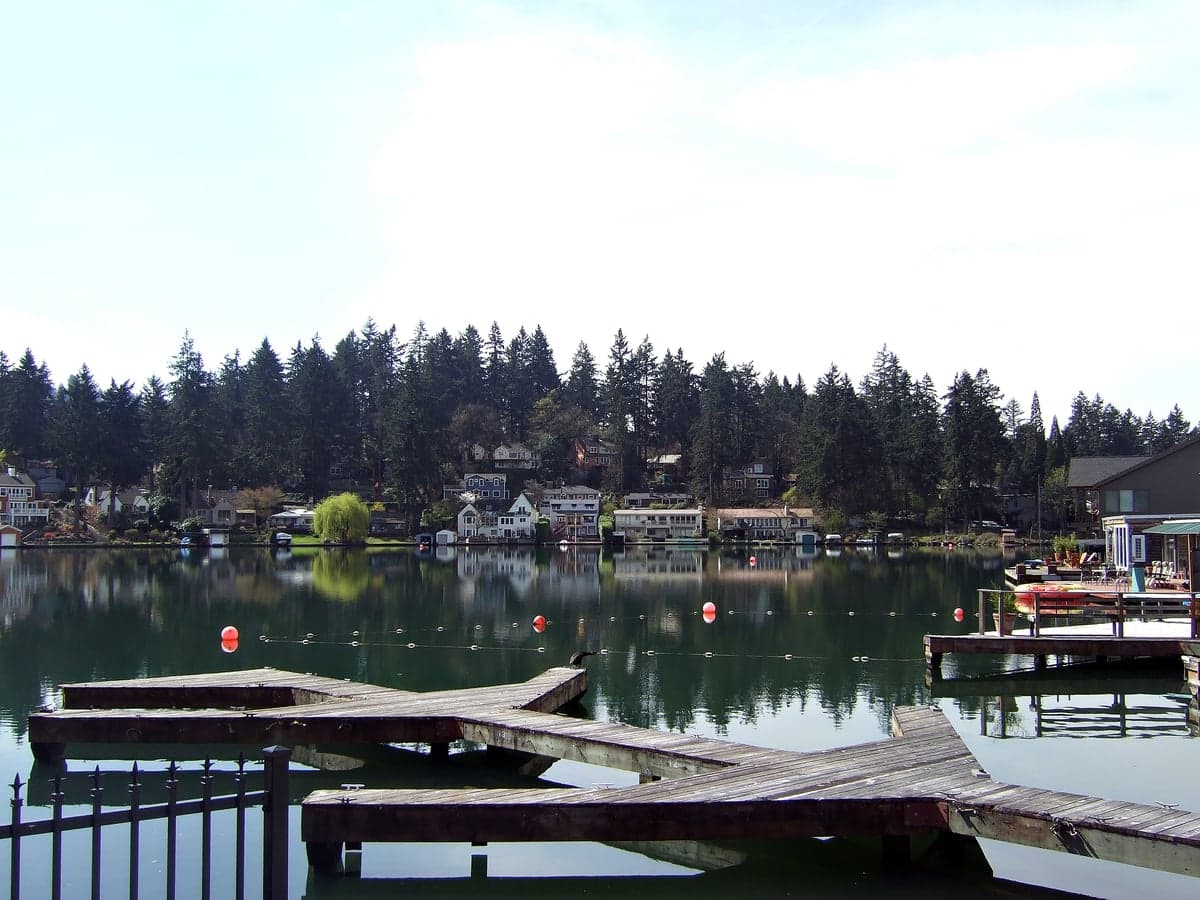
Photo: Wikipedia
Political ClimatePolitical Climate in Lake Oswego, OR
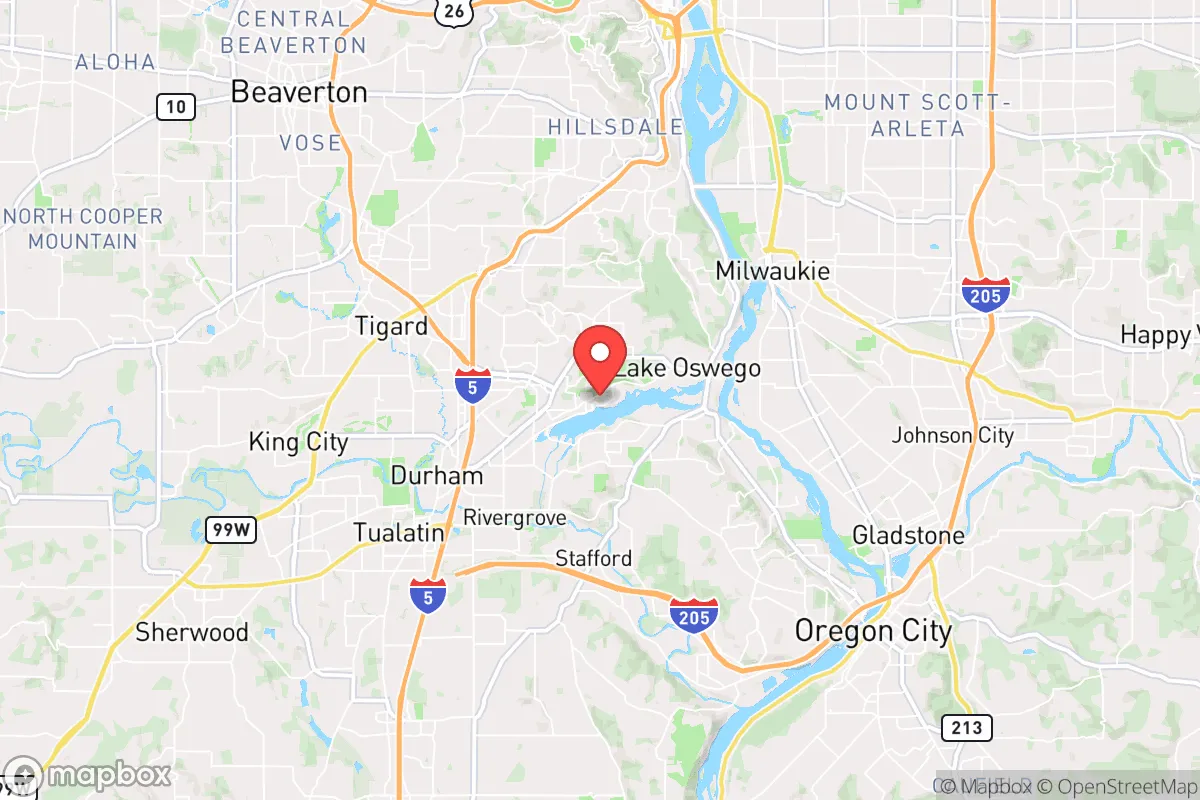
District shown is the primary district for this city’s centroid. Cities may span multiple districts.
Local Political AnalysisPolitical Analysis of Lake Oswego, OR
Lake Oswego has always had a bit of a split personality when it comes to politics, but the needle has been shifting left for a while now. The Cook PVI rating of D+4 tells you the basics—it leans Democratic—but that number doesn't capture the full story. Twenty years ago, this was a reliably Republican town, a place where fiscal conservatism and a live-and-let-live attitude were the norm. Today, you're seeing more progressive energy in city hall and the school board, and a lot of us who remember the old days are getting a little uneasy about where things are headed.
How it compares
To really get the political vibe here, you have to look at the neighbors. Drive ten minutes south to West Linn, and you'll find a place that's still more balanced, with a stronger conservative streak and less appetite for the kind of top-down social engineering you see in Portland. Head east across the river to Milwaukie, and you're in solidly blue territory, where progressive policies are embraced without much pushback. Lake Oswego sits right in the middle, but it's drifting toward the Milwaukie end of the spectrum. The contrast is sharpest when you compare us to places like Oregon City or Canby, where voters are far more skeptical of government overreach and tax hikes for social programs. Here, the local government has been increasingly willing to impose new regulations on housing, land use, and even how businesses operate, all in the name of equity and sustainability. It feels like the old common-sense approach—where you trusted people to make their own choices—is being replaced by a one-size-fits-all progressive agenda.
What this means for residents
For the average person living here, the political shift translates into real, everyday consequences. Property taxes are already high, and there's constant pressure to approve new bonds and levies for schools and city projects, often with little debate about long-term affordability. The city council has been pushing denser housing and transit-oriented development, which sounds good on paper but often means less parking, more traffic, and a loss of the quiet, suburban character that drew many of us here in the first place. There's also a growing sense that your personal freedoms—like how you use your property, what you can build, or even what you can say in public meetings—are being hemmed in by well-intentioned but overreaching regulations. The school district has adopted progressive curriculum changes that some parents feel prioritize ideology over academics, and there's been friction over library policies and student privacy. It's not a crisis, but it's a steady erosion of the kind of individual liberty that used to be a given around here.
One cultural distinction that stands out is the local attitude toward policing and public safety. While nearby Portland has seen dramatic defunding debates, Lake Oswego has mostly held the line, keeping a well-funded police force and maintaining a low crime rate. That's a bright spot for those of us who value order and personal security. But the pressure is mounting from activist groups to adopt "reimagining public safety" initiatives, and some city council candidates are running on those platforms. Long-term, I worry that if the progressive momentum continues, we'll lose that sense of safety and autonomy that makes Lake Oswego a great place to raise a family. The old guard is fading, and the new guard is pushing a vision that feels less about freedom and more about control. It's worth keeping an eye on the next few election cycles—they'll decide whether this town stays a balanced, independent-minded community or becomes just another Portland suburb in spirit as well as geography.

State Political ClimatePolitical Climate in Oregon
State Political AnalysisPolitical Environment in the State
Oregon has long been painted as a deep-blue state, but the reality is far more fractured. The Willamette Valley’s urban core—Portland, Eugene, and Salem—drives a progressive supermajority, while the rest of the state, from the high desert of Bend to the timber towns of Grants Pass, votes reliably red. Over the past 20 years, the state has lurched leftward on social and environmental policy, but a growing backlash in rural and suburban areas has created a political tug-of-war that any conservative considering a move here needs to understand. The 2022 gubernatorial race, won by Democrat Tina Kotek by just 3 points, showed the state is not a monolith—and the margins are tightening.
Urban vs. rural divide
The political map of Oregon is a tale of two states. Multnomah County (Portland) alone casts about 20% of the state’s vote and delivers a 40-point Democratic margin. Lane County (Eugene) and Washington County (suburban Portland) add another 30-point blue cushion. But drive 30 minutes east of Portland into Clackamas County, and you hit a purple-to-red belt that flipped for Trump in 2020 after backing Biden in 2016. The real conservative strongholds are in the south and east: Jackson County (Medford), Josephine County (Grants Pass), and the vast, sparsely populated counties of Lake, Harney, and Malheur vote 70-80% Republican. Bend, in Deschutes County, is the state’s most telling battleground—once a conservative ranching town, it’s now a purple city where transplants from California and Portland have pushed the county to a narrow Democratic lean in recent cycles. Meanwhile, Klamath Falls and Pendleton remain reliably red, anchored by timber, agriculture, and a strong gun culture.
Policy environment
Oregon’s policy landscape is a mixed bag for conservatives. On the plus side, there is no state sales tax—a major win for families and retirees. But property taxes are high, and the state income tax is among the steepest in the nation, topping out at 9.9% for top earners. The regulatory environment is heavy: Oregon’s land-use laws, passed in the 1970s, are the most restrictive in the West, limiting urban growth and making it hard to build new housing or expand businesses outside designated boundaries. Education policy is dominated by teachers’ unions; the state ranks near the bottom in high school graduation rates despite above-average per-pupil spending. Healthcare is heavily regulated, with a state-run insurance exchange and Medicaid expansion that covers nearly one in four Oregonians. Election laws are progressive: Oregon was the first state to vote entirely by mail (1998), and automatic voter registration is the norm. Ballot Measure 110, passed in 2020, decriminalized possession of small amounts of hard drugs—a policy that has been widely criticized for fueling public drug use and homelessness in Portland and Eugene. A 2024 rollback partially recriminalized possession, but the damage to public order is done.
Trajectory & freedom
Oregon’s trajectory on personal freedom is a cautionary tale. The state has expanded government control in several key areas. Gun rights have been under sustained assault: Measure 114, passed in 2022, requires a permit to purchase a firearm, bans magazines over 10 rounds, and mandates a waiting period. It’s currently tied up in court, but the intent is clear. Parental rights have eroded with the passage of the 2023 “Parents Bill of Rights” law, which actually weakened parental notification requirements for school health services—a move that sparked massive protests in Salem. Medical autonomy took a hit with the state’s strict COVID-19 vaccine mandates, which lasted longer than in most states and cost many healthcare workers their jobs. Property rights are constrained by the aforementioned land-use laws, which make it nearly impossible to build a home on rural land without years of permitting. On the other hand, Oregon has no “right-to-work” law, meaning union membership can be required for employment in certain sectors—a significant limit on economic freedom. The state’s sanctuary law (1987) prohibits local law enforcement from cooperating with federal immigration authorities, a policy that has become a flashpoint in border politics.
Civil unrest & political movements
Oregon has a long history of political activism, but the last five years have been particularly volatile. The 2020 Portland protests—part of the broader George Floyd demonstrations—turned into months-long nightly clashes between far-left antifa groups and federal law enforcement, with the city’s mayor and governor criticized for failing to restore order. The “Wall of Moms” and “Pacific Northwest Youth Liberation Front” became national symbols of the unrest. On the right, the “People’s Rights” network (led by Ammon Bundy, who famously occupied the Malheur National Wildlife Refuge in 2016) remains active in rural areas, organizing against vaccine mandates and land-use restrictions. The state’s sanctuary status has made it a destination for migrants, but also a target for conservative backlash: in 2023, a group of eastern Oregon counties voted to explore secession and join Idaho, citing cultural and political alienation from Portland. Election integrity is a live issue: Oregon’s all-mail system has been praised for turnout but criticized for lack of voter ID requirements, and a 2020 ballot harvesting scandal in a local race in Clackamas County fueled distrust. The 2022 gubernatorial race saw an unprecedented number of ballot drop box fires in Portland and Vancouver, Washington, though no evidence of widespread fraud emerged.
Projection
Over the next 5-10 years, Oregon’s political future hinges on demographics. The Portland metro area continues to grow, driven by tech and creative industries, which will reinforce the state’s blue lean. But the exodus from Portland to Bend, Medford, and even Boise is accelerating as families and retirees flee high taxes, crime, and homelessness. This out-migration is disproportionately conservative, meaning the rural vote may actually strengthen relative to the urban core. The 2024 election saw Trump improve his margins in every rural county compared to 2020, while Biden’s margins in Portland and Eugene shrank slightly. The “Greater Idaho” movement—which would redraw state lines to move 13 eastern Oregon counties into Idaho—has gained legislative traction in both states, though it faces long odds. If Measure 114 is upheld by the courts, expect a surge in gun-rights activism and legal challenges. The state’s housing crisis, driven by land-use restrictions, will likely force some deregulation, but don’t hold your breath—the environmental lobby is powerful. A new resident moving in now should expect a state that remains blue at the top but is increasingly divided, with a growing conservative counterweight in the south and east.
For a conservative considering Oregon, the bottom line is this: you can find a community that shares your values, but you’ll be fighting an uphill battle at the state level. The urban centers are hostile to gun rights, parental control, and economic freedom, while the rural areas offer a more traditional lifestyle but face constant pressure from Salem. If you’re looking for a place where your vote will matter, Bend, Medford, or even the Portland suburbs of Oregon City and Sandy offer a better balance than the deep-blue core. But be prepared for high taxes, heavy regulation, and a political climate that feels like a perpetual tug-of-war. Oregon is beautiful, but it’s not a free state—and it’s not getting freer anytime soon.
* Values derived from national, state, county, city and local statistics and may differ in a specific area. Last updated: 2026-05-01T13:34:10.000Z
Narrative content on this page is AI-generated and may contain mistakes. Verify any details that matter before acting on them.
ReloMaps may earn a commission from affiliate links at no extra cost to you.

