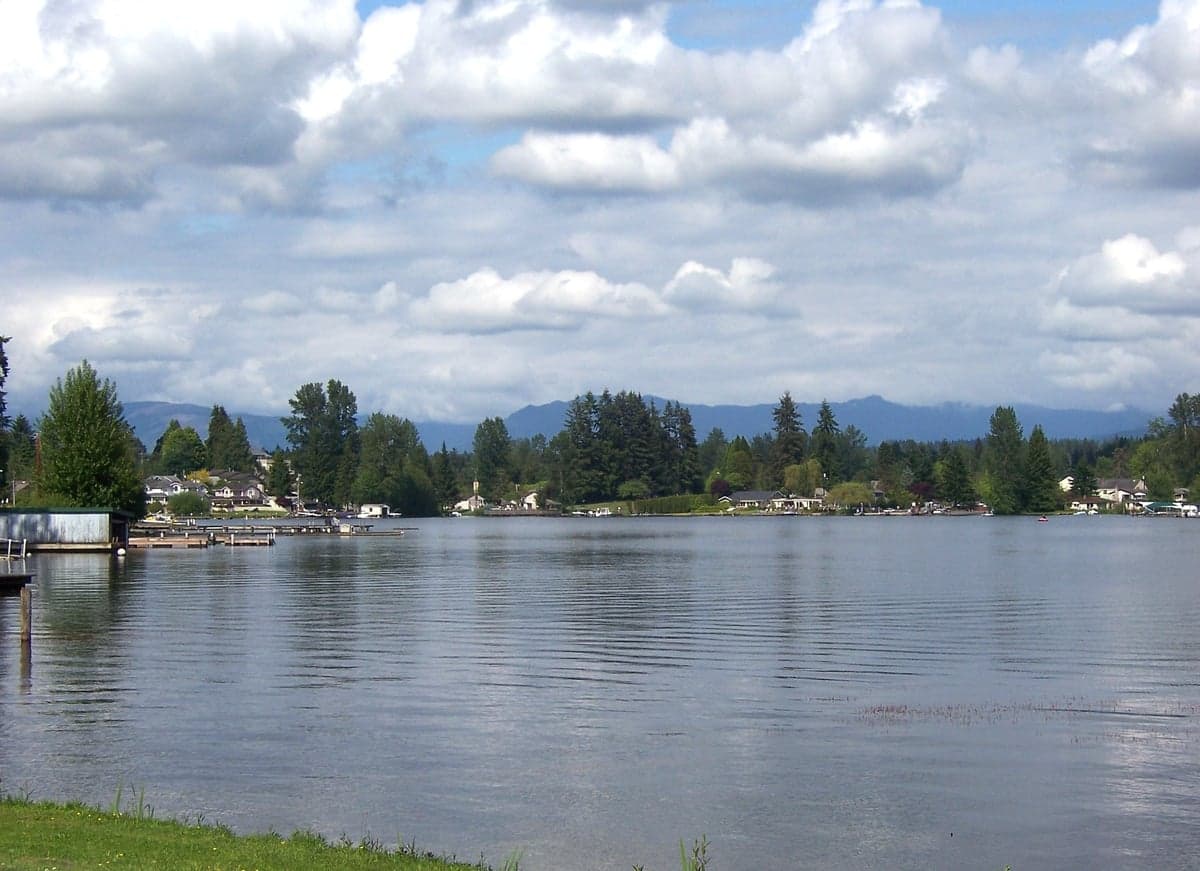
Photo: Wikipedia
Personal Sovereignty in Lake Stevens, WA
Viable for self-reliance. Generally workable, though some barriers may limit total independence.
What does Personal Sovereignty tell us?
Personal Sovereignty measures your capacity for self-reliance and independence with minimal government friction. Higher scores mean fewer barriers between you and the way you want to live... but it assumes you have the space you need and good neighbors.
What does this tell us?
Personal Sovereignty measures your capacity for self-reliance and independence with minimal government friction. Higher scores mean fewer barriers between you and the way you want to live... but it assumes you have the space you need and good neighbors.
State Policy
Energy independence: Importer (55% of energy produced in-state)
Personal Liberty
Homesteading

Personal Liberty Analysis
Lake Stevens, Washington, offers a mixed bag for those prioritizing personal sovereignty, and the honest assessment is that while the immediate community retains some frontier-minded independence, the state-level apparatus in Olympia exerts a heavy hand on individual autonomy. For a survivalist or prepper evaluating this Snohomish County city, the local reality is one of relative freedom in daily life, but the legal and regulatory framework from the state capital creates significant friction for those seeking true self-reliance. The key is understanding where you can operate under the radar versus where the state will actively constrain your choices, particularly in taxation, self-defense, and land use.
Tax burden and regulatory posture: How Washington state constrains financial independence
Washington’s lack of a state income tax is a genuine advantage for financial sovereignty, allowing residents to keep more of what they earn. However, this is offset by a regressive sales tax structure that can exceed 10% in Snohomish County when local levies are included, hitting consumption hard. Property taxes in Lake Stevens are moderate by state standards, but the state’s reliance on them means they tend to creep upward with assessed values. More concerning for the prepper mindset is the regulatory posture: Washington has some of the most stringent environmental and land-use regulations in the Pacific Northwest, including the Growth Management Act, which heavily restricts rural development and can make it difficult to build independent structures, install alternative energy systems, or even clear land for food production without costly permits. The state’s business climate is also hostile to small-scale manufacturing or home-based enterprises, with licensing requirements that can feel like bureaucratic harassment. For someone seeking to minimize government dependency, the tax burden is manageable, but the regulatory overhead is a constant drain on time and resources.
Self-defense and gun law specifics: Navigating Washington’s shifting legal landscape for firearms
This is the most volatile area for personal sovereignty in Lake Stevens. While the city itself has a strong hunting and outdoor culture, Washington state has aggressively moved to restrict firearm rights in recent years. The 2023 passage of HB 1240 banned the sale of many semi-automatic rifles commonly used for home defense and sport, and the state also enacted a 10-day waiting period on all firearm purchases and required a permit to purchase handguns. Magazine capacity is capped at 10 rounds for rifles and 17 for handguns. For a prepper, this means you cannot legally acquire many standard defensive platforms new; you must rely on pre-ban inventory or private transfers, which are also increasingly restricted. The state also has a “red flag” law (Extreme Risk Protection Order) that allows for temporary seizure of firearms without a criminal conviction, based on a civil petition. Concealed carry is shall-issue, but the training requirements are becoming more onerous, and reciprocity with other states is limited. In short, Lake Stevens residents face a state government that views firearm ownership as a privilege to be managed, not a right to be protected, making it a poor choice for those who prioritize unencumbered self-defense capability.
Self-reliance and homesteading viability: Lot sizes, zoning, and off-grid feasibility in Lake Stevens
The viability of a self-reliant lifestyle in Lake Stevens depends heavily on which part of the city you choose. The urban core near the lake features standard suburban lots of 6,000 to 10,000 square feet, where zoning codes strictly prohibit livestock, limit garden size, and require connection to municipal water and sewer. However, the outlying areas toward Granite Falls and the foothills offer larger parcels—some 1 to 5 acres—where more independent living is feasible. Even there, Snohomish County’s critical areas ordinances restrict clearing, wetlands development, and even rainwater collection in some cases. Off-grid solar is technically allowed but requires building permits and electrical inspections that can be costly. Composting toilets and alternative wastewater systems face heavy regulatory scrutiny, making true off-grid living nearly impossible without deep pockets and patience. For a prepper, the best strategy is to look for unincorporated Snohomish County land just outside city limits, where zoning is looser, but even then, the state’s environmental regulations will limit your ability to be fully self-sufficient. The climate is forgiving for gardening (long growing season, ample rainfall), but the legal framework is not.
Personal liberties: Parental rights, medical autonomy, speech, and property in a blue state context
On parental rights, Washington state is a mixed environment. The state has strong compulsory vaccination laws for school attendance, with only medical exemptions allowed, which directly impacts a parent’s ability to make medical decisions for their children. Homeschooling is legal but requires annual notification and standardized testing, and the state has been moving toward more oversight. Medical autonomy for adults is similarly constrained: Washington has legalized assisted suicide and recreational marijuana, but it also has a strict prescription drug monitoring program and has shown willingness to mandate vaccines for public employees and healthcare workers. Free speech is protected under the state constitution, but local governments in Snohomish County have experimented with “hate speech” ordinances and permit requirements for public assemblies that can chill dissent. Property rights are the weakest link: the state’s Growth Management Act gives local governments broad authority to downzone land, restrict development, and impose environmental easements without compensation. Eminent domain is used for transit projects and environmental conservation, and property owners have limited recourse. For someone who values the ability to control their own medical choices, educate their children as they see fit, and use their land without government interference, Lake Stevens is a place where you must be constantly vigilant against state overreach.
In the broader context of the Pacific Northwest, Lake Stevens offers a more community-oriented, less urban feel than Seattle, but it is still firmly within the grasp of a state government that actively seeks to manage individual choices. Compared to Idaho or Montana, where constitutional carry, lower taxes, and looser land-use laws prevail, Lake Stevens is a compromise location—one where you can find like-minded neighbors and decent land for a homestead, but where you will constantly battle state-level regulations on firearms, property use, and medical freedom. For the strategic relocator who values sovereignty above all, this area is a tactical choice: it works if you are willing to operate within the system and keep a low profile, but it is not a refuge from government overreach. The smart move is to buy land with good water and southern exposure, build a defensible position, and stay off the state’s radar as much as possible. The freedom here is local and interpersonal, not legal or structural.

* Values derived from national, state, county, city and local statistics and may differ in a specific area. Last updated: 2026-04-21T11:11:48.000Z
Narrative content on this page is AI-generated and may contain mistakes. Verify any details that matter before acting on them.
ReloMaps may earn a commission from affiliate links at no extra cost to you.

