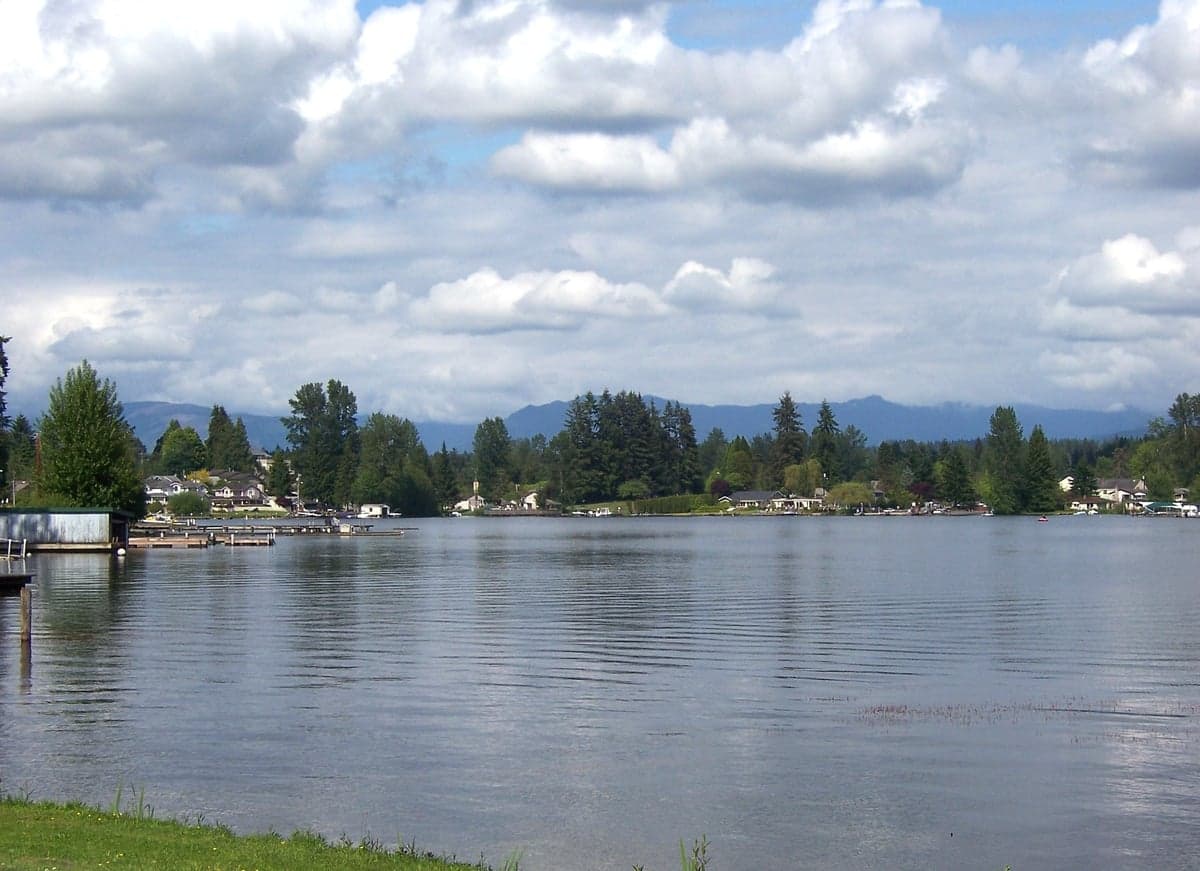
Photo: Wikipedia
Political ClimatePolitical Climate in Lake Stevens, WA
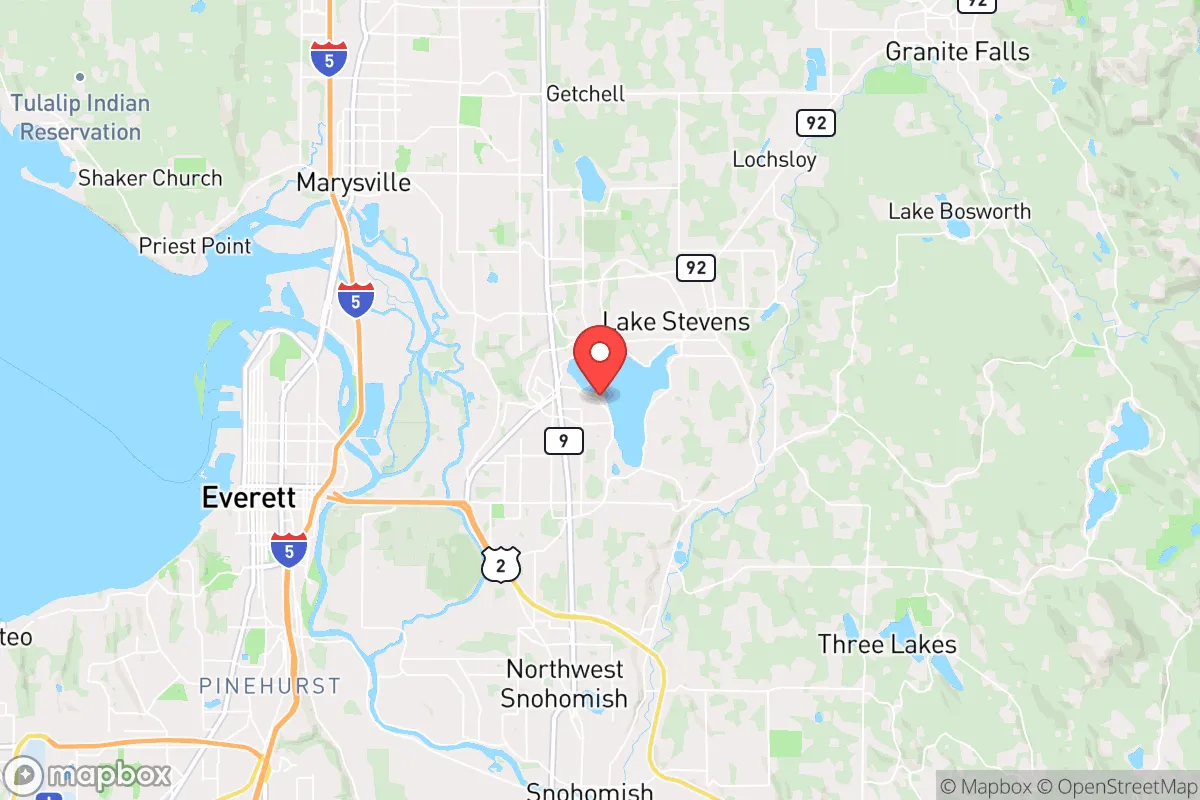
District shown is the primary district for this city’s centroid. Cities may span multiple districts.
Local Political AnalysisPolitical Analysis of Lake Stevens, WA
Lake Stevens, Washington, has shifted noticeably leftward in recent years, carrying a Cook Partisan Voting Index of D+15 that places it firmly in Democratic territory. This wasn't always the case—twenty years ago, this was a reliably blue-collar, independent-minded community where folks valued their privacy and didn't expect the government to meddle in their daily lives. Today, the political landscape is dominated by progressive activism, with local elections often decided by candidates who prioritize expansive government programs and regulatory oversight over individual freedoms. The trajectory is clear: each election cycle brings tighter restrictions on property rights, higher taxes, and a growing expectation that the state knows best.
How it compares
To understand Lake Stevens' political shift, look at its neighbors. Just a few miles west, Everett is even more progressive, with a D+18 PVI and a city council that has embraced rent control measures and police reform ordinances that many locals feel go too far. Head east toward Granite Falls or north to Arlington, and you'll find communities that still lean conservative—places where the "Keep Washington Free" signs outnumber the "Hate Has No Home Here" banners. Snohomish County as a whole has trended blue, but Lake Stevens now votes more like a Seattle suburb than the rural crossroads it once was. The contrast is stark: in 2024, precincts around Lake Stevens voted for progressive county executive candidates by double digits, while neighboring Lake Roesiger precincts split nearly evenly. That gap tells you everything about how fast this area has changed.
What this means for residents
For those who value personal autonomy, the practical effects are already visible. Property owners face increasingly complex building codes and environmental regulations that make simple home improvements a bureaucratic headache. The local school board has adopted curriculum materials that emphasize social justice themes over traditional academics, and parents who object are often dismissed as out of touch. Tax levies for parks, transit, and social services pass routinely, even as infrastructure like roads and sewer systems struggle to keep pace with growth. If you're someone who believes government should stay out of your backyard, your wallet, and your child's education, you'll find yourself swimming against a strong current here. The long-term outlook suggests more of the same: as Seattle-area refugees continue moving east for cheaper housing, they bring their voting habits with them, further entrenching the progressive majority.
Culturally, Lake Stevens has lost much of its old identity. The annual Aquafest parade still draws crowds, but the conversations at the hardware store now revolve around new apartment complexes and traffic-calming roundabouts rather than hunting seasons or boat repairs. The city council has debated sanctuary city policies and climate action plans—issues that would have been unthinkable a generation ago. For longtime residents, the most telling sign is the quiet resignation: fewer people bother to speak up at public meetings because they know the outcome is predetermined. If you're considering a move here, understand that this is no longer a place where individual liberty is the default assumption. It's a community where the government's role in your life is expected to grow, and where pushing back earns you the label of "out of step." That's the honest truth from someone who's watched it happen.

State Political ClimatePolitical Climate in Washington
State Political AnalysisPolitical Environment in the State
Washington State has shifted from a purple swing state to a solidly blue stronghold over the past two decades, with Democrats controlling every statewide office and both legislative chambers since 2012. The state hasn’t voted Republican for president since 1984, and the margin has only widened—Joe Biden won by 19 points in 2020, while Kamala Harris carried it by roughly 18 points in 2024. That said, the political landscape is far from uniform: the liberal Seattle metro area and its suburbs drive the statewide results, while vast swaths of Eastern Washington remain deeply conservative, creating one of the sharpest urban-rural divides in the country.
Urban vs. rural divide
The political map of Washington is essentially a tale of two states. King County, home to Seattle, casts about a third of all votes in the state and reliably delivers 70-75% Democratic margins—enough to cancel out the rest of the state combined. Neighboring Snohomish and Pierce counties have also trended blue, though Pierce (Tacoma) still has a sizable conservative minority. The real action is in the suburbs: places like Bellevue and Redmond on the Eastside have flipped from reliably Republican to competitive or even Democratic-leaning since 2016, driven by tech-worker transplants and shifting cultural values. Meanwhile, Eastern Washington is a different world. Spokane County, once a GOP stronghold, has become a battleground—it voted for Trump in 2020 and 2024 but by shrinking margins, and local races are increasingly tight. Further east, Yakima and Walla Walla remain conservative, but the agricultural valleys are seeing demographic changes that could shift them over time. The rural counties—Ferry, Stevens, Pend Oreille—vote 70-80% Republican, but their populations are too small to move the needle statewide. The key takeaway: if you’re looking for a conservative community, you’ll find it east of the Cascades, but you’ll be living in a state where your vote is effectively nullified by the Seattle metro.
Policy environment
Washington’s policy environment is a textbook example of progressive governance with few brakes. There’s no state income tax, which sounds great, but the state relies heavily on a regressive sales tax (9-10.5% in most areas) and high property taxes that have risen sharply since the 2020s. The regulatory posture is aggressive: the state has a cap-and-trade program (Climate Commitment Act) that drives up gas and energy costs, and a long-term care payroll tax (WA Cares Fund) that took effect in 2023, taking 0.58% of wages with no opt-out for most workers. Education policy is dominated by teachers’ unions, with school choice virtually nonexistent—no voucher programs, no charter schools outside of a few limited options. Healthcare is heavily regulated, with a public option (Cascade Care) that has seen low enrollment but signals future expansion. Election laws are among the most liberal: universal mail-in voting is the norm, same-day registration is allowed, and there’s no voter ID requirement beyond a signature check. For a conservative, this environment feels like a slow-motion erosion of personal choice—you’re paying more for energy, forced into a government-run care fund, and sending your kids to schools that prioritize DEI initiatives over academic rigor.
Trajectory & freedom
Washington has been on a clear trajectory toward less personal freedom over the past decade, particularly in areas of self-defense, parental rights, and economic liberty. The state passed Initiative 1639 in 2018, raising the purchase age for semi-automatic rifles to 21 and imposing enhanced background checks and storage requirements. In 2023, the legislature went further with a ban on “assault weapons” (HB 1240) and a high-capacity magazine ban (HB 1143), plus a 10-day waiting period for all firearm purchases. These laws have faced legal challenges but remain in effect. On parental rights, the state passed a “shield law” in 2023 that protects gender-affirming care for minors from out-of-state legal action, effectively overriding parental consent laws in other states. Medical autonomy took a hit with the COVID-19 vaccine mandate for state employees and healthcare workers, which was never fully repealed. Property rights are constrained by the Growth Management Act, which limits development in rural areas and drives up housing costs. The only bright spot for freedom advocates was the 2024 defeat of a capital gains tax (upheld by the state Supreme Court in 2023 but still controversial), and the failure of a proposed income tax on high earners. Overall, the trend is clear: more regulation, higher costs, and less individual autonomy.
Civil unrest & political movements
Washington has been a flashpoint for political activism on both sides. The CHAZ/CHOP occupation in Seattle during summer 2020 was a national symbol of progressive overreach, with six blocks of the city declared a police-free zone that saw multiple shootings and one death before being cleared. Since then, Seattle has seen regular protests over police reform, homelessness, and Gaza, with the city council consistently leaning further left. On the right, the Washington State Republican Party has struggled to gain traction, but grassroots movements like the “Moms for Liberty” chapters in Spokane and Vancouver have mobilized around school board races and parental rights. The “sanctuary state” law (Keep Washington Working Act) limits cooperation between local law enforcement and federal immigration authorities, which has created tension in border communities like Blaine and Sumas. Election integrity remains a hot-button issue: the 2020 and 2024 elections saw no major fraud scandals, but the mail-in system’s lack of voter ID continues to concern conservatives. The most visible flashpoint for a new resident would be the homelessness crisis in Seattle and Tacoma, where open-air drug use and tent encampments are common, and the state’s drug decriminalization experiment (Blake decision, later partially reversed) has left many feeling unsafe.
Projection
Over the next 5-10 years, Washington will likely become even more progressive. In-migration from California and other blue states continues to fuel growth in the Seattle metro and its suburbs, while rural counties are losing population or growing slowly. The state’s Democratic supermajority in the legislature shows no signs of weakening, and the 2026 gubernatorial race will likely replace the moderate Jay Inslee with a more progressive figure. Expect further gun restrictions, a push for a state income tax (possibly via a graduated model), and expansion of the WA Cares Fund. The Climate Commitment Act will drive up energy costs further, and the Growth Management Act will keep housing expensive. For conservatives, the best-case scenario is a continued rural stronghold in Eastern Washington, but statewide influence will continue to shrink. If you’re moving here now, expect to be in a permanent political minority, with your values increasingly at odds with state law.
For a conservative considering relocation, Washington offers beautiful geography and a strong economy, but the political cost is high. You’ll pay more in taxes and fees, have fewer gun rights, send your kids to schools that may not reflect your values, and live under a government that actively works against your political preferences. If you’re set on the Pacific Northwest, consider the Spokane area or the Tri-Cities (Kennewick, Pasco, Richland) for a more conservative community, but know that you’ll still be subject to state-level policies you likely oppose. The bottom line: Washington is a great place to visit, but for a conservative looking to put down roots, it’s a tough sell unless you’re ready to fight for every inch of freedom.
* Values derived from national, state, county, city and local statistics and may differ in a specific area. Last updated: 2026-04-21T11:11:48.000Z
Narrative content on this page is AI-generated and may contain mistakes. Verify any details that matter before acting on them.
ReloMaps may earn a commission from affiliate links at no extra cost to you.

